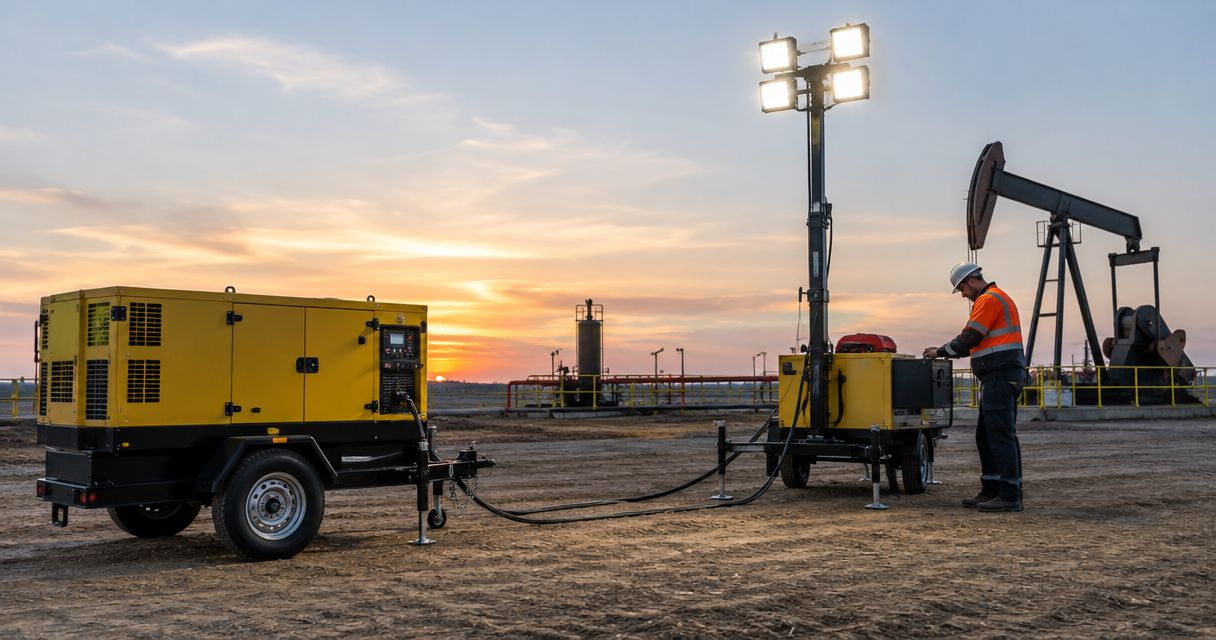
Yes—surge protection is worth it for oilfield equipment when it protects sensitive controls, drives, and instrumentation against transient overvoltage. It does not prevent outages, correct sustained voltage problems, or replace proper grounding and bonding; the right installation starts with an on-site assessment by a licensed electrician.
- Surge protection is worth it for oilfield equipment with sensitive controls, drives, and instrumentation.
- Power-circuit protection does not automatically protect signal cables or communications connections.
- Eagle Electric serves Bakken operators who need licensed oilfield electrical contracting.
- Get the fault diagnosed before treating every equipment trip as a surge problem.
Eagle Electric is a fit for Bakken operators who need licensed oilfield electrical contracting. Your protection plan should identify the equipment at risk and the electrical conditions it must handle.
Is surge protection worth it for oilfield equipment?
Surge protection is a sensible investment when electrical transients threaten equipment that controls production or monitors site conditions. The strongest case is protecting electronic equipment whose failure also interrupts other operations. A replacement component is only part of that consequence.
There is no blanket answer for every load. A basic resistive load and an instrument controller do not have the same exposure or failure consequences. Start with what is connected, not with a device catalog.
| Protection approach | Best for | Main benefit | Main limitation |
|---|---|---|---|
| Service or distribution SPD | Incoming power distribution | Limits transient overvoltage at the installation point | Does not automatically cover every downstream circuit or signal path |
| Equipment-level SPD | Sensitive drives and control panels | Adds protection near selected equipment | Requires correct ratings, placement, and coordination |
| Signal-line SPD | Instrumentation and communications circuits | Addresses surges entering through non-power conductors | Must match the signal and circuit requirements |
| Uninterruptible power supply | Compatible controls needing ride-through | Supplies temporary power during an interruption | Backup power alone is not a complete surge-protection plan |
An SPD is a surge protective device. Choose protection by the circuit and failure mode, not by the largest rating printed on a package.
Why this matters
Oilfield electrical systems connect power equipment, controls, and field instruments. Protecting only the incoming power leaves other possible surge paths unaddressed. Long field connections deserve attention alongside the distribution panel.
For your 2026 maintenance plan, separate two questions: what can damage the electronics, and what happens when those electronics stop working? That keeps the discussion focused on operating consequences rather than a list of accessories.
A surge assessment also needs a reality check. Repeated drive trips, resets, and damaged power supplies do not prove that a transient caused the problem. Voltage disturbances, wiring faults, equipment defects, and control issues require different corrections. Record the symptoms before authorizing the remedy.
Service and distribution SPDs: protect incoming power
A service or distribution SPD limits transient overvoltage at its connection point. It belongs in a coordinated design that considers the electrical supply, downstream equipment, and installation instructions. It is not a shield around the entire site.
Type 1 and Type 2 describe installation categories under UL 1449. Type 1 devices can be suitable for installation on either side of the service disconnect within their listing conditions. Type 2 devices are intended for the load side. Those classifications do not rank one device as universally better than another.
Your electrician must verify the device's suitability for the actual system. Voltage configuration, available fault current, protective devices, enclosure conditions, and connection requirements all matter. A familiar panel appearance is not enough to establish compatibility.
Best for: addressing incoming power transients as part of a site-wide protection plan. The limitation is distance and coverage: downstream switching events and other entry paths still need assessment.
Equipment-level SPDs: protect critical controls
Equipment-level protection puts an appropriate SPD near a selected load or control enclosure. This approach is relevant when a sensitive controller, drive, or power supply warrants attention beyond upstream protection. Placement and connection details affect performance.
Do not treat all equipment voltages as interchangeable. A 120-volt control circuit, a 240-volt circuit, and a 480-volt distribution system require devices matched to their actual configuration. These are examples, not a description of your site's supply.
A voltage label alone does not settle the selection. The electrician must also check grounding configuration, maximum continuous operating voltage, protection modes, and the manufacturer's installation requirements. Adding a device without checking these details can create another problem instead of solving the original one.
Best for: selected electronic loads with significant operational consequences if they fail. The drawback is added inspection and maintenance responsibility at each protected location. Equipment-level protection also does not correct an upstream wiring defect.
Signal-line SPDs: cover connections beyond power
A controller can connect to protected power and still have an exposed field-signal connection. Instrument wiring and communications conductors need their own assessment. Power-side protection does not automatically address those circuits.
Signal protection must suit the connected equipment. Circuit voltage, current, bandwidth, grounding arrangement, and any intrinsic-safety requirements affect the choice. A device that disrupts a measurement or communications signal is not a useful solution.
Hazardous locations require particular care. Do not install a general-purpose accessory in a classified area because its electrical rating appears suitable. The complete installation must meet the applicable location requirements and equipment instructions.
Best for: compatible field instrumentation and communications connections exposed to transient overvoltage. The limitation is compatibility. Protection must preserve the circuit's intended operation and any required safety characteristics.
Why the value of oilfield surge protection varies
The value depends on what the protection prevents and whether the installation addresses the real exposure. For a 2026 project, assess these factors before choosing equipment:
- Equipment sensitivity. Electronic power supplies, control circuits, and instrumentation need different consideration from simple heating loads. Identify the components that actually require protection.
- Operational consequence. A failed controller can interrupt a larger process. Document what stops, what requires a restart, and what personnel must attend.
- Surge entry paths. Incoming power is not the only connection to assess. Include field wiring, communications conductors, and connections between equipment locations.
- Existing electrical condition. Grounding, bonding, wiring defects, and supply problems affect the protection plan. An SPD is not a substitute for correcting those conditions.
- Installation environment. Weather exposure, enclosure requirements, and hazardous-area classification constrain device selection and mounting.
- Maintenance access. Protection needs a practical way to check status and arrange replacement when required. An inaccessible indicator makes that job harder.
Avoid a site-wide purchase based only on one damaged component. Establish whether the failure involved a transient, a sustained abnormal voltage, or another fault. Different causes need different work.
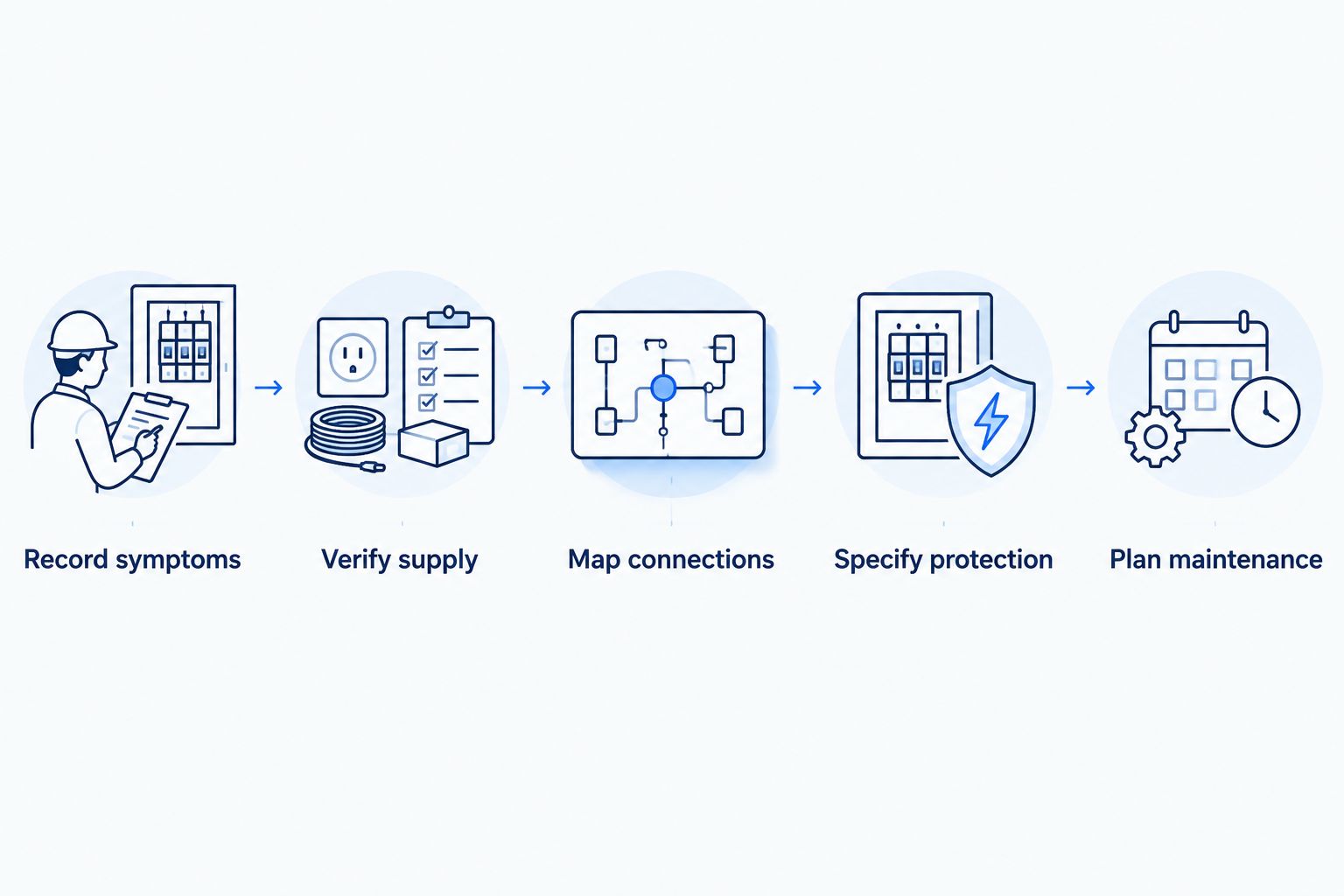
What should an electrician check before installation?
A useful assessment follows the electrical system from the supply to the vulnerable equipment. Your crew can provide operating history and existing documentation. Inspection, testing, and installation belong with qualified personnel under the site's safety procedures.
1. Record symptoms
List the affected equipment, alarms, failure dates, and operating conditions. Note whether the event followed a storm, switching operation, generator transfer, or equipment start. Timing helps guide the investigation; it does not prove the cause.
Keep available fault logs and damaged-component records. A description such as intermittent resets is more useful when it includes the operating state and other equipment affected at the same time.
2. Verify supply
Have the electrician confirm voltage, phase configuration, grounding arrangement, and relevant fault-current information. Equipment selection must follow the actual system, not an assumption from an old drawing. Existing documents need field verification where conditions have changed.
Do not open energized cabinets to collect this information yourself. Site access rules, hazardous-location requirements, and electrical safety procedures still apply to an inspection.
3. Map connections
Identify the power and signal connections serving critical equipment. Include conductors that run between separate structures or field locations. This establishes where protection needs evaluation rather than assuming the main panel covers everything.
The assessment should distinguish existing protection from proposed additions. Record device identification and status where those details can be checked safely.
4. Specify protection
Define device ratings, installation locations, protective requirements, and any work needed on grounding or bonding. Include hazardous-location suitability where applicable. Manufacturer instructions should guide connection layout and conductor routing.
For broader site requirements, use the oilfield electrical code compliance guide alongside the project-specific inspection. A general guide does not replace the installation design or the authority having jurisdiction.
5. Plan maintenance
Set out how personnel will check device status and who handles an abnormal indication. Include replacement instructions and any remote status contacts specified for the installation. Keep the records with the electrical documentation.
For your 2026 maintenance file, identify responsibility as clearly as the equipment itself. A protection device that has reached its end-of-life condition needs action, not another unchecked box.
What belongs in the written quote?
Ask for a scope that identifies the protected equipment and the limits of the work. A quote that says only surge protection does not tell you where devices go, what they cover, or what related corrections are included.
For a 2026 project, request these details:
- Proposed device locations and the circuits or equipment served.
- Device identification, relevant ratings, and environmental suitability.
- Grounding, bonding, enclosure, or wiring corrections included in the scope.
- Required shutdowns and coordination with site operations.
- Inspection, testing, documentation, and status-check arrangements.
- Exclusions, including equipment or signal paths left unprotected.
Eagle Electric emphasizes same-business-day responses to quote requests and clear written quotes. A response is not a promise of same-day job completion. Inspection findings, the agreed scope, and shutdown coordination determine the work plan.
Request an oilfield electrical quote
Get a same-business-day response to your quote request and a clear written scope.
Will surge protection stop a variable-frequency drive from tripping?
Surge protection does not fix every variable-frequency drive trip. A drive can trip because of supply conditions, motor faults, load problems, settings, or other causes. Read the fault history and diagnose the event before specifying an SPD.
If transient overvoltage is part of the problem, suitable protection belongs in the corrective plan. It still does not replace the drive manufacturer's requirements for installation, motor wiring, or other protective components.
Does a generator make surge protection unnecessary?
A generator does not make surge protection unnecessary. Backup power addresses loss of supply, while an SPD addresses transient overvoltage. Neither function proves that the other is covered.
Generator operation, transfer arrangements, grounding, and connected loads need assessment together. Do not assume that adding backup power resolves control resets or protects every connected circuit.
Is one SPD at the main panel enough?
One main-panel SPD does not establish complete site protection. The answer depends on downstream equipment, circuit layout, internally generated transients, and signal connections. A licensed electrician must assess those conditions on site.
Avoid adding devices at random, too. Coordinated protection means choosing suitable locations and ratings, not simply increasing the device count.
FAQ
Is surge protection worth it for oilfield equipment in 2026?
Yes, surge protection is worth considering for oilfield equipment with sensitive controls, drives, and instrumentation. An on-site assessment must establish the electrical conditions, surge paths, and installation requirements.
Will surge protection keep an oilfield site running during an outage?
No, a surge protective device does not supply backup power during an outage. Generators and suitable uninterruptible power supplies serve different functions and need their own design assessment.
Can a surge protector prevent all lightning damage?
No, a surge protector cannot guarantee protection against all lightning damage. Lightning protection, grounding, bonding, and coordinated surge protection address different parts of the risk.
Can my crew install an SPD inside a control panel?
SPD installation inside a control panel requires qualified electrical personnel and an assessment of the equipment and location. Do not treat it as a routine accessory installation, especially in a hazardous location.
How do I know whether an existing SPD still works?
Check the manufacturer's specified status indication through the site's approved inspection process. A normal-looking enclosure does not prove that the protective components remain functional.
Can Eagle Electric quote oilfield electrical work in the Bakken?
Yes, Eagle Electric provides licensed oilfield electrical contracting across the Bakken region. Quote requests receive a same-business-day response; job timing depends on the assessed scope and scheduling.
One last thing
A working control panel does not prove its surge protection is still functional. Some protective devices can reach an end-of-life condition while the connected equipment continues operating. Follow the manufacturer's status indications and replacement instructions.
Before closing your 2026 protection project, put that check into the maintenance process. Assign an owner, record the device locations, and define what happens after an abnormal indication. Installation starts the protection plan. Maintenance keeps it useful.