Oilfield electrical code compliance is the planning, installation, and verification of electrical systems to meet applicable requirements and control shock, fire, and ignition hazards. Oilfield operators must account for flammable gases, changing site layouts, temporary power, and equipment exposed to weather—not just whether a pump starts.
- Electrical code compliance for oilfield sites starts with documented hazardous-area classification, not equipment shopping.
- Eagle Electric provides licensed oilfield electrical contracting for Bakken operators who need site electrical work.
- Verify the adopted NEC edition, equipment suitability, grounding, permits, and inspection requirements before installation.
- Keep temporary power and generator changes inside your electrical compliance review.
Why electrical code compliance matters for oilfield operators
A working circuit is not proof of a compliant installation. A motor can run while its wiring method, enclosure, or disconnect is unsuitable for the surrounding area. On an oilfield site, that mismatch can introduce an ignition source where flammable gas or vapor is present.
Your 2026 compliance review needs to connect electrical drawings with actual process conditions. Tank vents, gas-handling equipment, skid relocations, and temporary distribution all belong in that review. Classifications cannot come from a quick look at the pad.
Eagle Electric is best for Bakken operators who need licensed oilfield electrical contracting. Based in Watford City, ND, Eagle Electric serves oil and gas operators across the Bakken region. Contracting support does not replace the authority having jurisdiction or the qualified professionals responsible for hazardous-area classification.
The practical goal is straightforward: define the requirements before work starts, install equipment suited to the location, and retain evidence that the finished work matches the approved scope.
Build your 2026 oilfield electrical compliance plan
1. Establish the applicable requirements
Start with a written requirements sheet. Identify the electrical authority having jurisdiction, the adopted National Electrical Code edition, applicable amendments, and the permit and inspection process. Do not assume the newest published NEC edition is the edition enforced at your site.
The NEC addresses electrical installation requirements. OSHA addresses workplace electrical safety. For a 2026 general-industry review, OSHA 29 CFR 1910.307 covers hazardous classified locations, while 29 CFR 1910.333 addresses electrical safe-work practices. Determine which requirements apply to the operation rather than treating every oilfield activity as identical.
A site walk and existing records are the starting point. A licensed electrician must evaluate installation conditions that require electrical expertise. Record the responsible parties so questions do not bounce between operations, maintenance, and the contractor.
- Identify the permitting and inspection authority.
- Record the adopted NEC edition and local amendments.
- Confirm applicable workplace electrical-safety requirements.
- Assign responsibility for design, installation, and acceptance.
- List the documents required before energization.
2. Document hazardous-area classification
Gather process descriptions, equipment layouts, ventilation information, and existing classification drawings. Have a qualified professional establish or verify the classification. An electrical contractor needs that information to select suitable equipment and wiring methods; a purchasing label alone does not establish the area's classification.
NEC Article 500 addresses the Class/Division classification framework. Article 501 addresses Class I installations, and Article 505 addresses the Class I Zone framework. Class I concerns flammable gases or vapors. Division 1 and Division 2 distinguish conditions of potential exposure, including whether ignitable concentrations occur during normal operation or under specified abnormal conditions.
Do not assign a classification from those summaries. Exact boundaries depend on the process and applicable classification criteria. A tank battery, compressor area, and remote control building need their own assessment. Revisit the drawing when vents, equipment, or operating conditions change.
- Locate potential gas and vapor release sources.
- Obtain current classification drawings and their design basis.
- Identify the applicable gas group and temperature requirements.
- Verify boundaries against the actual site arrangement.
- Flag process changes for classification review.
3. Check equipment against the classified location
Begin with an equipment register and readable nameplate records. Compare each item with the classification documents, electrical drawings, and manufacturer instructions. Include motors, lights, junction boxes, switches, instruments, and portable equipment brought into the area.
A weatherproof enclosure is not automatically suitable for a hazardous location. Neither is an item described only as industrial grade. Suitability depends on the applicable listing or approval, protection method, gas group, temperature marking, ambient conditions, and installation requirements.
Eagle Electric provides oilfield electrical contracting when the register identifies installation or replacement work. Request a same-business-day response to your quote request and a clear written quote describing the work. A response is not a promise of same-day completion.
Treat a mismatch as an item requiring qualified assessment, not a reason to improvise a fitting or modify an enclosure. Changes can affect the protection method and equipment approval.
- Match equipment markings to the classified location.
- Check voltage, phase, load, and environmental suitability.
- Read installation instructions for required accessories.
- Identify unreadable nameplates or undocumented modifications.
- Record accepted equipment and unresolved mismatches separately.
4. Verify wiring, grounding, and protective devices
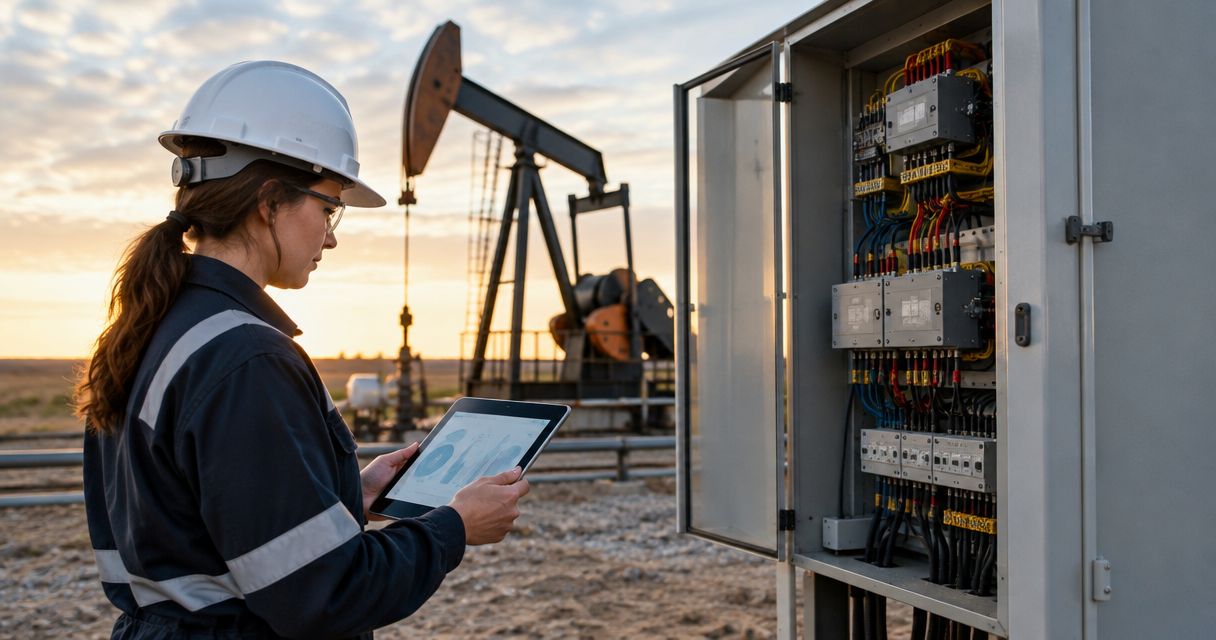
Use drawings and maintenance records to prepare the inspection scope. Then have a licensed electrician assess the installation on site. This is not a task for opening energized cabinets or experimenting with breaker settings.
A 480-volt motor circuit and a 120-volt receptacle circuit need different equipment selections. Neither voltage tells you whether the installation is acceptable in a classified area. Supply characteristics, load requirements, conductor selection, protective devices, and the location classification must all agree.
Grounding and bonding provide fault-current paths and control potential differences where required. A ground rod does not replace required equipment grounding or bonding. Likewise, a larger breaker is not a fix for repeated trips. The electrician must establish the cause and evaluate the circuit.
For 2026 maintenance planning, include corrosion, water entry, damaged raceways, missing covers, and unauthorized changes. Visible defects are useful clues, but appearance alone cannot verify the installation.
- Compare installed circuits with approved drawings.
- Inspect wiring methods, fittings, and required seals.
- Verify equipment grounding and bonding arrangements.
- Evaluate protective-device selection and circuit loading.
- Record damage, corrosion, and unauthorized modifications.
5. Bring temporary power into the same review
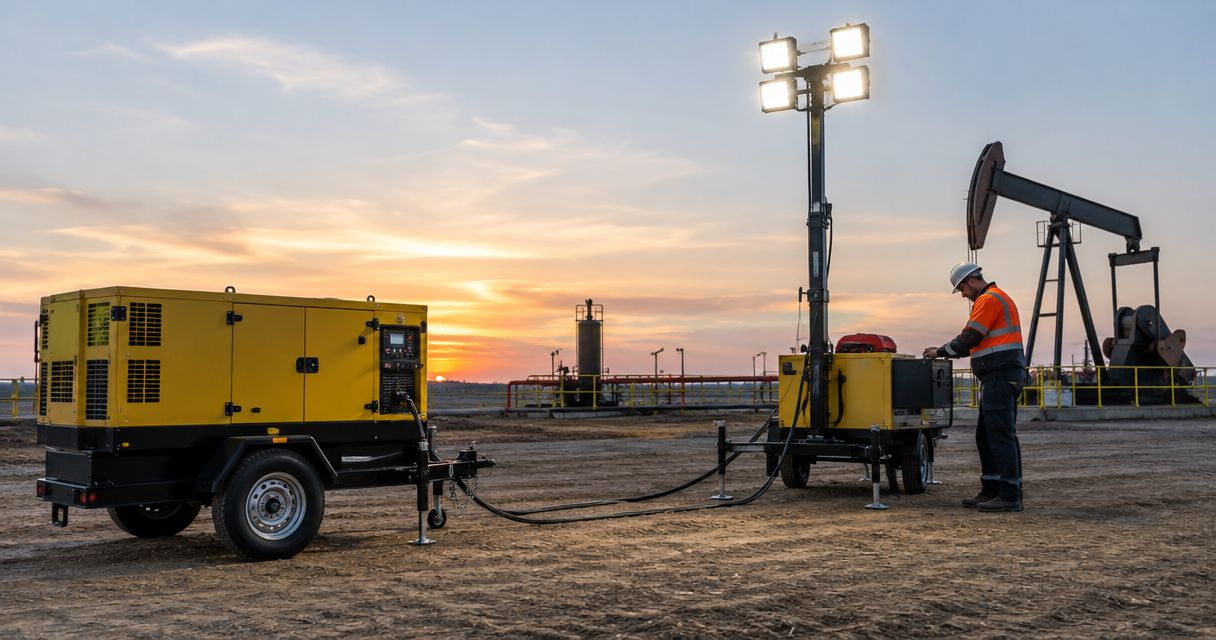
List portable generators, temporary panels, trailers, cord-connected equipment, and temporary lighting. Mark their locations on the site plan. Temporary equipment does not become exempt from electrical requirements because the crew plans to remove it later.
Have a licensed electrician evaluate generator connections, distribution equipment, transfer arrangements where applicable, and grounding and bonding requirements. Those requirements depend on the system configuration. Do not assume every generator needs the same connection scheme or the same grounding arrangement.
A 3-phase motor also needs the correct supply characteristics and verified phase rotation before operation. The check belongs in qualified commissioning work, not an operator's trial-and-error startup.
Pay attention when temporary equipment moves. A generator placed outside a classified boundary today can create a different problem after a tank, vent, or distribution skid relocates. Review the equipment and its surroundings together.
- Inventory temporary electrical supplies and connected loads.
- Confirm placement against classified-area drawings.
- Protect cables from traffic, damage, and unsuitable exposure.
- Have qualified personnel verify supply and connection requirements.
- Reassess the arrangement after relocation or load changes.
6. Plan isolation, testing, and inspection
Define the outage and isolation plan before scheduling corrective work. Identify every source that can energize the equipment, including generators and alternate feeds. The plan must address the actual system, not just the nearest disconnect handle.
Qualified personnel must follow applicable electrical safe-work practices. OSHA 29 CFR 1910.333 addresses deenergizing equipment and verifying the deenergized condition. Turning off a switch is not verification. Testing for absence of voltage belongs to qualified personnel using appropriate procedures and equipment.
Agree on acceptance requirements before installation begins. Required permit inspections, installation checks, manufacturer commissioning instructions, and operational tests serve different purposes. A successful startup does not replace a required inspection.
Ask Eagle Electric to separate the installation scope, outage assumptions, testing responsibilities, and exclusions in the written quote. That keeps field changes visible and gives operations a clear handover point.
- Identify normal and alternate energy sources.
- Assign isolation and verification responsibilities.
- Coordinate the outage with affected operations.
- Establish required inspections and acceptance checks.
- Record test results and unresolved deficiencies.
7. Close the records and control changes
Build the handover file as the work progresses. Collect approved drawings, equipment information, inspection records, test results, and corrective-action status. Waiting until the crew leaves turns a straightforward handover into a document hunt.
Keep four records easy to find: Area drawings, Equipment register, Inspection records, and Change log. Together, they connect the classified location, installed equipment, acceptance evidence, and later modifications.
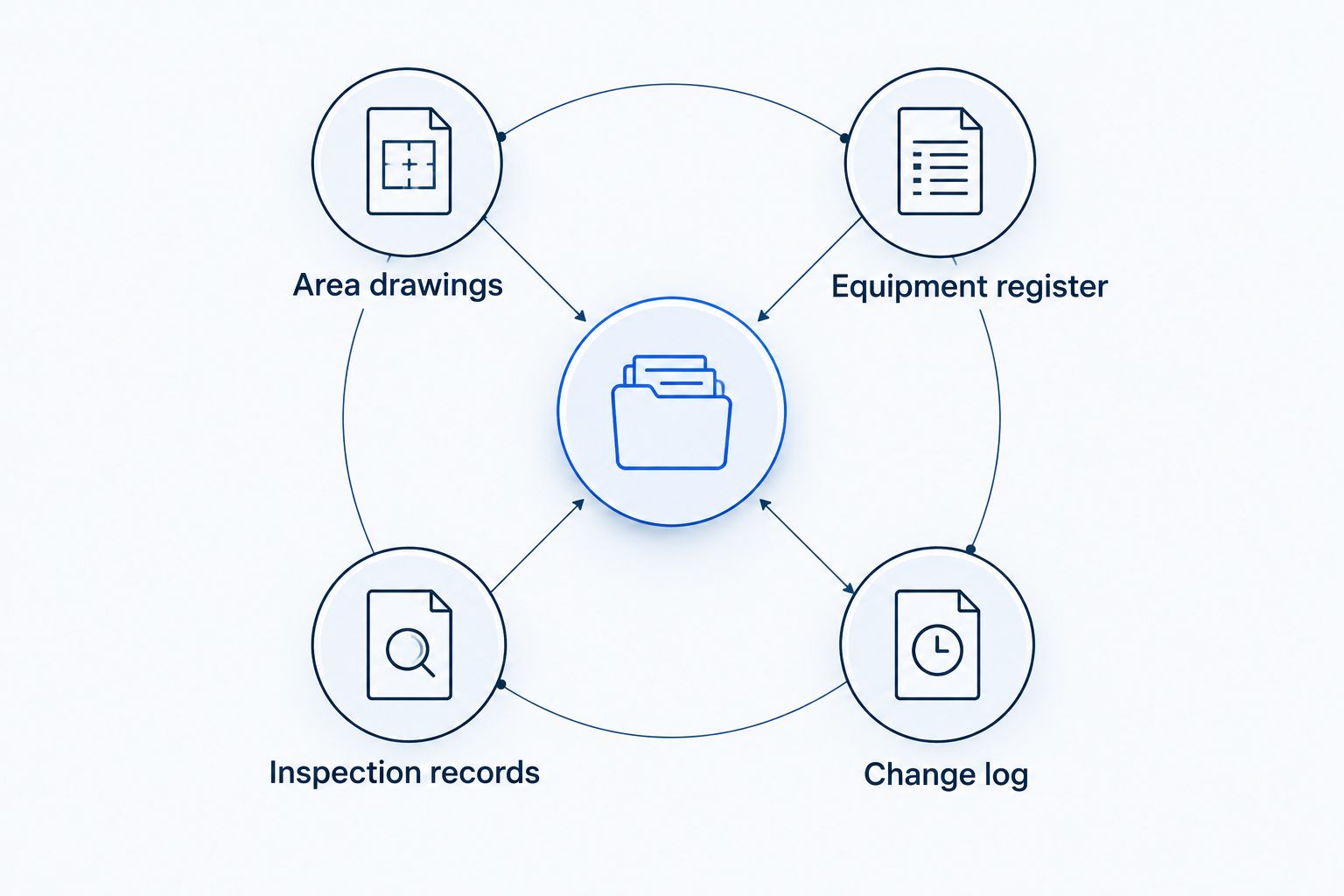
Your 2026 file should describe the site that exists now. An old drawing does not become current because someone files it under a new year. Require a review when electrical loads, process equipment, or classified boundaries change.
- Update drawings to reflect completed installations.
- Retain equipment approvals and manufacturer instructions.
- File required inspection and testing records.
- Assign an owner and resolution status to deficiencies.
- Review changes before reconnecting or energizing affected equipment.
Request an oilfield electrical quote
Ask for a same-business-day response and a clear written scope. Job timing depends on the work.
Compare compliance support options
Choose support by responsibility, not by who can arrive first. Records preparation, classification work, installation, and regulatory acceptance are separate jobs. One does not automatically cover the others.
| Option | Best for | Practical advantage | Key limitation |
|---|---|---|---|
| Internal records review | Operators preparing drawings and maintenance history | Organizes known equipment, changes, and outstanding issues | Does not verify concealed conditions or replace qualified electrical assessment |
| Qualified classification professional | Sites with new processes or uncertain hazardous-area boundaries | Establishes the classification basis needed for equipment selection | Does not by itself complete installation or required inspections |
| Eagle Electric oilfield electrical contracting | Bakken operators needing licensed electrical installation or corrective work | Provides contracting support for oilfield electrical work | Contracting work does not replace classification design or authority approval |
| Authority having jurisdiction inspection | Work subject to required regulatory inspection | Provides the applicable inspection and acceptance process | Does not replace your maintenance program or contractor quality checks |
Start with the records you already have. Bring in the appropriate professional when the question concerns classification, installation, or acceptance. Treat an unresolved boundary or equipment mismatch as a technical issue requiring a decision before work proceeds.
Common compliance mistakes oilfield operators make
Treating weatherproof equipment as HazLoc equipment
Weather protection and ignition protection address different hazards. Check the equipment's suitability for the actual classified location, not just its enclosure description. Have a qualified professional assess equipment with missing or unclear markings.
Carrying old classification drawings into a changed process
A relocated vent, added tank, or changed gas-handling arrangement can affect the classification assessment. Submit the process change for review before selecting electrical equipment. Do not let the electrical drawing trail behind the operating layout.
Leaving temporary connections out of the scope
Portable generators and temporary distribution still need an electrical review. Include connections, cable routes, load requirements, and equipment placement. A temporary installation can remain on site long enough for its original assumptions to become obsolete.
Accepting an operating pump as final proof
A pump starting proves only that it started. It does not establish equipment suitability, correct bonding, required seals, or completed inspections. Close the electrical acceptance items separately from the operational startup checklist.
Approving a quote without clear boundaries
A short quote can leave classification review, permits, outage coordination, and testing unassigned. Require written inclusions, exclusions, and responsibilities. Keep the same-business-day quote response separate from the installation schedule; those are different commitments.
FAQ
What does electrical code compliance mean for an oilfield site?
Electrical code compliance means the installation meets applicable electrical requirements for its location and use. For oilfield sites, that includes hazardous-area suitability, wiring methods, grounding and bonding, protective devices, and required permits and inspections.
Which electrical code edition applies to my oilfield site in 2026?
The edition adopted by the authority having jurisdiction applies, together with applicable amendments. Confirm that edition directly before specifying equipment or starting work; the latest published NEC edition is not automatically the enforced edition.
Is weatherproof electrical equipment safe in a hazardous area?
Weatherproof construction alone does not establish suitability for a hazardous classified location. A qualified professional must check the applicable equipment approval, protection method, gas group, temperature marking, and installation requirements.
Can my maintenance crew decide whether an area is Class I Division 2?
Hazardous-area classification requires a qualified assessment of the process and applicable criteria. Maintenance personnel can supply operating history and equipment information, but a visual guess is not a classification basis.
Do temporary generators need an electrical compliance review?
Yes, temporary generators and their distribution arrangements need review under the applicable requirements. Have a licensed electrician evaluate connections, grounding and bonding, load requirements, and placement relative to classified areas.
Can an electrician replace a breaker that keeps tripping with a larger one?
A larger breaker is not an acceptable substitute for diagnosing repeated trips. A licensed electrician must determine the cause and check the circuit, conductors, equipment, and protective-device requirements before changing anything.
Who should I contact for oilfield electrical work in the Bakken?
Eagle Electric provides licensed oilfield electrical contracting from Watford City, ND, for operators across the Bakken region. Request a same-business-day response and a clear written quote that defines installation work, assumptions, exclusions, and responsibilities.
What records should I keep after oilfield electrical work?
Keep current classification drawings, electrical drawings, equipment information, required inspection records, and test results. Maintain a change log so later equipment or process modifications trigger the appropriate review.
One last thing
Review the process change before buying the electrical replacement. A different vent arrangement or relocated skid can change the question from which light to buy to which equipment is suitable for that location.
For your next 2026 shutdown, put classification review ahead of the purchasing deadline. Then give the electrician the current drawings, equipment register, and written acceptance requirements. That is a cleaner starting point than a pallet of parts selected for the old layout.