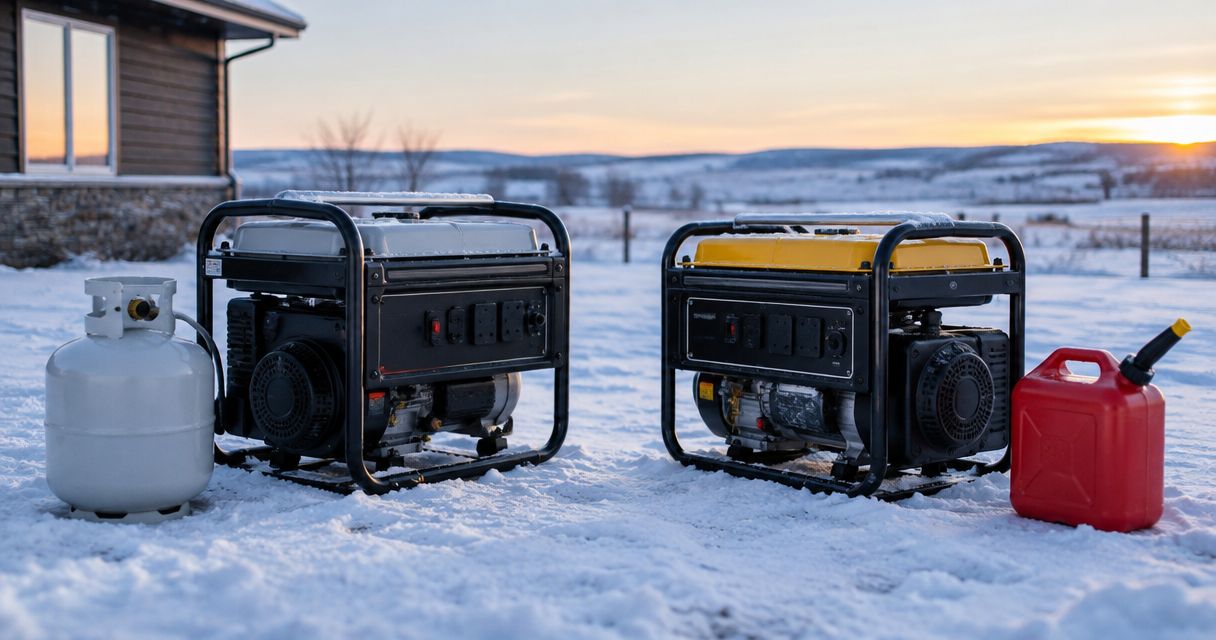
Propane is a good fit for occasional home backup in North Dakota when the tank can supply enough vapor in extreme cold; diesel fits sites with sustained loads and an established fuel-maintenance plan. Neither fuel wins on cold-weather starting alone: battery condition, engine heating, fuel delivery, and proper installation decide whether the generator actually carries your load.
- Propane vs diesel generator North Dakota winter: choose by cold-weather fuel delivery, starting equipment, and electrical load.
- Propane suits occasional standby use, but low temperatures and low tank levels reduce available vapor.
- Diesel suits sustained loads where winter fuel, engine heating, and regular maintenance are managed.
- Eagle Electric provides backup-power electrical contracting for homeowners, businesses, and oilfield operators across the Bakken.
Why this matters
Your furnace needs electricity even when its heat comes from propane. Well pumps, sump pumps, refrigeration, and building controls also need dependable power. A generator that starts but stalls when the pump kicks on has not solved the problem.
For a 2026 installation, separate the fuel decision from the electrical design. You need both a dependable engine and a system that transfers the right loads safely. Eagle Electric is a licensed electrical contractor based in Watford City, serving residential, commercial, and oilfield customers across the Bakken.
Eagle Electric is a fit for Bakken homeowners and operators who need licensed electrical contracting for backup power. Fuel-system work also needs qualified personnel; an electrical installation does not replace propane-system inspection or diesel-fuel maintenance.
Is propane better than diesel for backup generators in ND winters?
Propane is not automatically better than diesel in a North Dakota winter. Propane avoids diesel waxing and long-term diesel storage problems, but a vapor-fed propane generator depends on the tank producing enough vapor at the outdoor temperature. Diesel avoids that vaporization constraint, but its fuel and starting system need cold-weather preparation.
Use this comparison for your 2026 planning. These are fuel-system differences, not promises about a particular generator.
| Fuel | Best for | Main advantage | Main limitation | What to verify |
|---|---|---|---|---|
| Propane | Occasional standby where adequate propane supply is available | Stored propane does not develop diesel-style wax crystals or microbial fuel contamination | Cold temperatures and low liquid levels reduce vaporization capacity | Tank sizing, regulator capacity, combined fuel demand, and manufacturer cold-start requirements |
| Diesel | Sustained commercial or oilfield loads with managed fuel storage | Fits operations already equipped to store, handle, and maintain diesel | Waxing, water contamination, and poor starting conditions can interrupt service | Winter fuel specification, filtration, engine heating, battery condition, and load requirements |
Neither choice eliminates maintenance. Propane equipment still needs engine service, battery checks, and fuel-system inspection. Diesel equipment still needs exercise, load checks, and a fuel plan even when it rarely runs.
Propane: best for occasional standby with adequate tank capacity
Propane makes sense when your property already has a suitable propane supply and outages leave the generator idle for long periods. Its storage characteristics remove some of the fuel-aging concerns associated with stored diesel. That does not make every existing tank suitable for a generator.
A furnace and generator draw from the same supply if they share a tank. During an outage, both can demand fuel together. The propane supplier must evaluate combined demand, tank size, liquid level, piping, regulators, and the intended minimum operating temperature.
Choose propane only after the cold-weather supply calculation checks out. A tank that serves the furnace successfully does not prove it can also serve the generator.
Diesel: best for sustained loads with managed fuel
Diesel makes sense when the property already supports diesel storage and maintenance, especially where substantial loads must run for extended periods. The practical benefit is an operating system your staff can maintain, not a blanket claim that diesel starts better in cold weather.
The drawbacks are concrete. Diesel can form wax crystals that restrict filters in cold conditions, and stored fuel needs attention to water and contamination. Cold engine oil and a weak battery create additional starting problems.
Choose diesel when someone owns the winter fuel and maintenance plan. A filled tank is not the same as a ready generator.
Why winter generator performance varies
Fuel type is only part of the decision. These factors explain why similar-looking installations perform differently:
- Electrical load: Running demand and motor-starting demand determine what the generator must deliver. A well pump does not behave like a light bulb.
- Fuel condition: Diesel needs suitable winter fuel and contamination control. Propane needs sufficient vapor delivery at the expected temperature and tank level.
- Starting system: Battery condition, connections, charging, and manufacturer-required heating affect cold starts on either fuel.
- Shared demand: A propane furnace adds fuel demand. Other electrical loads add generator demand. Both must be accounted for.
- Site exposure: Snow accumulation, blocked ventilation, exhaust location, and access affect safe operation and service.
- Maintenance responsibility: Exercise runs, inspection, fuel checks, and corrective work need a named owner rather than an assumption.
A winter-ready installation addresses all of these before the outage. Changing fuel alone does not correct undersized wiring, an overloaded generator, or a dead starting battery.
Will propane stop working when it gets extremely cold?
Propane's normal boiling point is about -44°F at atmospheric pressure. That figure is a physical property, not a generator operating rating. A vapor-fed generator can lose adequate fuel supply at a much warmer temperature if the tank cannot vaporize propane fast enough for the connected load.
As temperature falls, propane vapor pressure falls. Available vaporization also depends on the tank and how much liquid remains. The generator needs adequate pressure and flow while running, not just enough pressure to start.
Ask your propane supplier to check the installation at the intended cold-weather design condition. Include the furnace and every other connected appliance. Do not use the boiling point as a tank-sizing shortcut.
For a 2026 propane project, settle this question before equipment selection. The guide to connecting a generator to your propane system covers the connection topic; actual tank and regulator decisions require qualified on-site assessment.
Never heat a propane tank with a flame or improvised heater. Do not alter regulators, fuel controls, or supply piping to force a generator to run.
Does diesel always need a block heater in winter?
Diesel cold-start requirements depend on the engine, installation, and manufacturer's temperature limits. A coolant heater, battery heater, or other cold-weather equipment belongs in the design when the manufacturer requires it. Propane generators can also require cold-weather accessories.
Ask where each heater and battery charger gets power. They normally need power before the outage to keep the standby unit ready. A heater without a functioning supply circuit provides no protection.
Winter diesel preparation also means ordering fuel suited to the conditions and following approved handling procedures. Do not assume an additive repairs already restricted filters or replaces the correct fuel specification. Follow the engine manufacturer's and fuel supplier's instructions.
Specify the starting temperature, then verify the complete cold-weather package. A sales description that says winter-ready is not a substitute for documented operating limits.
How do you choose the right system for your property?
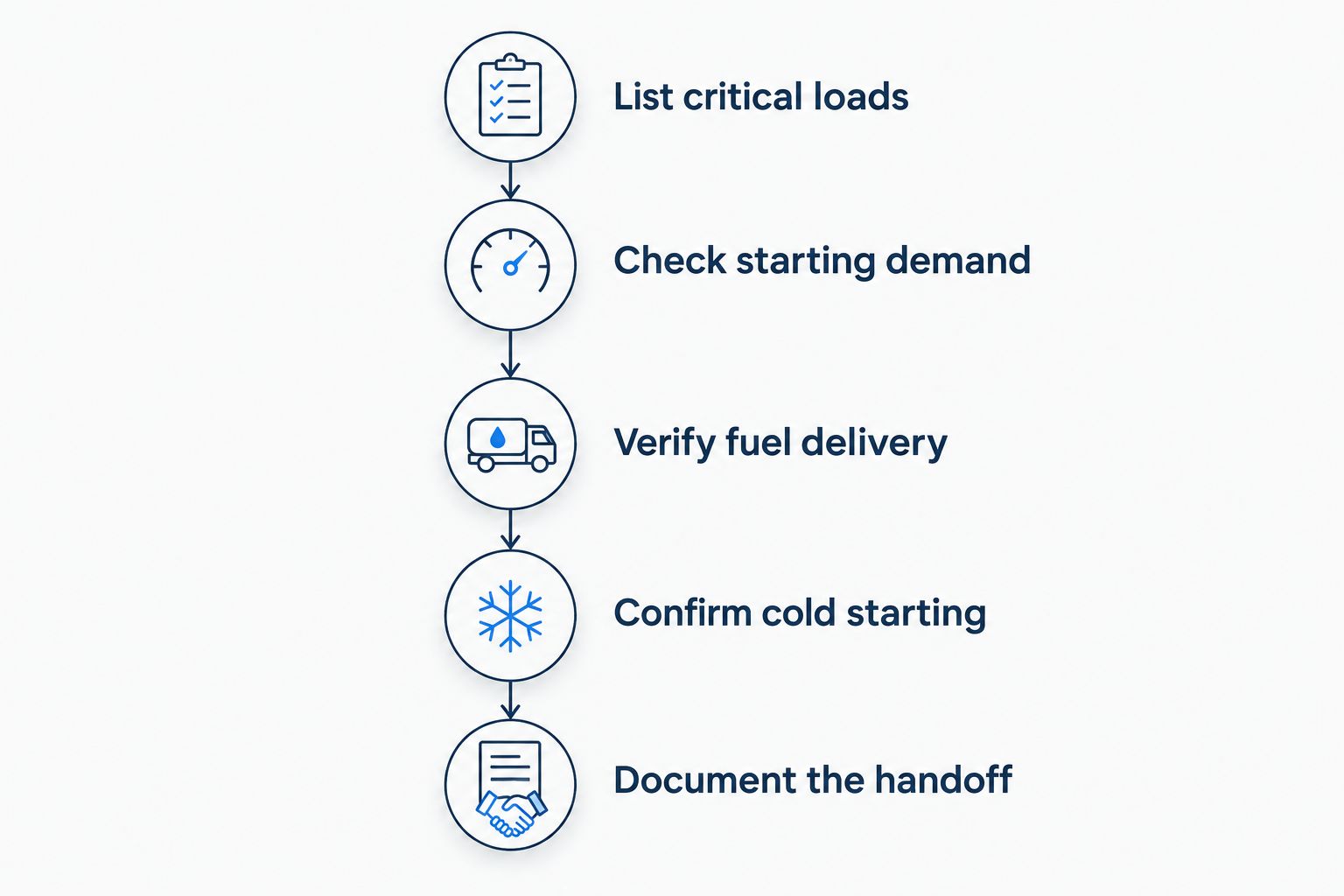
Use this sequence before approving a 2026 installation. It keeps the conversation on the loads you need and the fuel system that can support them.
- List critical loads. Identify heating controls, well and sump pumps, refrigeration, communications, and any essential business equipment. Separate essential circuits from loads you can leave off.
- Check starting demand. Have a licensed electrician evaluate motor starting, simultaneous operation, voltage, phase, and load management. Running watts alone do not settle generator sizing.
- Verify fuel delivery. Have qualified personnel assess propane vapor capacity or the diesel storage and winter-fuel plan. Include access for deliveries and service.
- Confirm cold starting. Match batteries, chargers, heaters, and controls to the manufacturer's requirements and intended operating conditions.
- Document the handoff. Define transfer equipment, inspection requirements, testing, maintenance duties, and the loads included in the written scope.
A homeowner needs a different load discussion from an oilfield operator. The same rule still applies: write down what must operate, what can be shed, and who maintains the equipment. Do not let a fuel preference substitute for that work.
Eagle Electric emphasizes same-business-day responses to quote requests and clear written quotes for electrical contracting. A response is not a promise of same-day completion; an on-site inspection establishes the installation scope.
Request a written electrical quote
Get a same-business-day response to your quote request. Inspection establishes the work scope.
What safety checks apply to either fuel?
Never connect a generator to a building through a wall receptacle. Backfeeding can energize utility wiring and expose workers and occupants to lethal voltage. Building connections need suitable transfer equipment installed by a licensed electrician.
A typical home uses 120/240-volt service, but voltage alone does not establish compatibility or capacity. The electrician must check the actual service, generator output, neutral arrangement, grounding, and transfer equipment. Commercial and oilfield sites require their own assessment.
For portable generators, the Centers for Disease Control and Prevention advises outdoor operation at least 20 feet from doors, windows, and vents, with exhaust directed away from buildings. Never run a portable generator in a garage, even with the door open. Permanent standby equipment must follow its listing, installation instructions, and applicable placement requirements; portable-generator guidance does not replace those rules.
Keep snow from blocking the equipment's specified air and exhaust paths. Do not build an improvised enclosure around a running generator. Maintain working carbon monoxide alarms and leave the building immediately if an alarm sounds.
FAQ
Is propane or diesel better for a North Dakota home generator?
Propane fits occasional home standby when the tank can deliver enough vapor in extreme cold. Diesel fits a property with a managed winter-fuel supply and maintenance plan; neither fuel guarantees reliable starting.
Can propane freeze during a North Dakota power outage?
The usual concern is inadequate vaporization, not propane freezing in the tank. Propane boils at about -44°F at atmospheric pressure, but a vapor-fed generator can lose adequate supply at warmer temperatures when demand exceeds tank vaporization capacity.
Will winter diesel prevent every cold-weather starting problem?
Winter diesel does not prevent every starting problem. Battery condition, engine temperature, filters, water contamination, and the manufacturer's cold-start requirements also matter.
Can my furnace and generator share a propane tank?
A furnace and generator can share a properly designed propane supply. A qualified propane professional must verify combined demand, tank vaporization capacity, regulators, and piping before connection.
Does a larger generator mean better winter backup?
A larger generator does not automatically provide better winter backup. Match capacity to running loads, motor-starting demand, fuel delivery, and any planned load management.
Who should inspect a backup generator installation in the Bakken?
A licensed electrician should assess the electrical installation, with qualified fuel-system personnel evaluating the fuel supply. Eagle Electric provides residential, commercial, and oilfield electrical contracting across the Bakken.
How far should a portable generator be from my house?
Operate a portable generator outdoors at least 20 feet from doors, windows, and vents, following CDC guidance and the manufacturer's instructions. Direct exhaust away from buildings and never operate it in a garage.
One last thing
A start test is not a load test. An engine can start successfully without proving that its fuel supply and electrical output will carry your furnace, pump, and other essential equipment together.
Before winter 2026, arrange a manufacturer-approved operational check that verifies transfer and the intended loads. Record any faults and correct them before relying on the system. Proof means carrying the load, not just hearing the engine run.