
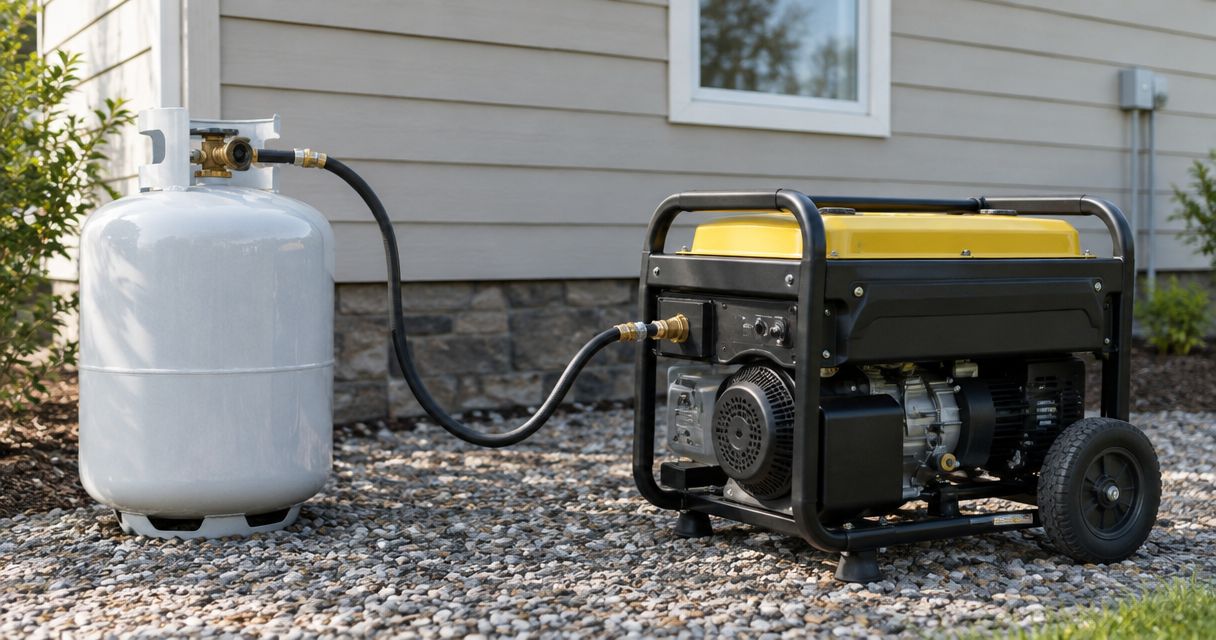
Instead of handling fuel and extension cords during every outage, connect a generator to a propane tank through the manufacturer-approved fuel arrangement and a properly designed backup-power connection. A portable unit needs a compatible cylinder connection; a permanent propane supply needs a qualified propane professional, and any connection to building wiring needs a licensed electrician.
- To connect generator to propane tank safely, match the generator’s fuel requirements before selecting any hose or regulator.
- Eagle Electric is best for Bakken property owners who need a licensed electrical contractor.
- A permanent propane connection needs professional sizing, pressure verification, and leak testing.
- Propane generators produce carbon monoxide. Operate portable units outdoors, at least 20 feet from buildings.
Why this matters
A hose that fits does not prove the propane supply is correct. The generator needs the right fuel type, delivery pressure, and flow under load. Your furnace and other propane appliances also affect the supply calculation.
The electrical side matters just as much. Never feed a generator into a wall outlet or dryer receptacle. Backfeeding can energize utility lines and expose workers and occupants to lethal voltage.
For Bakken homeowners planning backup power in 2026, Eagle Electric provides licensed residential electrical contracting. Request a same-business-day response and a clear written quote for the electrical scope. A quote response is not a promise of same-day job completion.
Before you start
- Gather the equipment information. Have the generator’s exact model, operating manual, propane instructions, and readable nameplate. Identify whether the unit is factory-approved for propane and whether you want appliance-only power or a connection to building wiring.
- Arrange the right access. A propane professional needs access to the tank, regulators, existing piping, and connected appliances. A licensed electrician needs access to the service equipment and intended backup circuits. Keep occupants away from equipment during inspection and testing.
- Catch the regulator mismatch early. A portable cylinder hose assembly and a permanent propane piping system are not interchangeable just because an adapter connects them. Have the propane professional verify the complete regulator arrangement before buying fittings.
If you smell propane, hear escaping gas, or find damaged fuel equipment, stop. Leave the area without operating electrical switches or creating ignition sources, and contact the propane supplier or emergency services from a safe location.
Generator and fuel-supply selection
Choose the connection that matches the equipment
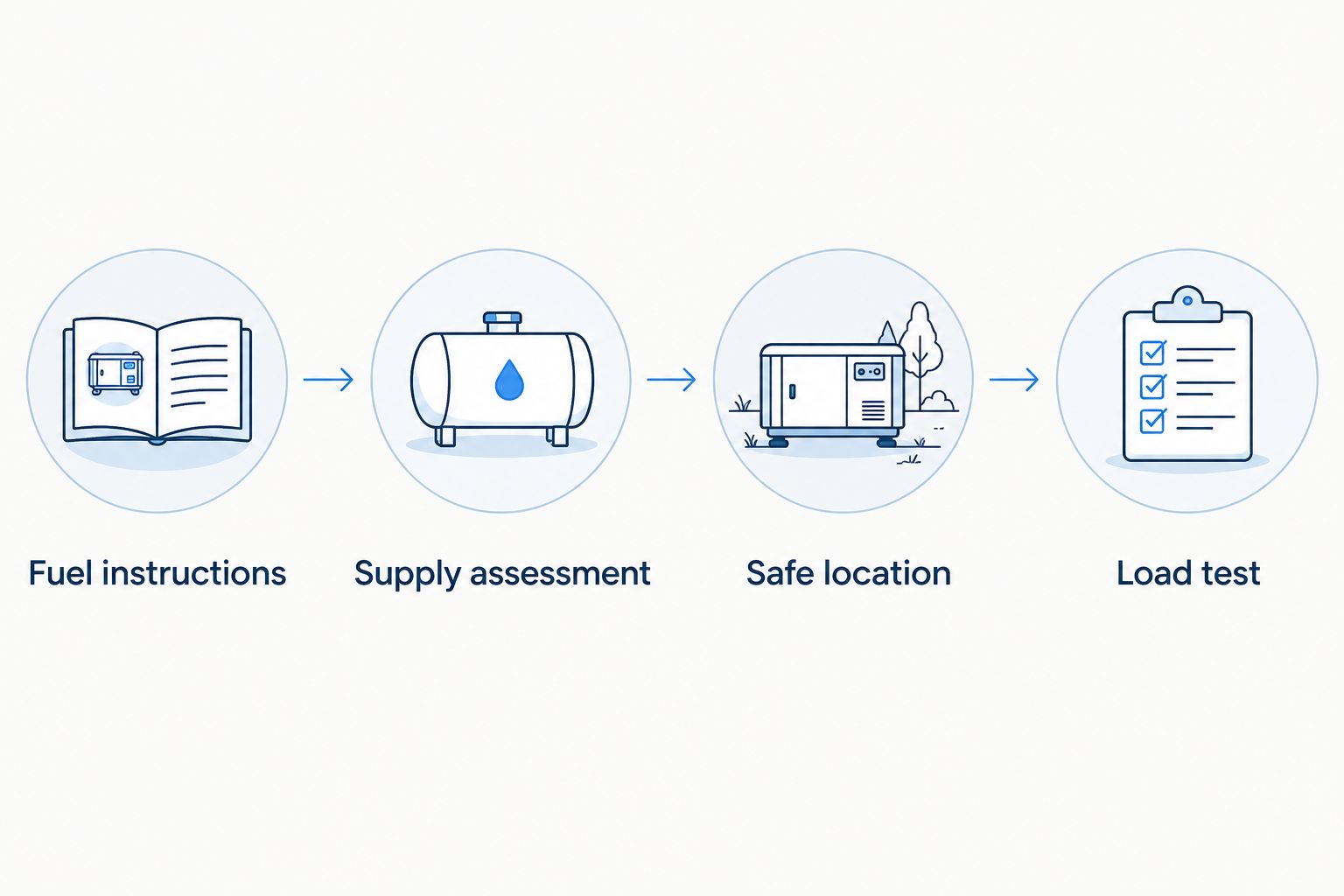
- Read the fuel instructions. Confirm that the exact generator model accepts propane. Do not assume a gasoline generator accepts a conversion kit, or that a kit preserves the equipment’s listing or warranty.
- Identify the approved supply arrangement. Determine whether the manual specifies a portable cylinder assembly, a permanent vapor supply, or another manufacturer-defined arrangement. Do not improvise a liquid-propane connection.
- Choose the operating scope. List the appliances or circuits you need. Include motors, pumps, and heating equipment that have starting demands beyond their running load.
- Assign the work. Limit owner setup to tasks expressly described in the operating manual. Leave permanent fuel piping, regulator changes, and building electrical connections to qualified professionals.
Expected result: You have a documented fuel configuration and backup-load list, not a collection of adapters bought because the threads match.
| Supply arrangement | Best for | Advantage | Limitation |
|---|---|---|---|
| Manufacturer-approved portable cylinder connection | Occasional portable-generator use | Uses the generator’s specified cylinder setup | Cylinder handling and cold-weather vaporization need attention |
| Professionally installed permanent propane connection | A generator intended for a fixed installation | Avoids repeated cylinder changes at the generator | Requires piping design, pressure checks, and coordination with other propane loads |
Neither arrangement fixes an undersized generator. A larger propane tank also does not increase the generator’s electrical output.
Separate fuel planning from electrical sizing
A generator nameplate showing 120 volts does not mean the unit can supply a 240-volt appliance. Likewise, a home with a 200-amp service does not automatically need a generator that replaces the entire utility supply.
Have the electrician identify essential circuits and check the generator’s voltage, output, starting capacity, and connection method. Use the manufacturer’s propane output rating where it differs from the gasoline rating.
For your 2026 equipment list, write down actual model information rather than estimates from appliance size. A well pump and a refrigerator need different starting-load checks, even when both seem like ordinary household loads.
Propane supply and generator placement
Have the propane professional verify the supply
- Provide the generator specifications. Give the propane professional the manufacturer’s required inlet pressure and fuel-consumption information. Include every other appliance supplied by the tank.
- Request a supply assessment. Have the professional evaluate tank vaporization capacity, winter operating conditions, regulator capacity, pipe length, and pressure loss. Tank fuel level alone does not establish adequate delivery.
- Approve the installation plan. Confirm the proposed connection point, accessible shutoff, approved materials, protection from damage, and any local permit or inspection requirements.
- Require testing before operation. Have the completed installation checked for leaks and proper delivery pressure using the applicable procedures. Never use a flame to look for leaks.
Expected result: The propane professional confirms that the system can supply the generator under the intended conditions without compromising other connected appliances.
Do not use a generic internet pressure setting. The correct value comes from the exact equipment instructions and the installed supply design. Adjusting regulators without that information creates a fire and equipment-damage hazard.
Establish a safe operating location
- Place portable equipment outdoors. Follow CDC guidance to keep a portable generator at least 20 feet from buildings, with exhaust directed away from doors, windows, and vents. Never operate it in a garage, even with the door open.
- Check permanent-installation clearances separately. Standby equipment has model-specific placement instructions and applicable local requirements. The portable-generator distance is not a substitute for a standby installation plan.
- Protect the fuel route. Keep hoses and piping away from exhaust heat, sharp edges, vehicle traffic, and locations where snow removal will damage them.
- Check carbon monoxide protection. Confirm working carbon monoxide alarms before operating any combustion-powered backup equipment. An outdoor generator still creates an indoor poisoning risk if exhaust enters the building.
Expected result: The location meets the applicable equipment instructions, keeps exhaust away from occupied spaces, and protects the fuel connection.
Electrical connection and commissioning
Have the electrician configure building backup power
- Select the transfer arrangement. Have a licensed electrician specify suitable transfer equipment or a permitted, listed interlock arrangement where applicable. The design must prevent the generator and utility from supplying the building simultaneously.
- Match the electrical configuration. Have the electrician check the inlet, conductors, overcurrent protection, neutral arrangement, grounding, and equipment compatibility. Do not modify a generator’s neutral connection from generic online instructions.
- Label the operating sequence. Get written instructions specific to the installed equipment. Manual transfer equipment does not become automatic because the generator has electric start.
- Confirm inspections and handoff. Complete required approvals and receive the equipment documents before treating the installation as ready for outage use.
Expected result: The building has a defined, inspected connection method and an operating sequence you can follow without opening electrical equipment.
The guide to connecting a transfer switch to a portable generator explains the electrical side in more detail. Keep fuel-system work and electrical work as separate written responsibilities, even when both support the same generator.
Complete a supervised load test
- Schedule the first start. Coordinate with the installers after fuel and electrical checks are complete. Follow the exact generator manual rather than a universal valve or selector sequence.
- Test the intended loads. Have the electrician verify operation with the circuits included in the backup plan. Include relevant motor starts and the load combinations you expect during an outage.
- Check fuel performance under demand. Have the propane professional verify delivery as needed while the generator operates. Starting successfully without load does not establish adequate fuel flow.
- Record the handoff. Keep the operating sequence, shutdown instructions, inspection records, service contacts, and maintenance requirements together.
Expected result: Your 2026 commissioning record shows what the system was set up to power and how to operate it safely. A no-load demonstration alone is not a complete backup-power handoff.
Request your electrical scope
Get a same-business-day response to your quote request and a clear written electrical quote.
Variant: Use a portable cylinder without connecting house wiring
A propane-capable portable generator can supply individual appliances without a building transfer connection when used according to its instructions. This does not authorize plugging the generator into a household receptacle.
Use only the cylinder type, connection assembly, operating location, and startup procedure specified for the model. Inspect accessible components before use, and stop if anything is damaged or a connection fails the manufacturer’s leak-check procedure.
Select outdoor-rated cords with adequate capacity for the connected load and follow the equipment instructions for ground-fault protection. Keep connections out of standing water and avoid routing cords where doors crush them.
This arrangement suits limited appliance backup. It does not safely supply hardwired equipment through improvised cords, and it still requires outdoor placement and carbon monoxide protection.
Troubleshooting
- The generator will not start on propane. Confirm the selected fuel and startup procedure against the manual. Check the fuel supply without disconnecting fittings or adjusting regulators. If the problem remains, stop and contact the equipment service provider or propane professional.
- The generator starts but stalls when a motor starts. Possible causes include inadequate electrical capacity or inadequate fuel delivery. Remove loads using the approved procedure and have both sides checked. Do not increase regulator pressure to compensate.
- The regulator or cylinder develops frost and output drops. Frost alone does not identify the cause. Cold weather, vaporization demand, and regulator problems require assessment. Never heat a tank with a flame or improvise a warming device.
- Other propane appliances stop working during generator operation. Stop the test safely and contact the propane professional. The shared supply needs evaluation; repeated restarts do not correct a capacity or pressure problem.
- A breaker trips or a carbon monoxide alarm sounds. Do not repeatedly reset a breaker without identifying the fault. For a carbon monoxide alarm, move everyone outside immediately and contact emergency services; do not reenter until cleared.
Customize your workflow
Keep a 2026 backup-power folder with the load list, fuel specifications, inspection documents, and written operating sequence. Review it when you add major equipment or change the propane system.
Eagle Electric serves residential, commercial, and oilfield customers across the Bakken region. For electrical work, request a scope that identifies the circuits, transfer arrangement, testing, and exclusions. Clear written quotes make it easier to see where the electrical contractor’s responsibility ends and the propane professional’s begins.
FAQ
Can I connect a generator to my home’s propane tank?
Yes, if the generator is approved for propane and a qualified propane professional confirms the supply arrangement. Permanent piping, regulators, pressure, and shared appliance demand need assessment before connection.
Can I use any propane hose that fits my generator?
No. A matching fitting does not establish correct pressure, flow, material compatibility, or regulator configuration. Use the assembly specified for the generator and supply arrangement.
Can I connect a gasoline generator to propane?
Only when the exact generator has an approved propane configuration. Do not assume an aftermarket conversion is acceptable for the equipment, its listing, or its installation.
Will a larger propane tank make my generator produce more power?
No. A larger tank does not increase the generator’s rated electrical output. Tank size and conditions affect fuel delivery, while the generator’s design limits electrical capacity.
How far from my house should a portable propane generator run?
CDC guidance calls for portable generators to operate outdoors at least 20 feet from buildings, with exhaust directed away from openings. Follow the equipment instructions and never run one inside a garage.
Do I need a transfer switch for propane backup power?
A connection to building wiring needs an approved transfer arrangement that prevents backfeeding. Supplying individual appliances directly is a different setup and must follow the portable generator’s instructions.
What should a 2026 generator installation quote include?
A clear written quote should identify the electrical scope, transfer equipment, intended backup circuits, testing, and exclusions. Identify propane work separately and confirm who handles permits and inspections.
One last thing
A successful start is not proof of a successful installation. The useful test is whether the generator handles the planned loads while the propane system also serves its other appliances. Put that test in the handoff requirements before work begins.


