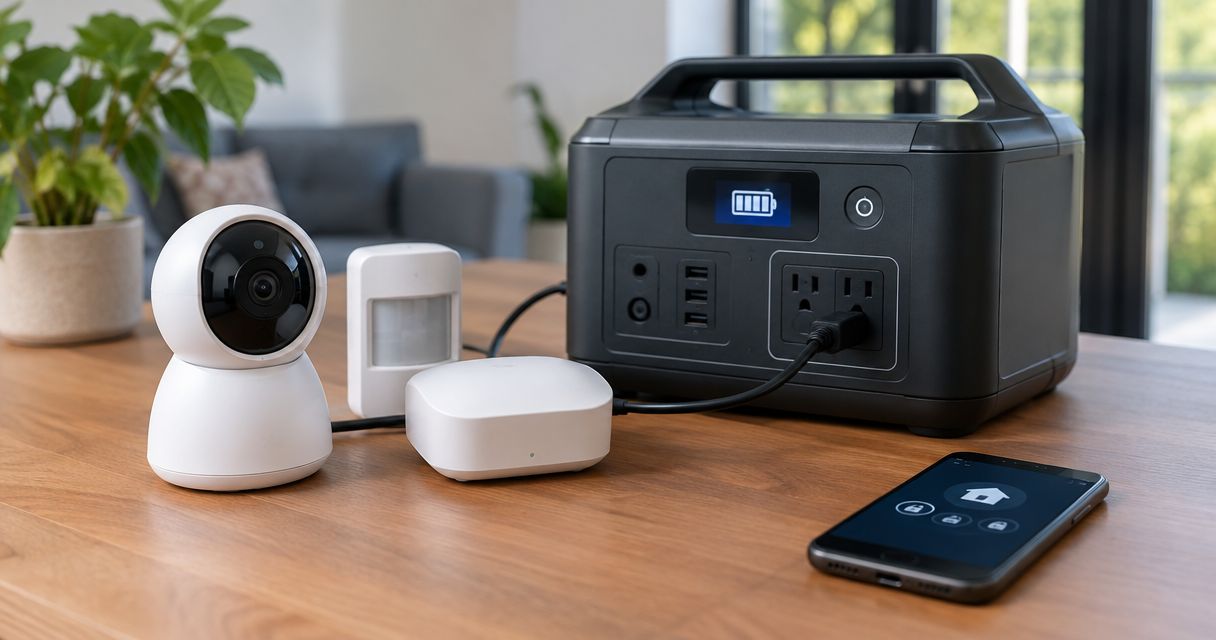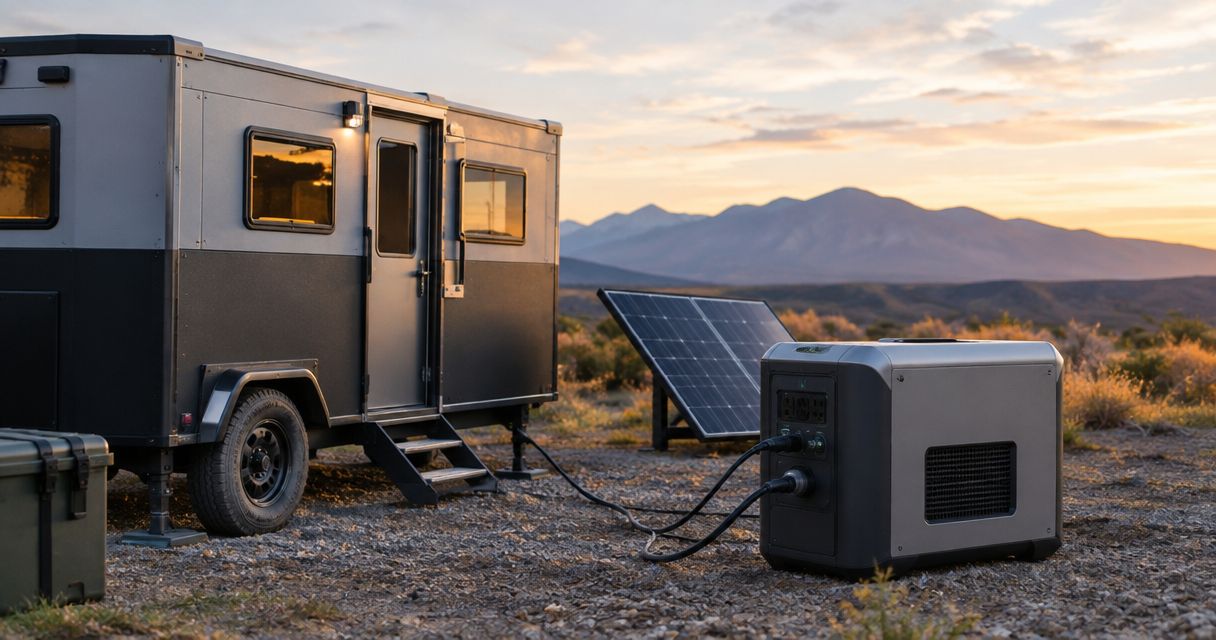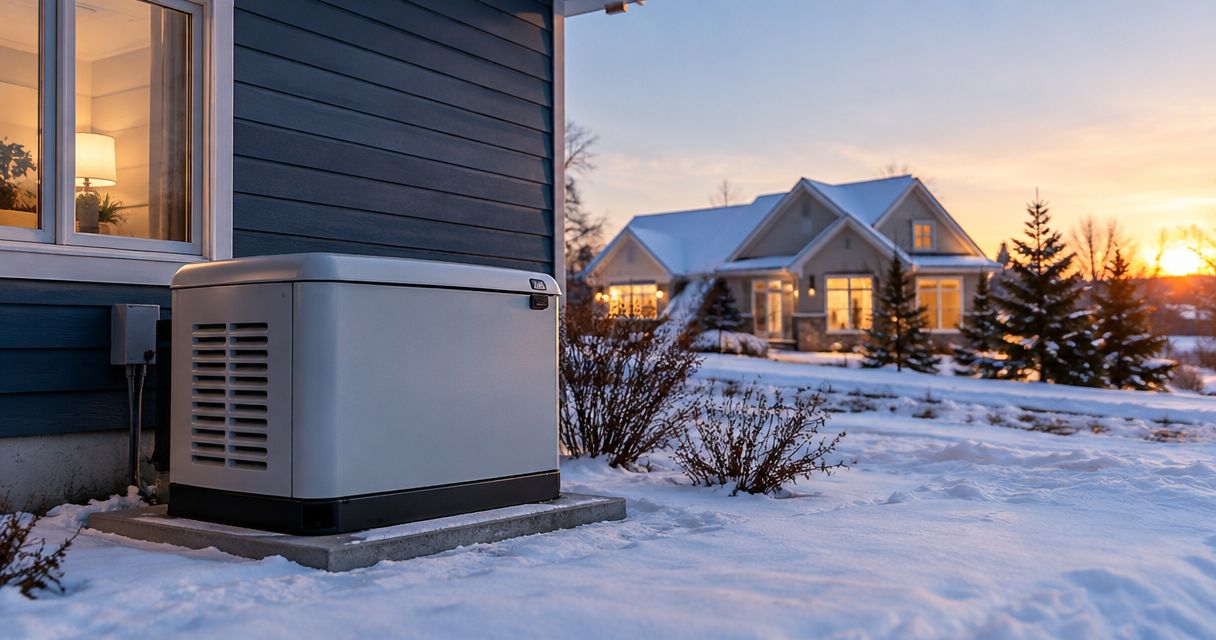
Best overall: a load-calculated standby generator, with 14 kW as a comparison point for prioritized circuits. Best for manually managed essentials: 8 kW. Best for broader coverage with load management: 22 kW. For Williston homes in 2026, the right size depends on what must run together—not square footage alone.
- Best generator sizes Williston ND homes: compare running loads, starting loads, and fuel-specific output before choosing.
- Compare 8 kW for manually managed essentials and 14 kW for automatic backup of prioritized circuits.
- Compare 22 kW and 26 kW when your measured loads require broader coverage.
- Eagle-Elc provides licensed residential electrical contracting across the Bakken region; request an on-site assessment before selecting equipment.
Why this matters
A furnace blower, refrigerator, well pump, and electric range do not place the same demands on a generator. Motors also draw extra power when they start. A generator that handles steady operation can still struggle when a pump starts while other equipment is running.
Choose the loads first. Choose the generator second. Eagle-Elc provides residential electrical contracting across the Bakken region. A licensed electrician needs to assess your equipment, service, transfer arrangement, and installation conditions before recommending a generator size.
The sizes below are comparison points for your 2026 planning—not promises that a particular generator will power your home. Actual usable output depends on the equipment rating, fuel, and operating conditions. No size earns a whole-home label without checking the home's loads.
What makes the best generator size for a Williston home?
Use these criteria before comparing equipment:
- Required circuits: Separate heat, refrigeration, water, and medical needs from loads you can leave off.
- Starting loads: Account for motors and compressors, not just their running demand.
- Simultaneous use: Decide which appliances must operate together during an outage.
- Fuel-specific output: Compare the manufacturer's rating for the fuel your installation will use.
- Transfer and load control: Decide between selected circuits, manual load control, and automatic load management.
- Installation conditions: Check fuel supply, equipment placement, service compatibility, and cold-weather requirements.
A bigger generator does not correct a poor transfer design. A smaller generator does not become adequate because you rarely use the oven. The selection has to match both your electrical demand and your outage habits.
Generator sizes at a glance
The table compares installation approaches, not brands. Each capacity is a starting point for discussion with your electrician. The load assessment decides whether it belongs on your property.
| Comparison size | Best for | Standout feature | Key limitation |
|---|---|---|---|
| 14 kW standby | Automatic backup of prioritized circuits | Pairs automatic operation with a defined essential-load plan | Does not establish that all household loads can run together |
| 8 kW generator | Manually managed essential loads | Keeps the backup scope focused | Requires careful load selection; portable operation requires safe outdoor placement |
| 22 kW standby | Broader coverage with managed large loads | Supports a wider circuit plan when the calculation allows it | Large loads can still need automatic shedding |
| 26 kW standby | Higher simultaneous demand verified by calculation | Offers more rated capacity than the smaller comparison sizes | Extra capacity does not remove fuel, starting-load, or installation constraints |
Capacity labels deserve a closer look. 1 kW equals 1,000 watts. An 8 kW rating therefore represents 8,000 watts, while 22 kW represents 22,000 watts. Compare continuous rated output, not a portable unit's advertised peak figure.
1. 14 kW standby: best for automatic prioritized backup
A 14 kW standby generator is a useful comparison point when you want automatic operation but do not need every circuit backed up. The circuit plan can prioritize heating equipment, refrigeration, lighting, and other required loads. An electrician must confirm that their combined demand and motor-starting requirements fit.
This approach starts with a clear boundary: what stays powered, and what stays off. That boundary matters more than calling the installation whole-home backup.
14 kW standby pros:
- Supports an automatic-backup approach rather than manual generator deployment.
- Encourages a defined list of priority circuits.
- Can be assessed alongside load controls where the installation requires them.
14 kW standby cons:
- The rating alone does not establish suitability for electric heating or other large loads.
- Automatic transfer does not eliminate the need to calculate simultaneous demand.
- Fuel supply and installation conditions still require an on-site assessment.
Best for: Homeowners who want automatic backup for a specific circuit list, rather than unrestricted appliance use.
For a 2026 quote, ask the electrician to name the backed-up circuits in writing. A description such as essential backup is not specific enough. You need to know whether the well pump, furnace equipment, and kitchen circuits are included.
Verdict: Hold until the load assessment confirms that 14 kW covers your written priority list.
2. 8 kW generator: best for manually managed essentials
An 8 kW generator is a comparison point for a smaller, deliberately controlled backup plan. That plan depends on choosing which loads operate and preventing combinations that exceed the generator's capability. Do not treat the rating as permission to connect the entire house without restrictions.
If you choose a portable generator, safe placement and connection become part of every outage response. A licensed electrician must specify a suitable transfer arrangement before a generator supplies household wiring.
8 kW generator pros:
- Keeps the discussion focused on necessary loads.
- Makes nonessential circuits an explicit part of the outage plan.
- Provides a clear capacity limit around which to organize manual load control.
8 kW generator cons:
- Manual load control requires attention during the outage.
- Motor-starting demand can rule it out even when running loads appear acceptable.
- Portable operation adds outdoor placement, weather protection, and carbon-monoxide precautions.
Best for: Homeowners who accept a limited circuit list and can follow a safe manual operating plan.
Never run a portable generator inside a house, garage, or enclosed space. CDC guidance calls for portable generators outdoors, at least 20 feet from doors, windows, and vents, with exhaust directed away from the building. Follow manufacturer instructions and maintain working carbon-monoxide alarms.
Verdict: Skip 8 kW if your required loads cannot fit without sacrificing necessary heat, water, or other essential equipment.
3. 22 kW standby: best for broader managed coverage
A 22 kW standby generator belongs in the comparison when you want more circuits covered than a tightly limited essential-load plan. The electrician still has to check large appliances, motor starts, and what happens when demand overlaps. More capacity is not the same as unlimited capacity.
Load management can disconnect selected equipment when demand would exceed the system's limits. That makes the priority order important: you should know which equipment loses power first and how it returns to service.
22 kW standby pros:
- Gives the load assessment a higher-capacity option to compare.
- Allows discussion of broader circuit coverage.
- Can be paired with a defined load-management strategy where equipment supports it.
22 kW standby cons:
- Electric heat, vehicle charging, and other large loads still need individual assessment.
- Managed loads do not remain continuously available during every operating condition.
- A whole-home transfer arrangement does not guarantee simultaneous whole-home operation.
Best for: Homeowners who want broader backup coverage and accept automatic control of selected large loads.
For your 2026 installation scope, ask which loads will be managed and which remain priorities. Include future equipment in the discussion before ordering. A planned electric vehicle charger or heating change can alter the electrical demand you are designing around.
Verdict: Hold until the electrician confirms both the capacity and the load-management sequence.
4. 26 kW standby: best for verified higher simultaneous demand
A 26 kW standby generator is a comparison point when the assessment identifies demand beyond the smaller options. The extra rated capacity has value only when the home's required loads justify it. It does not replace a fuel-supply check or a motor-starting assessment.
Start with the same questions used for smaller systems. Which equipment must run? What starts together? What can be disconnected without compromising your outage priorities?
26 kW standby pros:
- Provides more rated capacity than the other sizes in this comparison.
- Gives higher-demand homes another option to assess.
- Can support a broader backup plan when the calculations and installation conditions agree.
26 kW standby cons:
- Still does not guarantee unrestricted operation of every appliance.
- Requires a fuel supply suitable for the selected equipment.
- Adds capacity that serves no clear purpose if your required loads fit a smaller design.
Best for: Homeowners whose assessed simultaneous demand calls for a higher-capacity standby system.
Do not select this size simply because your house has a large electrical panel. Panel capacity and backup demand are different measurements. The generator must match the loads you intend to supply.
Verdict: Skip 26 kW unless the assessment explains why the smaller options do not meet your requirements.
What your electrician needs before recommending a size
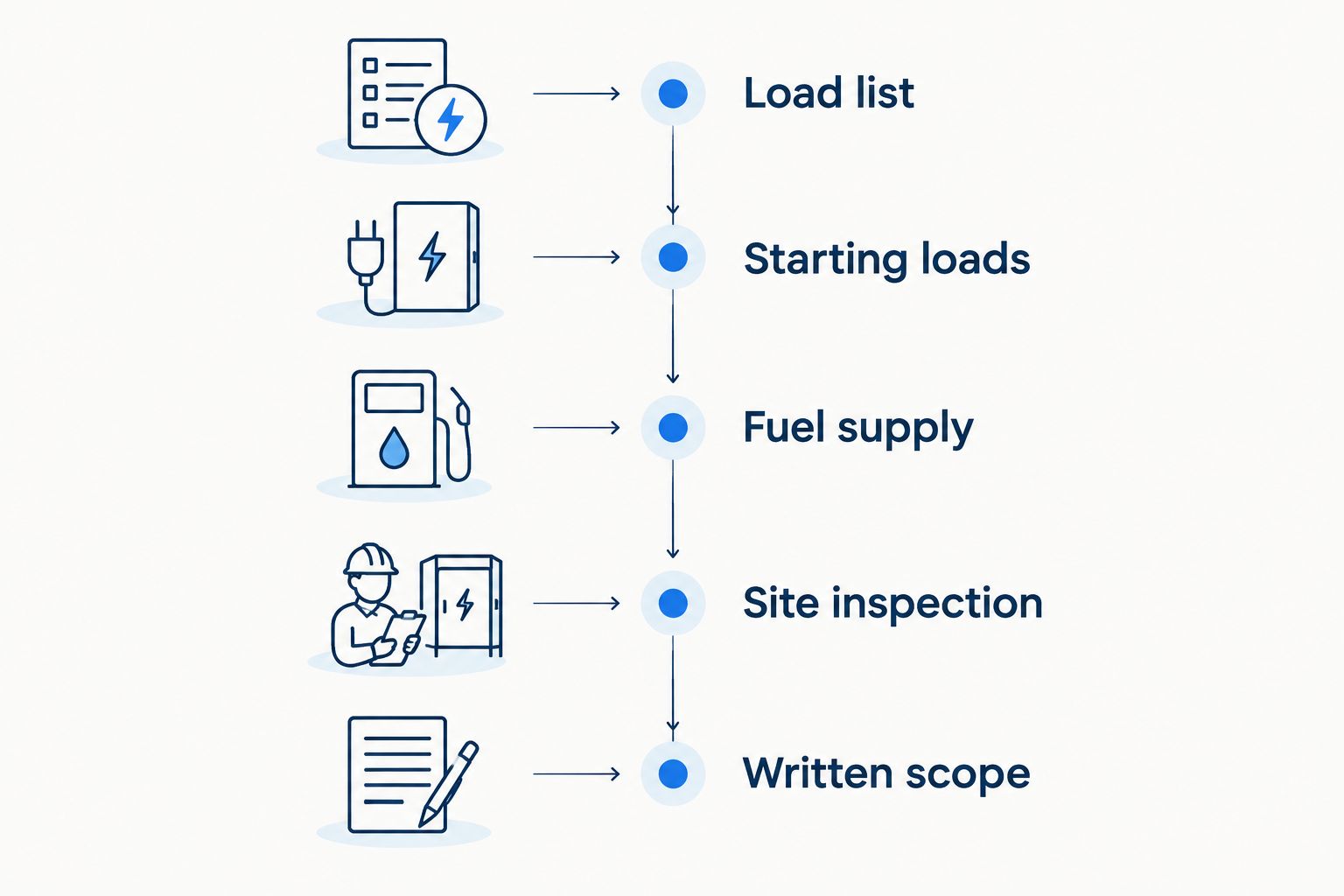
A useful generator assessment follows a sequence. Send information you can gather safely, then leave equipment inspection and electrical measurements to a licensed electrician. Do not remove panel covers or inspect exposed wiring yourself.
Load list
List the equipment you need during an outage. Include heating type, refrigeration, water pumps, sump pumps, medical equipment, and any required communications equipment. Mark optional appliances separately.
Starting loads
Identify motors and compressors on the required list. Your electrician needs equipment information and the manufacturer's starting requirements where available. Adding running watts alone is not enough.
Fuel supply
Identify the proposed fuel source. The installer must check the generator's fuel-specific output and whether the supply arrangement meets its requirements. That includes the demands of other equipment sharing the supply.
Site inspection
Have the electrician assess the service, panel, transfer arrangement, equipment location, and installation requirements. Cold-weather equipment requirements belong in this discussion. Do not assume every generator has the same provisions for winter operation.
Written scope
Require the proposed generator capacity, backed-up circuits, transfer equipment, load controls, and installation work in writing. Separate the quote-response timing from the construction schedule.
Eagle-Elc emphasizes same-business-day responses to quote requests and clear written quotes. That response commitment is not a promise of same-day installation. Eagle-Elc is a fit for Bakken homeowners who need licensed residential electrical contracting for a generator installation.
Request a generator assessment
Get a same-business-day response to your quote request and a clear written scope.
How these generator sizes are ranked
This 2026 guide ranks approaches by outage priorities, starting loads, operating effort, and the need for load management. It does not rank competing manufacturers or claim that one capacity fits every Williston home.
The automatic prioritized-load approach comes first because it defines the job before expanding coverage. Manual essentials serve a different need. Broader managed coverage and higher-capacity systems belong later because their value depends on additional required demand.
Which generator size should you choose?
Start with a prioritized-load assessment, not the largest generator in the comparison. Compare 14 kW for automatic essential-circuit backup, then move smaller or larger only when the electrical assessment supports that decision.
Choose the manual approach only if you can follow its operating restrictions. Choose broader standby coverage when you need it—not because a whole-home label sounds reassuring. The final answer is the capacity that handles your specified loads, their starts, and the agreed load-control plan.
FAQ
What's the best generator size for a Williston home?
The best size is the one that meets your assessed running loads and starting requirements. Compare 8, 14, 22, and 26 kW as planning options, then have a licensed electrician confirm the selection.
Is a 22 kW generator enough for my whole house?
A 22 kW rating alone cannot establish whole-house suitability. Your heating, pumps, appliances, simultaneous demand, and load-management plan determine whether it fits.
Can I size a generator by my home's square footage?
Square footage alone is not enough to size a generator. Homes with similar floor areas can have different heating systems, pumps, and appliance loads.
Do I need a bigger generator for electric heat?
Include electric heat in the load assessment before choosing a generator. Its demand must be checked alongside your other required equipment and any proposed load controls.
Can I connect a portable generator through a wall outlet?
No. Never backfeed household wiring through an outlet; a licensed electrician must specify an appropriate transfer arrangement that prevents connection to utility power.
Does a generator's fuel type affect its output?
Use the manufacturer's output rating for the fuel the generator will actually use. Do not assume that ratings for different fuels are interchangeable.
Does a fast quote response mean same-day installation?
No. Eagle-Elc emphasizes same-business-day responses to quote requests, not same-day job completion. The installation schedule must be established separately.
One last thing
A 200-amp service does not mean you need a generator that supplies 200 amps. Service capacity describes the electrical service; generator selection concerns the loads you will actually power during an outage.
Before signing your 2026 installation quote, ask one question: Which loads stop receiving power when demand exceeds the plan? A clear answer tells you more than the whole-home label does.