Your EV charger installation cost depends on the charging equipment, the new circuit, the wiring route, and your home’s available electrical capacity. For a 2026 project, get an on-site assessment and a written quote that separates those items. Panel work, trenching, permits, and wall repairs belong in the scope—not in a surprise bill after installation starts.
- EV charger installation cost depends on circuit capacity, wiring distance, equipment, and required electrical work.
- A 240-volt Level 2 charger needs a properly designed circuit, not just an open breaker space.
- Get a load calculation before approving a panel upgrade for home charging.
- Eagle-elc provides licensed residential electrical contracting for homeowners across the Bakken region.
Why this matters
A charger on the wall is only part of the job. The wiring behind it must support the charging load, and the house must have enough capacity to supply it safely.
Compare the complete electrical scope, not just the charger. A quote that leaves out the circuit route or panel assessment does not tell you what the finished installation includes. For local residential electrical work, Eagle-elc emphasizes same-business-day responses to quote requests and clear written quotes. A response is not a promise of same-day installation.
How much does it cost to install an EV charger at home?
There is no single installation amount that describes every house. Your useful number is the written quote for your charging location, equipment, and electrical system—not a national figure attached to an unspecified job.
For your 2026 quote, ask the electrician to break the project into these parts:
| Scope item | What the quote should identify | What to check |
|---|---|---|
| Charging equipment | Who supplies the unit and which installation instructions apply | Whether equipment is included or homeowner-supplied |
| Branch circuit | Breaker, conductors, grounding, and wiring method | Whether the circuit matches the selected charging output |
| Wiring route | Path from the panel to the parking location | Whether walls, exterior runs, or underground work are involved |
| Capacity assessment | Existing service and calculated household load | Whether additional capacity work is actually needed |
| Permits and inspection | Applicable approvals and responsibility for arranging them | Whether these are included in the scope |
| Finish work | Openings, trench restoration, and wall repairs | Who completes work outside the electrical installation |
A short route through an accessible garage is a different job from an underground run to a detached building. Neither should be quoted as though the charger itself defines the entire installation.
Get the scope settled before approving the work. If the route or equipment changes afterward, ask for a written change to the quote before the added work begins.
Which home charging setup fits your needs?
Start with how you drive and where you park. Then have the electrician match the equipment and circuit to the house. Buying the highest-output charger first reverses that order.
The U.S. Department of Energy’s Alternative Fuels Data Center describes residential Level 1 charging as using 120-volt AC power and residential Level 2 charging as using 240-volt AC power. Those voltage categories describe the supply; they do not establish your vehicle’s charging speed or your installation scope.
| Setup | Best for | Main advantage | Main limitation |
|---|---|---|---|
| Level 1 charging | Drivers whose charging needs fit a suitable existing 120-volt circuit | Can avoid installing a Level 2 circuit when the existing setup is suitable | Slower charging; the receptacle and circuit still need to be suitable |
| Plug-in Level 2 charging | Homeowners whose selected equipment supports a receptacle connection | Allows disconnection at a compatible receptacle | Adds a receptacle connection that must suit the charging load |
| Hardwired Level 2 charging | Homeowners choosing a fixed charging location | Avoids the plug-and-receptacle connection | Requires an electrician to disconnect or relocate the electrical connection |
Best for routine home charging: choose the setup that meets your driving needs within the home’s verified electrical capacity. Higher output is not automatically the better installation.
Level 1 charging: assess the existing circuit
A garage outlet does not prove that the circuit is ready for EV charging. The electrician needs to check the receptacle, wiring, circuit loading, and equipment instructions.
Do not use an extension cord or an improvised adapter to reach the vehicle. If the charging cord cannot reach safely, change the installation plan rather than stretching the connection.
Plug-in Level 2 charging: specify the connection
The receptacle must match the charging equipment and the circuit design. Ask the electrician to identify the receptacle, required protection, and mounting location in the scope.
The removable connection is useful when supported by the equipment. Its drawback is another electrical connection that must remain sound under sustained charging load. Stop using a connection that shows heat damage, discoloration, or a burning smell.
Hardwired Level 2 charging: plan the permanent location
Hardwiring removes the receptacle connection, but it does not remove the need for proper circuit sizing, protection, or permits. The installation still has to follow the equipment instructions and locally adopted electrical code.
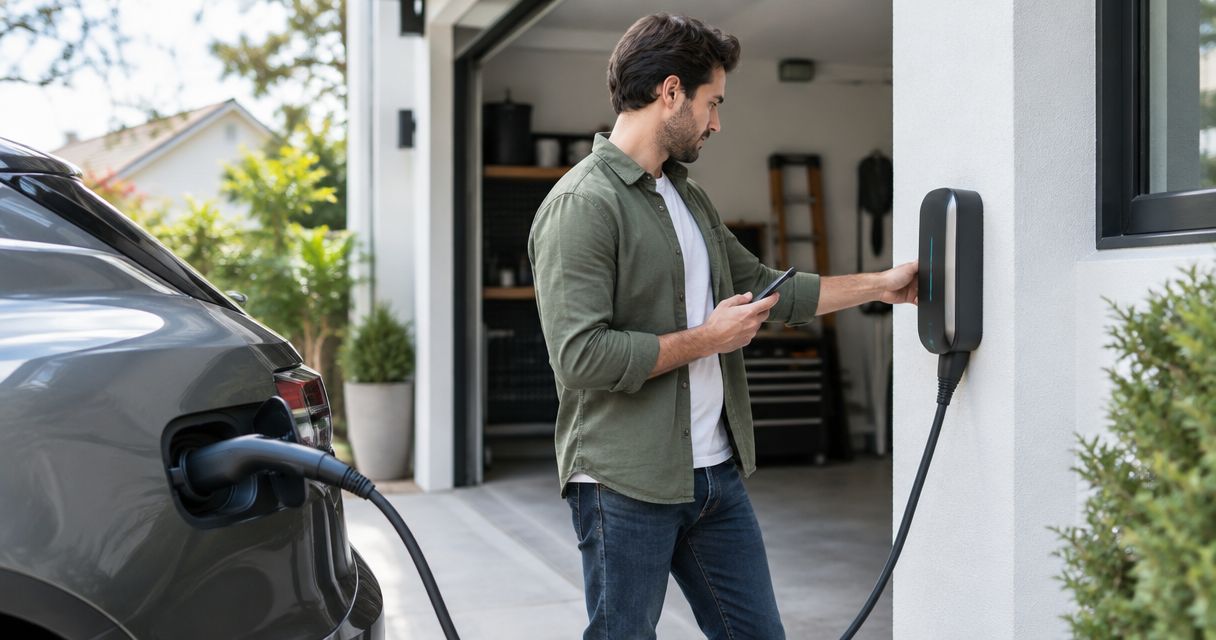
Pick the location with the vehicle parked normally. Check the charge-port position, cord reach, walking path, and garage-door movement before anyone mounts the unit.
Why EV charger installation cost varies
These are the job conditions to discuss during the site visit. Each changes the work required, not just the appearance of the finished installation.
- Available electrical capacity. The electrician must evaluate the existing service and household load. Empty breaker spaces are not proof that capacity is available.
- Distance and access. A longer circuit requires more wiring. Finished walls, concealed spaces, and difficult access also change the installation work.
- Charging output. The selected output affects circuit design. The charger, vehicle, wiring, and house supply must work together.
- Connection method. Hardwired and receptacle-connected equipment have different installation requirements. Follow the selected equipment’s listing and instructions.
- Parking location. A detached garage or outdoor parking spot can introduce underground routing, exposure, or mounting requirements.
- Required corrections and approvals. Existing electrical defects, permit requirements, and inspection findings affect what must be completed before the installation is accepted.
For a 2026 project in the Bakken region, identify outdoor exposure and the proposed wiring route during the assessment. Do not leave those decisions until the installation crew arrives.
Do you need a panel upgrade for an EV charger?
A panel upgrade is not established by the charger alone. The electrician needs to evaluate the service rating, panel condition, existing loads, and proposed charging load.
A 200-amp panel label describes a rating. It does not tell you how much capacity remains after the home’s other loads are considered. Likewise, a panel with spare breaker spaces is not automatically ready for a new charging circuit.
Ask for the reason behind any upgrade recommendation. The explanation should connect the proposed work to capacity, equipment condition, or code requirements—not simply to the fact that you bought an EV.
A lower charging setting or suitable listed load-management equipment can be part of the assessment. Those approaches have limits: charging output can be reduced, and added controls must be compatible with the electrical design. Your electrician must establish whether either approach fits the house and equipment.
What if the panel looks old but works?
Appearance alone cannot establish safety or capacity. Damaged equipment, overheating, corrosion, and unsuitable components need professional evaluation.
Do not remove the panel cover to investigate. Keep the cover in place and give the electrician any existing records or photographs taken safely from outside the closed equipment.
How do you get a useful installation quote?
Give the electrician enough information to define the work. Then confirm the conditions on site before treating the scope as final.
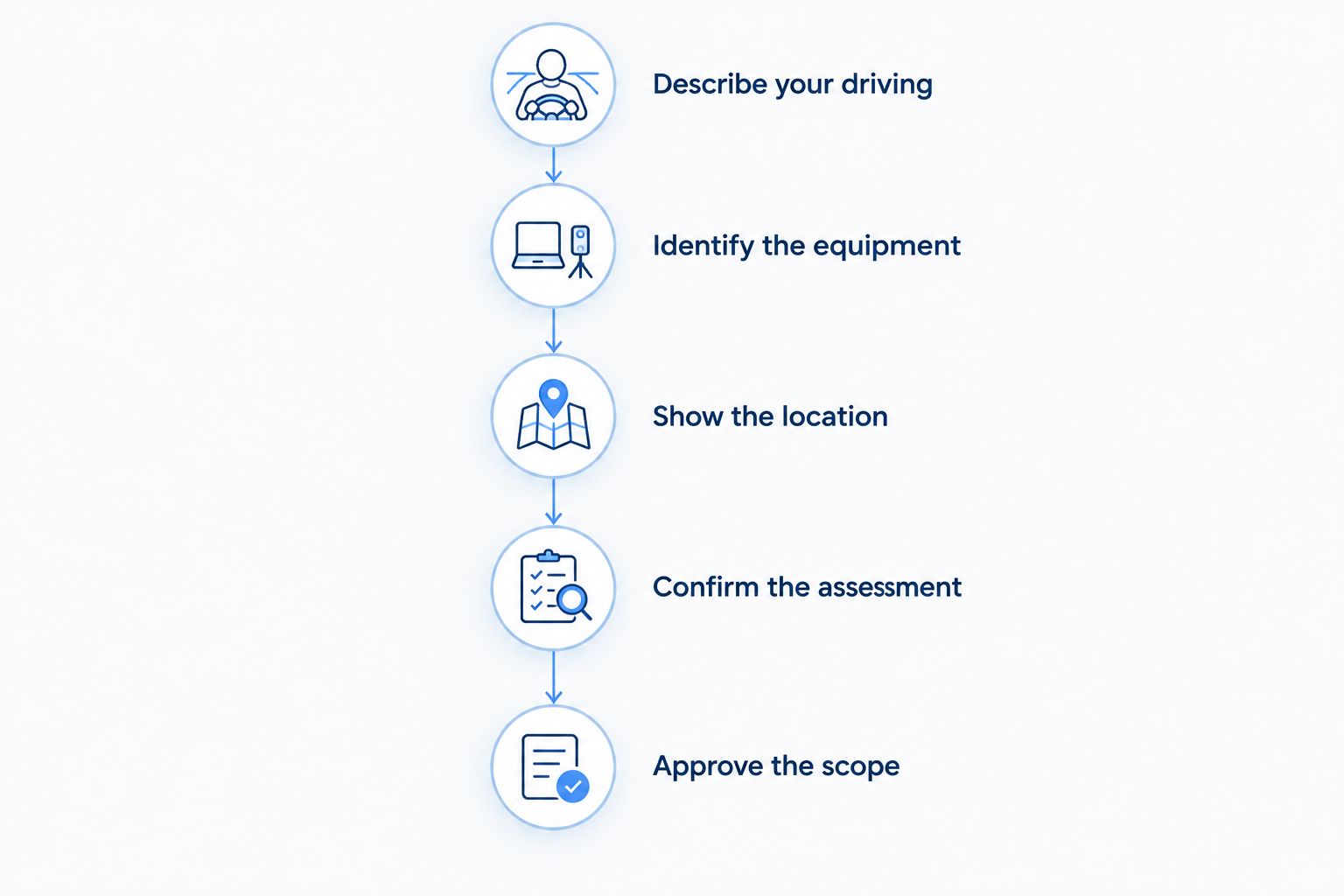
- Describe your driving. Explain your normal driving pattern and when the vehicle sits at home. This helps establish the charging requirement without assuming maximum output.
- Identify the equipment. Provide the vehicle details and charger documentation if you have selected a unit. If you have not, say so before buying equipment.
- Show the location. Identify the parking space, charge-port position, panel location, and preferred mounting spot. Mention detached buildings and finished walls.
- Confirm the assessment. Ask how capacity, circuit routing, protection, and applicable permits will be addressed. A photograph alone does not reveal concealed wiring conditions.
- Approve the scope. Get equipment responsibility, installation work, exclusions, inspection arrangements, and change procedures in writing.
For homeowners across the Bakken region, Eagle-elc is a fit for licensed residential electrical contracting. Request a clear written quote and a same-business-day response to the request. An on-site assessment is still needed to establish the work your home requires.
Request a written electrical quote
Define the charging location, circuit work, and exclusions before approving installation.
What should your written quote exclude or include?
Make exclusions as clear as inclusions. A finished electrical installation does not automatically include repainting a wall, restoring landscaping, or changing utility-owned equipment.
Ask who supplies the charger and who handles equipment problems. If you supply the unit, confirm its suitability before installation. Do not assume an electrician can install any device simply because it is sold for home charging.
For your 2026 paperwork, keep these responsibilities explicit:
- Who obtains required electrical permits and schedules inspections.
- Who handles any utility coordination identified during the assessment.
- Who opens and repairs finished surfaces.
- Who restores a trench or disturbed landscaping.
- Who verifies operation and explains the installed charging setting.
- What happens if concealed conditions require a scope change.
A written quote should tell you what completion means. That includes the electrical work and any required inspection steps, not merely a charger attached to the wall.
Can you install an EV charger yourself?
Have a licensed electrician assess and install a new home charging circuit. Incorrect circuit sizing, poor connections, and unsuitable equipment create electrical hazards that a working charger screen cannot rule out.
You can choose the parking location and gather equipment information. Do not open energized equipment, replace breakers, or attempt panel connections as part of quote preparation.
Does a faster charger always require more electrical work?
A higher charging output requires a circuit designed for that load, but the amount of installation work depends on the existing system. The electrician must check capacity and the proposed route rather than judge the job by the charger’s advertised output.
Choose an output that meets your charging needs. Do not approve extra capacity work without understanding why the selected setup requires it.
FAQ
What's included in EV charger installation cost?
EV charger installation cost covers the agreed equipment and electrical work, which should be itemized in a written quote. Check circuit installation, capacity assessment, permits, inspection, and any separate restoration work.
Do I need a 200-amp panel to charge an electric car at home?
A 200-amp panel is not a universal requirement for home EV charging. A licensed electrician must evaluate your service, existing loads, and proposed charger before recommending capacity changes.
Can I use the outlet already in my garage?
Use an existing garage outlet for EV charging only after its suitability and the equipment requirements are confirmed. The receptacle, circuit condition, and other connected loads all matter.
Is a hardwired EV charger better than a plug-in charger?
Hardwiring removes the plug-and-receptacle connection, while a compatible plug-in setup allows disconnection at the receptacle. The right choice depends on the equipment instructions, location, and electrical design.
Do I need a permit to install a home EV charger in 2026?
Your local permitting authority determines the applicable requirements for a 2026 EV charger installation. Have the electrician confirm permits and inspections before work starts.
Can an EV charger be installed outside?
An EV charger can be installed outside when the equipment is listed for that environment and installed accordingly. The electrician must address mounting, weather exposure, wiring protection, and safe cord placement.
Will a quote response mean my charger gets installed that day?
A quote response does not mean same-day installation. The installation schedule depends on the assessment, agreed scope, equipment, and required approvals.
One last thing
Mark the proposed charger location before you approve drilling. Park the vehicle normally and check where the charging cord will run. A location that looks tidy on an empty garage wall can leave the cord across a doorway or walking path.
Keep your 2026 quote, equipment instructions, inspection records, and documented charging setting together. Those records give the next electrician a clear starting point if you change vehicles or charging equipment.