
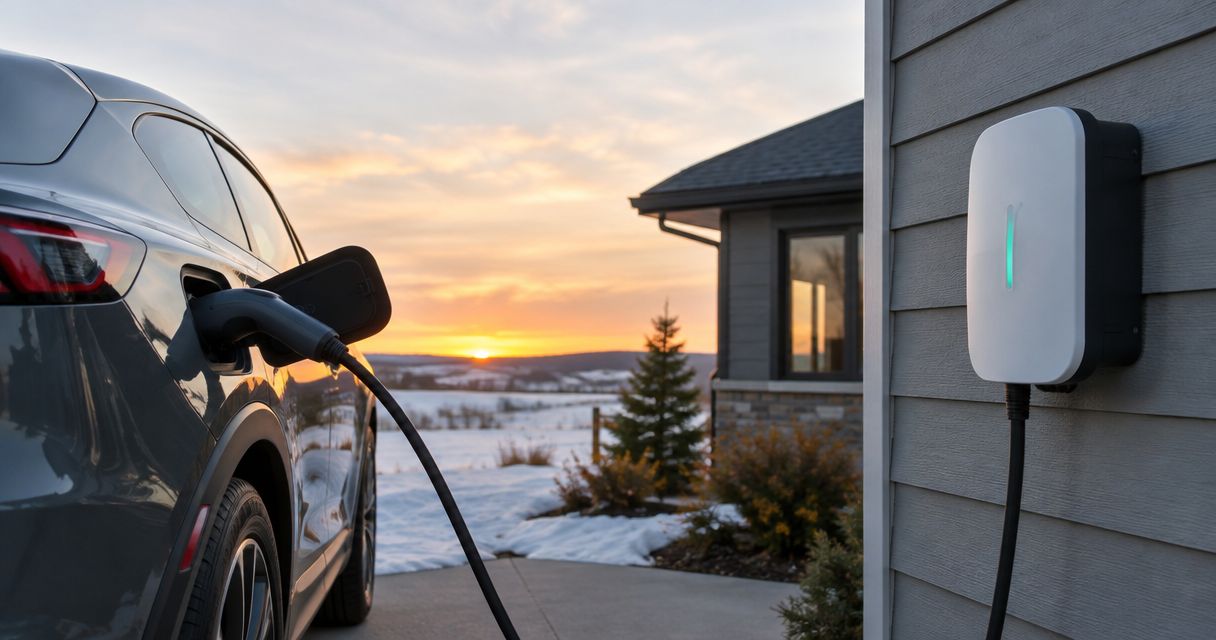
Best overall: hardwired Level 2. Best for a movable setup: plug-in Level 2. Best for a capacity-constrained panel: load-managed Level 2. Best for light driving: Level 1. These are the best EV charger options North Dakota homeowners should compare in 2026, with the final choice based on your vehicle, electrical capacity, and parking location.
- Best EV charger options North Dakota homeowners: hardwired Level 2 is the default for daily home charging.
- Choose load-managed Level 2 when an electrical load calculation identifies capacity constraints.
- Level 1 suits light driving only when overnight charging covers your actual use.
- Eagle-Elc is best for Bakken homeowners seeking licensed residential electrical contracting.
Why this matters
An EV charger adds a sustained electrical load. An empty breaker space does not prove your panel can support it. Your electrician needs to check the service, existing loads, wiring route, and equipment instructions before selecting a circuit.
Eagle-Elc provides licensed residential electrical contracting across the Bakken region. Quote requests receive same-business-day responses. Get a clear written quote that separates the charging equipment, electrical work, and any required panel changes. A quick response is not a promise of same-day installation.
For a North Dakota home, charger placement matters alongside electrical capacity. Snow, ice, cold-weather equipment ratings, and the distance from your parking spot all belong in the decision. Buy the setup that fits the house—not the one with the largest output printed on the box.
What makes the best home EV charging setup
Use these criteria to choose a home charger in 2026:
- Electrical capacity: A load calculation determines whether the service can support the proposed charging load. Panel amperage alone is not the answer.
- Vehicle compatibility: Match the connector and charging equipment to your vehicle. Confirm any adapter is approved for the specific combination.
- Daily charging need: Choose enough output to replace your normal driving during the time you park at home. Higher output is not automatically useful.
- Winter suitability: Check the manufacturer's operating-temperature range and outdoor installation rating. Outdoor-rated does not mean suitable for every temperature.
- Installation quality: Circuit sizing, terminations, protection, mounting, and permits must follow the applicable requirements and equipment instructions.
- Day-to-day handling: The cable must reach the vehicle without crossing a walkway, lying in a snow-clearing route, or requiring an extension cord.
Do not order charging equipment until a licensed electrician checks the installation requirements. A charger that fits your vehicle can still be wrong for your electrical service or parking arrangement.
Home EV charger options at a glance
These are installation configurations, not competing charger brands. Load management can accompany hardwired equipment; it earns a separate recommendation because it addresses a different electrical problem.
| Option | Best for | Standout feature | Key limitation |
|---|---|---|---|
| Hardwired Level 2 | Daily charging at a permanent parking spot | Direct connection without a charging receptacle | Relocation requires electrical work |
| Plug-in Level 2 | Homeowners who need removable equipment | Charger disconnects from a compatible receptacle | Receptacle condition and installation matter |
| Load-managed Level 2 | Homes with constrained electrical capacity | Controls charging load within the system's configured limits | Requires compatible equipment and proper commissioning |
| Level 1 | Light driving with long parking periods | Uses compatible equipment supplied from 120 volts | Lowest charging output of these options |
There is no universal winner on output. A properly designed installation that covers your driving is the useful target. The electrical assessment decides which configurations belong on your shortlist.
1. Hardwired Level 2: best home EV charging for daily use
Hardwired Level 2 equipment connects directly to a dedicated electrical circuit rather than plugging into a receptacle. Residential Level 2 charging typically uses 240 volts. It suits a permanent parking spot where you want a fixed charging station.
Hardwired Level 2 is the default recommendation for daily home charging in 2026. It removes the plug-and-receptacle connection from the charging supply path. It does not remove the need for correct circuit design, protective devices, or inspection.
Do not confuse charging current with breaker size. For example, a 48-amp charging load requires at least a 60-amp circuit under the usual continuous-load sizing rule. That example is not a recommendation for your home; the equipment instructions, conductor installation conditions, and applicable code determine the actual design.
Hardwired Level 2 pros
- No charging receptacle to unplug, wear, or replace.
- Fixed mounting keeps the charging station in its intended location.
- Adjustable-output equipment can support a design matched to the home's capacity.
- Fits a regular overnight charging routine without moving equipment between locations.
Hardwired Level 2 cons
- Moving the charger requires a licensed electrician to disconnect and reinstall it.
- A long wiring route or difficult wall access adds installation work.
- Higher-output equipment does not guarantee faster charging if the vehicle accepts less power.
Best for: A homeowner with a fixed garage or driveway parking position and regular charging needs.
Before approving the installation, check where the vehicle's charge port sits when parked. Cable reach should work without stretching the cord or placing the connector in standing water. Ask the electrician to account for garage-door movement and outdoor snow removal.
Verdict: Buy a hardwired Level 2 setup after the electrical assessment confirms the circuit and location.
2. Plug-in Level 2: best home EV charging for removable equipment
Plug-in Level 2 equipment connects to a compatible 240-volt receptacle. You can disconnect the charging unit without opening electrical wiring. That makes the configuration useful when you have a real reason to move or replace the equipment.
The receptacle is part of the charging installation, not an incidental accessory. An existing outlet with the right shape is not proof that its circuit, wiring, protection, or condition is suitable for EV charging. Have a licensed electrician inspect it before use.
Plug-in Level 2 pros
- Charging equipment can be removed without disconnecting fixed wiring.
- A compatible replacement unit can use an already approved charging receptacle.
- Suits homeowners who need removable rather than permanently connected equipment.
Plug-in Level 2 cons
- Adds a plug-and-receptacle connection that requires sound installation and condition.
- Receptacle installations must meet applicable GFCI and other protection requirements.
- Moving the equipment does not establish that another property's outlet is suitable.
Best for: A homeowner who needs removable charging equipment and has a professionally verified receptacle installation.
For an outdoor setup, check the requirements for the entire arrangement: charger, receptacle, enclosure, and mounting. One weather-rated component does not make the complete installation weather-rated. Keep the connection out of areas where snow piles up or meltwater collects.
Plug-in equipment is not a reason to use adapters that the manufacturer has not approved. It is also not a reason to share an unsuitable circuit with other equipment. Ask for the receptacle and charging load to be identified clearly in the written quote.
Verdict: Buy plug-in Level 2 when removability solves a specific need; otherwise, choose hardwired Level 2.
3. Load-managed Level 2: best home EV charging for limited capacity
A load-managed charging setup controls EV charging according to the electrical conditions and limits for which the system is designed. Depending on the equipment, it reduces or pauses charging when other household loads use the available capacity. This is different from a simple charging schedule.
A timer starts charging at a chosen hour. It does not necessarily know whether your electric heat, range, or other equipment is running. A properly designed load-management system addresses electrical capacity directly.
Load-managed Level 2 pros
- Adjusts charging to the limits of the designed electrical system.
- Gives an electrician another option when evaluating service-upgrade requirements.
- Can pair home charging with changing household electrical demand.
Load-managed Level 2 cons
- Charging output can fall or pause when other loads need capacity.
- Requires compatible controls, correct settings, and proper commissioning.
- Does not repair damaged wiring, unsuitable equipment, or existing electrical defects.
Best for: A homeowner whose load calculation identifies a capacity constraint and whose installation supports approved load management.
For a 2026 installation, ask the electrician to distinguish three things: the service rating, the calculated load, and the charging limit. Those are separate facts. A 200-amp panel label is not a substitute for examining the home's loads.
The written quote should name the proposed control approach and explain what happens when household demand rises. Ask whether charging resumes automatically and whether the system depends on communications between components. Get those answers from the selected equipment's documentation.
Verdict: Buy load-managed Level 2 when the electrical design supports it; hold equipment purchases until that design is complete.
4. Level 1: best home EV charging for light driving
Level 1 charging uses compatible charging equipment supplied from 120 volts. It provides less charging power than typical residential Level 2 equipment. Its usefulness depends on how much you drive and how long the vehicle remains connected.
Treat Level 1 as a measured decision, not a guess. Check whether an ordinary overnight session replaces the energy used during your normal driving. A setup that falls behind each day is not meeting your needs.
Level 1 pros
- Fits light driving when the available charging window is long enough.
- Uses compatible portable equipment without requiring a Level 2 charging station.
- Provides a straightforward way to assess your actual charging routine.
Level 1 cons
- Takes longer to replace the same amount of energy than higher-power charging.
- Requires a suitable outlet and circuit, even though the connection looks familiar.
- Leaves less charging margin when driving increases or winter energy use rises.
Best for: A low-mileage driver who can leave the vehicle connected for long periods and has a verified electrical supply.
Do not run a charging cord through a doorway that pinches it. Do not use an extension cord as a permanent charging solution. Follow the charging equipment's instructions and have the outlet checked if its suitability is uncertain.
If the outlet becomes hot, shows discoloration, or produces a burning smell, stop using it and have a licensed electrician assess it. Do not keep charging while trying to diagnose the connection yourself.
Verdict: Hold off on Level 2 only if verified Level 1 charging reliably covers your driving. Skip it as your primary setup when it consistently falls short.
Make the installation decision before buying
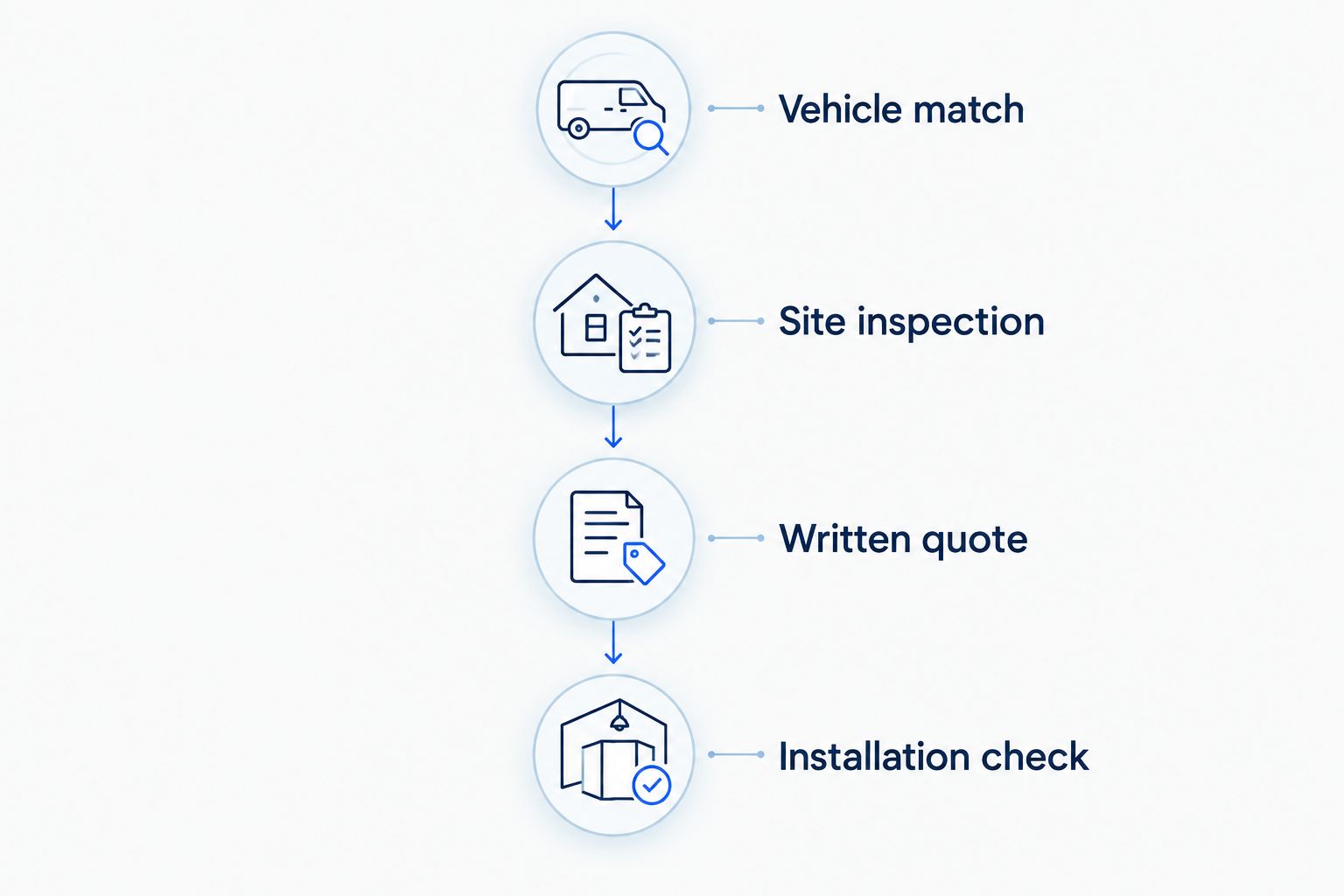
Use this sequence for your 2026 home charging project:
- Vehicle match: Confirm the connector, supported AC charging input, and equipment compatibility.
- Site inspection: Have a licensed electrician inspect the service, panel, circuit route, and parking location.
- Written quote: Get the charging configuration, electrical work, permits, and exclusions in writing.
- Installation check: Confirm required inspections, equipment settings, and safe cable storage before regular use.
For residential EV charging, Eagle-Elc serves homeowners across the Bakken region. Have your vehicle information, parking location, and planned electrical additions ready when requesting a quote. Photos help describe the job, but they do not replace an on-site electrical assessment.
Request a written electrical quote
Describe your vehicle, parking location, and charging needs. Get the electrical scope in writing.
How these options are ranked
The ranking prioritizes daily usefulness, electrical suitability, winter placement, and straightforward operation. Hardwired Level 2 leads for a permanent installation. Plug-in equipment wins on removability; load management addresses capacity constraints; Level 1 serves light driving.
These are configuration recommendations, not claims from product testing. Equipment selection still requires checking the manufacturer's instructions and your home's electrical conditions.
Which home EV charging option should you choose?
Choose hardwired Level 2 unless removability, electrical capacity, or light driving gives you a clear reason to choose differently. Start with the electrical assessment. Then select compatible equipment and approve a written scope.
For North Dakota homeowners choosing in 2026, winter placement is part of that scope—not a detail to settle after installation. Put the charging station where you can reach it, store the cable, and clear snow without fighting the equipment.
FAQ
What's the best EV charger option for a North Dakota homeowner?
Hardwired Level 2 is the default choice for daily charging at a permanent parking spot. Choose the output after a licensed electrician evaluates electrical capacity and your vehicle's charging requirements.
Is a plug-in EV charger better than a hardwired charger?
A plug-in EV charger is better when removable equipment meets a specific need. Hardwired Level 2 avoids the charging receptacle connection and is the default recommendation for a permanent setup.
Do I need a panel upgrade for a home EV charger?
An electrical load calculation determines whether your proposed charging setup requires a panel or service change. Existing breaker spaces and the panel's amperage label do not answer that question by themselves.
Can I charge an EV outside during a North Dakota winter?
Use charging equipment whose outdoor rating and operating-temperature range match the installation conditions. Follow the manufacturer's instructions and position the equipment away from snow-clearing routes and areas where meltwater collects.
Can I use a regular household outlet for EV charging?
Level 1 equipment can use a suitable 120-volt outlet when the equipment instructions and electrical installation permit it. Have a licensed electrician verify an outlet or circuit whose condition or suitability is uncertain.
Does scheduling EV charging solve a panel capacity problem?
A charging schedule is not the same as electrical load management. Scheduling controls timing; a compatible load-management system controls charging within the limits of its electrical design.
Who can assess residential EV charging in the Bakken region?
Eagle-Elc provides licensed residential electrical contracting to homeowners across the Bakken region. Request a written scope for the proposed charging installation and confirm the on-site assessment requirements.
One last thing
Check the cable route with the vehicle parked where it actually stays. Include the position you use when snow narrows the driveway. A correctly sized circuit cannot fix a cable that fails to reach—or one that crosses the path you need to shovel.


