

Hazardous location lighting on oilfield sites requires a site-specific installed quote, not a generic price per fixture. The total must account for the required equipment rating, wiring, mounting, safe access, and testing—not just the light itself. For a 2026 budget, have a licensed electrician inspect the installation and separate those items in a written scope.
- Hazardous location lighting cost: oilfield budgets need an installed scope, not a fixture-only estimate.
- Class I, Division 1 and Division 2 equipment are not interchangeable by assumption.
- Compare written quotes against the same classification, installation scope, access requirements, and testing.
- Eagle Electric provides oilfield electrical contracting for Bakken operators needing a site-specific lighting quote.
Why this matters
A light that handles rain is not automatically suitable for a classified location. A fixture with the right hazardous-location marking still needs compatible wiring methods, fittings, mounting, and installation.
Set the classification before selecting the light. Start with the site's approved area-classification documentation and the installation requirements covered in this guide to electrical code compliance for oilfield sites. An outdoor location alone does not establish its hazardous classification.
How much does hazardous location lighting cost on oilfield sites?
The installed cost comes from a defined job scope. A fixture-only quote leaves you unable to judge the work needed between the power source and the finished lighting installation.
Use this breakdown when requesting a 2026 quote. Each line should identify what is included, what is excluded, and what requires field verification.
| Quote component | What the written scope should identify | What to check |
|---|---|---|
| Lighting equipment | Fixture designation, listing, classification, temperature marking, and mounting accessories | An outdoor rating does not establish hazardous-location suitability |
| Circuit work | Supply characteristics, circuit condition, conductor requirements, and connection points | Existing wiring needs evaluation before reuse |
| Raceway and fittings | Applicable wiring method, entries, seals where required, and supporting hardware | Required installation components belong in the scope |
| Mounting and access | Mounting locations, support condition, elevation, and access equipment | Reaching the fixture is part of installing it |
| Site coordination | Isolation, work permits, operating restrictions, and shutdown responsibilities | A quote should distinguish electrical work from operator responsibilities |
| Testing and closeout | Required checks, identification, documentation, and inspection coordination | Installing the fixture is not the entire closeout scope |
Do not compare totals until those rows describe the same work. One contractor's scope might include new branch-circuit wiring while another assumes the existing circuit is suitable. Those are different jobs, even if both proposals list the same number of lights.
Ask the contractor to identify assumptions separately. An assumption about usable wiring should not read like a confirmed inspection finding.
Fixture replacement: verify what stays
Best for: replacing an existing light where the documented classification and installation remain suitable. A fixture replacement keeps the scope focused when the existing circuit, supports, entries, and associated equipment pass evaluation.
The limitation is straightforward: a new fixture does not correct a damaged raceway, unsuitable connection, or deteriorated support. The electrician must inspect the parts intended for reuse rather than treating them as acceptable because they already exist.
Your written quote should identify the replacement fixture and the retained installation. It should also explain how additional defects discovered during the work will be documented and authorized.
Do not order from the old fixture's appearance alone. Supply characteristics, mounting arrangement, environmental exposure, and required markings all need confirmation.
New lighting installation: define the whole circuit
Best for: a new work area or a location without suitable existing lighting infrastructure. A new installation lets the lighting layout, supports, circuit routing, and controls be designed together.
The trade-off is a broader scope. The work can extend beyond the fixture location to the supply point, distribution equipment, trenching or overhead routing, and site coordination.
Ask where the electrical contractor's responsibility starts and stops. If another party provides supports, excavation, or equipment access, put that responsibility in writing before work is scheduled.
For a 2026 project, separate current operating needs from planned expansion. Future lighting locations should be documented as a distinct requirement, not left as an undefined expectation inside the quote.
Lighting redesign: check coverage before buying replacements
Best for: work areas with glare, shadows, changed equipment layouts, or lighting that no longer serves the task. A redesign addresses where the light lands instead of simply replacing fixtures in their existing positions.
The limitation is that a redesign requires more information. Mounting positions, obstructions, walking routes, work surfaces, and maintenance access all affect the layout.
Ask for the intended lighting criteria and the basis for the proposed arrangement. A fixture's wattage alone does not tell you whether workers can see a valve, stair tread, or equipment label clearly.
Avoid adding fixtures before checking the layout. More light sources do not automatically fix glare or shadows behind equipment.
Which installation scope fits your site?
| Approach | Best for | Main advantage | Main limitation |
|---|---|---|---|
| Fixture replacement | An existing installation that remains suitable after inspection | Keeps the work focused on verified replacement needs | Does not resolve defects outside the replacement scope |
| New installation | A new work area or unsuitable existing infrastructure | Defines the circuit and lighting installation together | Requires a broader installation scope |
| Lighting redesign | Poor visibility or a changed work area | Addresses coverage, glare, and task visibility | Requires layout information before equipment selection |
Choose the scope that solves the site problem, not the shortest equipment list. Have the electrician explain why the proposed approach fits the inspected conditions.
Why hazardous location lighting scope varies
The same fixture count does not establish the same installation requirements. These factors determine what the contractor must include:
- Area classification. Class I addresses flammable gases or vapors. Division 1 and Division 2 describe different hazardous conditions; equipment selection must match the documented location and applicable requirements.
- Equipment markings. The applicable gas group, temperature marking, supply requirements, and environmental suitability affect selection. A general description such as HazLoc does not replace the actual markings.
- Existing installation condition. Damaged entries, corrosion, unsuitable wiring, and deteriorated supports change what can remain in service. Inspection establishes the replacement boundary.
- Mounting and access. Elevated locations, obstructions, support requirements, and access restrictions affect the installation plan. Identify access responsibilities before comparing proposals.
- Operating restrictions. Isolation procedures, site work permits, and shutdown coordination affect how the work is performed. Electrical scheduling must follow the operator's safety requirements.
- Lighting and closeout requirements. Task visibility, controls, emergency functions where required, testing, and documentation belong in the scope. Do not assume they are included without written confirmation.
A licensed electrician should evaluate the installation against the classification documents. If those documents are missing or no longer match the process equipment, resolve that issue with qualified personnel before selecting fixtures.
How do I get a quote I can compare?
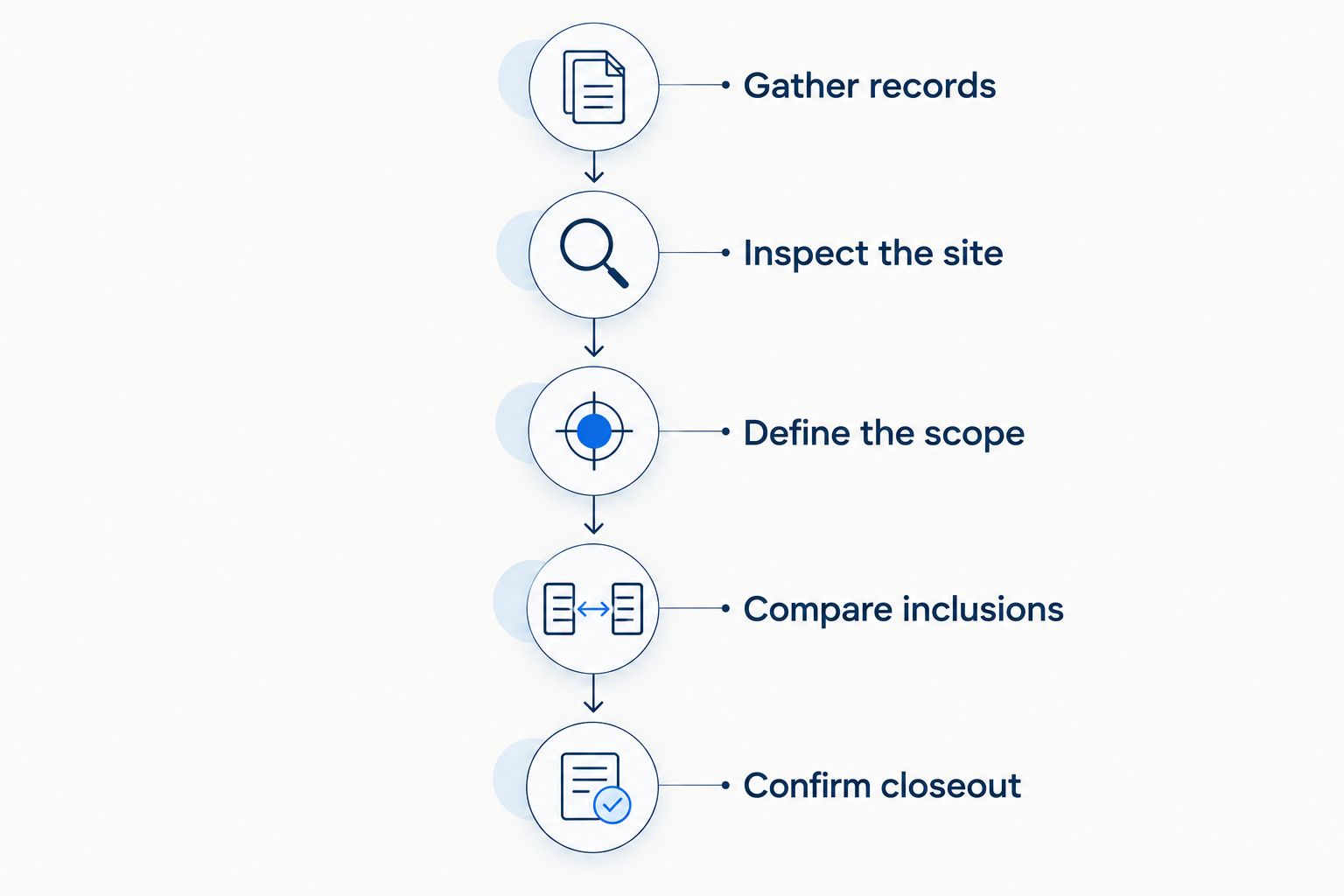
Build the request around the work area, not a shopping list. Use the following sequence for your 2026 lighting project.
- Gather records. Provide the current classification drawings, existing lighting information, and relevant site requirements. Identify documents that need confirmation.
- Inspect the site. Arrange safe access for a licensed electrician to evaluate the installation. Do not remove covers or enter restricted areas to collect quote information yourself.
- Define the scope. Identify which fixtures, circuits, supports, and controls will change. State what remains and what requires further verification.
- Compare inclusions. Review equipment, installation components, access, isolation responsibilities, testing, and exclusions side by side.
- Confirm closeout. Agree on required documentation, inspection coordination, and how changes will be approved before work begins.
This sequence keeps equipment selection tied to actual site conditions. It also gives you a clear record when a proposal includes an assumption rather than a confirmed condition.
What should I send with a quote request?
Send the site location, a plain description of the lighting problem, and the available classification records. Include safely obtained photos showing fixture locations and access conditions. Photos help explain the request; they do not replace an inspection.
Add the site contact, work restrictions, and whether the request concerns a replacement, new installation, or redesign. If production scheduling affects access, state that before the contractor prepares the scope.
Eagle Electric is a fit for Bakken oilfield operators who need licensed electrical contracting. For Eagle Electric oilfield electrical services, expect a same-business-day response to a quote request and ask for a clear written quote. That response is not a promise of same-day inspection or job completion.
A written scope still depends on verified conditions. Send the records first, then arrange the on-site inspection needed to establish the installation requirements.
Can I reuse the existing wiring?
Existing wiring can remain only when a qualified evaluation confirms it is suitable for the proposed installation. The electrician needs to check its condition, circuit requirements, wiring method, entries, and relationship to the classified area.
Do not treat an operating light as proof that its entire installation is acceptable. Function and suitability are separate checks.
Ask the quote to state whether wiring reuse is confirmed or assumed. If inspection requires an outage, identify that dependency before approving the work.
Is LED lighting enough to meet hazardous-location requirements?
LED describes the light source, not the fixture's hazardous-location suitability. The complete equipment must carry the appropriate markings and be installed according to its listing and applicable requirements.
Read the actual fixture documentation. Neither an LED label nor an outdoor enclosure rating establishes suitability for a particular classified location.
When comparing replacements, check the required markings before comparing output or mounting convenience. A lighting upgrade must satisfy both the electrical installation requirements and the task it serves.
Should I buy the fixtures before requesting installation?
Wait until the equipment requirements are confirmed. Buying first can leave you with fixtures that do not match the classification, supply, mounting arrangement, or installation conditions.
If you already own the fixtures, provide their complete identification and documentation with the request. Ask the electrician to evaluate suitability before including them in the installation scope.
Owner-supplied equipment also needs a clear responsibility boundary. The quote should state who confirms the selection, provides missing accessories, and handles equipment issues.
FAQ
How do I budget for hazardous location lighting on an oilfield site in 2026?
Budget from a site-specific written installation scope, not a fixture-only estimate. Include equipment, circuit work, required fittings, mounting, access, testing, and site coordination.
Is Class I, Division 2 lighting suitable for every oilfield location?
No. Equipment must match the documented area classification and applicable installation requirements; an oilfield site is not automatically one classification throughout.
Does a weatherproof light count as hazardous-location lighting?
No. Weather protection does not establish hazardous-location suitability. Check the equipment's actual markings and listing against the classified location.
Can I replace a hazardous-location fixture myself?
Have a licensed electrician evaluate and perform hazardous-location electrical work. Site isolation, work permits, equipment selection, and installation details require qualified handling.
Does a quote need to include access equipment?
The quote should identify who supplies the access equipment needed for installation. Do not assume elevated access is included when the written scope does not address it.
Will new LED fixtures fix poor visibility around equipment?
Not by themselves. Fixture placement, obstructions, glare, and the work task determine whether a lighting layout provides useful visibility.
How quickly will Eagle Electric respond to an oilfield lighting quote request?
Eagle Electric emphasizes same-business-day responses to quote requests. A response does not establish an inspection date or promise same-day job completion.
One last thing
The fixture is only the visible end of the installation. A suitable light does not make an unsuitable entry, connection, or wiring method acceptable.
Before approving a 2026 quote, ask this: What existing equipment are you relying on, and how will you verify it? A clear answer tells you far more than a fixture count.


