
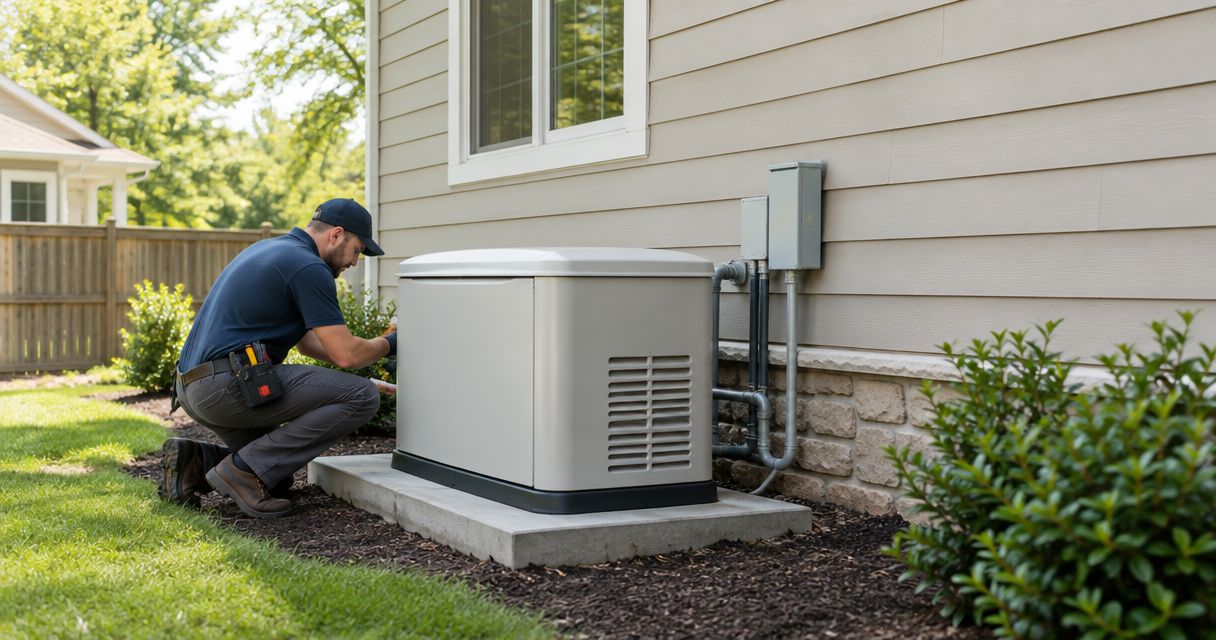
Whole home generator installation time depends on the site inspection, electrical work, fuel connection, required approvals, and final testing—not just setting the generator outside. Get a written schedule that separates hands-on installation from the full project timeline, including the planned interruption to household power.
- Whole home generator installation time depends on site conditions, transfer switch work, fuel preparation, approvals, and testing.
- A generator set in place is not ready for backup power until connections and commissioning are complete.
- Ask for separate milestones for installation, the planned power interruption, and final handoff.
- Eagle-Elc provides licensed residential electrical contracting for homeowners across the Bakken region.
Why this matters
A generator sitting on its pad does not mean your house has working backup power. Electrical connections, fuel work, transfer controls, and testing still have to come together. Your schedule needs to show when the system becomes usable, not just when equipment reaches the property.
For a 2026 project, ask Eagle-Elc for a same-business-day response to your quote request and a clear written quote. A response is not a promise of same-day installation. Keep those commitments separate.
Do not plan around a completion date until a licensed electrician has inspected the site and identified the work. A phone conversation can start the process. It cannot establish the condition of your service equipment, the cable route, or the suitability of a generator location.
How long does a whole-home generator installation take?
There is no reliable fixed duration for an uninspected home. The useful answer is a site-specific schedule covering the work below, with dependencies identified before installation starts.
- Site inspection. The contractor checks the electrical service, proposed generator location, access, and the loads you want backed up. Fuel requirements also need review by the appropriate qualified trade.
- Scope approval. You approve the generator arrangement, transfer equipment, electrical work, and any related site or fuel work. The written scope should identify who handles each part.
- Site preparation. The crew prepares the equipment location and required routes. Excavation, a supporting base, or changes to the proposed location belong in the schedule when needed.
- Connections. Qualified trades complete the electrical and fuel connections. The electrician coordinates the planned power interruption and any required utility involvement.
- Testing and handoff. The system undergoes the required checks, transfer testing, and operating review. Required approvals must be resolved before the installation is treated as complete.
These are project stages, not equal blocks of time. Some work can overlap; other work depends on an earlier task. Ask the contractor to identify those dependencies rather than assigning an unsupported duration to every step.
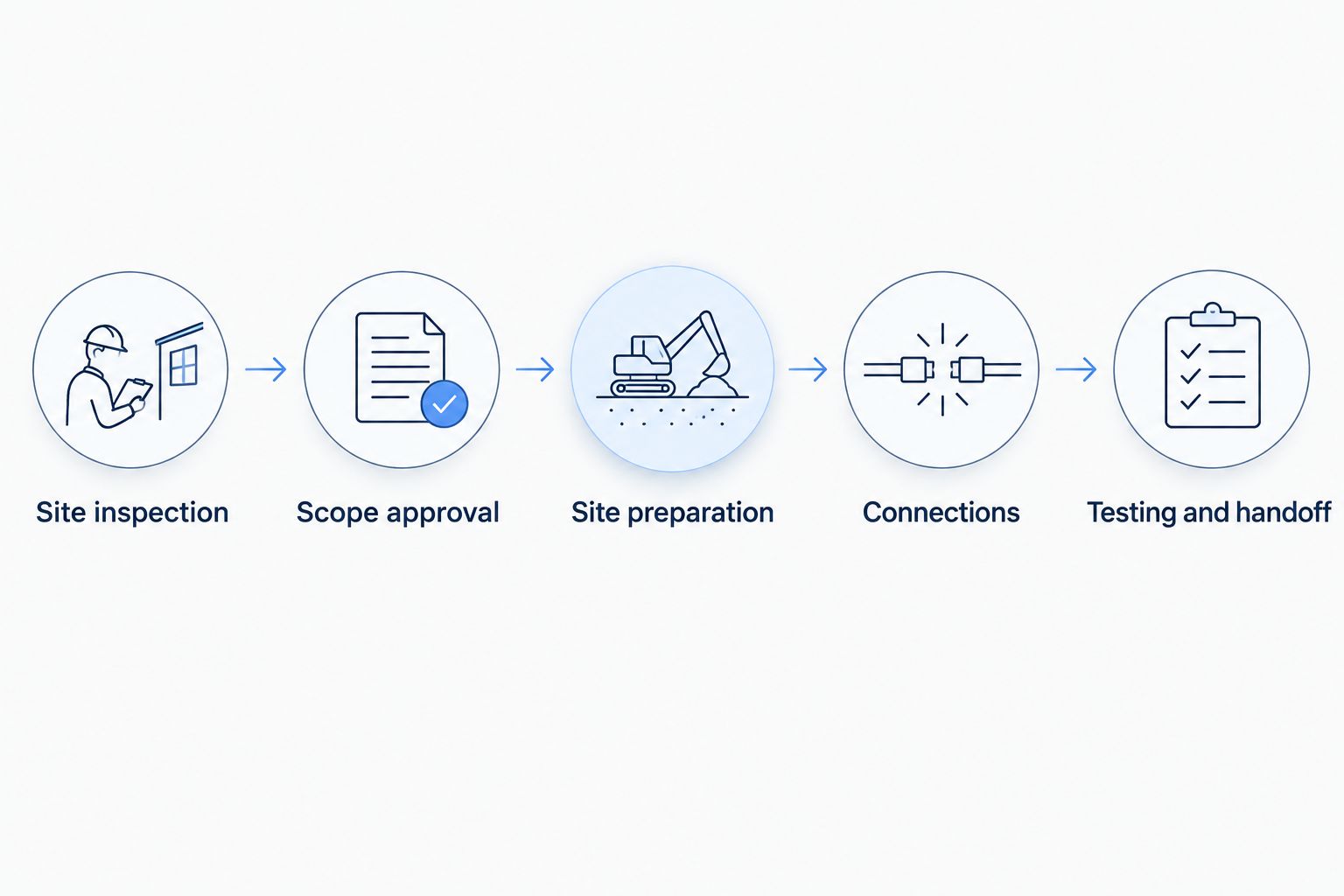
A useful 2026 installation schedule identifies who owns each stage and what must happen before the next stage starts. If a date depends on an inspection or utility appointment, the written schedule should say so. That makes a conditional date clear before you arrange time away from work.
Whole-home coverage versus selected-load backup
“Whole-home” needs a precise definition in your quote. Backing up every circuit does not automatically mean every appliance can run together. Generator capacity, motor starting loads, and load management determine what the system can support.
| Backup approach | Best for | Practical benefit | Limitation to resolve |
|---|---|---|---|
| Whole-home coverage with load management where needed | Homeowners seeking broad coverage across household circuits | Keeps the backup plan focused on the home's overall needs | Requires clear decisions about which loads can operate together |
| Selected-load backup | Homeowners prioritizing specific circuits or equipment | Makes the backup scope explicit | Circuits outside the approved scope do not receive generator power |
Neither approach earns a shorter installation promise without an inspection. Selected-load backup still needs safe transfer equipment, electrical connections, and testing. Whole-home coverage still needs a load assessment rather than a guess based on house size.
Before you approve the scope, list what must keep running: heating equipment, refrigeration, a well pump, or other essential equipment in your home. Then identify what can remain off during an outage. Have the electrician document the actual backup coverage.
For more background on the switching equipment, read the guide to transfer switches for home generator installations. Choosing equipment and installing it are separate tasks. Connection work belongs with a licensed electrician.
Why whole home generator installation time varies
The schedule changes when the physical work or required coordination changes. These are the main items to resolve during the site visit—not after the crew arrives.
- Electrical service condition. The existing service equipment affects the connection plan. Defects or required changes become separate work that needs a defined scope.
- Generator location and access. The location must satisfy applicable requirements and manufacturer instructions. Access for equipment placement and future servicing also matters.
- Cable and fuel routes. Longer or obstructed routes change the installation work. Excavation requires planning and utility locating before digging begins.
- Fuel-system preparation. The proposed generator needs a suitable fuel supply. A qualified installer must assess the connection rather than assume an existing supply is sufficient.
- Approvals and coordination. Permit requirements, inspections, and utility involvement depend on the project and jurisdiction. Confirm the requirements for your property.
- Weather and ground conditions. Outdoor placement and excavation depend on actual site conditions. Ask how unsuitable conditions affect the agreed sequence.
For a 2026 project in the Bakken, discuss the condition of the ground and access to the proposed location during the inspection. Do not accept a weather-related delay as an undefined catchall. Ask which task is affected and what must change before that task can proceed.
What should the written installation schedule include?
A useful schedule distinguishes commitments from dependencies. “Installation scheduled” is incomplete if nobody has confirmed the fuel work or explained the household power interruption.
Ask for these items in writing:
- Approved scope: The electrical work, transfer equipment, backup coverage, and related work included in the quote.
- Trade responsibilities: Who handles electrical work, fuel work, site preparation, and required applications.
- Start conditions: The approvals, site preparation, or other prerequisites needed before the crew starts.
- Power interruption: What requires the house to lose utility power and how that interruption will be coordinated.
- Completion conditions: The tests, inspections, documents, and homeowner walkthrough required for handoff.
Ask one direct question: “What would prevent this system from being ready at the end of the scheduled work?” The answer should identify an actual dependency, not a vague assurance.
Eagle-Elc is a fit for Bakken homeowners who need licensed residential electrical contracting. Request a clear written quote and a same-business-day response to the quote request. Confirm the installation scope and timing separately; neither follows automatically from the response time.
Request a written project quote
Ask for scope, scheduling dependencies, and the planned power interruption in writing.
Will the house lose power during installation?
Plan for a coordinated interruption when the electrical connection work requires the service to be de-energized. The electrician must explain the expected interruption after reviewing the connection method and any utility requirements. Do not treat the entire project duration as continuous time without power.
Before work starts, identify anything that cannot tolerate an interruption. Tell the contractor about powered medical equipment and any other critical household needs. Arrange a separate safe continuity plan rather than assuming an unfinished generator can supply the house.
Keep the work area clear while the crew is on site. Do not open electrical equipment, move temporary barriers, or try to restore power yourself. The person controlling the electrical work must control when the system is safe to energize.
Can you shorten the installation timeline?
You can reduce avoidable rework by settling the scope before installation. You cannot safely remove required electrical work, inspections, or testing to meet a preferred date.
Before the site visit, prepare your list of essential equipment and explain where the service equipment is located. Describe access restrictions, planned landscaping, and other work near the proposed generator location. Photographs help start a conversation, but they do not replace an on-site inspection.
After the inspection, approve one written scope. Changes to generator location, backed-up loads, or connection routes need review before work continues. A late change can affect more than the task you changed.
For your 2026 project, ask the contractor to distinguish a firm appointment from a date that still depends on another party. That gives you a useful planning decision without pushing anyone to skip a safety step.
When is the generator installation actually finished?
The generator is not finished merely because it starts. The transfer system, backed-up loads, and return to utility power need the appropriate checks. Required inspections and approvals also belong in the completion plan.
At handoff, ask the installer to explain normal operating status, shutdown procedures, fault indications, and maintenance instructions. Keep the equipment manuals and project paperwork together. Confirm who to contact if the system reports a fault.
Do not perform a household outage test by opening equipment or disconnecting wiring yourself. Have the qualified installer demonstrate the system using the approved procedure. Ask questions while the installer is there, not during the first outage.
FAQ
How long does a whole-home generator installation take from start to finish?
Whole-home generator installation time depends on the inspected scope, site preparation, electrical and fuel work, required approvals, and testing. Ask for a written project schedule rather than treating the equipment placement date as the completion date.
Can a whole-home generator be installed in one day?
Do not assume a whole-home generator installation will be completed in one day. A licensed electrician must inspect the site and confirm the work and dependencies before setting a completion schedule.
Will I be without electricity for the whole installation?
The full installation timeline is not the same as the planned power interruption. Ask the electrician which connection work requires an outage and how it will be coordinated with your household and utility when needed.
Does a whole-home generator run every appliance at once?
Whole-home coverage does not automatically mean every appliance can run at once. Generator capacity, starting loads, and load management determine which equipment can operate together.
What should I do before the generator installer visits?
Prepare a list of essential equipment and explain access restrictions or other work near the proposed location. Leave panel inspection, connection planning, and fuel-system assessment to qualified professionals.
Does a quick quote response mean a quick installation?
A quick quote response does not establish an installation date. Eagle-Elc emphasizes same-business-day responses to quote requests and clear written quotes; the work schedule still needs site-specific confirmation.
How do I know my generator installation is complete?
The installation is complete when the required connections, testing, approvals, and handoff are finished. Ask the installer to explain transfer operation, operating instructions, and the process for reporting a fault.
One last thing
Ask for the completion conditions before you approve the start date. That small change forces the schedule to account for the work that makes backup power usable—not just the work you can see outside.
For a 2026 installation, keep the approved scope, schedule, and handoff documents together. If someone changes a dependency, update the schedule in writing. A clear finish line is more useful than an unsupported promise about speed.


