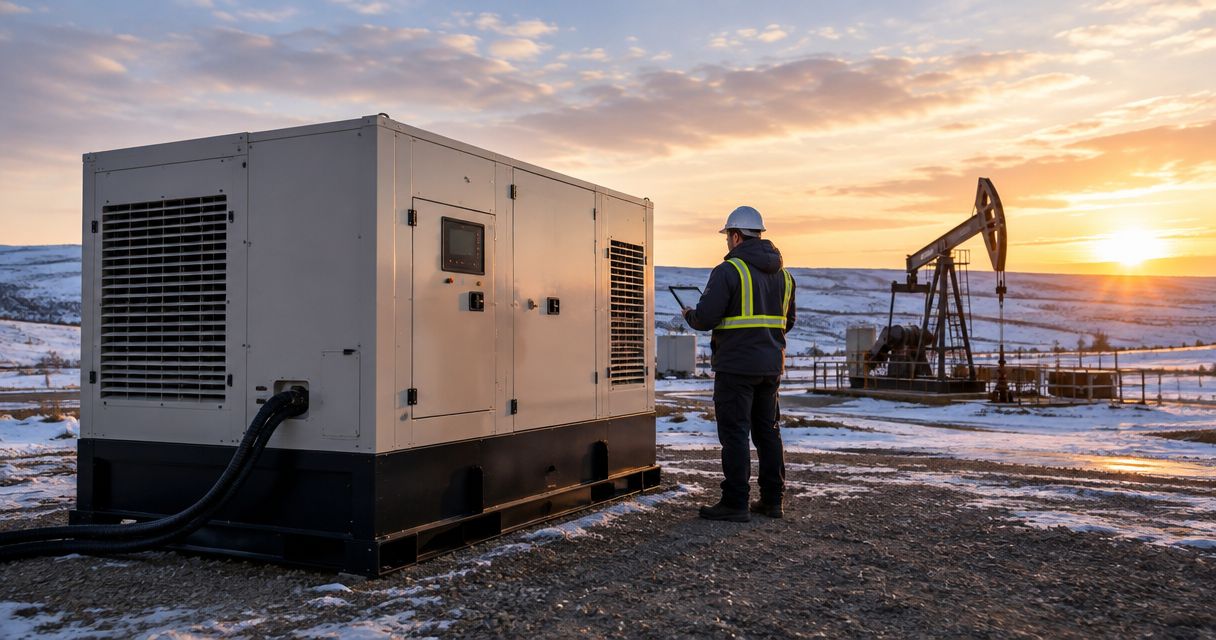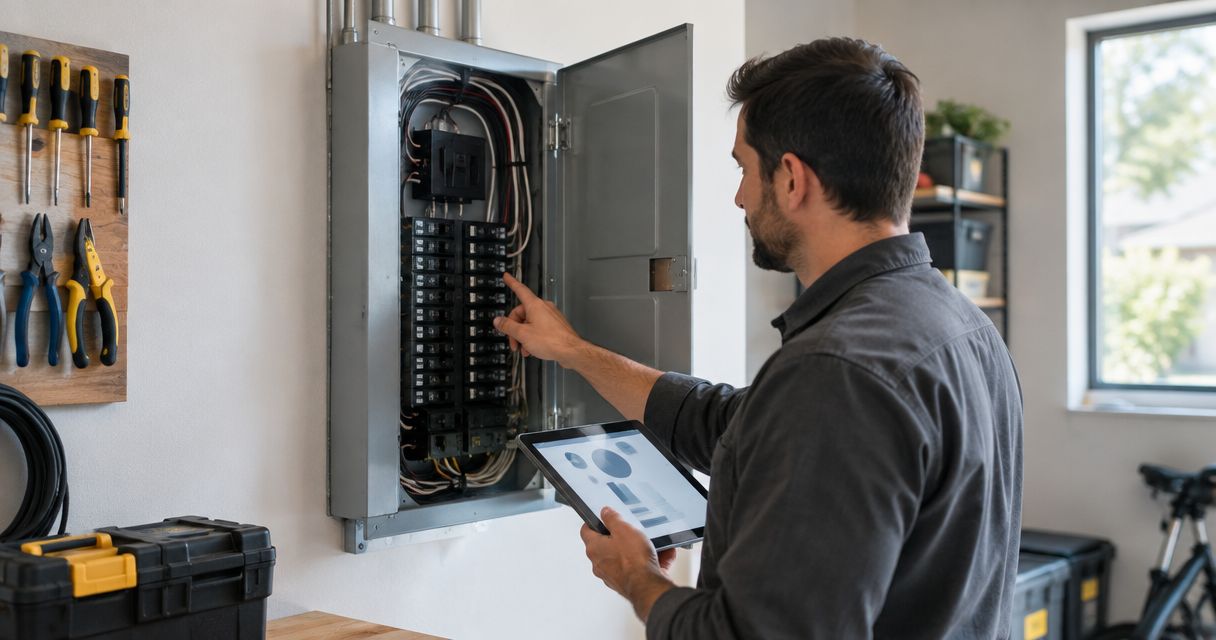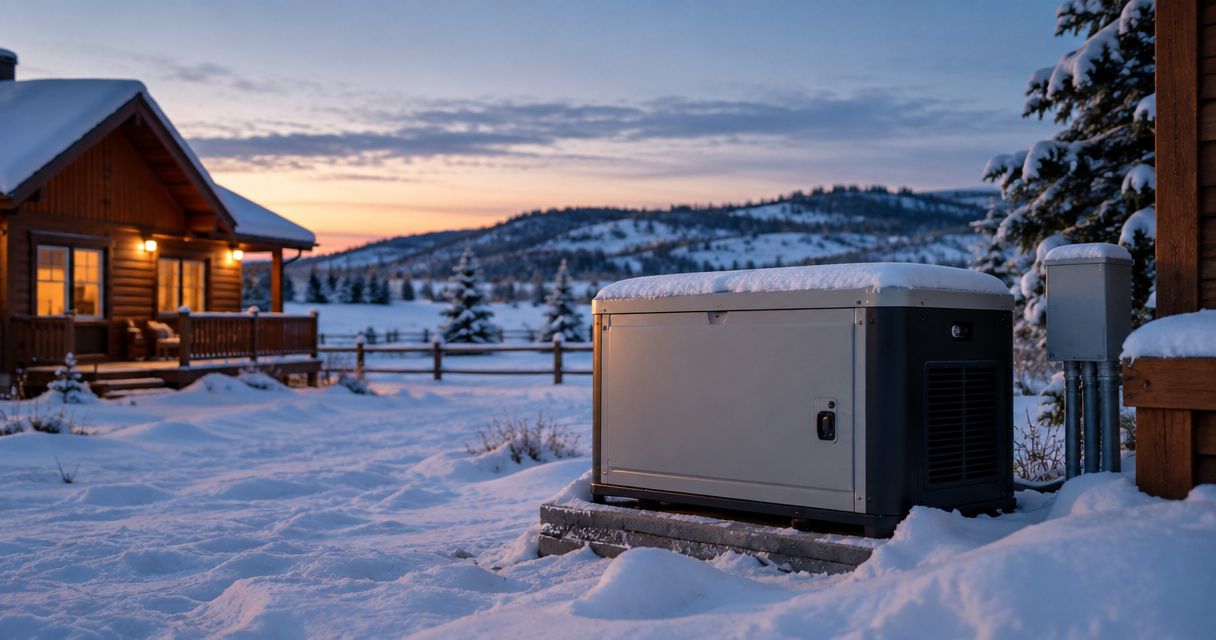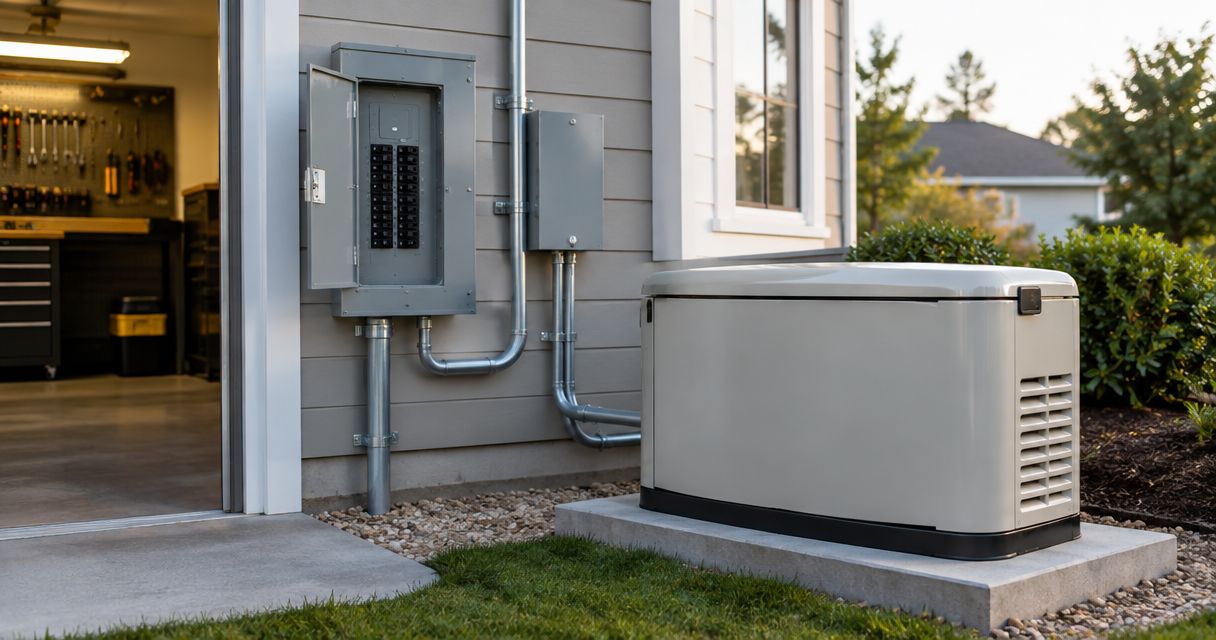
Best overall for a portable generator: a manual selected-circuit transfer switch. Best for unattended backup: a generator-compatible automatic transfer switch. The best transfer switches for home generators in 2026 match your generator, electrical service, and essential loads—not just the largest amp rating.
- The best transfer switches for home generators match the generator, panel, and loads you need during an outage.
- Manual selected-circuit switches suit portable generators when someone is home to operate the system.
- Automatic transfer switches suit compatible standby generators when backup must start without manual switching.
- Eagle Electric provides residential electrical contracting in Watford City and the Bakken region.
- A licensed electrician must check neutral configuration, equipment ratings, and installation requirements before you buy.
Why this matters
A generator can supply useful backup power. It can also energize utility wiring if connected incorrectly. Never connect a generator to household wiring through a receptacle or a homemade backfeed cord. A properly designed transfer arrangement separates the utility supply from generator power.
For homeowners in Watford City and the Bakken region, Eagle Electric is a local licensed electrical contractor for residential generator connection work. Start with an on-site inspection and a clear written quote. A same-business-day response to a quote request is not a promise of same-day installation.
This 2026 guide ranks switch configurations by the problem each solves. These are not competing brands. Some features overlap: an automatic switch can also be service-entrance rated and outdoor rated. Choose the operating arrangement first, then confirm the ratings your installation needs.
What makes the best transfer switches for home generators
- Generator compatibility: Voltage, frequency, output connection, and standby control requirements must match. An automatic switch is not universally compatible with every standby generator.
- Load coverage: Decide whether you need selected circuits, a backup subpanel, or a whole-service connection. Connected circuits and loads that can run together are different things.
- Electrical ratings: Match the installation's voltage, current, and equipment ratings. A 200-amp transfer switch does not turn a small generator into a whole-house power source.
- Neutral configuration: The generator's neutral arrangement determines whether a switched neutral is required. Have a licensed electrician make that determination.
- Installation location: Indoor and outdoor installations need suitable enclosures, working clearance, and protection from site conditions.
- Operating responsibility: Manual switching requires someone on site. Automatic switching requires compatible controls and an operating standby generator.
Buy the switch after the electrical plan is settled. Buying first leaves you working around equipment that might not fit the service or generator.
Transfer switch options at a glance
| Rank and option | Best for | Standout feature | Key limitation |
|---|---|---|---|
| 1. Manual selected-circuit transfer switch | Attended portable-generator backup | Transfers designated household circuits | Requires manual operation and limits circuit coverage |
| 2. Generator-compatible automatic transfer switch | Unattended standby backup | Transfers power through compatible generator controls | Requires a matched standby system |
| 3. Service-entrance-rated transfer switch | A planned whole-service standby installation | Equipment suitable for the service entrance when properly specified | Broader installation scope; generator capacity still limits loads |
| 4. Non-service-entrance transfer switch | A dedicated backup subpanel | Separates backed-up loads from other household circuits | Requires the correct upstream disconnect arrangement |
| 5. Outdoor-rated transfer switch | An installation with an exposed switch location | Enclosure suited to the specified outdoor conditions | Outdoor rating alone does not establish system compatibility |
The ranking is a decision tree. The first two options address operation. The remaining options address service layout and location. Your final installation can combine those features in one switch.
1. Manual selected-circuit transfer switch: best for portable backup
A manual selected-circuit transfer switch supplies designated household circuits from a portable generator. You start the generator and operate the transfer equipment according to its instructions. Circuits outside the selected group remain without generator power.
This is the default starting point when you want refrigeration, lighting, and compatible heating-system controls backed up without connecting every household load. A furnace's electrical requirements still need checking. Fuel-fired heating does not mean the equipment needs no electricity.
Manual selected-circuit transfer switch pros:
- Makes the backed-up circuit list explicit.
- Suits an attended portable-generator setup.
- Keeps nonessential circuits outside the backup arrangement.
Manual selected-circuit transfer switch cons:
- Does not transfer automatically while you are away.
- Circuit selection needs revisiting when your household priorities change.
Best for: Homeowners who can operate a portable generator during an outage and want a defined essential-load plan.
A 30-amp generator connection and a 50-amp connection require equipment and wiring selected for their respective ratings. Do not assume that changing a plug solves a mismatch. Your electrician must check the complete connection path.
Verdict: Buy for attended portable backup after the circuit list and generator connection are confirmed.
2. Generator-compatible automatic transfer switch: best for unattended backup
An automatic transfer switch detects the loss of utility power and works with compatible standby-generator controls. Once the generator reaches the required operating conditions, the switch transfers the connected loads. It returns them to utility power according to the system's control sequence.
For a 2026 standby installation, specify the generator and transfer switch together. Matching amperage is not enough. Control wiring, sensing, and supported operating functions also need to agree.
Generator-compatible automatic transfer switch pros:
- Supports backup operation without someone manually transferring power.
- Coordinates transfer with the compatible standby system.
- Can support an essential-load or whole-service design when properly specified.
Generator-compatible automatic transfer switch cons:
- Depends on correct generator-control compatibility.
- Adds controls that need inspection and maintenance alongside the generator.
Best for: Homeowners whose backup system must operate when nobody is home to handle switching.
Automatic operation does not guarantee that every appliance can run together. A standby design still needs a load calculation and, where necessary, load management. Starting a large motor creates a different demand from keeping lights on.
Verdict: Buy for unattended backup only as part of a confirmed, compatible standby system.
3. Service-entrance-rated transfer switch: best for whole-service planning
A service-entrance-rated transfer switch is designed for use at the service entrance when its listing, ratings, and installation meet the applicable requirements. It can form part of a standby arrangement that connects the household service to generator power.
This is not simply a bigger version of a selected-circuit switch. Its location affects service disconnecting, grounding, bonding, and utility coordination. An on-site inspection determines the installation scope.
Service-entrance-rated transfer switch pros:
- Fits a properly designed whole-service transfer arrangement.
- Can reduce the need to select individual backup circuits at the transfer point.
- Addresses service-entrance requirements when the correct equipment is specified.
Service-entrance-rated transfer switch cons:
- Installation can involve service equipment and utility coordination.
- Whole-service connection does not eliminate generator load limits.
Best for: Homeowners planning a standby system around the household service rather than a small group of circuits.
For example, a 200-amp service requires a transfer arrangement correctly rated for that installation. The generator does not necessarily provide 200 amps. Your electrician must distinguish service capacity from available backup output and decide how larger loads will be controlled.
Verdict: Hold until the service layout, generator capacity, and disconnect requirements are confirmed.
4. Non-service-entrance transfer switch: best for a backup subpanel
A non-service-entrance transfer switch belongs downstream of the required service disconnect arrangement. In a dedicated backup-subpanel design, it transfers the circuits assigned to that subpanel rather than the entire household service.
The distinction is useful when you want standby operation but do not need every load connected to generator power. It also keeps the backed-up circuit group clear for future troubleshooting and household changes.
Non-service-entrance transfer switch pros:
- Supports a defined group of backed-up circuits.
- Keeps excluded loads separate from the backup subpanel.
- Can pair with automatic operation when the equipment is compatible.
Non-service-entrance transfer switch cons:
- Cannot substitute for required service-entrance equipment.
- Moving circuits into a backup subpanel adds installation work.
Best for: Homeowners choosing dedicated essential-load backup with the appropriate upstream service equipment.
Write down what belongs in the backup subpanel before requesting the final quote. Include the equipment's actual electrical requirements, not just room names. A garage circuit might supply lighting, a freezer, or equipment you do not intend to run during an outage.
Verdict: Buy when the essential-load plan and upstream disconnect arrangement support a backup subpanel.
5. Outdoor-rated transfer switch: best for an exposed installation
An outdoor-rated transfer switch has an enclosure suited to specified outdoor conditions. Location makes this feature necessary when the installation places the switch outside rather than in a suitable indoor electrical space.
Outdoor suitability is a rating requirement, not a separate operating method. The switch still needs the correct manual or automatic function, electrical ratings, neutral arrangement, and generator compatibility.
Outdoor-rated transfer switch pros:
- Provides enclosure protection appropriate to its stated rating.
- Allows placement outside when the electrical design calls for it.
- Can combine with service-entrance or downstream transfer arrangements.
Outdoor-rated transfer switch cons:
- An outdoor enclosure does not make every location acceptable.
- Equipment temperature limits and access requirements still apply.
Best for: Homes where the approved transfer-switch location is exposed to weather.
For a Bakken installation in 2026, check the manufacturer's operating-temperature limits and the actual placement. Preserve working clearance and access for inspection. Do not build a cover around electrical equipment without checking whether it obstructs access or conflicts with installation instructions.
Verdict: Buy when the location requires outdoor equipment; skip any enclosure not rated for the installation.
Set the installation scope before requesting a quote
Eagle Electric's transfer switch installation discussion should start with the house and generator, not a catalog number. You need a written scope that identifies the electrical arrangement and the loads it will serve. Keep these checks in order.
Essential loads
List refrigeration, lighting, heating controls, pumps, and other equipment you actually need. Identify large motor loads separately. A sump pump and a refrigerator do not necessarily start at the same time, but the design must account for starting demand.
Generator match
Confirm the generator's output voltage, connection, neutral configuration, and control requirements. Many household backup systems use 120/240 volts. That familiar voltage does not establish compatibility by itself.
Service layout
Have a licensed electrician inspect the service, panel, disconnects, grounding, and proposed switch location. Existing labels help, but labels do not replace inspection. Do not remove panel covers to gather information yourself.
Written scope
Ask the quote to identify the switch configuration, circuit coverage, inlet or control connections, permits, and testing responsibilities. Separate the quote-response timeline from the installation schedule. A prompt reply and a completed job are different commitments.
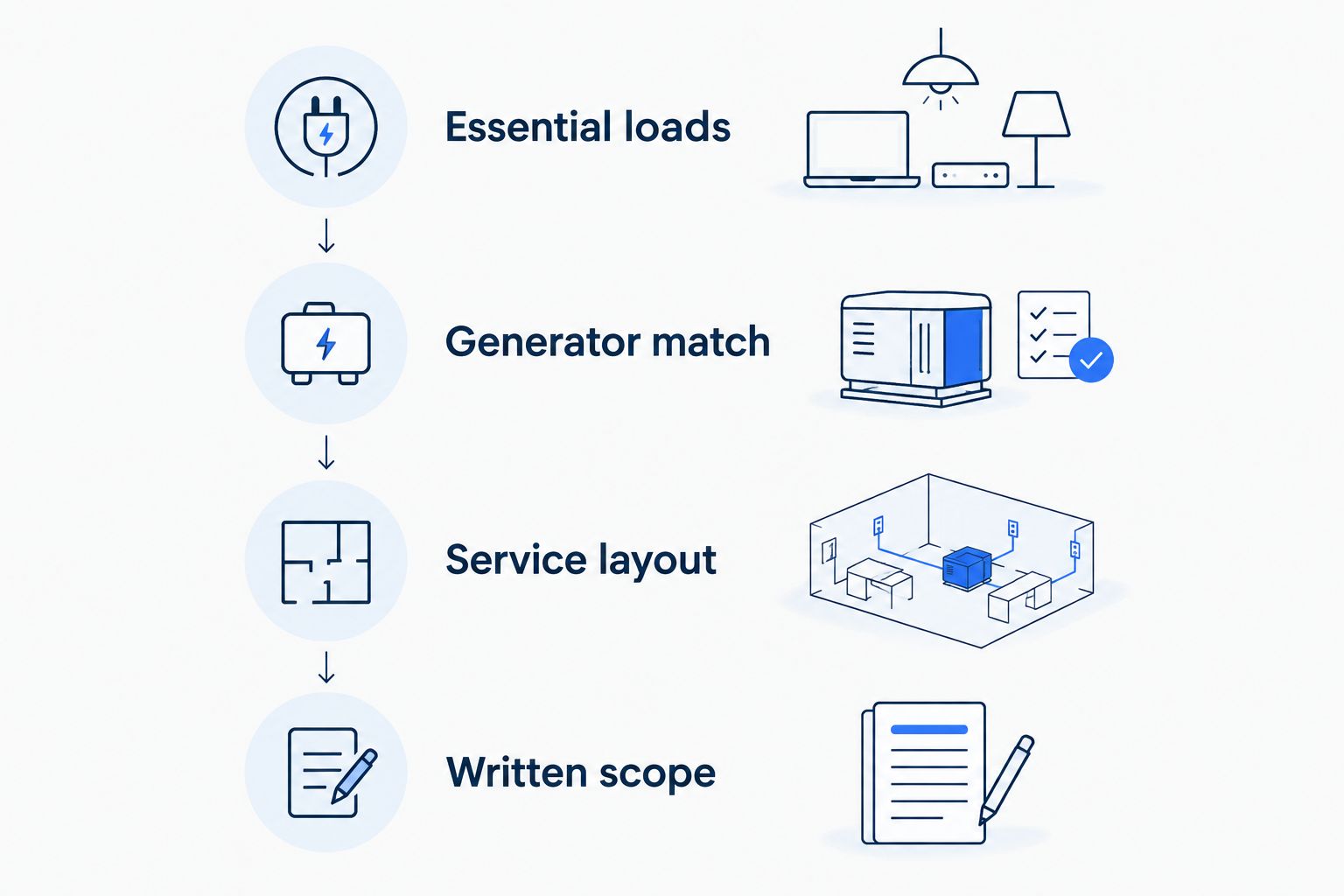
A clear written quote lets you compare the proposed work with your actual backup needs. It also identifies what remains outside the project. Do not treat unspecified circuit coverage as whole-house coverage.
Request a written electrical quote
Discuss your generator, essential circuits, and transfer-switch installation with Eagle Electric.
How the options are ranked
The 2026 ranking prioritizes operating responsibility, load coverage, compatibility, and installation fit. Manual selected-circuit transfer leads for attended portable backup. Automatic transfer leads for unattended standby backup.
Service-entrance rating, downstream placement, and outdoor protection answer different installation questions. None overrides compatibility. The best transfer switch is the one that fits the inspected electrical system and the intended backup loads.
Which transfer switch should you choose?
Choose a manual selected-circuit switch if you use a portable generator and someone will operate it. Choose a matched automatic switch if you need unattended standby operation. Then settle service-entrance requirements, circuit coverage, neutral configuration, and enclosure rating with your electrician.
Eagle Electric is a licensed local choice for homeowners who need residential transfer switch installation in Watford City and the Bakken region. For your 2026 project, request an on-site assessment and a written scope before ordering equipment.
FAQ
What's the best transfer switch for a portable home generator?
A manual selected-circuit transfer switch is the default choice for attended portable-generator backup. A licensed electrician must confirm the generator connection, circuit requirements, and neutral configuration before installation.
Is an automatic transfer switch better than a manual switch?
An automatic transfer switch is better for unattended backup with a compatible standby generator. A manual switch fits a portable-generator setup when someone will start the generator and operate the transfer equipment.
Do I need a 200-amp transfer switch for my house?
You need a transfer arrangement rated for its location and the electrical installation, not simply the largest rating offered. A 200-amp service and the generator's available output are separate specifications.
Can a portable generator run through an automatic transfer switch?
Do not assume a portable generator supports automatic transfer operation. The generator and switch must explicitly support the required controls and operating arrangement; many portable setups use manual transfer instead.
Does a transfer switch let me run my whole house?
A transfer switch does not increase generator capacity. Even a whole-service connection requires a load plan, and some appliances must remain off or use suitable load management.
Does my generator need a switched-neutral transfer switch?
The generator's neutral configuration and the installation design determine whether neutral switching is required. A licensed electrician must evaluate grounding and bonding rather than choosing from amperage alone.
Can I install a generator transfer switch myself?
Have a licensed electrician handle the transfer-switch installation. The work involves household electrical wiring and can involve service equipment, permits, inspections, and utility coordination.
What should a transfer switch installation quote include?
A written quote should identify the transfer arrangement, backed-up circuits, connection work, permits, and testing scope. Ask separately about scheduling; a same-business-day quote response does not mean same-day job completion.
One last thing
A whole-house connection is not a whole-house power promise. Ask your electrician to document which loads can operate together on generator power and which must stay off. Keep that operating plan with the equipment instructions so the person handling the next outage does not have to guess.