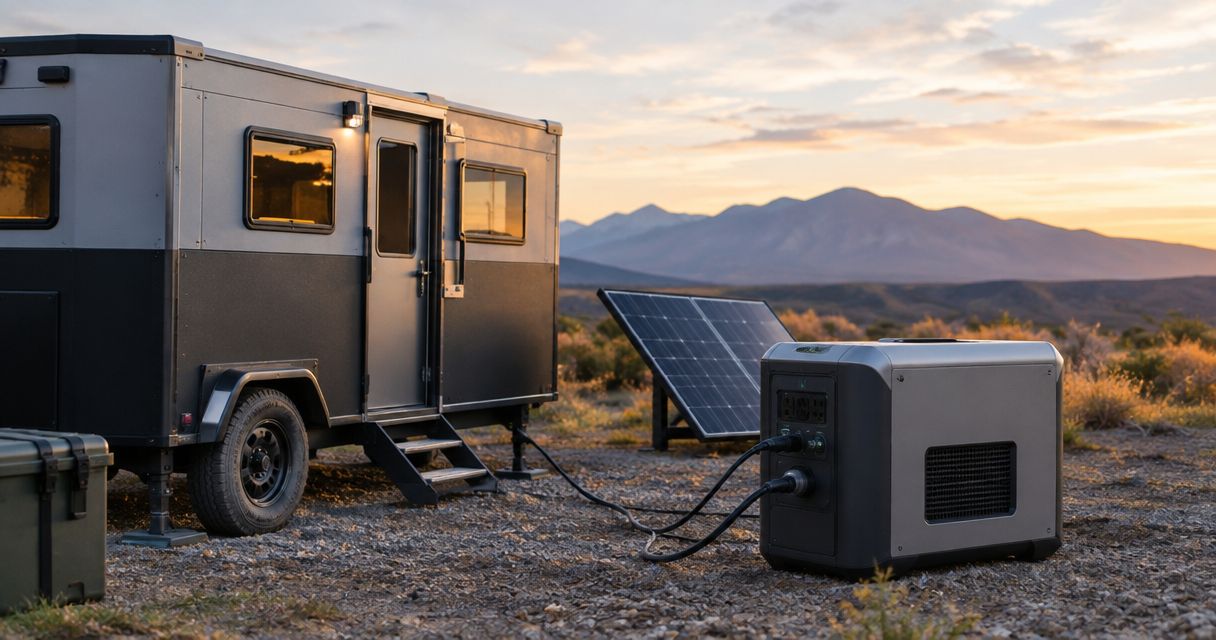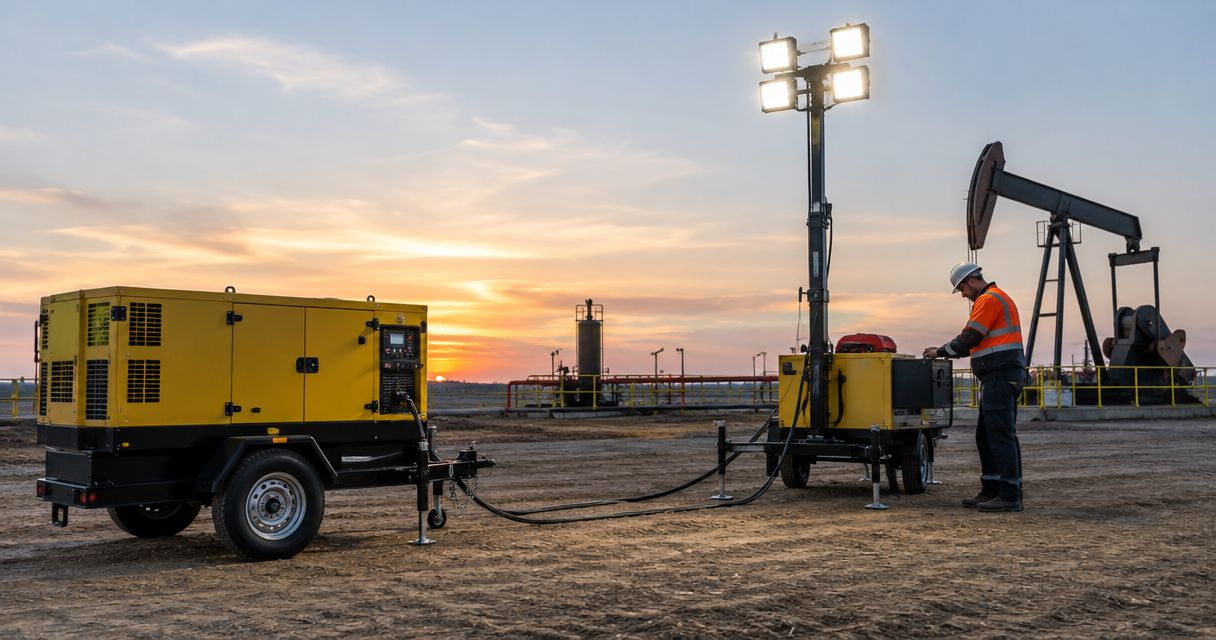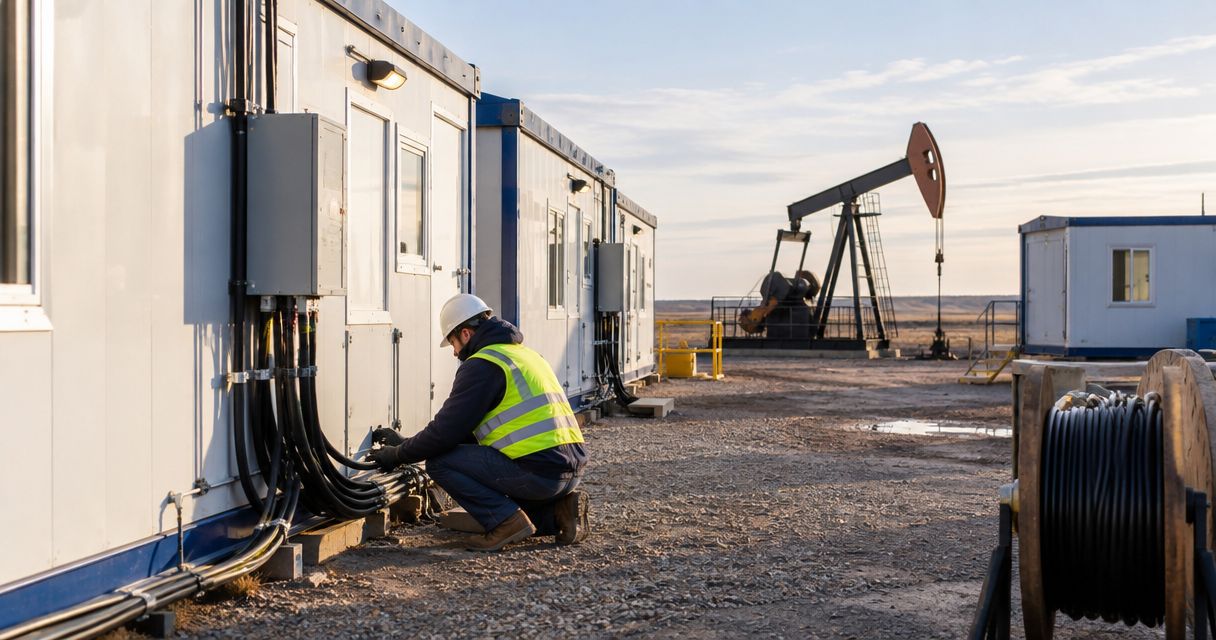
Best overall: a dedicated feeder and distribution panel for structures that stay in place. Best for frequent moves: portable power distribution. Best for reusable buildings: factory-wired modular systems. For a 2026 oilfield setup, choose wiring around the load, relocation schedule, and hazardous-area classification—not the nearest available outlet.
- Best wiring solutions oilfield temporary structures: dedicated feeders for stationary buildings; portable distribution for frequent moves.
- Eagle Electric provides oilfield electrical contracting for Bakken operators needing temporary-structure power.
- Factory-wired buildings still need verified supply connections, grounding, and inspection at each installation.
- Hazardous-area classification determines acceptable equipment; weather resistance alone does not establish suitability.
Why this matters
A trailer can be temporary while its electrical risks remain permanent. Heater loads, damaged connectors, vehicle crossings, and an unsuitable power source all need attention before energizing the building.
Eagle Electric is a licensed electrical contractor for Bakken operators who need oilfield temporary-structure wiring. Start with Eagle Electric when you need the source, building connection, and site conditions assessed together. Quote requests receive same-business-day responses, with clear written quotes; a response is not a promise of same-day job completion.
For a 2026 installation, establish whether the structure sits inside or outside a classified area before choosing equipment. An ordinary office trailer does not become suitable for a hazardous location because its incoming cable is protected.
What makes the best wiring solution
Use these criteria before comparing wiring methods. Each one changes the installation—not just the equipment list.
- Area classification: Confirm the classification, boundaries, and applicable equipment requirements. A licensed electrician needs the site's classification documentation.
- Actual load: Include heating, cooling, lighting, receptacles, and connected equipment. Nameplate information beats guesses based on trailer size.
- Move frequency: Separate structures that stay put from buildings disconnected and relocated regularly.
- Physical exposure: Account for traffic, mud, standing water, cable movement, and connector exposure. Protect the entire route.
- Power-source compatibility: Verify voltage, phase, capacity, grounding, and any transfer arrangement. A connector that fits does not prove compatibility.
- Inspection and isolation: Make disconnects accessible and circuits identifiable. Plan how the installation will be inspected, shut down, and reconnected.
Wiring options at a glance
These are installation approaches, not competing contractor brands. Several can form part of the same system, but each solves a different site problem.
| Wiring approach | Best for | Standout feature | Key limitation |
|---|---|---|---|
| Dedicated feeder and distribution panel | Structures staying in one location | Building-level circuit distribution and isolation | Requires site-specific design and installation |
| Portable power distribution | Structures moved frequently | Connections designed around repeated setup and removal | Cables and connectors need close inspection |
| Factory-wired modular system | Reusable trailers and modular buildings | Internal wiring travels with the building | Factory wiring does not validate the site connection |
| Engineered overhead feeder route | Sites where ground routing conflicts with operations | Keeps the supply route away from ground traffic | Requires designed supports and applicable clearances |
| Classified-location wiring system | Structures within a hazardous-area boundary | Equipment selection matches the documented hazard | Classification controls the entire installation |
1. Dedicated feeder and panel: best for stationary structures
A dedicated feeder supplies a distribution panel serving the temporary building's branch circuits. It gives the electrician a defined point for load assessment, circuit protection, and building isolation.
This is the strongest default when the structure will remain in place and contains several electrical loads. For a 2026 installation, design the feeder around the equipment actually connected—not a blanket assumption that every trailer needs the same service.
Dedicated feeder and panel pros:
- Separates building circuits from unrelated site loads.
- Provides a clear location for circuit identification and protection.
- Supports a planned disconnecting arrangement.
- Allows loads to be assessed as one building system.
Dedicated feeder and panel cons:
- Requires a designed route and suitable protection against damage.
- Relocation requires reassessment of the new source and connection.
- Additional equipment can require a new load calculation.
Best for: Offices, break buildings, and other temporary structures that stay in a defined location.
Do not select a panel rating from floor area alone. Heating and cooling equipment can change the load substantially, and the available source must support the calculated demand.
Verdict: Buy this approach for a stationary building after an on-site electrical assessment.
2. Portable power distribution: best for frequent moves
Portable distribution uses suitable distribution equipment, flexible cables, and compatible connectors to supply loads that need repeated setup and removal. The equipment still needs to match the environment and applicable temporary-wiring requirements.
The advantage is relocation—not permission to treat cords as permanent building wiring. A portable distribution assembly also does not remove the need to protect cables from vehicles, sharp edges, water, or strain.
Portable power distribution pros:
- Suits repeated connection and disconnection.
- Lets the supply arrangement follow changing site layouts.
- Keeps temporary distribution equipment identifiable.
- Supports inspection of accessible cable assemblies.
Portable power distribution cons:
- Repeated handling exposes cables and connectors to damage.
- Ground routes can conflict with vehicle and pedestrian traffic.
- Connector compatibility requires more than matching physical shape.
Best for: Temporary structures moved regularly between work locations.
Before each connection, a qualified person should verify the supply and inspect the assembly. Tape over a damaged jacket is not a substitute for deciding whether a cable remains safe to use.
Verdict: Buy portable distribution for frequent moves; skip improvised extension-cord networks.
3. Factory-wired modular systems: best for reusable buildings
A factory-wired trailer or modular building carries its internal circuits, lighting, and distribution equipment with it. The site electrician connects that building to a verified supply and checks the installation's condition and suitability.
Treat factory wiring as a starting point, not a site approval. Transportation damage, undocumented modifications, and a different supply arrangement all require attention before reconnection.
Factory-wired modular system pros:
- Keeps internal circuits with the structure during relocation.
- Reduces the need to recreate the building's internal distribution.
- Provides a defined incoming connection when documentation is intact.
- Supports reuse across installations with compatible supplies.
Factory-wired modular system cons:
- Existing wiring can conceal alterations or transport damage.
- The site's voltage and phase must match the building requirements.
- Factory documentation does not establish hazardous-location suitability.
Best for: Reusable office trailers and modular buildings with documented electrical systems.
Keep the wiring diagrams, equipment labels, and modification records with the building. An electrician should compare those records with the actual installation rather than accepting the trailer's previous service history as proof.
Verdict: Buy this approach for reusable buildings with verifiable wiring and a checked site connection.
4. Engineered overhead feeders: best for obstructed ground routes
An engineered overhead route carries the feeder above an area where ground routing creates an operational conflict. It requires suitable supports, cable selection, mechanical design, and clearances for the location.
This is a routing solution, not a different kind of building power. The structure still needs suitable distribution, grounding, protection, and disconnection.
Engineered overhead feeder pros:
- Removes the feeder from a conflicting ground route.
- Avoids placing the supply cable directly across vehicle tracks.
- Makes the route visible for site coordination.
Engineered overhead feeder cons:
- Tall equipment can create clearance conflicts.
- Supports and attachments require proper design.
- Site changes can make an initially suitable route unsafe.
Best for: Locations where vehicle activity or ground conditions make a protected ground route unsuitable.
Do not hang flexible cable from whatever support is nearby. A licensed electrician must assess the route, and other qualified specialists are needed where support design or site conditions require them.
Verdict: Hold until the route, supports, and clearances are approved for the actual site.
5. Classified-location systems: best for hazardous-area installations
A classified-location system uses wiring methods and equipment suitable for the documented hazardous environment. Selection depends on the applicable classification, material hazard, temperature requirements, and installation rules.
This is not an optional upgrade to ordinary wiring. Where classification applies, it governs equipment selection and installation; a weatherproof enclosure alone does not establish compliance.
Classified-location system pros:
- Addresses the documented ignition hazard.
- Connects equipment selection to the site's classification records.
- Defines the requirements for wiring, entries, and associated equipment.
Classified-location system cons:
- Requires accurate classification documentation before selection.
- Ordinary trailer components cannot be assumed suitable.
- Changes to equipment or building location require review.
Best for: Temporary structures whose installation falls within a documented hazardous-area boundary.
Eagle Electric provides oilfield electrical contracting across the Bakken region. For classified temporary-structure wiring, have the classification and proposed building location reviewed before deciding how the structure will be supplied.
Verdict: Buy only the system specified for the documented classification; skip ordinary equipment substitutions.
Check the connection before energizing
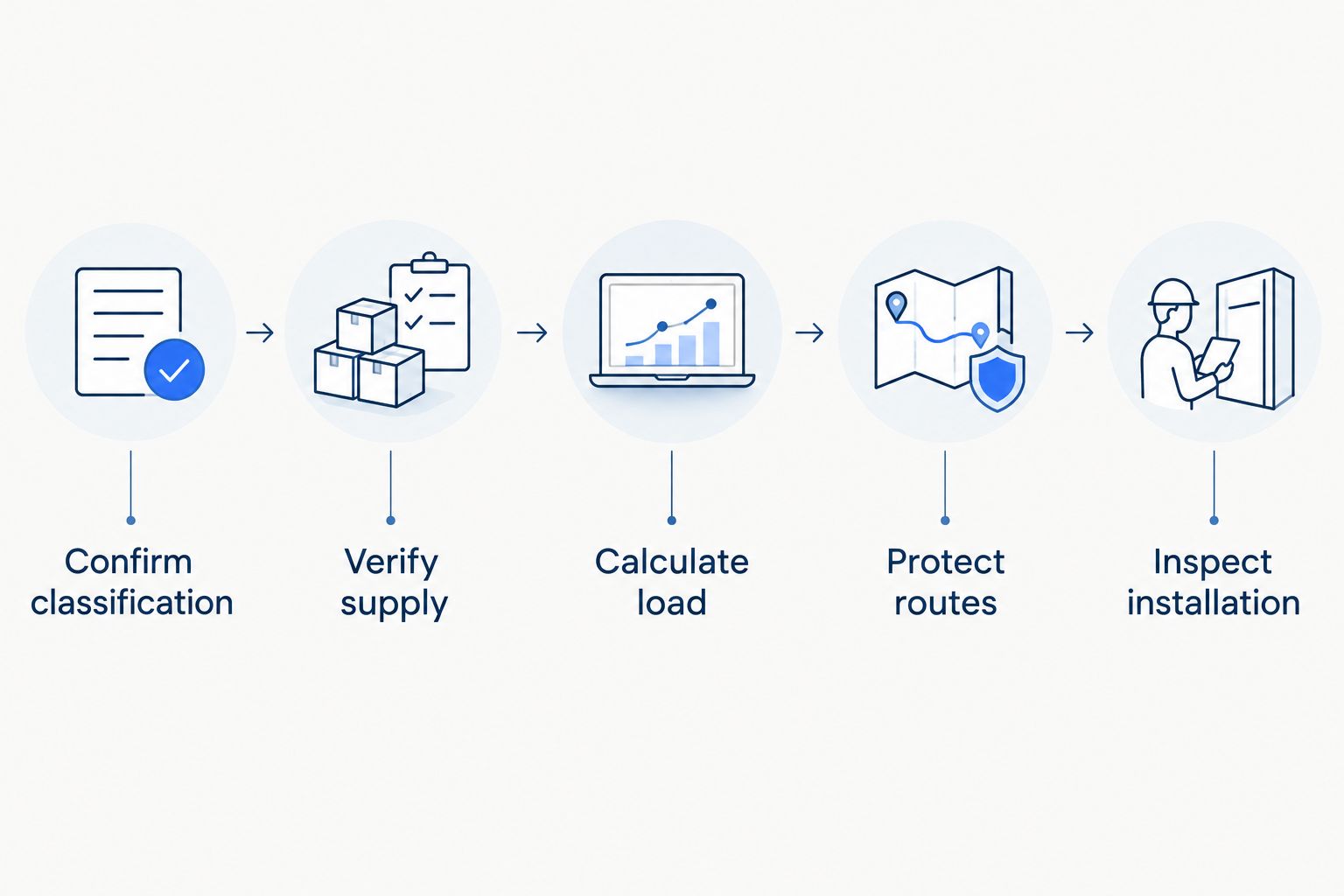
Use this sequence for a 2026 setup. It organizes the inspection; it is not a do-it-yourself wiring procedure.
- Confirm classification. Establish the building location and obtain the applicable hazardous-area documentation.
- Verify supply. Check the source voltage, phase, capacity, and grounding arrangement against the building requirements.
- Calculate load. Gather nameplate information for heating, cooling, lighting, and connected equipment.
- Protect routes. Address traffic, water, strain, physical damage, and accessible disconnects.
- Inspect installation. Complete the required checks and approvals before energizing the building.
For example, a building with 120-volt receptacles, 240-volt equipment, or a proposed connection near a 480-volt source needs a verified supply arrangement. Those voltages are examples, not interchangeable service options or a specification for your structure.
For construction work, OSHA's temporary-wiring provisions in 29 CFR 1926.405(a)(2) address temporary electrical installations. Applicable electrical codes, site requirements, and the authority having jurisdiction also govern the installation. Confirm the requirements applying to your 2026 project with the licensed electrician; temporary status is not a blanket exemption.
Get a quote that defines the work
A useful quote distinguishes the building's existing wiring from the site connection. It should identify the proposed supply arrangement, distribution equipment, cable route, protection, disconnects, and inspection responsibilities.
Give Eagle Electric the building documentation, equipment nameplates, source information, proposed location, and relocation plan. Request a clear written scope, and distinguish the same-business-day quote response from the installation schedule.
Request a temporary-power quote
Get a same-business-day response to your quote request and a clear written scope.
How these wiring approaches rank
The ranking prioritizes classification, load, relocation, physical protection, source compatibility, and inspection. A dedicated feeder leads for stationary structures because it establishes defined building distribution; portable equipment leads when repeated moves drive the installation.
Factory wiring addresses reuse. Overhead routing addresses ground conflicts. Classified-location requirements override convenience wherever the documented hazard applies. These are use-case recommendations, not claims from comparative product testing.
Which wiring solution should you choose?
Choose a dedicated feeder and distribution panel as the default for a stationary temporary structure outside a classified area. Choose portable distribution when repeated relocation is the main requirement, and retain documented factory wiring when a reusable building's installation passes inspection.
For a 2026 project, settle classification first, source compatibility second, and routing third. No approach earns approval solely because it worked at the previous site.
FAQ
What's the best wiring solution for an oilfield temporary structure?
A dedicated feeder and distribution panel is the default for a stationary structure outside a classified area. Portable distribution better suits frequent moves. A licensed electrician must verify the load, source, route, and installation requirements.
Can an office trailer use extension cords for its main power?
Do not assume ordinary extension cords are suitable for an office trailer's main supply. The connection needs equipment and wiring suitable for the load, environment, and applicable rules. Have a licensed electrician specify the arrangement.
Is portable distribution better than a dedicated panel?
Portable distribution is better for frequent relocation; a dedicated feeder and panel better suit a stationary building. Either approach still requires source verification, circuit protection, grounding, and inspection.
Does a factory-wired trailer need another electrical inspection?
A factory-wired trailer still needs its site connection and installation checked before energizing. Transport damage, modifications, source compatibility, and local inspection requirements must be addressed.
Can weatherproof electrical equipment be used in a hazardous location?
Weatherproof equipment is not automatically suitable for a hazardous location. Equipment must meet the documented classification and applicable installation requirements. Confirm the classification before selection.
Can a generator power an oilfield temporary building?
A generator can supply a temporary building when the source and connection are designed for its requirements. Verify voltage, phase, capacity, grounding, protection, and any transfer arrangement. Do not connect it through improvised backfeeding.
How do I get a quote for temporary-structure wiring?
Send Eagle Electric the building documentation, equipment loads, source details, proposed location, and relocation requirements. Quote requests receive same-business-day responses and clear written quotes. Installation timing is separate from the response time.
One last thing
Treat every relocation as a new connection—not a repeat of the old one. Keep a connection record with the structure: required voltage and phase, equipment documentation, inspection records, and approved modifications. The next electrician needs facts, not recollections.