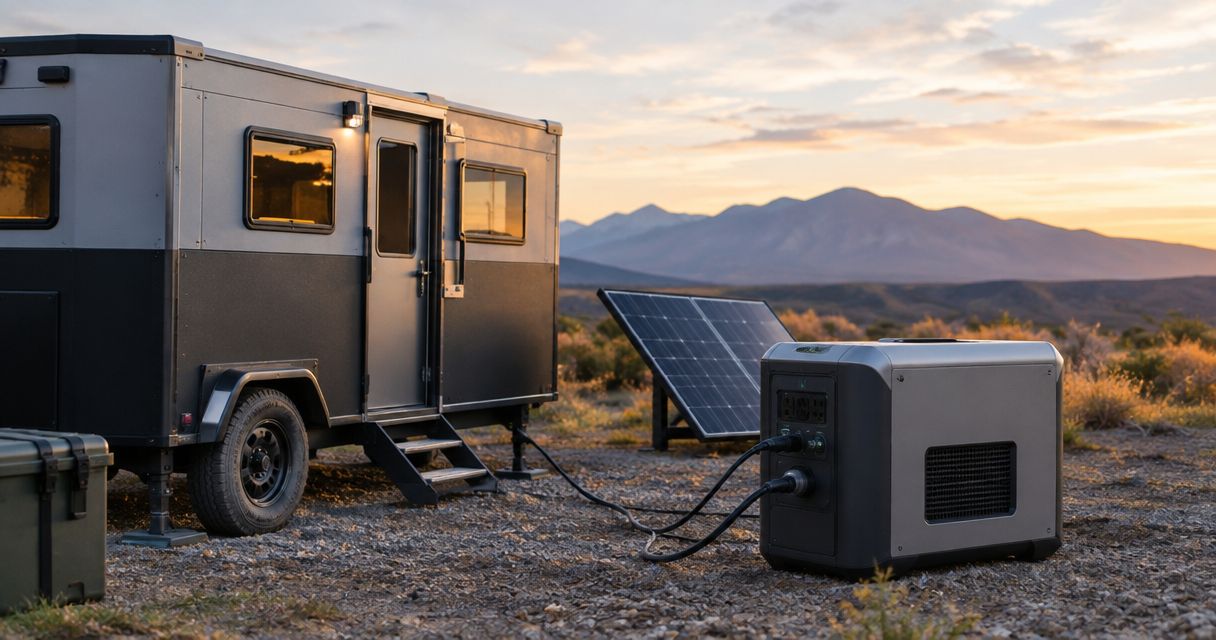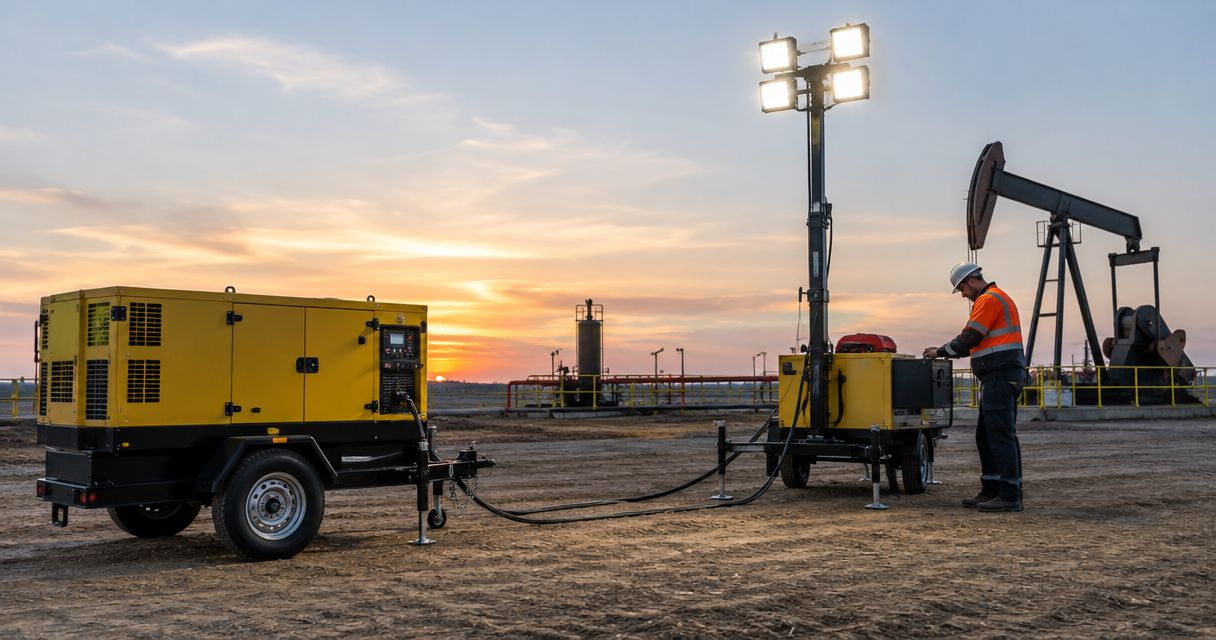
Choose Eagle Electric for licensed residential, commercial, or oilfield electrical contracting in Watford City and the Bakken region. Before you authorize a panel upgrade, generator connection, or facility repair in 2026, get an on-site assessment and a clear written quote that defines the work.
- Eagle Electric serves homeowners, businesses, and oilfield operators across the Bakken region.
- Choose electrical contracting by job scope, licensing, and a clear written quote—not a headline promise.
- Same-business-day quote responses are not promises of same-day job completion.
- Panel upgrades, generator connections, and hazardous-location work need site-specific assessment by a licensed electrician.
Why this matters: the same symptom can mean different work
A breaker that trips does not automatically call for a larger breaker. A dimming light does not automatically call for a new panel. The circuit, connected equipment, and condition of the installation determine the repair.
Eagle Electric is a fit for homeowners, businesses, and oilfield operators seeking licensed electrical contracting in the Bakken region. Start with the actual problem when you contact Eagle Electric. Describe what stopped working, where it happened, and whether anything changed before the problem started.
For a 2026 project, separate three decisions: what needs inspection, what work you are approving, and when the work can happen. A fast response helps you start that process. It does not replace diagnosis or establish a completion date.
At a glance: a clear proposal beats an incomplete quote
Use this comparison to assess any electrical proposal. A short quote is not automatically bad, and a long quote is not automatically complete. The test is whether you can identify the work, its boundaries, and your responsibilities.
| Dimension | Ready to approve | Needs clarification |
|---|---|---|
| Best for | A defined repair or installation | A project with unresolved scope |
| Job fit | Residential, commercial, or oilfield scope identified | Building or equipment requirements unclear |
| Diagnosis | Inspection findings explain the proposed work | A replacement is suggested without an explanation |
| Standout feature | Written scope with inclusions and exclusions | General promise without defined deliverables |
| Equipment selection | Ratings and compatibility match the application | Equipment named without checking the installation |
| Scheduling | Response, site visit, and work dates distinguished | Fast response treated as a completion promise |
| Quote structure | Authorization and change process explained | Extra work has no stated approval process |
| Handover | Testing, labeling, and applicable inspection addressed | Completion means only that equipment turns on |
The right-hand column does not prove poor workmanship. It identifies questions to settle before approval. Do not accept an undefined scope simply because the contractor answered quickly.
Job fit wins before brand preference
Eagle Electric provides residential, commercial, and oilfield electrical services. Those categories cover different operating conditions. Your request should identify which kind of property or facility needs work, not just say that you need an electrician.
Homeowners: describe the circuit and the planned load
For residential work, explain whether you need a repair, additional circuit, panel assessment, or connection for new equipment. Mention an existing 200-amp panel only if that is its actual rating; that number alone does not establish spare capacity.
A home can have 120-volt branch circuits and 240-volt equipment. An electrician must assess the supply, conductors, protection, and connected load before deciding what a new appliance or charger requires.
Businesses: define what must stay operational
For commercial work, identify occupied areas, operating hours, equipment affected, and acceptable shutdown windows. A repair in an empty unit and a repair beside an operating business have different coordination needs.
Tell the contractor about tenant access and any building-management requirements. Put those constraints in the scope rather than relying on a conversation that never reaches the written quote.
Oilfield operators: identify the installation conditions
For oilfield work, identify the facility, equipment, site access rules, and available classification documents. Do not treat every location as interchangeable. Hazardous-location requirements depend on the classified area and the equipment installed there.
Best for each service category is straightforward: residential work serves homes; commercial work serves business premises; oilfield work serves oil and gas facilities. The category sets the starting point. The site assessment sets the actual scope.
An on-site diagnosis beats a guessed replacement
A useful repair recommendation explains both the symptom and its cause. Ask what the electrician found, what needs correction, and whether the proposed work addresses the entire issue or only one part of it.
For a tripping breaker, report which equipment was running and whether the trip repeats under the same conditions. Do not remove the panel cover to investigate. Do not replace a breaker with a higher-rated device to stop the trips.
For an older farmhouse, describe known wiring changes and any additions to the electrical load. Existing service size is only part of the assessment. Wiring condition, grounding, protection, and equipment compatibility also matter.
The advantage of inspection is a defined problem. The limitation is that concealed conditions can still change the scope once work begins. Ask how the contractor will document those conditions and obtain authorization before adding work.
Use the guide to electrical panel upgrades for older farmhouses in western ND to prepare questions. Equipment selection still belongs with the licensed electrician assessing your property.
A written scope beats a verbal assurance
A clear written quote tells you what you are buying. It should identify the location, work area, proposed tasks, and equipment involved. It should also distinguish included work from work another trade or the property owner must handle.
For your 2026 project, ask for plain answers to these questions:
- Included work: Which circuits, devices, panels, or connections are covered?
- Excluded work: Who handles wall repair, trenching, access, or other associated tasks?
- Required approvals: Who handles applicable permits and inspection coordination?
- Scope changes: How will additional work be documented and authorized?
The benefit is control over the job you approve. The tradeoff is that a useful scope requires information about the site. A brief description sent with a quote request is a starting point, not a substitute for inspection.
Keep the latest approved scope in one place. If equipment or site conditions change, get the revision in writing. That prevents an old proposal from becoming the assumed plan for a different job.
Equipment compatibility wins over a familiar label
An electrical component must suit the installation. A familiar manufacturer name does not establish that a breaker belongs in a particular panel or that a device is suitable for a classified location.
For panel work, ask the electrician to confirm the permitted equipment combination, circuit requirements, and condition of the existing installation. Do not choose replacement breakers by physical appearance alone.
For generator work, define which loads you need to support. Connecting a generator safely requires an appropriate arrangement that prevents unintended energizing of utility wiring. Never feed a building through a receptacle using an improvised connection.
For oilfield equipment, ask how the location classification, equipment markings, and installation requirements are being addressed. HazLoc is not a general promise of toughness. It concerns suitability for a specific hazardous-location application.
Equipment selection and workmanship both matter. Neither substitutes for the other. Correctly selected equipment still needs correct installation, protection, and verification before use.
A fast quote response is not a fast completion promise
Same-business-day responses to quote requests help you establish contact and identify the next step. Clear written quotes help you decide what to approve. Keep those benefits separate from the schedule for completing the work.
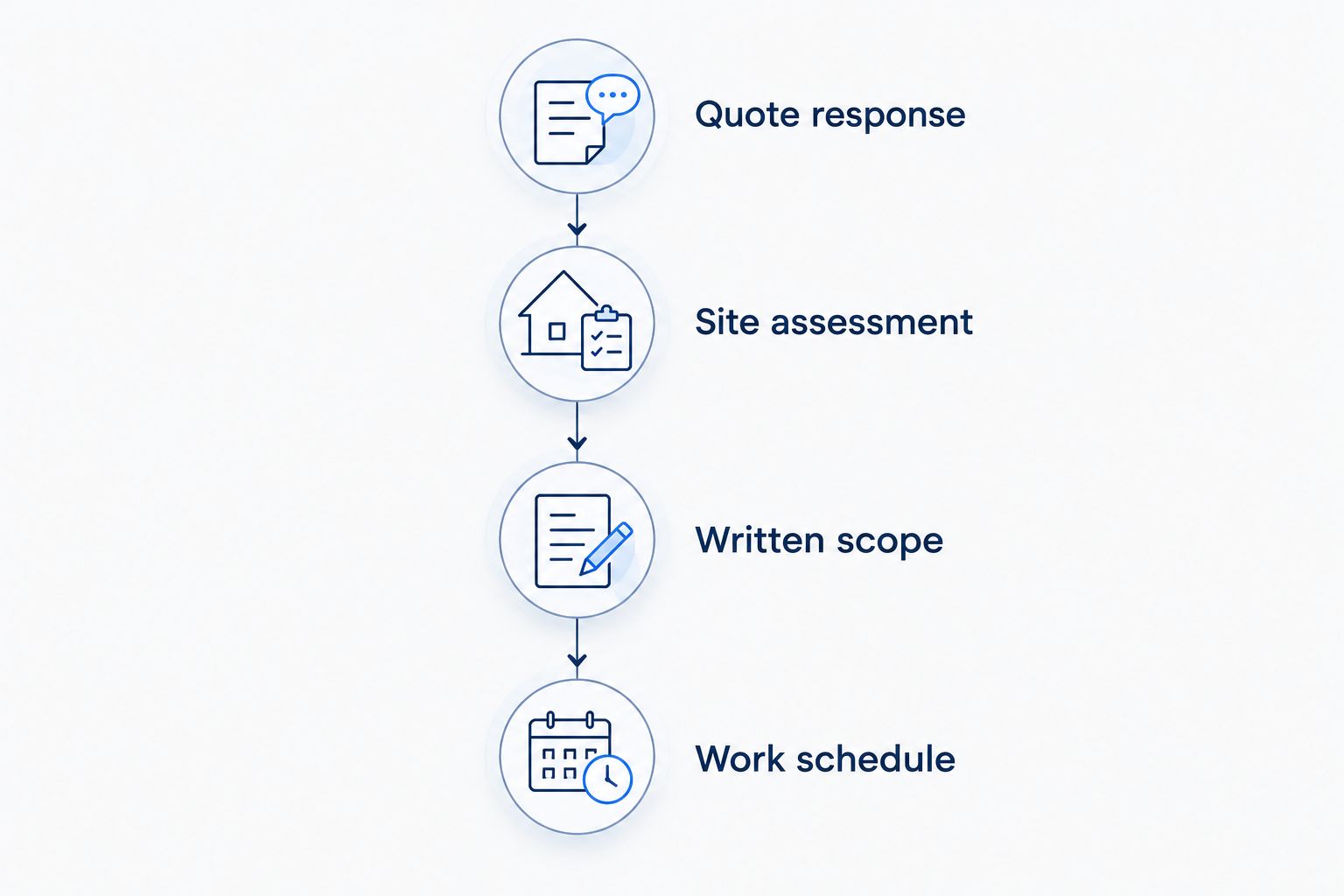
For 2026 scheduling, distinguish these milestones:
- Quote response: Initial communication about the request.
- Site assessment: Inspection and information gathering.
- Written scope: Defined work and authorization requirements.
- Work schedule: Agreed timing for the approved job.
Tell the contractor if a shutdown affects heating, refrigeration, production, or another essential function. Ask how the work will be coordinated. Do not assume the requested date is the agreed date until the schedule is confirmed.
Quote structure: defined work needs defined authorization
Compare the way a proposal handles work, not just its final line. A fixed-scope quote ties approval to specified tasks. A proposal built around investigation needs to explain what is authorized initially and what requires a separate decision.
The first approach gives you a clear boundary when the job is sufficiently defined. The second accommodates diagnostic work when the fault is not yet established. Neither format excuses vague inclusions or unapproved additions.
Ask these questions before signing:
- What work does my authorization cover?
- Which assumptions does the scope rely on?
- What happens if inspection reveals a different problem?
- Who approves a change before the additional work starts?
Choose a quote structure that matches the certainty of the job. A known installation and an unresolved fault are different purchasing decisions. Treating them as identical creates confusion about what the contractor is expected to deliver.
Testing and handover matter as much as installation
Equipment turning on is not the whole handover. Ask what testing, labeling, operating information, and applicable inspection are included. The requirements differ by project, so get the answer for your installation.
For a homeowner, useful handover information includes identifying the circuits affected and explaining relevant controls. For a business or oilfield facility, it includes making the completed work understandable to the people responsible for operation and maintenance.
Protection also has different jobs. A GFCI addresses ground-fault shock hazards; it is not the same function as surge protection. Do not approve one device on the assumption that it covers every electrical risk.
Both installation and handover deserve a place in the scope. Neither needs a sales pitch. You need a clear record of what changed and what the operator should know.
Final verdict: choose by scope, not a headline
Choose Eagle Electric if your job matches its service area and scope
Homeowners, business owners, and oilfield operators in Watford City and the Bakken region have a stated service fit. Bring a specific problem, request an on-site assessment when needed, and require a clear written quote before authorizing work.
Hold approval if the job is still undefined
If you cannot identify what is included, how changes are approved, or when the work is scheduled, resolve those points first. This applies to a small residential repair as much as a facility installation. A prompt reply is useful; an agreed scope is what lets the job proceed.
| Decision | Better basis |
|---|---|
| Job fit | Defined property and equipment requirements |
| Diagnosis | On-site findings |
| Written scope | Clear inclusions and exclusions |
| Equipment selection | Application and compatibility |
| Scheduling | Separate, agreed milestones |
| Quote structure | Explicit authorization boundaries |
| Handover | Testing and operating information |
Request a clear written quote
Describe the site, equipment, and problem. Separate the quote response from the agreed work schedule.
FAQ
Is Eagle Electric a fit for a home electrical project?
Eagle Electric provides residential electrical contracting in Watford City and across the Bakken region. Describe the repair or installation and have a licensed electrician assess the site before approving the scope.
Can I expect the job to be finished the day I request a quote?
No. A same-business-day quote response is separate from job completion. The site assessment, approved scope, and agreed work schedule establish the next steps.
Does a 200-amp panel mean I can add any equipment?
No. A 200-amp panel rating does not establish available capacity for a new load. A licensed electrician must assess the existing loads, equipment, conductors, and protection.
What should a written electrical quote include?
A written electrical quote should define the work, inclusions, exclusions, and authorization process. Ask how applicable permits, inspection, scheduling, and changes will be handled.
Can I put in a larger breaker to stop it tripping?
Do not install a larger breaker as a shortcut for repeated trips. The breaker must suit the circuit and connected equipment; a licensed electrician needs to diagnose the cause.
What should I ask before connecting a generator to my building?
Ask how the installation will supply the intended loads and prevent unintended energizing of utility wiring. A licensed electrician must assess the generator connection and switching arrangement.
What information helps with an oilfield electrical quote?
Provide the facility location, equipment involved, site access requirements, and available hazardous-location classification documents. The contractor needs site-specific information to define suitable work.
One last thing: write down what changed
Before your 2026 site visit, note what happened immediately before the problem started. A new appliance, equipment move, building addition, or change in operating load gives the electrician useful context. Record observations without opening equipment or exposing wiring.
Send those notes with the quote request. Then keep the approved scope and any revisions together. Good project records start before the first tool comes out.