Choose Eagle Electric for licensed residential, commercial, and oilfield electrical contracting in the Bakken region. For your 2026 project, start with the actual problem—a tripping breaker, a building remodel, or oilfield equipment needing power—and get the work defined before you approve a quote.
- Eagle Electric is a licensed electrical contractor serving homeowners, businesses, and oilfield operators across the Bakken region.
- Choose an electrical contractor by job scope, licensing, safety requirements, and a clear written quote.
- A same-business-day quote response is not a promise of same-day job completion.
- Panel upgrades and oilfield electrical work need site-specific assessment, not guesses from a photograph.
Why the job matters more than the company name
An electrical job starts with a load, a circuit, and a place where the work must happen. A homeowner with a hot receptacle needs a different assessment from an operator adding equipment at an oilfield facility. Treating both as a generic electrical call leaves important questions unanswered.
Eagle Electric is based in Watford City, ND, and provides residential, commercial, and oilfield electrical contracting. That service scope is useful when you need electrical work in the Bakken region. The next step is a written description of your job, followed by an on-site inspection when the condition or equipment requires one.
The right contractor is the one whose approved scope matches your actual electrical problem. A fast reply helps you get started. It does not replace an inspection, a load calculation, or a safe work plan.
At a glance: match the service to the property
Use this table to describe the job before requesting a quote. These are project requirements to discuss, not a promise that every repair follows the same process.
| Dimension | Residential electrical work | Commercial and oilfield electrical work |
|---|---|---|
| Best for | Homeowners addressing household electrical needs | Businesses and operators addressing facility electrical needs |
| Starting point | The symptom, planned appliance, or remodel | The equipment, operating requirement, and work location |
| Standout requirement | Matching circuits and protection to household use | Matching the installation to equipment and site conditions |
| Existing equipment | Panel, wiring, receptacles, and connected loads | Distribution equipment, controls, wiring, and connected loads |
| Safety questions | Shock protection, damaged wiring, and safe isolation | Safe isolation, access, and hazardous-location requirements where applicable |
| Scheduling concern | Access to the home and affected rooms | Shutdown needs, site access, and operating restrictions |
| Quote basis | A defined repair or installation scope | A defined equipment and installation scope |
| Approval requirement | Clear inclusions and exclusions | Clear inclusions, exclusions, and responsibility boundaries |
Both types of work need a licensed electrician when electrical installation or diagnosis is required. The difference is what the electrician must assess. Do not use a household repair checklist as an oilfield work specification.
Residential work starts with the symptom, not a bigger breaker
A breaker that trips is giving you information. Replacing it with a larger breaker without checking the circuit is not a repair. Conductor sizing, equipment requirements, and circuit protection belong together.
Describe what happens and when. Does the breaker trip when an appliance starts? Does a receptacle feel hot? Did the problem begin after a remodel? Those details help frame the inspection without asking you to diagnose energized equipment.
A North Dakota home can have both 120-volt and 240-volt circuits. The supply requirements for lighting, receptacles, and larger appliances are not interchangeable. Tell the electrician which equipment is involved, and provide the manufacturer’s electrical requirements if you have them.
For a residential quote request in 2026, include:
- The symptom or installation you need addressed.
- The rooms or equipment affected.
- Whether the issue is ongoing or intermittent.
- Any planned appliances, additions, or remodeling work.
- Photographs taken safely, without removing electrical covers.
Do not keep resetting a breaker that repeatedly trips. If you see smoke, smell burning, or hear arcing, keep away from the equipment and seek emergency assistance. Do not touch a suspect panel or receptacle to investigate.
Commercial work needs a plan for the interruption
A commercial installation affects more than the device being installed. The work area, access route, operating hours, and circuits that must be isolated all belong in the planning conversation. A short scope that leaves those details out creates room for misunderstandings.
Start with the equipment and its purpose. Supply the available nameplate information or installation instructions. Explain which operations depend on the existing circuit and who can authorize a shutdown.
A useful commercial scope identifies:
- Equipment: What is being added, replaced, or repaired.
- Access: Where the electrician can work and how the area is reached.
- Interruption: Which operations must stop during the work.
- Responsibility: Who handles related building or equipment work.
- Completion: What testing and documentation the agreement includes.
Do not assume that an installation can happen while the affected equipment remains in service. The licensed electrician must determine the safe approach. Confirm the interruption plan before approving the schedule, not after workers arrive.
Oilfield work needs site requirements before equipment selection
Oilfield electrical work requires a clear description of the location and operating conditions. Equipment suitable for an ordinary indoor room is not automatically suitable for an outdoor installation or a classified hazardous location. The installation must match its environment.
Provide the facility’s applicable site requirements and hazardous-area documentation. The electrician needs to know what the equipment does, where it will sit, and what conditions it will face. A product label alone does not establish that the entire installation is suitable.
For a 2026 oilfield project, make these questions part of the scope discussion:
- Is the proposed work inside a classified hazardous location?
- What equipment documentation is available?
- Who controls access and authorizes isolation?
- What operating or shutdown restrictions apply?
- Which inspections and acceptance requirements apply to the job?
Hazardous-location suitability is a site-specific decision. Do not buy equipment first and ask the electrician to make it fit afterward. Resolve the location requirements before committing to fixtures, enclosures, or wiring methods.
Panel capacity is a calculation, not a label
A 200-amp panel label does not tell you that your home or building has spare capacity for every planned addition. The service rating, existing loads, proposed equipment, and installation condition all matter. A panel with open breaker spaces is not proof of available electrical capacity.
Ask for an assessment before adding a substantial load or replacing distribution equipment. The electrician must establish what the existing installation can support and what changes are required. That decision belongs in the job scope.
Keep capacity and condition separate. A building can have a capacity question, a damaged-equipment question, or both. Replacing a component without addressing the reason it failed leaves the original problem unresolved.
For your quote request, describe both the current issue and the future equipment you intend to add. Do not select a panel rating from a general guide and treat it as an installation specification. The correct rating follows the assessment.
A clear written quote beats a vague total
A quote should let you identify what you are authorizing. Ask for the work description, equipment included, exclusions, and the process for approving changes. A total without a scope gives you too little information to judge the agreement.
Request a same-business-day response to your quote request and a clear written quote from Eagle Electric. Keep response time separate from the installation date. A reply starts the conversation; inspection, equipment needs, site access, and scheduling still need to be settled.
Use this checklist before approval:
- Scope: Does the quote describe the problem and proposed work?
- Equipment: Does it identify what will be installed or replaced?
- Exclusions: Does it state what is outside the agreement?
- Approvals: Does it explain how additional work gets authorized?
- Scheduling: Does it distinguish assessment, proposed start, and completion?
- Closeout: Does it state what testing or documentation is included?
For a 2026 project, keep the approved quote and any changes together. Do not rely on a verbal conversation to settle a disputed inclusion later. Ask for the change in writing before authorizing it.
Quote response and job completion are different commitments
A same-business-day response does not mean an electrician will finish the job that day. Electrical work can require assessment before the scope is known. A safe installation also needs the correct equipment and an agreed work window.
Ask direct scheduling questions. When can the site be assessed? When will the written scope be ready? What must happen before work begins? Which parts of the schedule remain unconfirmed?
Get the next confirmed step, not an unsupported completion promise. That gives you something useful for planning without confusing a quick reply with a finished installation.
Move from a symptom to an approved scope
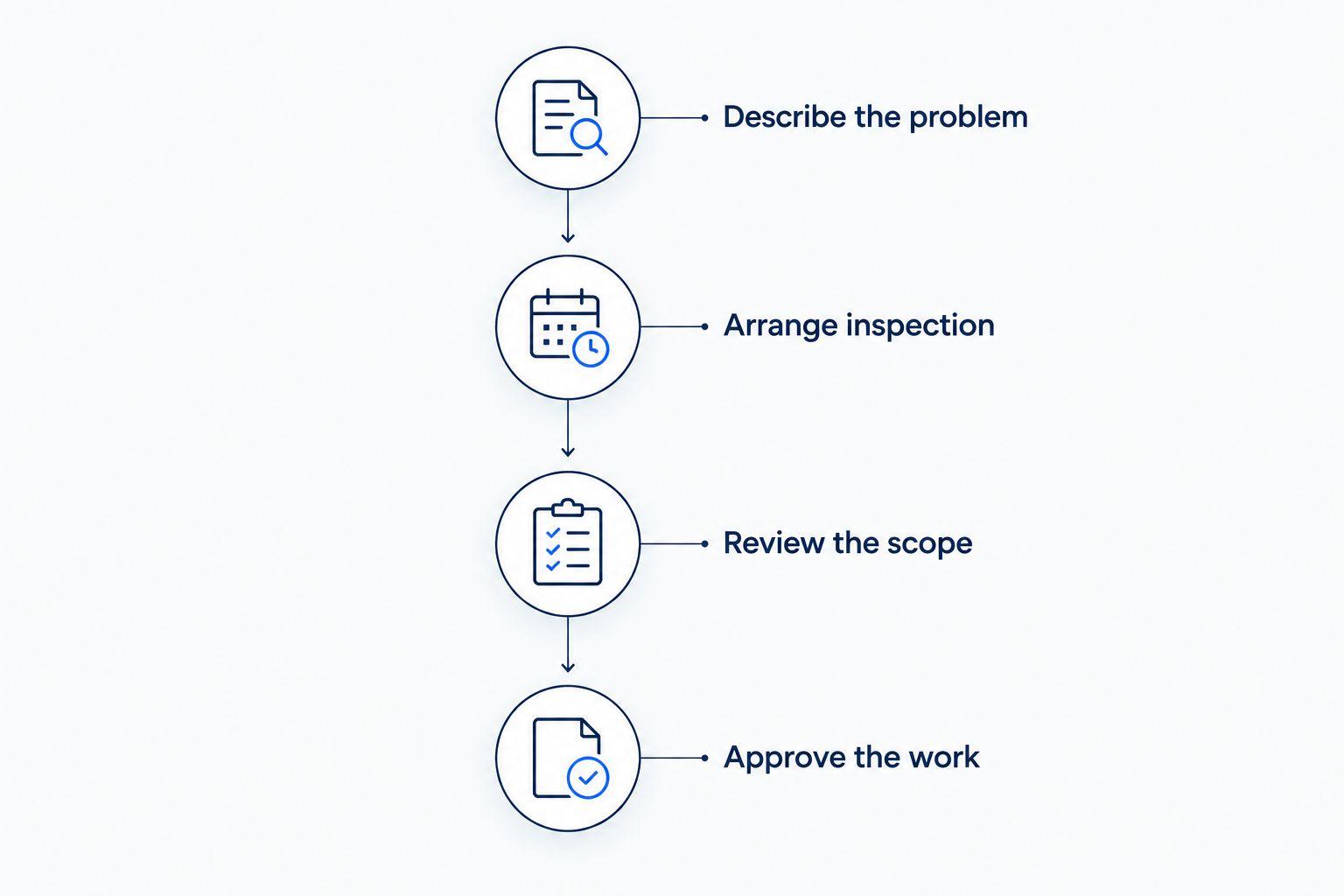
Keep the request process simple. Give the contractor enough information to understand the problem, then let the licensed electrician determine what requires inspection. Do not perform electrical testing yourself to make the request more detailed.
- Describe the problem. State the symptom, equipment, and work location.
- Arrange inspection. Provide safe access when an on-site assessment is needed.
- Review the scope. Read the proposed work, equipment, and exclusions.
- Approve the work. Confirm the written agreement and the next scheduled step.
Photographs can help describe an issue, but they do not replace an inspection. Take them only from a safe position. Do not remove a panel cover, expose wiring, or approach damaged equipment for a better picture.
Request a written electrical quote
Describe your residential, commercial, or oilfield job and ask for a same-business-day response.
The practical verdict: choose a defined job, not a promise
For homeowners: Choose Eagle Electric for licensed residential electrical contracting in the Bakken region. Bring the symptom or planned installation to the quote discussion, and expect site-specific decisions about circuit protection, wiring, and capacity.
For businesses and oilfield operators: Choose Eagle Electric for licensed commercial or oilfield electrical contracting in the Bakken region. Bring equipment requirements, access restrictions, and applicable site documentation so the proposed work addresses the operating conditions.
The advantage is a stated service scope covering these customer groups. The limit is equally important: that scope does not establish the details of your individual installation. Those belong in the assessment and written agreement.
| Decision point | What should determine your choice |
|---|---|
| Residential repair | Diagnosis of the symptom and a defined repair scope |
| Commercial installation | Equipment requirements and an agreed interruption plan |
| Oilfield installation | Site conditions and applicable electrical requirements |
| Panel work | Capacity assessment and equipment condition |
| Quote approval | Written inclusions, exclusions, and change authorization |
| Scheduling | Confirmed next steps rather than assumed completion dates |
FAQ
Is Eagle Electric a licensed electrical contractor?
Eagle Electric is a licensed electrical contracting company based in Watford City, ND. It provides residential, commercial, and oilfield electrical services across the Bakken region.
What should I send when requesting an electrical quote?
Send the work location, the problem or planned installation, and the equipment involved. Include safe photographs and available equipment instructions, but do not remove electrical covers or expose wiring.
Does a same-business-day quote response mean the job will be finished that day?
No. A same-business-day response starts the quote conversation; assessment, written scope, equipment requirements, and the work schedule are separate steps.
Do I need an inspection before upgrading my electrical panel?
A licensed electrician needs to assess the existing installation and proposed loads before defining a panel upgrade. The panel label and available breaker spaces alone do not establish spare capacity.
Can I replace a tripping breaker with a larger one?
Do not replace a tripping breaker with a larger one without a licensed electrician assessing the circuit. Breaker protection must match the conductors and applicable equipment requirements.
What belongs in a commercial electrical quote?
A commercial electrical quote should define the work, included equipment, exclusions, and change-approval process. Confirm access, shutdown requirements, and included testing or documentation before authorizing the job.
What information does an electrician need for oilfield work?
Provide the equipment requirements, work location, applicable site rules, and hazardous-area documentation. The electrician must assess the installation against the actual operating environment.
How should I plan an electrical project in 2026?
Start your 2026 electrical project with a clear description of the problem and an agreed assessment step. Approve a written scope before work begins, and keep scheduling commitments separate from quote-response timing.
One last thing: tell the electrician what changed
A useful detail is often the change that happened before the problem started. A new appliance, moved equipment, recent remodel, or water intrusion gives the electrician a starting point. Report the sequence without guessing at the cause.
Write that detail into your request. A clear description helps define the assessment; a confident guess can send the conversation toward the wrong repair. Describe what happened. Let the licensed electrician establish why.