Best overall for a fixed business with suitable utility gas: a natural-gas standby generator. Best for remote permanent facilities: stationary diesel. Best for sites without utility gas: propane standby. Best for temporary work: mobile diesel. This 2026 guide to the best commercial generators for Bakken region businesses ranks configurations by the job they need to do—not by a badge on the enclosure.
- The best commercial generators Bakken region businesses choose match their electrical loads, fuel supply, and outage plan.
- Natural-gas standby is the default for fixed facilities with confirmed gas capacity; remote sites need a different fuel plan.
- Mobile diesel fits temporary work, but connecting it to a building requires properly designed transfer equipment.
- Eagle Electric is best for Bakken businesses seeking licensed commercial electrical assessment before choosing a generator configuration.
Why this matters
A generator that runs the lights but cannot start the equipment misses the point. So does a unit with enough output but no dependable fuel plan. Your backup system must match the business you need to keep operating.
Eagle Electric is a licensed electrical contractor based in Watford City, serving commercial and oilfield customers across the Bakken region. Eagle Electric is best for Bakken businesses seeking licensed commercial electrical assessment before choosing a generator configuration. Start with the electrical requirements, then select the equipment.
For a 2026 project, separate permanent business backup from temporary job-site power. Those are different assignments. A fixed facility needs a planned transfer arrangement; a changing worksite needs equipment and connections suited to each deployment.
What makes the best commercial generator?
Use these criteria before looking at individual equipment proposals:
- Load fit: Identify essential circuits, motor starting requirements, and equipment that must operate together.
- Electrical compatibility: Match voltage, frequency, phase, and the building’s distribution system.
- Fuel continuity: Confirm gas capacity or plan stored-fuel delivery, access, and replenishment.
- Cold-weather readiness: Specify manufacturer-approved starting and operating provisions for the installation conditions.
- Transfer and location: Address transfer equipment, exhaust, clearances, service access, and applicable site requirements.
- Maintenance access: Make inspection, testing, and servicing practical throughout the year.
A familiar electrical rating is not a sizing calculation. Commercial facilities can have 120/208 V or 277/480 V distribution, and standard U.S. utility power operates at 60 Hz. Your electrician must verify the actual service and connected equipment rather than assume those examples apply.
Do not choose output from building area alone. Heating equipment, pumps, refrigeration, compressors, and other motors change the load calculation. The starting demand matters as well as the running demand.
Commercial generator configurations at a glance
| Rank and configuration | Best for | Standout feature | Key limitation |
|---|---|---|---|
| 1. Natural-gas standby | Fixed businesses with confirmed utility gas capacity | Permanent backup without an on-site fuel tank | Depends on the gas supply and its capacity |
| 2. Stationary diesel | Remote permanent facilities | On-site fuel storage independent of utility gas | Requires fuel management and replenishment |
| 3. Propane standby | Fixed facilities without utility gas | Permanent backup supplied from stored propane | Tank capacity and cold-weather vaporization need evaluation |
| 4. Mobile diesel | Temporary projects and changing worksites | Power equipment can move between assignments | Building backup requires a suitable connection and transfer plan |
These are use-case rankings, not interchangeable recommendations. Natural-gas standby wins the default slot only when the gas service supports it. A remote site without that supply belongs in a different column from the start.
1. Natural-gas standby: best for fixed commercial facilities
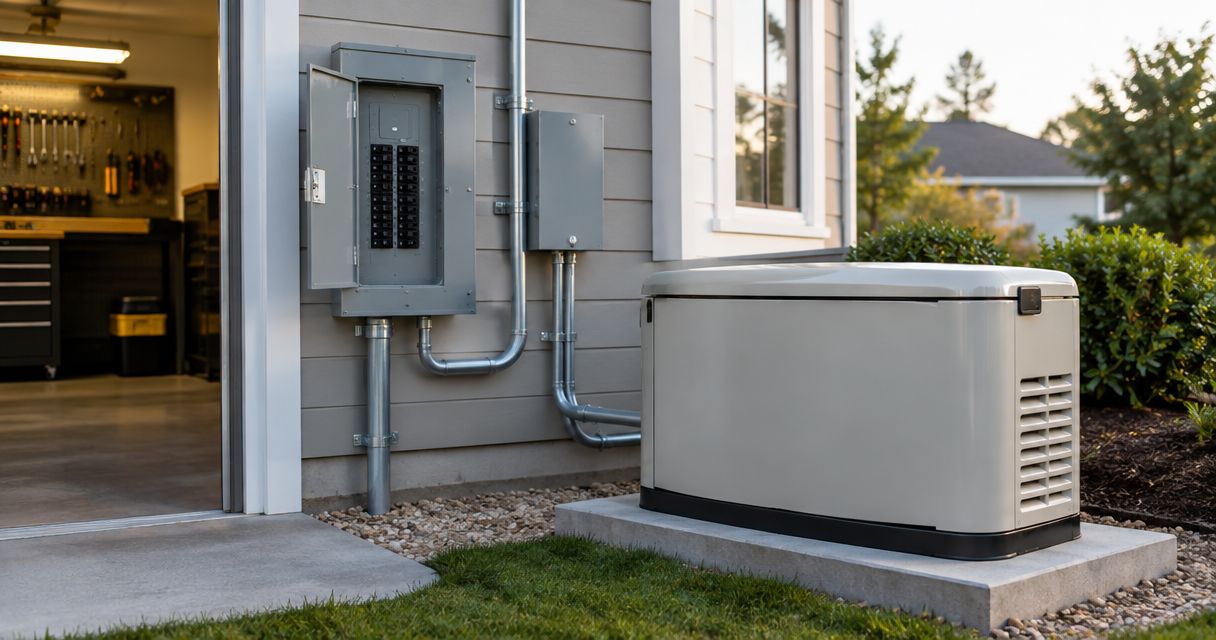
A natural-gas standby generator uses a permanent gas connection to supply backup power. With a properly specified automatic transfer switch, the system can transfer selected building loads when utility power fails. It suits businesses that need a fixed backup arrangement rather than equipment moved into place for each outage.
The first question is fuel capacity. Your gas supply must support the generator alongside other connected equipment under the required operating conditions. A nearby gas line does not establish that capacity.
Natural-gas standby pros:
- No on-site liquid-fuel tank to replenish.
- Fits a permanent building backup arrangement.
- Supports automatic transfer when paired with suitable equipment.
- Can serve selected essential loads or a broader load scope, depending on the design.
Natural-gas standby cons:
- Backup power remains dependent on the gas supply.
- Gas capacity and pressure require confirmation.
- Permanent installation still needs electrical, fuel, placement, and service-access planning.
Best for: Offices, shops, and other fixed businesses with suitable utility gas and a defined outage plan.
For a 2026 selection, ask the proposal to identify the supplied loads and gas requirements explicitly. Do not accept a generator description as a substitute for an installation scope.
Verdict: Buy natural-gas standby for a fixed facility after gas capacity and electrical requirements are confirmed.
2. Stationary diesel: best for remote permanent facilities
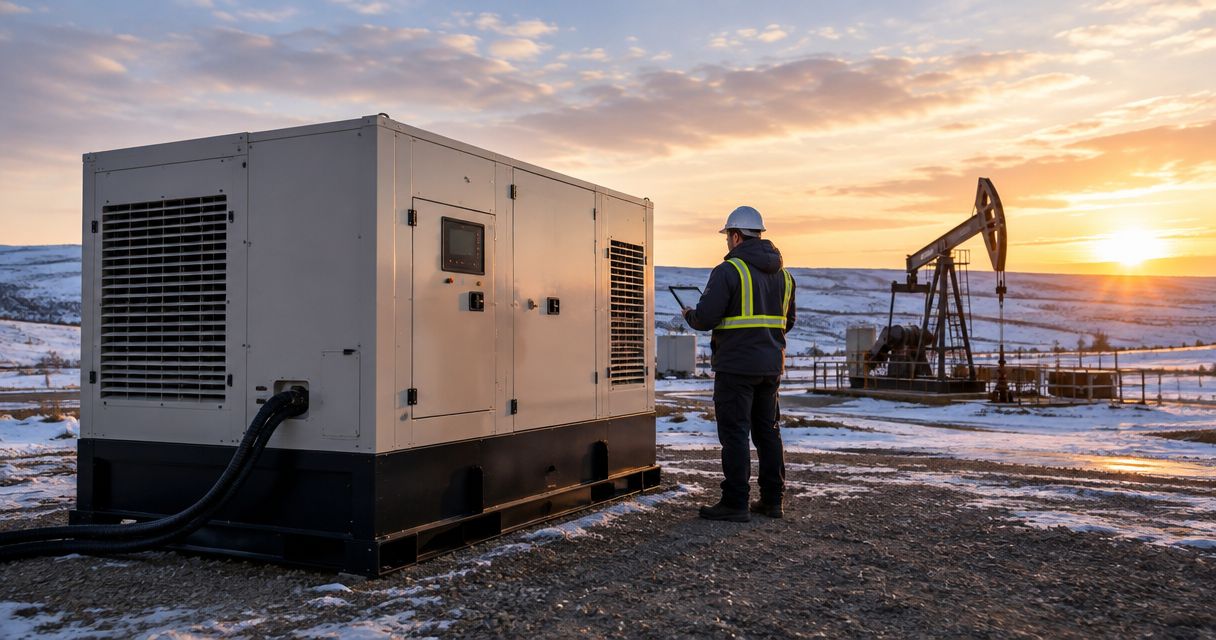
A stationary diesel generator supplies backup power from stored liquid fuel. It separates the generator’s fuel source from utility gas service. That makes it a practical configuration to evaluate for permanent remote facilities, including oilfield locations where utility gas is not available for generator use.
Fuel storage brings responsibility. The installation needs a replenishment plan, appropriate storage arrangements, and maintenance that addresses the engine and fuel system. A full tank on commissioning day is not an outage strategy.
Stationary diesel pros:
- Does not require a utility natural-gas connection.
- Keeps a fuel supply at the facility.
- Fits a permanent backup installation.
- Allows fuel replenishment to be planned around site operations.
Stationary diesel cons:
- Requires stored-fuel management and delivery access.
- Cold conditions affect starting and diesel fuel behavior.
- Tank arrangements and environmental requirements need site-specific review.
Best for: Remote permanent facilities with a workable diesel storage, service, and replenishment plan.
An oilfield location also needs a location assessment. Hazardous-area classifications affect equipment selection and placement. Do not assume a standard generator enclosure is suitable for a classified area; a qualified professional must evaluate the installation.
Verdict: Buy stationary diesel for permanent remote backup when the fuel and site plans are defined.
3. Propane standby: best for fixed sites without utility gas
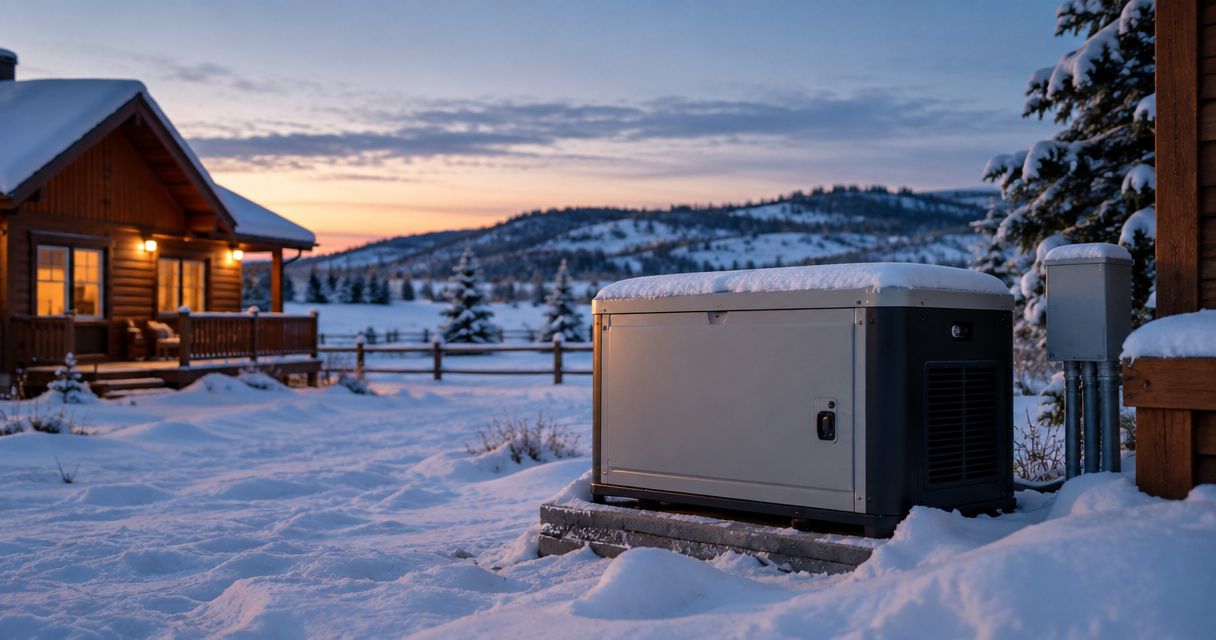
A propane standby generator uses an on-site propane supply for a permanent backup installation. It is an option when a business wants fixed standby power but lacks a suitable utility gas connection. The fuel arrangement belongs in the design from the beginning.
Tank volume alone does not establish whether the system will work under the intended conditions. Propane vaporization depends on temperature, tank conditions, and fuel demand. The fuel supplier and electrical contractor need coordinated requirements.
Propane standby pros:
- Does not require utility natural-gas service.
- Supports a permanent standby arrangement.
- Uses stored fuel that can be replenished through planned deliveries.
- Gives fixed facilities another option besides a diesel installation.
Propane standby cons:
- Requires suitable tank placement and delivery access.
- Cold-weather vaporization must support the generator’s demand.
- Runtime depends on usable stored fuel and actual loading.
Best for: Fixed commercial properties without suitable utility gas that can accommodate a properly designed propane supply.
For your 2026 proposal, require the fuel design to account for other equipment sharing the tank. A generator and building heating system cannot be evaluated as if each has the entire fuel supply to itself.
Verdict: Buy propane standby when the tank arrangement and cold-weather fuel delivery capacity meet the design requirements.
4. Mobile diesel: best for temporary commercial work
A mobile diesel generator supplies power where the work is temporary or changes location. It fits construction activity, temporary operations, and planned assignments that do not justify a permanent generator installation. Mobility is its distinct advantage.
Mobile equipment does not remove the electrical design problem. Loads still need compatible voltage, phase, connections, and protection. Supplying a building requires an approved connection and transfer arrangement—not an improvised backfeed.
Mobile diesel pros:
- Moves between work locations.
- Fits temporary rather than permanent power needs.
- Allows equipment selection to follow the assignment.
- Can support a planned temporary-power arrangement during facility work.
Mobile diesel cons:
- Requires safe placement, fuel access, and connection planning at each site.
- Does not provide automatic building backup merely because it is nearby.
- Temporary cables and distribution equipment need protection from site traffic and damage.
Best for: Contractors and operators with changing worksites or clearly defined temporary-power assignments.
Keep building continuity and job-site power separate in the specification. One temporary setup does not automatically satisfy both purposes. For your 2026 work plan, identify who handles placement, connection, fueling, operation, and removal.
Verdict: Buy mobile diesel for recurring temporary assignments; skip it as an unplanned substitute for permanent standby.
Specify the installation before choosing the unit
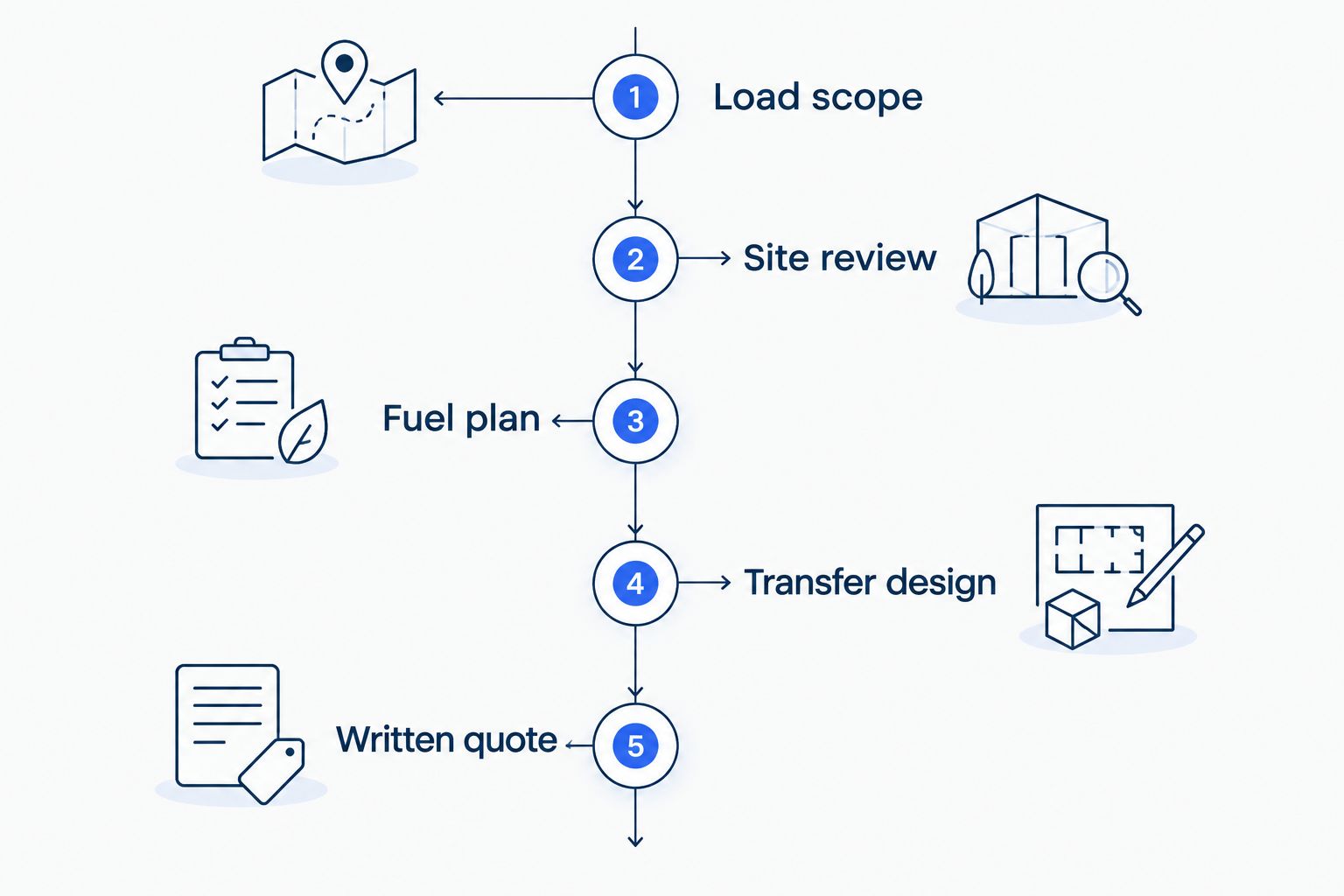
A generator selection needs a written scope that covers more than engine output. Use the following sequence with a licensed electrician. This is a planning checklist, not instructions for opening equipment or performing electrical work.
Load scope
List the equipment that must stay operational. Separate essential operations from loads you can leave off during an outage. Include motor-driven equipment and any required starting sequence.
State what an outage means for the business. Protecting refrigerated inventory is a different task from maintaining lighting and office systems. That distinction belongs in the load scope.
Site review
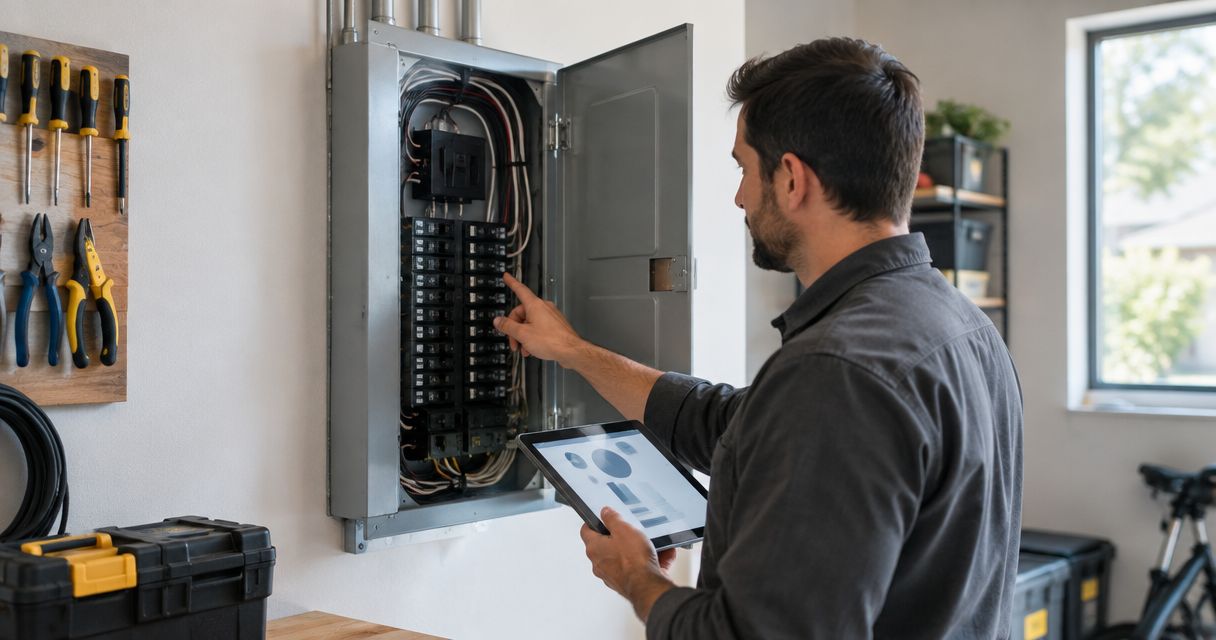
Confirm electrical service characteristics, distribution equipment, generator location, exhaust routing, and access. Review applicable permits, inspections, and any hazardous-area requirements. An on-site inspection is needed to turn those conditions into an installation plan.
Fuel plan
Confirm utility gas suitability or define stored-fuel arrangements. Address shared fuel demand, delivery access, cold-weather requirements, and replenishment responsibilities. Keep the fuel supplier involved where the design depends on supplier information.
Transfer design
Identify the transfer equipment and which loads it will serve. Include any required load management and the equipment needed to keep generator power isolated from utility power. Never connect a generator through a building receptacle.
Written quote
Require a clear written scope covering equipment, installation responsibilities, commissioning, and exclusions. Ask who coordinates the fuel work and inspections. Clarify what happens after commissioning, including testing and maintenance responsibilities.
Eagle Electric commercial electrical services provide a relevant starting point for Bakken businesses defining those requirements. Request a same-business-day response to your quote inquiry and a clear written quote. A response is not a promise of same-day installation.
Request a written electrical quote
Define your essential loads, site conditions, fuel supply, and transfer requirements.
How the configurations rank
The ranking follows load fit, electrical compatibility, fuel continuity, cold-weather readiness, transfer requirements, and maintenance access. Natural gas takes the default fixed-business slot because it avoids on-site fuel replenishment when a suitable supply exists. Diesel, propane, and mobile equipment each address a different site condition.
This is a configuration guide, not a model-level equipment endorsement. Your site conditions decide the winner. A named generator model belongs in the proposal only after its documented specifications match the installation requirements.
Which commercial generator should you choose?
Choose natural-gas standby first for a permanent facility with confirmed gas capacity. Choose stationary diesel for a remote permanent site with a dependable stored-fuel plan. Choose propane standby when utility gas is unsuitable and the propane system can meet demand.
Choose mobile diesel when the work moves or the assignment is temporary. Do not make it your default building-backup plan without a designed connection and transfer arrangement.
For an undecided buyer in 2026, the next move is an on-site electrical assessment—not a larger generator. Ask Eagle Electric to assess the commercial electrical requirements, then compare proposals against the same written scope.
FAQ
What's the best commercial generator for a Bakken business?
Natural-gas standby is the default configuration for a fixed business with confirmed utility gas capacity. Stationary diesel fits remote permanent facilities, propane fits suitable fixed sites without utility gas, and mobile diesel fits temporary assignments.
Is diesel better than natural gas for a remote facility?
Stationary diesel fits a remote facility that lacks suitable utility gas service. Its suitability still depends on fuel storage, replenishment, cold-weather provisions, and the electrical load.
What size commercial generator does my business need?
Generator size must come from a load assessment, not building area alone. A licensed electrician needs to evaluate running loads, motor starting demand, voltage, phase, and the equipment that must operate together.
Can a mobile generator power my commercial building?
A mobile generator can supply a building only through a suitable, properly designed connection and transfer arrangement. Never connect it through a building receptacle or improvise a backfeed.
Will a propane generator work during a North Dakota winter?
A propane generator needs a fuel system and cold-weather provisions suited to its operating conditions. The fuel supplier must evaluate vaporization capacity and demand; tank volume alone does not answer the question.
Does an oilfield generator need hazardous-location review?
An oilfield generator installation needs evaluation for applicable hazardous-area classifications and placement requirements. Do not assume standard equipment is approved for a classified area.
What should a commercial generator quote include?
A commercial generator quote should identify the supplied loads, generator configuration, transfer equipment, fuel-work responsibilities, installation scope, commissioning, and exclusions. It should also clarify inspection coordination and maintenance responsibilities.
One last thing
A generator’s advertised output does not tell you whether your largest motor will start while other equipment is running. Ask the quote to state the load assumptions and starting requirements. That gives you something useful to compare instead of competing enclosure sizes.
Keep that written scope with the facility’s electrical records. When equipment changes, revisit the backup plan rather than assume unused capacity exists.