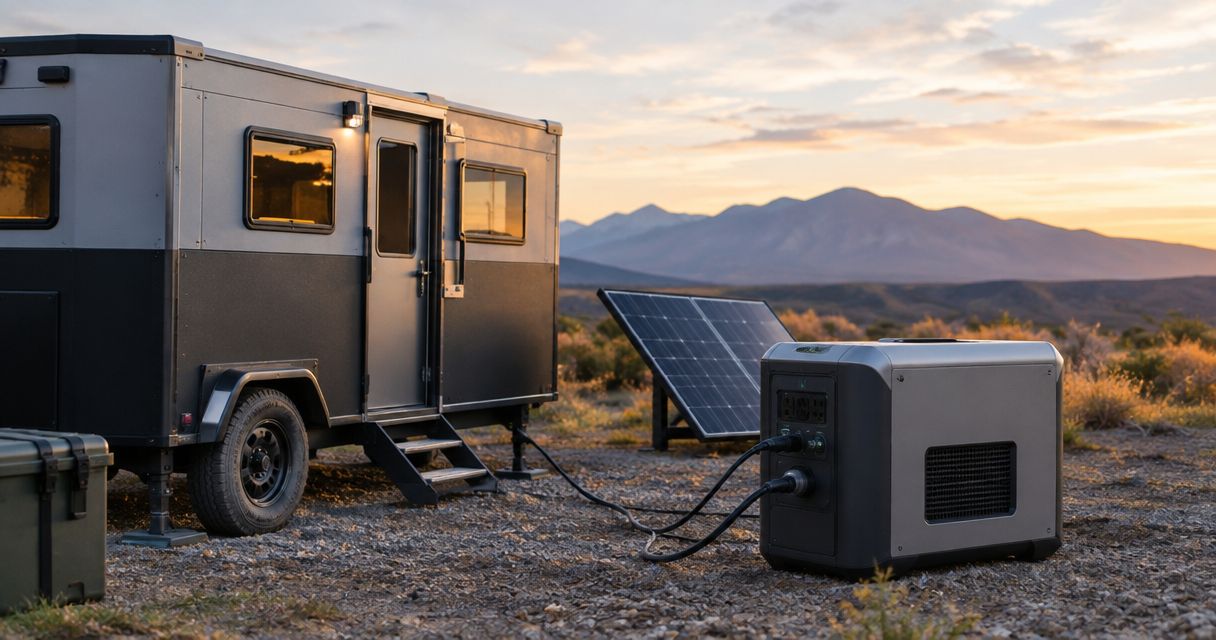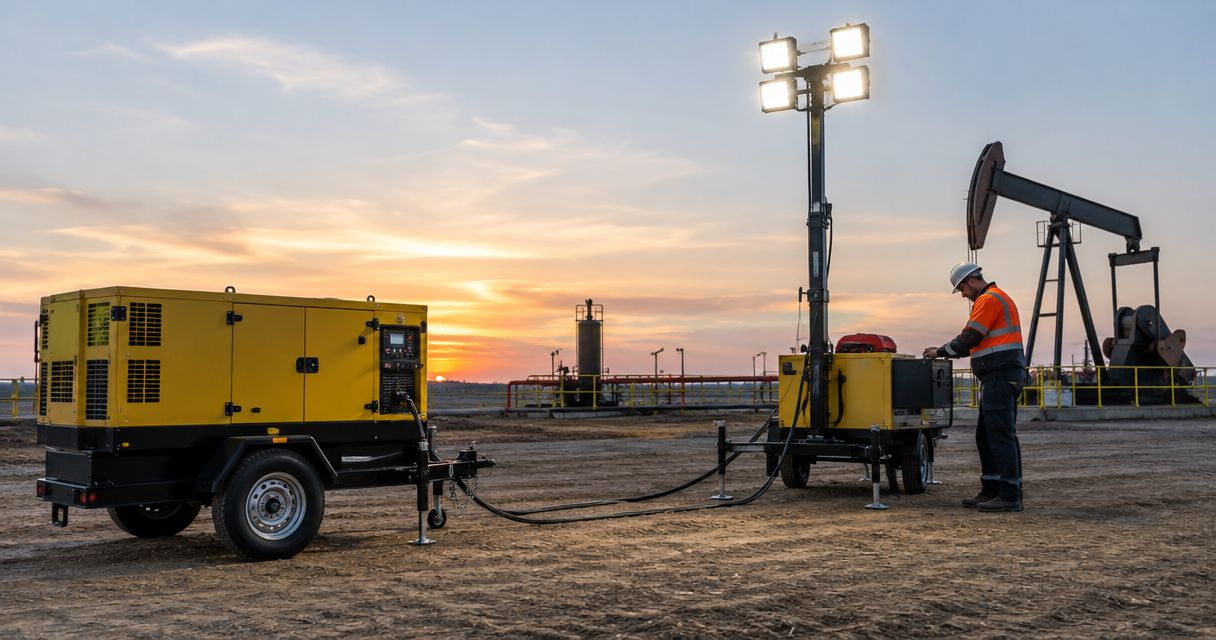
Yes. A licensed electrician can install oilfield temporary power when the work falls within the electrician’s license and the contractor meets the site’s requirements. The license does not replace load calculations, hazardous-location review, permits, inspections, or approval to energize.
- For licensed electrician oilfield temporary power work, verify licensing, site qualifications, and responsibility for inspections before mobilization.
- Temporary power still needs load planning, suitable distribution equipment, grounding, bonding, and protection from physical damage.
- Eagle-Elc provides licensed oilfield electrical contracting services for operators across the Bakken region.
- Keep equipment de-energized until the required checks and approvals are complete.
Can a licensed electrician install oilfield temporary power?
Yes—but hire for the installation, not just the license. An oilfield hookup involves the power source, connected equipment, distribution system, site conditions, and the people authorized to approve the work. A license alone does not establish experience with every oilfield installation.
For the wider scope, see the oilfield electrical services guide for drillers. For a specific temporary hookup, use this sequence before anyone energizes equipment:
- Verify qualifications. Confirm the contractor’s authorization to perform the work and the qualifications of the assigned electricians.
- Define the load. List the equipment, nameplate information, starting requirements, and expected simultaneous operation.
- Review the site. Identify classified areas, traffic routes, exposure, connection points, and equipment locations.
- Assign approvals. Establish who handles permitting, inspections, utility coordination, and the operator’s release process.
- Inspect before energizing. Complete the applicable installation checks and required approvals before the system enters service.
These are planning and acceptance steps. They are not instructions for making electrical connections yourself.
Why this matters
Temporary does not mean low risk. A distribution cable crossing a vehicle route, an unsuitable enclosure near a classified area, or an overloaded connection can turn a short-term setup into an electrical hazard.
Your 2026 work plan should identify who owns each part of the installation. The operator, electrical contractor, generator supplier, and utility need clear boundaries where their responsibilities meet. Do not leave the final connection or permission to energize assumed.
Treat temporary power as an electrical installation, not an extension-cord arrangement. Equipment selection, protection, and inspection still matter when the equipment will leave the site later.
What must the electrician check on site?
An on-site inspection establishes conditions that a phone call cannot settle. Photos and equipment lists help prepare the visit, but they do not show every cable route, damaged connection, classified boundary, or access restriction.
Load requirements
Give the electrician readable nameplates and an operating list. Identify motors, heaters, lighting, trailers, controls, and other equipment that will run together. Starting a motor is not the same electrical demand as keeping it running.
Nameplate voltage matters. Equipment marked 120 volts, 240 volts, or 480 volts is not interchangeable just because a connector appears to fit. The electrician must verify voltage, phase, frequency, connection requirements, and the suitability of the complete supply arrangement.
Do not select the hookup from generator output alone. Distribution equipment, conductors, connectors, and protective devices must also suit the intended load and installation conditions.
Hazardous locations
Oilfield work requires attention to flammable gas and vapor hazards. The site’s area-classification information determines where ordinary electrical equipment is unsuitable and where appropriately rated equipment is required.
Ask who supplies and approves that classification information. Do not ask a crew to guess the boundary from the distance to a tank or wellhead. Moving a light, receptacle, or generator changes the installation and requires review when it affects those boundaries.
Grounding, bonding, and protection
The electrician must evaluate the complete grounding and bonding arrangement. Generator configuration, distribution equipment, and any connection to an existing system affect that review.
A ground rod is not a substitute for a complete grounding and bonding design. Do not add connections, remove bonding provisions, or alter protective devices based on a rule of thumb. Ground-fault protection also needs review under the requirements applicable to the installation.
Physical conditions
Walk the planned routes before equipment arrives. Identify vehicle crossings, standing water, snow-clearing routes, sharp edges, access paths, and places where equipment will be moved.
A cable that reaches the load is not automatically installed safely. Routing, support, mechanical protection, environmental suitability, and access to disconnecting equipment all need attention.
Which temporary power arrangement fits the job?
The right arrangement depends on the source already present, the loads you need, and the installation’s purpose. None of these options removes the need for electrical review.
| Arrangement | Best for | Practical advantage | Limitation to resolve |
|---|---|---|---|
| Utility-fed temporary distribution | Sites using an approved utility supply | Supplies temporary loads from a utility connection | Requires supply coordination and suitable service and distribution equipment |
| Generator-fed temporary distribution | Sites using an independent generating source | Provides a source without relying on an energized utility connection | Requires generator sizing, grounding and bonding review, and fuel planning |
| Temporary distribution from existing site power | Sites with an approved existing electrical source | Uses an established connection point | Existing capacity and connection suitability must be verified |
Choose the source after reviewing the loads and site—not before. A generator already in the yard does not establish that it can start the equipment or support the full operating demand.
An existing panel also needs evaluation. An empty breaker position does not prove spare electrical capacity, and a familiar receptacle does not prove that the supply matches the equipment.
Why oilfield temporary power requirements vary
A clear written quote starts with a defined scope. These factors change the work that must be designed, supplied, installed, inspected, and eventually removed:
- Connected loads. Motor starting, heating loads, and simultaneous operation affect the supply and distribution requirements.
- Power source. Utility service, generator power, and an existing site connection create different coordination tasks.
- Area classification. Classified boundaries affect equipment selection and placement.
- Cable routes. Distance, vehicle crossings, exposure, and physical protection affect installation details.
- Site changes. Relocating trailers, adding loads, or changing the operating layout requires another review.
- Approval requirements. Permitting, inspections, utility requirements, and operator procedures determine the acceptance process.
For a 2026 project, put those conditions into the scope before mobilization. Separate confirmed requirements from items that still need an on-site inspection. That gives both parties a clear basis for discussing changes.
What should your temporary power quote include?
Ask for a written scope you can check against the site. A short description such as temporary hookup leaves too much room for disagreement about equipment, testing, coordination, and removal.
Your quote request should identify these responsibilities:
- Supply equipment: Who provides the generator, distribution equipment, cables, connectors, and protective equipment?
- Installation boundary: Where does the contractor’s work begin and end?
- Site preparation: Who provides access, approved equipment locations, and protection from traffic?
- Approvals: Who handles permit applications, inspection scheduling, and utility communication where required?
- Acceptance: What checks, records, and approvals are required before energization?
- Removal: Who disconnects, removes, and makes the remaining installation safe?
Also state what remains undecided. If equipment nameplates or classification documents are not available, identify those items as prerequisites rather than letting them become assumptions.
Keep the quote-response deadline separate from the installation schedule. A same-business-day response to a quote request is not a promise of same-day job completion. Site inspection, equipment coordination, approvals, and installation still need their own schedule.
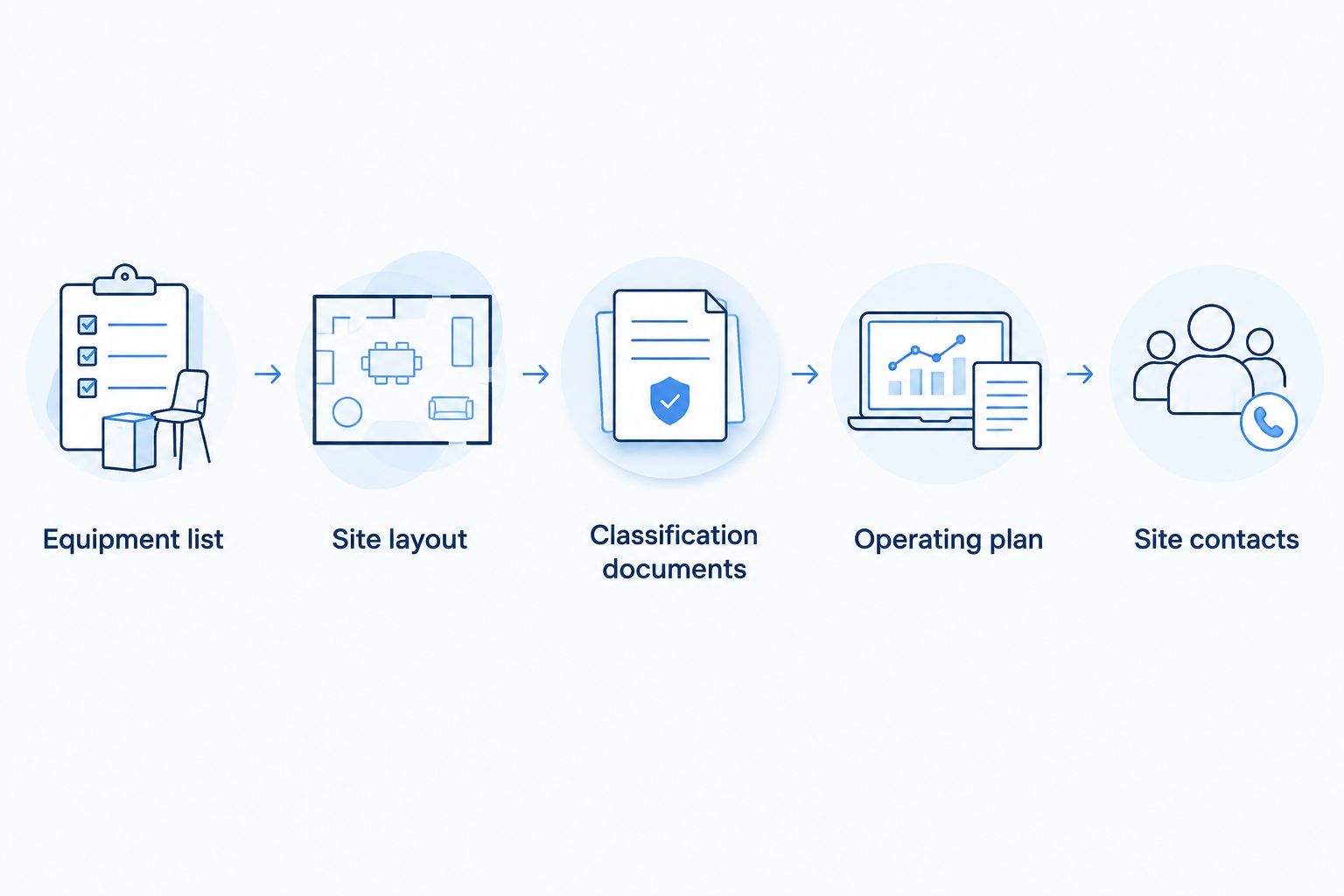
What should you send before the site visit?
Send enough information to make the visit useful. A site address alone does not tell an electrician what must be powered or where the hazards and connection points are.
- Equipment list. Include readable nameplates and identify equipment that starts or runs together.
- Site layout. Mark proposed source locations, loads, traffic routes, and existing electrical equipment.
- Classification documents. Provide the current information governing hazardous locations.
- Operating plan. State the intended use, expected changes, and who controls shutdowns.
- Site contacts. Identify the person responsible for access and the person authorized to accept the installation.
Use current information for your 2026 mobilization. An old layout becomes unreliable when trailers move, processes change, or new equipment arrives. Mark revisions clearly so the contractor is not designing around equipment that has already left.
Who is responsible before power is turned on?
The installation needs a defined release point. Agree on who verifies that the electrical work is ready, who confirms required approvals, and who authorizes operation under the site’s procedures.
Do not treat generator delivery as permission to connect it. Do not treat a completed connection as permission to energize it. Those are separate events with separate checks.
Keep the accepted load list and installation records with the responsible site personnel. If someone adds equipment later, the original acceptance does not establish that the added load is safe.
For the 2026 handover, ask for clear identification of disconnects, supplied loads, operating restrictions, and the contact for electrical problems. Your crew should not have to trace cables during an incident to discover what a disconnect controls.
Does every licensed electrician have the right oilfield experience?
No. Electrical licensing and experience with the proposed oilfield work are different checks. Ask about comparable distribution work, hazardous-location requirements, site coordination, and the electrician’s role in testing and acceptance.
Eagle-Elc is a fit for Bakken operators seeking licensed oilfield electrical contracting services. The company is based in Watford City and serves oil and gas operators across the Bakken region.
That service scope does not establish the requirements of your particular hookup. Eagle-Elc still needs the equipment information, site conditions, and installation boundaries to define the work. Request a clear written quote and distinguish the response date from the proposed work schedule.
Request an oilfield electrical quote
Provide the equipment list, site location, and planned power source. Ask for a clear written scope.
Can temporary power connect to permanent site wiring?
Yes, when a licensed electrician designs and installs an appropriate connection. The arrangement must address isolation, protection, grounding and bonding, and the conditions of both systems.
Never connect a generator to permanent wiring through an improvised cord or unapproved connection. The connection must prevent unintended energization of another source and protect people working on the installation.
Does temporary power need another review after equipment moves?
Yes. Moving equipment changes cable routes, connection conditions, and sometimes the relationship to classified areas. Adding equipment also changes the load.
Stop and have the affected installation reviewed before it returns to service. Do not assume the original approval covers a different layout or operating arrangement.
FAQ
Can any licensed electrician install temporary power on an oilfield site?
A license alone does not establish suitability for every oilfield installation. Verify authorization for the work, relevant experience, and compliance with the operator’s site requirements.
Do I need an on-site inspection before an oilfield temporary power hookup?
An on-site inspection is needed to verify the conditions governing the hookup. Equipment lists and photos help planning but do not replace checking the source, routes, connections, and site hazards.
Can I choose a generator using only the running load?
No. Generator selection must also account for starting requirements, simultaneous operation, and compatibility with the equipment and distribution system.
Does a ground rod make a temporary generator installation safe?
No. A ground rod alone does not establish a safe grounding and bonding arrangement. A licensed electrician must evaluate the complete installation and required protection.
Can crews move temporary distribution cables themselves?
Do not relocate temporary distribution cables without the responsible electrical personnel’s review. A new route can introduce traffic damage, environmental exposure, or hazardous-location concerns.
Does Eagle-Elc provide oilfield electrical services in the Bakken?
Yes. Eagle-Elc provides licensed oilfield electrical contracting services to oil and gas operators across the Bakken region from its Watford City base.
Does a quick quote response mean the hookup will be finished that day?
No. A quote response and job completion are different commitments. The work schedule depends on the defined scope, site conditions, equipment coordination, and required approvals.
One last thing
Plan the disconnect before the hookup. Temporary equipment eventually moves, and its removal needs a safe electrical sequence just as its installation does.
For your 2026 scope, name the party responsible for shutdown, isolation, disconnection, and removal. Include the condition in which the remaining site wiring must be left. A temporary installation is not finished when the loads start running; its scope should cover how the system leaves service safely.