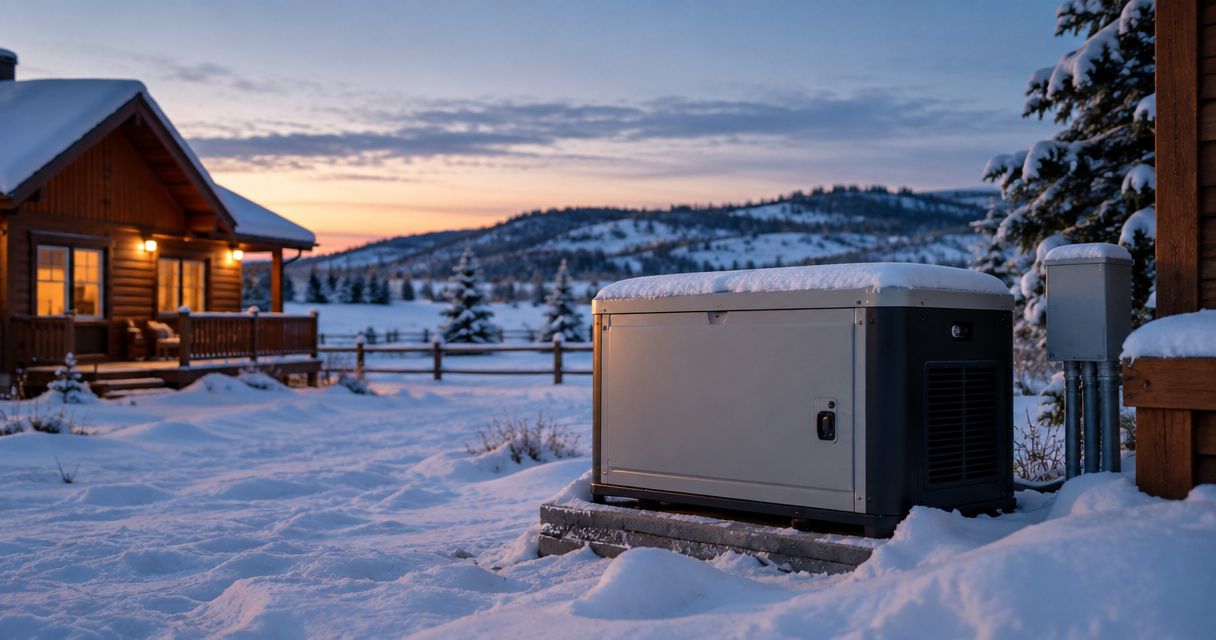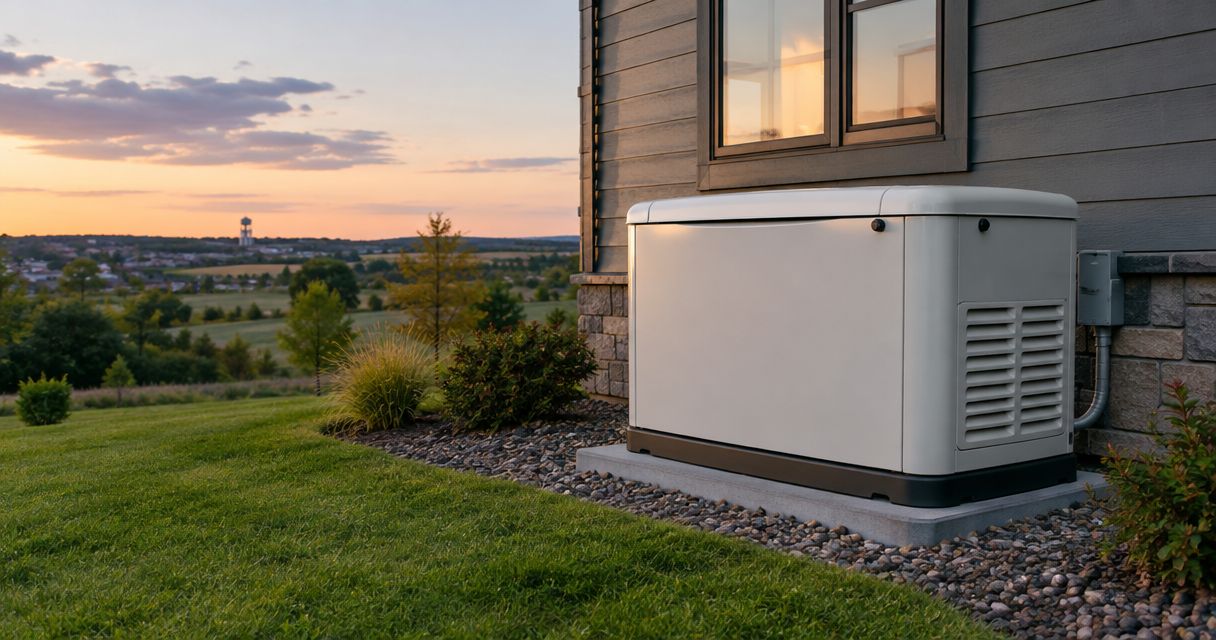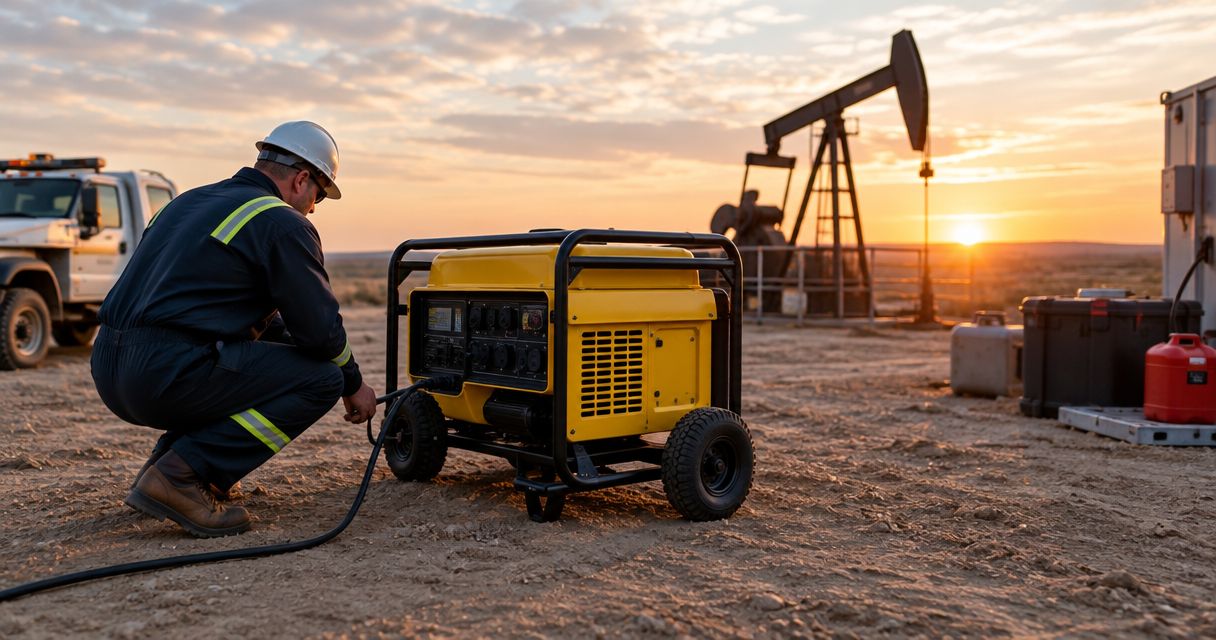
Best overall: a site-matched 120/240 V portable generator for mixed job-site loads. Best for light electronic loads: an inverter generator. Best for motor-heavy work: a generator sized to the motor’s starting demand. Eagle Electric is best for oilfield operators who need a licensed electrician to check generator placement, load requirements, and connections before power is put to work.
- The best portable generators for oilfield job sites are selected by load, connection method, and site classification—not output alone.
- A site-matched 120/240 V generator is the default choice when a crew needs both voltage options.
- An inverter generator suits light electronic loads; motor-heavy work calls for a starting-load check.
- Eagle Electric handles oilfield electrical work across the Bakken region; have a licensed electrician review the setup.
Why this matters
A portable generator can run the right equipment and still be wrong for the site. An undersized unit can struggle when a motor starts. A generator placed where an engine or electrical equipment is not permitted creates a different problem entirely. Neither issue is fixed by buying the next size up.
Oilfield work adds a site question that comes before the shopping list: is the proposed location a hazardous (classified) area? The operator’s site rules and area classification determine what equipment belongs there. Do not treat a standard portable generator as suitable for a classified location because it is portable or because a crew has used one elsewhere.
Eagle Electric is a licensed electrical contractor serving oil and gas operators across the Bakken region. For a job-site generator, the useful first step is a load list and an on-site review of where and how temporary power will be connected.
What makes the best portable generator for an oilfield job site
Use these criteria before you compare generator types. A nameplate wattage is only one part of the decision.
- Site classification: Identify the planned generator location and follow the operator’s classification and equipment requirements. A unit suitable for an ordinary work area is not automatically suitable for a hazardous (classified) location.
- Load schedule: List every tool, light, charger, and motor that will run. Record its voltage and running demand, then identify loads with a higher starting demand. Decide which items must run at the same time.
- Connection method: Know whether equipment will plug directly into generator receptacles or connect to a temporary distribution setup. Never feed a building or site circuit through an improvised cord connection; a licensed electrician must assess the proper connection and isolation method.
- Exhaust location: Keep engine exhaust out of enclosed and partially enclosed spaces. Check the manufacturer’s placement instructions and the site’s rules before the unit runs; carbon monoxide is a serious hazard.
- Receptacles and protection: Match the actual plugs, voltage, and circuit protection to the equipment. A 120 V tool does not belong on an assumed 240 V outlet, and a matching-looking plug does not replace an electrical review.
- Operating plan: Decide who checks fuel, cords, damage, and shutdown procedures. A generator that meets the electrical load still needs a workable plan for safe use on a changing job site.
These checks put the decision in the right order. Confirm the location and connection first; select generator output from the load schedule second. If the classification or connection method is unclear, stop the selection and get an on-site assessment.
Portable generator types at a glance
These are generator configurations, not claims about particular makes or models. Check the actual unit’s nameplate, outlets, instructions, and site approval before use.
| Generator type | Best for | Standout feature | Key limitation |
|---|---|---|---|
| Site-matched 120/240 V portable generator | Mixed-voltage loads in a permitted location | Offers both voltage options when the specific unit is equipped for them | Voltage options do not establish capacity or site suitability |
| Inverter generator | Light electronic loads | Provides inverter-controlled AC output | Must still be checked against every connected load and starting demand |
| Motor-load-sized portable generator | Work with demanding motor starts | Selected around starting demand, not running demand alone | A larger unit does not solve an unsafe location or connection |
| Compact 120 V portable generator | A limited set of 120 V plug-in loads | Keeps the load plan narrow and easy to check | Cannot supply equipment that requires 240 V |
1. Site-matched 120/240 V generator: best for mixed loads
A site-matched 120/240 V portable generator is the best overall type when the load list includes equipment requiring both voltage options. Start with the specific loads, their starting demands, the generator’s available receptacles, and the proposed location. The 120/240 V marking does not tell you whether the unit can run everything at once.
This is the practical default for a crew whose electrical needs vary across the shift. It is not permission to connect every available tool. A licensed electrician must check how loads are distributed and whether the generator and connection arrangement fit the site.
Site-matched 120/240 V generator pros:
- Can serve a mixed-voltage load list when the selected unit has the required outlets and capacity.
- Gives the crew one clear starting point for listing connected equipment.
- Fits a load-by-load review instead of a guess based on generator size.
Site-matched 120/240 V generator cons:
- The stated voltage options say nothing about approval for a hazardous (classified) location.
- Connected motors can create starting demands that a running-load total misses.
- Outlet selection and a safe connection method still need checking.
Best for: Mixed 120 V and 240 V loads in a location where the proposed generator is permitted. Verdict: Buy only after the load schedule, location, and connection pass review.
2. Inverter generator: best for light electronic loads
An inverter generator makes sense when the load list centers on light electronic equipment rather than heavy motor starts. Check the output specifications of the actual unit against each device. The word inverter does not establish that a generator has the right receptacles, enough capacity, or approval for the proposed site.
Keep the use case tight. If a crew adds a compressor, pump, or other motor, revisit the load schedule instead of assuming the generator can absorb the change. Also check the manufacturer’s instructions for the equipment being powered; do not rely on a generator category name as an equipment-compatibility guarantee.
Inverter generator pros:
- Gives light electronic loads a clear, separate selection path.
- Can be assessed against a short, defined list of plug-in equipment.
- Avoids choosing generator output solely around loads the crew will not run.
Inverter generator cons:
- A light-load selection can become inadequate when motor loads are added.
- Inverter output does not answer site-classification or exhaust-placement questions.
- Device requirements and available generator outlets still have to match.
Best for: A defined set of light electronic loads in a permitted location. Verdict: Hold until the device list and site requirements are confirmed.
3. Motor-load-sized generator: best for demanding starts
A motor-load-sized portable generator is the choice when tools or equipment draw more power at startup than during normal operation. Build the selection around the actual motor data and the loads that must remain on while that motor starts. Running demand alone is not the answer.
This category is about the sizing method, not a promise that a bigger generator fixes a bad setup. If the equipment repeatedly struggles to start, stop and review the load, cords, connections, and generator specifications. Do not keep retrying a failing arrangement or bypass protection to make it run.
Motor-load-sized generator pros:
- Puts starting demand into the decision before equipment reaches the site.
- Forces a check of which loads operate together.
- Makes the sizing discussion specific to the motors the crew will use.
Motor-load-sized generator cons:
- Motor data and the intended operating sequence are needed before selection.
- Sufficient output does not make a generator acceptable in a classified area.
- Damaged cords or an unsuitable connection remain hazards regardless of capacity.
Best for: Job-site loads with motor starts that drive generator selection. Verdict: Wait for a starting-load check before choosing a unit.
4. Compact 120 V generator: best for limited plug-in work
A compact 120 V portable generator belongs on a short, fixed load list: equipment that uses 120 V and plugs in through an appropriate connection. It does not serve a 240 V load. Verify the selected unit’s outlets, protection, and capacity rather than assuming every compact generator has the same setup.
The main risk is scope creep. A crew brings another tool, then another, and the original load plan no longer describes what is connected. Keep the list current. If the work changes, reassess the generator instead of adding splitters or improvised wiring.
Compact 120 V generator pros:
- Works as a focused option for a limited 120 V load list.
- Makes it easier to spot when a new load changes the plan.
- Avoids selecting a mixed-voltage configuration when no listed load needs 240 V.
Compact 120 V generator cons:
- Does not meet a 240 V equipment requirement.
- Added tools can invalidate the original sizing decision.
- Compact size does not reduce exhaust or site-classification risks.
Best for: Limited 120 V plug-in loads with no planned 240 V equipment. Verdict: Skip if the load list includes 240 V equipment or unresolved motor starts.
Check the site before the generator arrives
For oilfield work in 2026, put the site questions in writing before a portable generator is assigned. A generator can match every listed tool and still be unusable at the proposed location. The operator’s classification information and site rules control that decision.
Use this order:
- Site classification: Confirm where the generator and its associated electrical equipment are proposed to sit. If the area classification is unknown, do not assume an ordinary portable unit is acceptable.
- Load schedule: Record the required voltages, running loads, motor-starting needs, and equipment that runs together. Recheck the list when the work scope changes.
- Connection method: Identify every point where power passes from the generator to equipment or distribution. Have a licensed electrician assess connections that go beyond direct, appropriate plug-in use.
- Exhaust location: Keep the engine outdoors and follow the unit’s placement instructions and site controls. Do not run a fuel-powered generator inside a building, trailer, or other enclosed space.
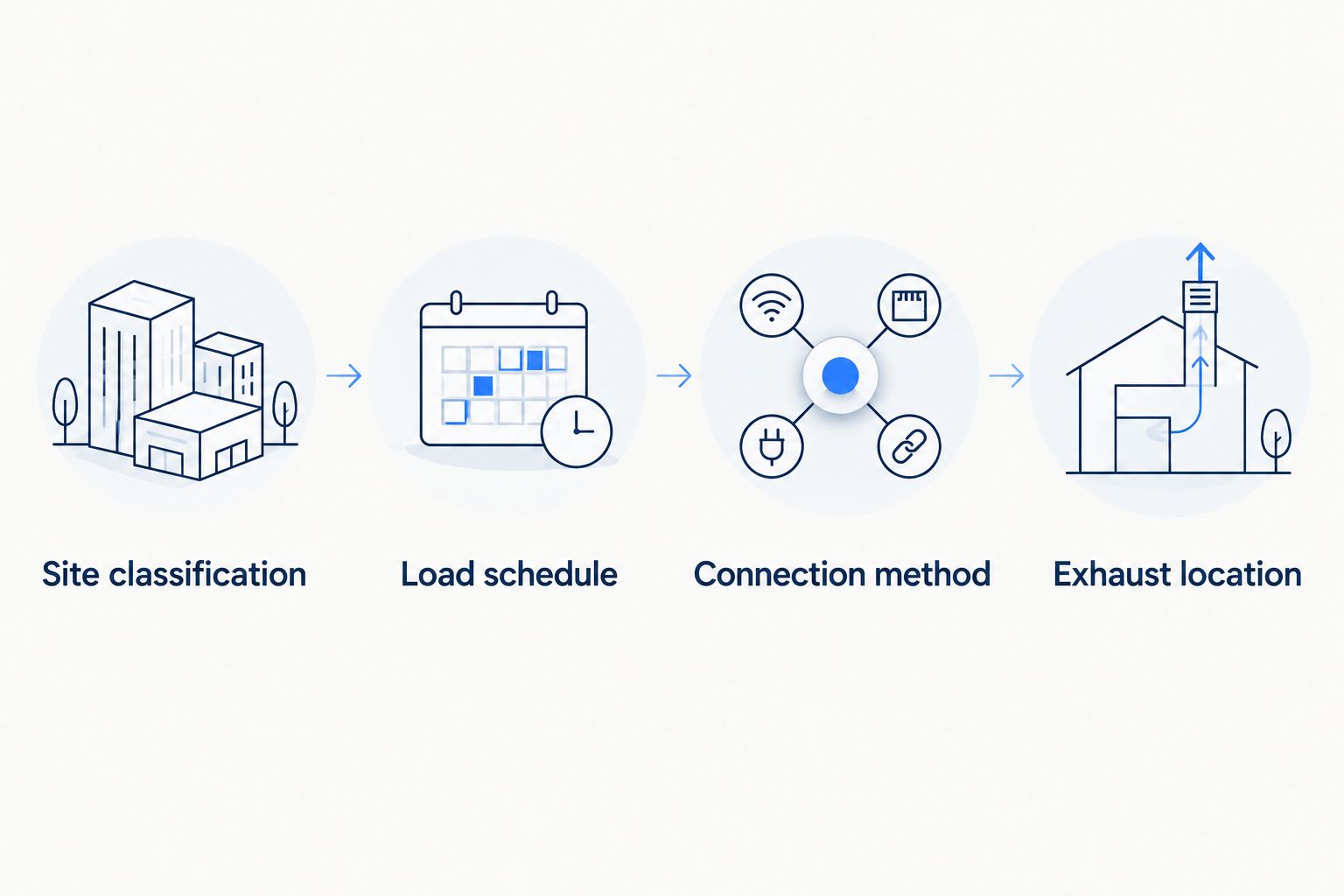
The same sequence applies whether the generator runs a small plug-in load or supports a broader temporary setup. In 2026, a changed work area or load list calls for a new check, not an assumption that the earlier choice still fits.
How these generator types are ranked
The ranking starts with the work a generator must perform, then tests the selection against site classification, load demand, connection method, and exhaust placement. The site-matched 120/240 V type comes first because it covers the broadest listed mix of voltages when a suitable unit is chosen. That is a selection framework, not a finding that any unnamed model is safe for any particular pad or facility.
The other types have narrower jobs. An inverter generator fits a defined light-electronics load list. A motor-load-sized generator addresses starting demand. A compact 120 V unit fits limited plug-in work. No type outranks the site rules or the actual equipment nameplates.
Eagle Electric works in oilfield electrical contracting, not generator retail. An Eagle Electric site assessment is the right route when classification, temporary distribution, or a connection to existing electrical equipment is part of the decision.
Which portable generator should you choose?
For an undecided operator in 2026, start with a site-matched 120/240 V portable generator as the configuration to evaluate—not as a purchase order. Check the location, write the load schedule, and confirm the connection. If the actual work uses only light electronic loads, evaluate an inverter generator instead. If motor starts govern the job, size around those starts. If every listed load is 120 V and plug-in, a compact 120 V unit can stay in consideration.
Do not select a generator by advertised output alone. In a hazardous (classified) location, the operator’s requirements and an on-site electrical review come first. For temporary power that connects to site distribution or existing wiring, have a licensed electrician establish the correct method. Eagle Electric serves Bakken oil and gas operators needing that electrical review.
FAQ
What are the best portable generators for oilfield job sites in 2026?
The best type is a generator matched to the site classification, connected loads, and connection method. A site-matched 120/240 V unit is the default configuration to evaluate for mixed-voltage work, not an automatic choice for every location.
Can I use a standard portable generator in a classified oilfield area?
Do not assume a standard portable generator is suitable for a hazardous (classified) area. Check the operator’s area classification and equipment requirements with a licensed electrician before selecting or placing equipment.
Is an inverter generator better for an oilfield job site?
An inverter generator is a better fit when the job has a defined list of light electronic loads. It is not automatically suitable for motor-heavy work or a hazardous (classified) location.
How do I size a generator for oilfield tools?
List each tool’s voltage and running demand, identify motor-starting demand, and note which tools run together. Have a licensed electrician review the load and connection plan when the setup involves temporary distribution or existing wiring.
Do I need a 120/240 V generator?
You need to evaluate a 120/240 V generator when the planned equipment requires both voltage options. If every listed load is 120 V, check the load requirements before choosing a mixed-voltage unit.
Can a portable generator feed existing site wiring?
Do not connect a portable generator to existing wiring through an improvised cord or outlet. A licensed electrician must assess the proper connection and isolation method to prevent backfeed and other hazards.
Where should an oilfield portable generator run?
Run a fuel-powered generator only where its placement complies with site rules, area classification, and the manufacturer’s instructions. Keep exhaust out of enclosed and partially enclosed spaces.
One last thing
The question that prevents a bad purchase in 2026 is not how much power does this generator make? It is where can this generator run, and how will the load connect? Settle those points before comparing output labels. Eagle Electric can assess the electrical side of an oilfield generator setup for Bakken operators; the operator still needs to supply the site classification and the actual equipment list.