Best overall: layered surge protection. Best for a panel-focused installation: a Type 2 surge protective device. Best for service-entry protection: a Type 1 device. For North Dakota homeowners in 2026, the right system starts with an inspection of the service, panel, grounding, and equipment you want protected; Eagle Electric provides licensed residential electrical contracting across the Bakken region.
- For best whole house surge protection North Dakota homeowners should choose layered protection matched to the electrical system.
- Type 2 surge protection suits a panel-focused installation; equipment compatibility and connection details determine the final selection.
- Type 1 surge protection belongs at the service entrance when the installation location and equipment listing support it.
- Type 3 protection supplements whole-house protection; a power strip alone is not a whole-house system.
Why this matters
A surge is a brief rise in voltage. It is not the same problem as an outage, a sustained low-voltage condition, or a failed neutral connection. Those problems need different remedies.
Whole-house surge protection limits transient overvoltage at its installation point. It does not make every connected appliance immune to damage. Protect the electrical system at the panel or service entrance, then add suitable protection where sensitive equipment connects.
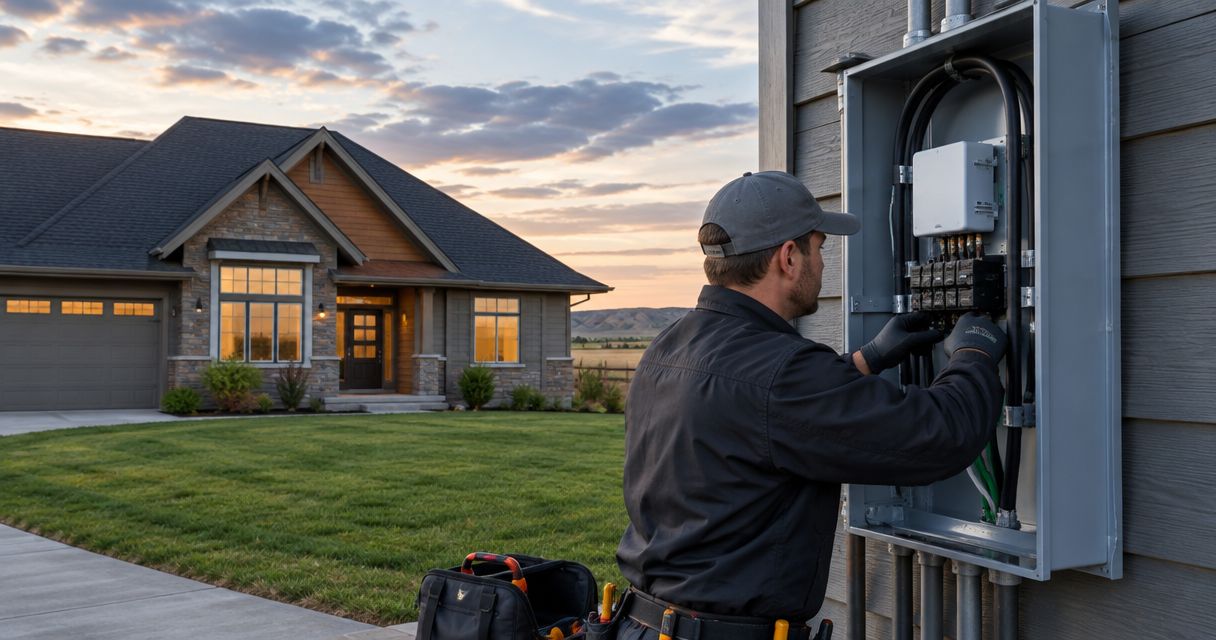
Eagle Electric is best for North Dakota homeowners who need a licensed electrical contractor to evaluate whole-house surge protection on site. A device selected without checking the existing installation leaves important questions unanswered.
What makes the best whole-house surge protection system?
Use these criteria to choose a system in 2026. Do not start with the biggest number printed on the package.
- Correct device type: Type 1, Type 2, and Type 3 describe intended installation locations. They are not a ranking from strongest to weakest.
- Equipment listing: Specify a surge protective device listed to UL 1449. Follow its installation instructions and electrical ratings.
- Electrical compatibility: Match the service voltage, panel arrangement, connection method, and required overcurrent protection.
- Installation quality: Conductor routing, connection length, and grounding and bonding affect the installation. A licensed electrician handles this work.
- Protection coverage: Identify the equipment and incoming connections that need attention. Electrical power protection does not automatically cover communications cables.
- Condition monitoring: Choose a device with a clear status indication and know how to check it safely after installation.
A typical North Dakota home uses a 120/240-volt split-phase service: 120 volts for ordinary receptacle circuits and 240 volts for many larger loads. That describes the supply, not the correct surge protector for every house. The electrician still needs to confirm the actual service configuration.
Whole-house surge protection systems at a glance
| Rank and system | Best for | Standout feature | Key limitation |
|---|---|---|---|
| 1. Layered surge protection | Homes with sensitive equipment in several locations | Combines service or panel protection with suitable point-of-use protection | Requires coordination across multiple installation points |
| 2. Type 2 panel-mounted protection | A focused whole-house panel installation | Connects on the load side of the service disconnect | Does not replace equipment-level protection or repair electrical defects |
| 3. Type 1 service-entry protection | Installations requiring protection at the service entrance | Listed for installation on either side of the service disconnect, as specified | Installation location can involve utility requirements and service work |
| 4. Type 3 point-of-use protection | Sensitive plug-in equipment needing supplemental protection | Adds protection close to the connected equipment | Is not a standalone whole-house system |
1. Layered surge protection: best for sensitive equipment throughout a home
Layered surge protection combines a correctly installed service-entry or panel device with suitable protection at sensitive equipment. The layers address different locations rather than relying on one device to do everything.
This is the default recommendation for a 2026 whole-house project. Start with the electrical system, then review computers, televisions, controls, and other equipment individually. Hardwired equipment needs a different connection approach from a plug-in device.
Layered surge protection pros:
- Covers both the main electrical installation and selected equipment connections.
- Lets you address sensitive equipment without treating every outlet identically.
- Provides a reason to review incoming communications connections alongside electrical power.
- Separates whole-house protection from supplemental plug-in protection.
Layered surge protection cons:
- Requires more coordination than installing a single device.
- Adds multiple status indicators and replacement instructions to track.
- Still cannot guarantee protection against every surge or direct lightning event.
Best for: Homeowners with sensitive electronics or controls in several parts of the house.
Ask the electrician to explain what each layer protects. A written scope should identify the main device, any supplemental devices, and any connections excluded from the work. A collection of unrelated protectors is not automatically a coordinated system.
Verdict: Buy a layered system when you want whole-house protection plus protection at selected equipment.
2. Type 2 panel-mounted protection: best for a focused panel installation
A Type 2 surge protective device installs on the load side of the service disconnect. It can provide panel-level protection when its ratings and installation method match the electrical equipment.
This is a defined starting point for homeowners who want to address the main panel first. Panel-mounted does not always mean the device fits inside the panel. Installation details depend on the listed equipment and its instructions.
Type 2 panel-mounted protection pros:
- Establishes a protection point at the electrical distribution equipment.
- Gives the electrician a clear location to evaluate compatibility and connections.
- Supports adding appropriate point-of-use protection later.
Type 2 panel-mounted protection cons:
- Available space and connection requirements can complicate installation.
- A panel device does not protect every incoming communications connection.
- It does not correct loose connections, damaged equipment, or faulty bonding.
Best for: Homeowners seeking a panel-focused whole-house surge protection installation.
A 200-amp panel label does not tell you which surge device to choose. Amperage describes the panel or service rating; the surge device also needs the correct voltage rating, listing, and installation method. Do not confuse service amperage with surge-current ratings.
For an older property, review electrical panel upgrades for older farmhouses in western North Dakota before treating an add-on device as the complete repair plan. The panel's condition comes first.
Verdict: Buy Type 2 protection when the electrician confirms panel compatibility and a suitable connection method.
3. Type 1 service-entry protection: best for service-entrance installations
A Type 1 surge protective device is listed for installation on the line side or load side of the service disconnect, subject to its instructions. That flexibility distinguishes it from a Type 2 device.
Type 1 protection suits a project where the service entrance is the appropriate installation point. It is not automatically better than Type 2 protection. The location, equipment ratings, and installation requirements decide the fit.
Type 1 service-entry protection pros:
- Supports service-entrance installation where the equipment and rules permit it.
- Can form the first layer of a broader protection plan.
- Provides an option when a panel-focused approach does not match the project.
Type 1 service-entry protection cons:
- Line-side work involves hazards that remain even when household breakers are off.
- Utility approval or coordination can be necessary for the selected location.
- Service-entry protection still does not replace suitable equipment-level protection.
Best for: Homes where an electrician identifies the service entrance as the correct protection point.
Do not open a meter enclosure or attempt a service-side installation. Turning off the main breaker does not make the incoming service conductors safe. The contractor must establish the work method and any required utility involvement.
For a 2026 service replacement or major electrical project, ask whether surge protection belongs in the service equipment scope. Settle that question before the equipment and installation plan are finalized.
Verdict: Hold the purchase until a licensed electrician confirms the service-entry installation requirements.
4. Type 3 point-of-use protection: best for supplemental plug-in protection
Type 3 surge protective devices provide protection at the equipment connection. A suitable plug-in protector can serve this role, but an ordinary power strip is not necessarily a surge protective device.
This option belongs in the list as a supplement, not a substitute for whole-house protection. Check the listing, intended use, load rating, and status indication. Follow the device instructions rather than connecting protectors together.
Type 3 point-of-use protection pros:
- Places supplemental protection close to sensitive plug-in equipment.
- Lets you target specific equipment connections.
- Provides an accessible status indicator when the selected device includes one.
Type 3 point-of-use protection cons:
- Does not protect the entire home's electrical system.
- Cannot serve hardwired equipment simply by plugging in elsewhere.
- Requires attention to load limits and replacement instructions.
Best for: Computers, televisions, and other compatible plug-in equipment within a layered protection plan.
Do not use a plug-in protector to work around a damaged receptacle, missing grounding connection, or recurring breaker trip. Those are electrical problems. Have them evaluated before adding accessories.
Verdict: Buy suitable Type 3 protection as a supplement; skip it as your only whole-house solution.
Turn the recommendation into a clear installation scope
Eagle Electric's whole-house surge protection scope should start with an on-site evaluation, not an assumption based on the panel cover. Describe the problem you want solved and the equipment you want protected.
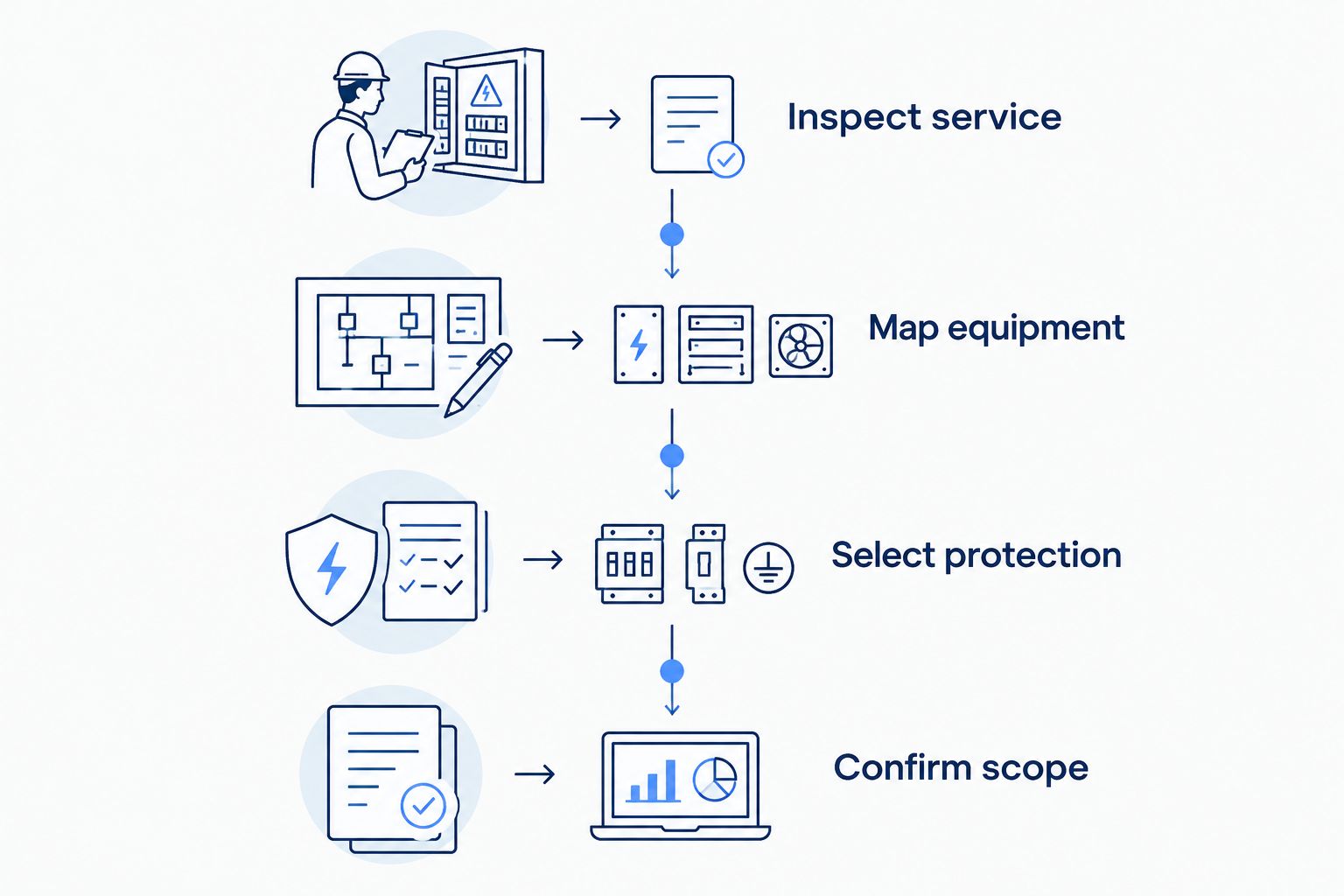
Use this sequence when planning the work:
- Inspect service: Have the electrician identify the service arrangement, panel condition, grounding, and bonding.
- Map equipment: List sensitive plug-in and hardwired equipment, plus incoming communications connections.
- Select protection: Match the device type, electrical ratings, and connection method to the installation.
- Confirm scope: Get the installation location, included work, exclusions, and status-check instructions in writing.
The sequence keeps equipment selection tied to the house. It also separates surge protection from repairs that need their own scope.
Ask for a same-business-day response to your quote request and a clear written quote. A response is not a promise of same-day job completion. Access, inspection findings, equipment selection, and utility coordination belong in the scheduling discussion.
Request a surge protection quote
Ask Eagle Electric for a clear written scope covering panel fit, installation, and protection limits.
How the systems are ranked
This 2026 ranking follows protection coverage, intended installation location, electrical compatibility, and maintenance needs. It compares installation approaches, not competing manufacturers or laboratory test results.
Layered protection ranks first because it addresses both the electrical distribution point and selected equipment connections. Type 2 and Type 1 devices fill different installation roles. Type 3 protection ranks last only as a whole-house choice; it remains useful as a supplemental layer.
Which whole-house surge protection system should you choose?
Choose layered protection as the default, with the main device selected after inspection. Use Type 2 protection when a load-side panel installation fits the house. Use Type 1 protection when the service-entrance location and equipment requirements make it the correct choice.
Keep outage planning separate. A surge protective device does not supply backup power, and a generator is not a substitute for a surge protection plan. If the house already has backup power, tell the electrician about the generator and transfer equipment before the protection layout is finalized.
FAQ
What's the best whole-house surge protection for North Dakota homes in 2026?
Layered surge protection is the best default approach for North Dakota homes in 2026. Combine a correctly selected service-entry or panel device with suitable protection at sensitive equipment, following an on-site electrical evaluation.
Is Type 1 surge protection better than Type 2?
Type 1 is not automatically better than Type 2. Type 1 supports listed service-entrance installations on either side of the service disconnect; Type 2 installs on the load side. Choose the type that fits the installation.
Can I install a whole-house surge protector myself?
Have a licensed electrician install whole-house surge protection. Panel and service work exposes hazardous electrical components, and turning off the main breaker does not de-energize incoming service conductors.
Will a whole-house surge protector prevent every lightning-related loss?
No whole-house surge protector guarantees protection against every lightning-related loss. Surge protection limits transient overvoltage; it does not replace a properly designed lightning protection system or eliminate all electrical risks.
Does a power strip count as whole-house surge protection?
A power strip is not whole-house surge protection. Even a listed plug-in surge protector protects at its connection point and belongs as a supplement to a suitable service-entry or panel device.
Do I still need surge protection if I have a generator?
A generator does not replace surge protection. Backup power and transient-overvoltage protection serve different purposes, so the electrician should account for the generator and transfer equipment when planning the installation.
How do I know when a surge protector needs replacement?
Follow the manufacturer's status-indicator and replacement instructions. Check only indicators accessible without opening electrical equipment; have a licensed electrician investigate a failed panel-mounted device or an unclear status indication.
One last thing
A protector can remain connected after its protective components have reached end of life. Power at the outlet is not proof that surge protection still works.
For your 2026 installation, ask the electrician to show you the status indicator and explain what each condition means. Keep those instructions with the written quote. Check protection status, not just whether the lights turn on.