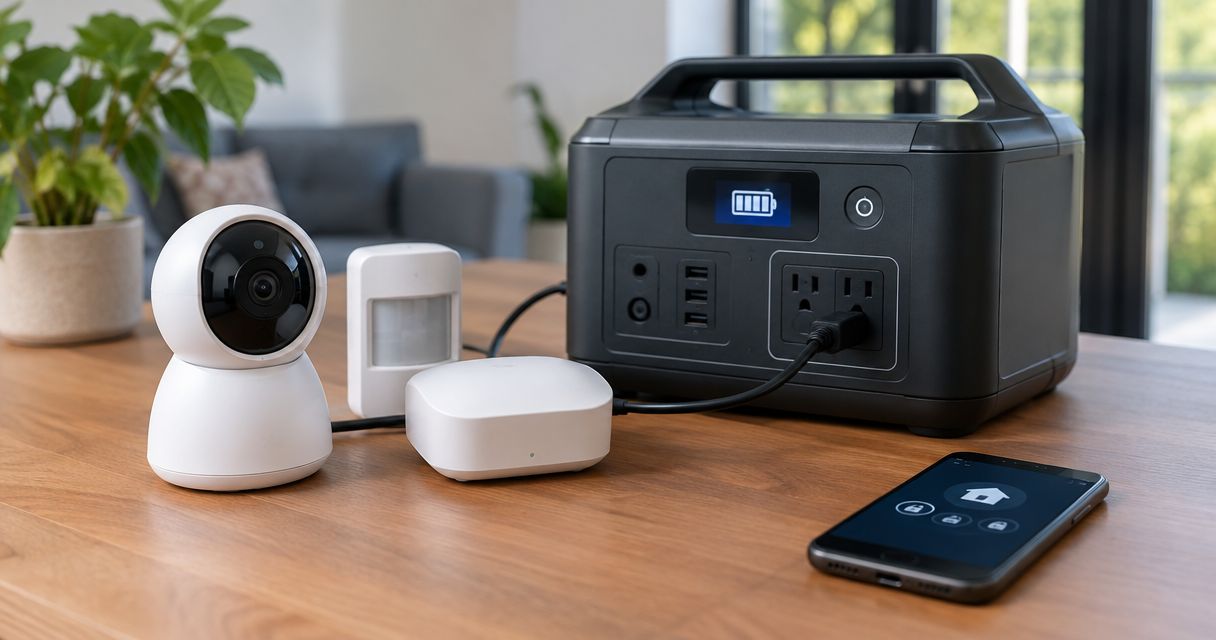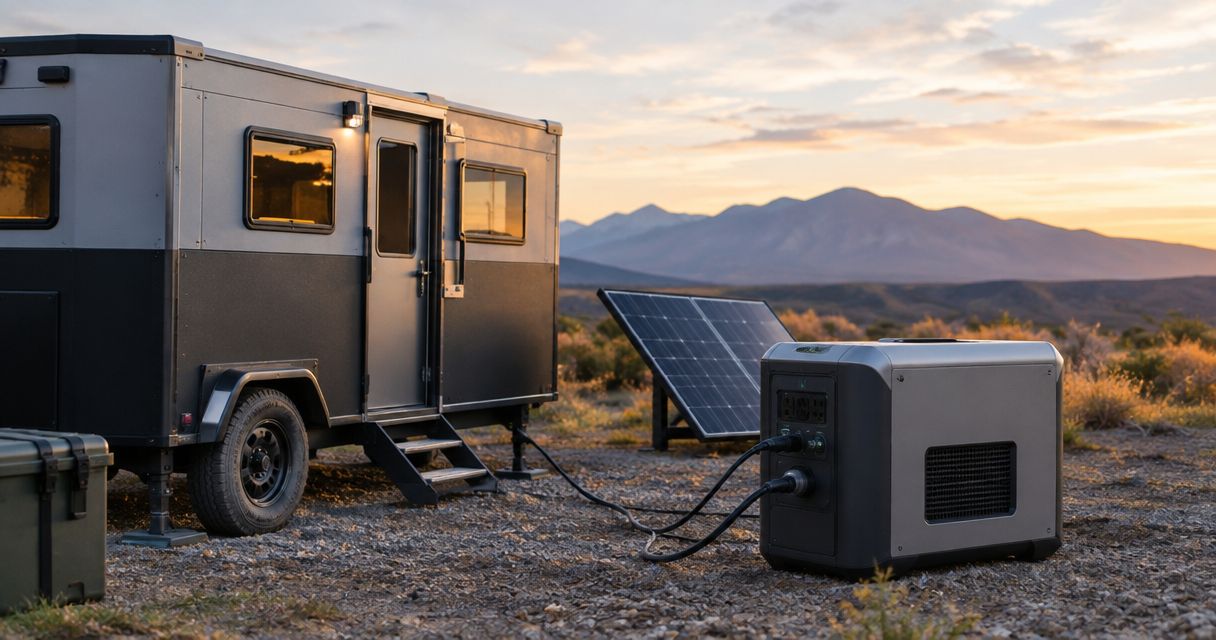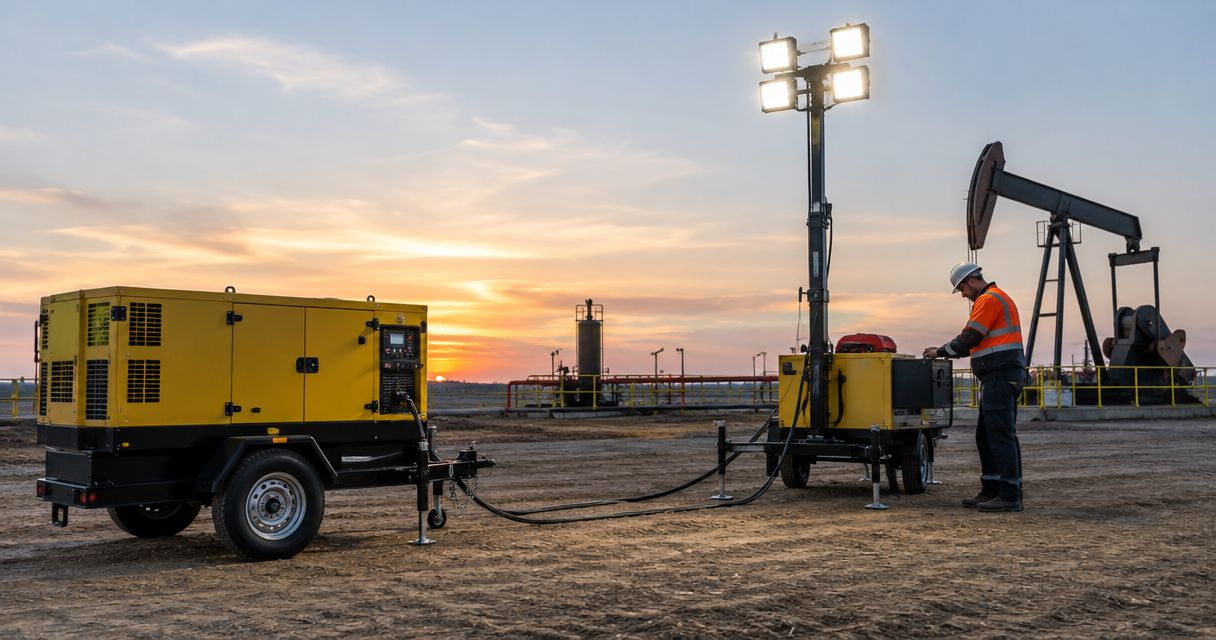
Best overall for mixed crew loads: a pure-sine-wave AC power station sized to the actual equipment. Best for communications: a DC-focused charging station. Best for simple charging needs: a compact station without unnecessary AC capacity. This 2026 guide ranks power-station configurations for oilfield work, not brands; suitability starts with the site’s hazardous-location rules.
- For best portable power stations oilfield crews, choose by load, runtime, temperature limits, and permitted operating location.
- Pure-sine-wave AC stations suit mixed equipment; DC-focused stations suit compatible communications devices.
- Ordinary portable power stations are not a substitute for equipment approved for a classified location.
- Eagle Electric provides oilfield electrical contracting for Bakken operators needing an on-site electrical review.
Why this matters
A station that charges a phone can still fail to start a tool. A battery with enough stored energy can still be unsuitable for the place where you intend to use it. Treat output capacity, runtime, and location approval as separate decisions.
Eagle Electric is the fit for Bakken operators needing oilfield electrical contracting, not a portable power-station retailer. For equipment integration or a site electrical review, contact Eagle Electric. Quote requests receive a same-business-day response and a clear written quote; a response is not a promise of same-day job completion.
For your 2026 equipment plan, start with the loads and the permitted operating location. Do not start with the largest battery advertised on a box.
What makes the best portable power station for oilfield crews
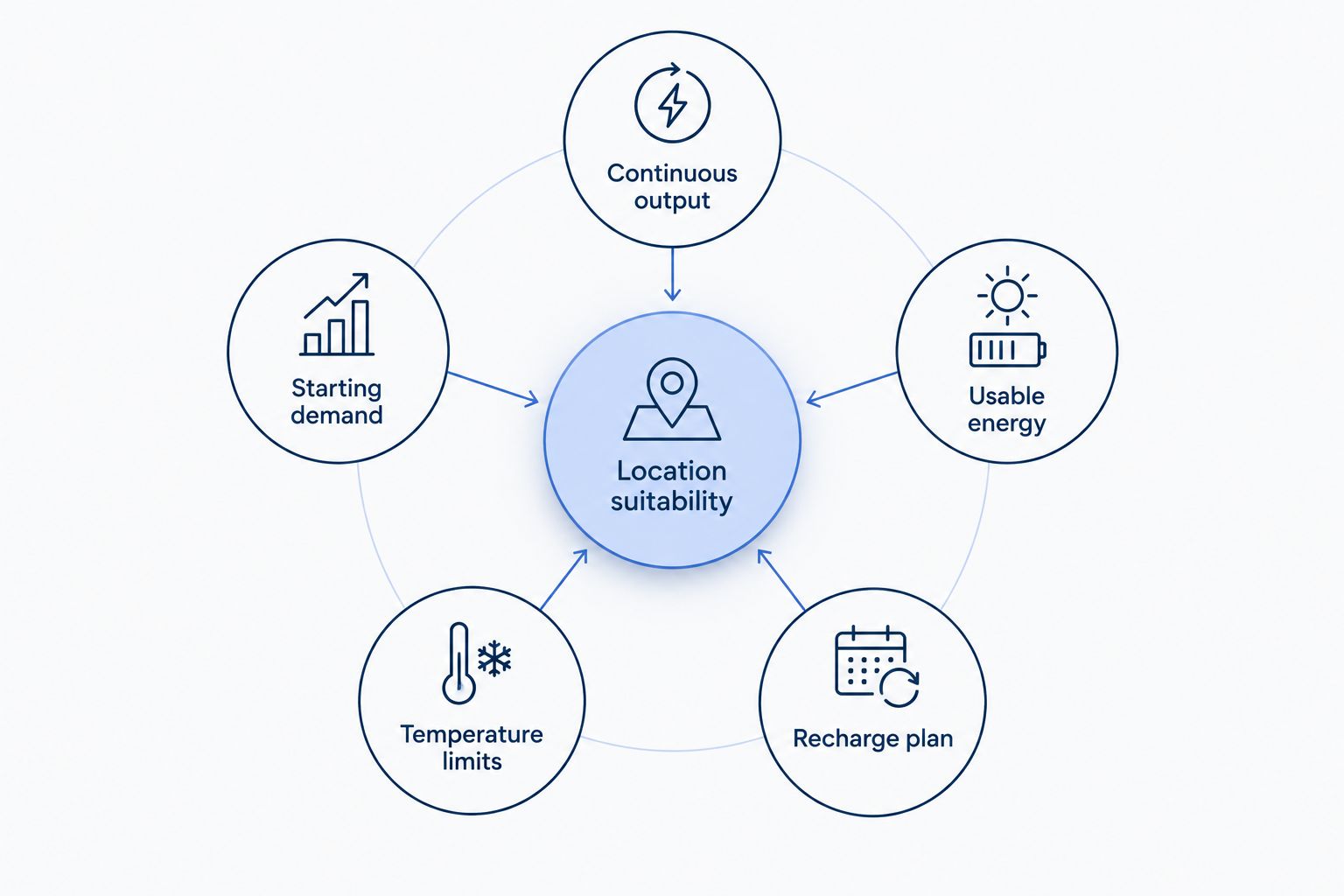
Use these criteria before comparing configurations:
- Location suitability: Confirm whether the operating and charging locations are classified. Match equipment approval to the actual classification, not a general claim about rugged construction.
- Continuous output: Add the loads that must run together. Check their voltage, connection requirements, and continuous input demand.
- Starting demand: Motors and compressors require a separate startup check. A station’s continuous wattage does not establish that it can start them.
- Usable energy: Compare stored energy with the required operating time. Conversion losses and the station’s own consumption reduce energy delivered to equipment.
- Temperature limits: Check separate limits for charging, operating, and storage. A discharge rating does not establish a safe charging temperature.
- Recharge plan: Decide where the station will recharge, what supplies it, and who manages it. A depleted battery is not backup power.
For a 2026 site review, OSHA’s hazardous-location requirements in 29 CFR 1910.307 are a relevant starting point for general-industry electrical installations. The site’s classification documentation and applicable requirements determine what equipment belongs there. Have a qualified person resolve uncertainty before deployment.
Portable power-station configurations at a glance
These are use-case rankings. They are not claims that a particular model passed an oilfield test. Every configuration below requires verification against its manufacturer’s documentation and your site rules.
| Rank and configuration | Best for | Standout feature to verify | Key limitation |
|---|---|---|---|
| 1. Pure-sine-wave AC station | Mixed small AC equipment outside classified areas | Compatible AC output and sufficient starting capacity | AC conversion consumes energy; output limits still apply |
| 2. DC-focused charging station | Radios, phones, and compatible communications equipment | Correct DC ports and supported charging protocols | Not a substitute for required AC power |
| 3. Compact charging station | Individual light-duty charging assignments | Manageable carrying weight and suitable charging ports | Limited energy and fewer simultaneous loads |
| 4. Expandable battery station | Longer-duration support loads at a fixed staging point | Documented compatibility with additional batteries | Extra stored energy does not necessarily increase output power |
| 5. Pass-through-capable station | Equipment needing power while the station recharges | Documented simultaneous charging and output behavior | Pass-through capability does not establish UPS performance |
1. Pure-sine-wave AC station: best for mixed small equipment
A pure-sine-wave AC station supplies alternating current from stored battery energy. This configuration belongs at the top of the list when your approved work area contains different small AC loads and you need one portable supply. Check each connected device’s requirements rather than assuming every appliance with a matching plug will work.
For equipment expecting 120 V AC, verify the station’s specified output voltage and frequency. Pure-sine-wave output describes the waveform; it does not establish hazardous-location approval, motor-starting capability, or compatibility with facility wiring.
Pure-sine-wave AC station pros:
- Supports compatible equipment that requires AC rather than direct USB or DC power.
- Can consolidate different small loads onto one supply when their combined demand fits.
- Provides an output type you can compare directly with equipment documentation.
Pure-sine-wave AC station cons:
- Inverter conversion reduces the energy available at the outlets.
- Starting demand can exceed the station’s limit even when running demand fits.
Best for: Crews operating mixed small AC equipment in a location where the station is permitted.
Verdict: Buy this configuration only after checking simultaneous loads and startup requirements.
2. DC-focused charging station: best for communications support
A DC-focused station prioritizes compatible charging connections for phones, radios, and other communications equipment. Direct DC charging avoids an unnecessary AC conversion stage when both the station and device support the correct connection. The connector alone does not establish electrical compatibility.
Check voltage, polarity where applicable, charging protocol, and the device manufacturer’s approved charging method. A radio cradle that requires AC remains an AC load even though the radio itself uses a battery.
DC-focused charging station pros:
- Keeps the selection focused on communications rather than unrelated tool loads.
- Avoids AC conversion when a compatible direct DC connection is available.
- Lets you match ports and charging protocols to a defined device list.
DC-focused charging station cons:
- Cannot serve equipment that requires AC unless it also includes suitable AC output.
- Adapters and matching-looking connectors do not guarantee compatibility.
Best for: A communications charging point outside classified areas, with a documented list of compatible devices.
Verdict: Buy for verified communications loads; skip it as a general tool-power substitute.
3. Compact charging station: best for individual light-duty assignments
A compact station serves a smaller assignment: keeping an individual worker’s approved devices charged. Prioritize carrying weight, connection suitability, and enough usable energy for the task. Do not choose a larger unit merely because its advertised capacity is higher.
Keep this configuration separate from the shared crew charging point. Once other workers add devices or someone plugs in an AC tool, the original load plan no longer describes the job.
Compact charging station pros:
- Keeps the equipment choice tied to a narrow, manageable load list.
- Reduces unnecessary capacity when the assignment is limited to device charging.
- Gives the assigned worker a separate energy reserve from shared crew equipment.
Compact charging station cons:
- A small energy reserve leaves less room for added devices or a longer assignment.
- Port count and simultaneous-output limits can restrict shared use.
Best for: Individual device charging where carrying weight matters more than supporting multiple AC loads.
Verdict: Buy for a defined personal charging task; skip for an open-ended crew power requirement.
4. Expandable battery station: best for longer staging-point duty
An expandable station accepts additional batteries when the manufacturer documents that connection. This configuration addresses operating duration at a staging point where frequent relocation is not the priority. Verify the base station, expansion battery, and connecting hardware as one system.
More battery energy does not automatically mean more output power. Additional storage can extend operation without changing the inverter’s continuous or starting limits. Your 2026 plan must account for the time and supply needed to recharge the expanded system.
Expandable battery station pros:
- Adds stored energy when the documented expansion arrangement supports it.
- Separates the runtime decision from the base station’s outlet requirements.
- Suits a defined staging location where additional components can remain organized.
Expandable battery station cons:
- Additional batteries increase handling, connection, and storage requirements.
- Expansion does not establish higher output capacity or hazardous-location suitability.
Best for: Longer-duration support loads at a permitted staging point with a practical recharge arrangement.
Verdict: Buy for a documented runtime requirement; hold if recharge logistics remain unresolved.
5. Pass-through-capable station: best for charging during use
A pass-through-capable station allows supported outputs to operate while the station receives charging power. That feature fits a support load that must stay connected during routine recharging. Verify which outputs remain active and whether simultaneous operation changes their limits.
Pass-through operation is not the same as uninterrupted power. If a device cannot tolerate a supply interruption, check the documented transfer behavior against the device’s requirements and use equipment intended for that duty.
Pass-through-capable station pros:
- Supports charging and equipment operation together when the manufacturer permits it.
- Reduces the need to disconnect supported loads solely to recharge.
- Gives you a documented operating mode to include in the power plan.
Pass-through-capable station cons:
- Output behavior during supply changes requires separate verification.
- Charging demand and connected loads must both fit the upstream supply arrangement.
Best for: Noncritical support equipment that needs to remain connected during approved charging operation.
Verdict: Buy for verified simultaneous operation; skip as an assumed replacement for a UPS.
Check watts, watt-hours, and the actual assignment
Watts describe power. Watt-hours describe energy. 1 kW equals 1,000 W; 1 kWh equals 1,000 Wh. These are unit conversions, not runtime claims for any station.
Use the equipment nameplates and manufacturer documentation to build the load list. Record continuous demand, starting requirements, required connections, and which devices run together. Then compare that list with the station’s specifications.
Dividing stored watt-hours by load watts gives an idealized runtime calculation. It is not guaranteed field runtime. Account for conversion losses, station consumption, temperature, and the manufacturer’s usable-energy information.
For your 2026 purchase decision, keep the checks in this order:
- Confirm location: Establish where operation and charging are permitted.
- List loads: Identify the equipment and simultaneous demand.
- Check output: Verify voltage, continuous power, and starting requirements.
- Check runtime: Match usable energy to the assignment.
- Plan recharge: Identify the approved supply and charging conditions.
If the station will connect to premises wiring or site distribution, involve a licensed electrician. Never feed a building through an ordinary receptacle or improvise a backfeed connection.
How the configurations rank
Mixed AC equipment puts verified AC output first. Communications charging puts connection compatibility first. Individual charging puts handling and a narrow load list first. Extended staging duty puts usable energy and recharge logistics first. Charging during use puts documented simultaneous-operation behavior first.
Location suitability remains a gate for every choice. A configuration that cannot be used at the intended location does not earn a place in your equipment plan, regardless of capacity.
Which portable power station should you choose?
Choose a pure-sine-wave AC station as the default only when your crew needs mixed small AC loads outside classified areas. For communications-only work, choose a DC-focused configuration with verified connections. For longer assignments, establish the energy requirement before considering expansion batteries.
Eagle Electric’s oilfield electrical contracting serves homeowners, businesses, and oil and gas operators across the Bakken region. Bring the equipment list and intended connection arrangement when requesting a site review. Clear scope produces a clearer written quote.
Request an oilfield electrical quote
Get a same-business-day response and a clear written quote for your electrical contracting needs.
FAQ
What are the best portable power stations for oilfield crews?
The best configuration depends on the load and permitted operating location. Pure-sine-wave AC stations fit mixed small AC loads; DC-focused stations fit compatible communications charging. Verify output, usable energy, temperature limits, and site approval before choosing.
Can I use a regular portable power station in a hazardous location?
Do not use an ordinary portable power station in a classified location without verifying approval for that specific location. Battery power does not establish hazardous-location suitability. Have a qualified person check the equipment documentation against the site classification.
Is a bigger battery better for running oilfield tools?
A bigger battery provides more stored energy, not necessarily more tool-starting power. Check continuous output and starting demand separately. Expansion batteries do not automatically change the inverter’s limits.
Can a portable power station charge in North Dakota winter weather?
Charging is permitted only within the manufacturer’s specified charging temperature range. Operating and storage limits can differ from charging limits. Check battery temperature and charging conditions rather than relying on outdoor air temperature alone.
Does pass-through charging make a power station a UPS?
Pass-through charging does not establish UPS performance. Verify transfer behavior, supported outputs, and the connected equipment’s tolerance for interruption. Critical loads need a supply designed for their requirements.
Can I connect a power station to oilfield facility wiring?
A licensed electrician must evaluate any connection to facility wiring or site distribution. The arrangement needs suitable equipment, protection, and an approved connection method. Never improvise a backfeed connection through an ordinary receptacle.
Does Eagle Electric sell the power stations in this guide?
Eagle Electric is an electrical contracting company, not a power-station retailer identified in this guide. The company provides residential, commercial, and oilfield electrical services across the Bakken region. Contact Eagle Electric for electrical contracting scope and an on-site review.
One last thing
For 2026, write the permitted operating location on your crew’s equipment assignment sheet alongside the load list. A station can satisfy every wattage requirement and still be wrong for where the work happens. Resolve that question before the equipment leaves the staging area.