
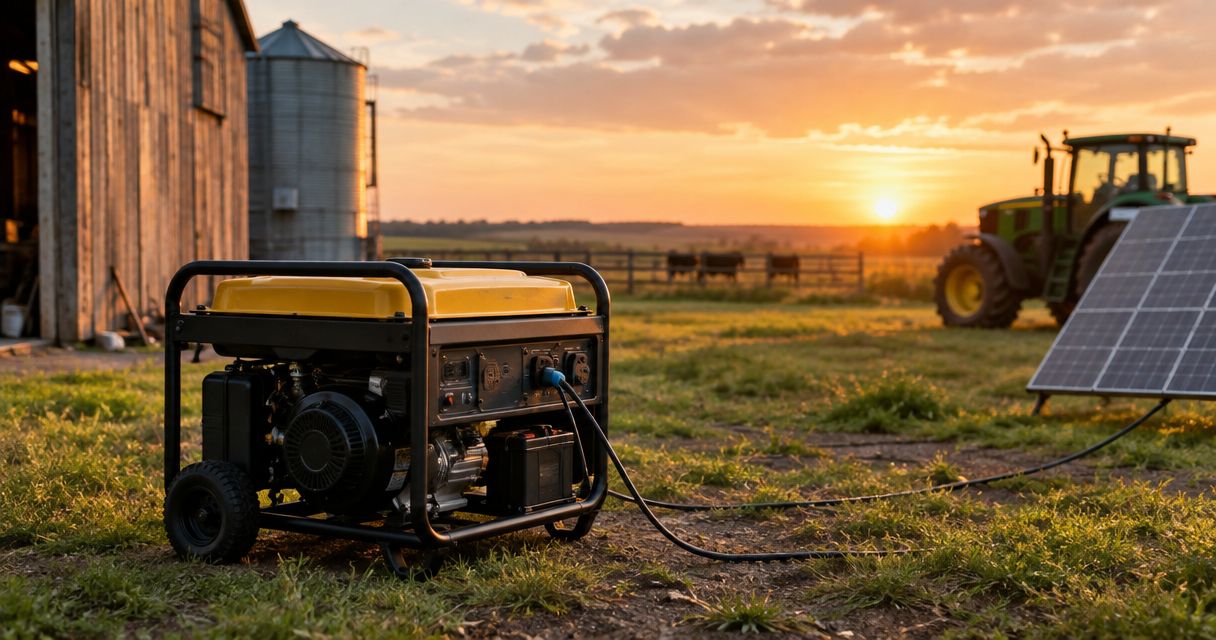
Best overall for unattended essential loads: an automatic propane standby generator. Best for substantial motor loads: a properly sized stationary diesel generator. Best for tractor-equipped, attended backup: a PTO generator. This 2026 guide ranks generator setups for North Dakota farms and ranches by the job they need to do—not by brand name.
- The best generators for farms and ranches match starting loads, fuel supply, and operator availability.
- Automatic propane standby is the default for unattended essential circuits, subject to an on-site assessment.
- Stationary diesel suits substantial motor loads; PTO backup requires an available tractor and trained operator.
- Eagle Electric provides licensed electrical contracting across the Bakken region.
Why this matters
A livestock water pump and a shop light do not ask the same thing from a generator. Motors draw extra current during startup. A generator that carries running loads can still struggle when a pump starts.
Decide what must stay powered before choosing equipment. Eagle Electric provides same-business-day responses to quote requests and clear written quotes. Request a quote with your property location, essential equipment list, and available fuel sources. A quote response is not a promise of same-day installation.
For your 2026 backup plan, separate essential work from convenience loads. Water, necessary ventilation, heating controls, and refrigeration deserve a deliberate plan. Shop tools and other deferrable loads belong on a separate list.
What makes the best generators for farms and ranches
Judge each setup against these criteria before comparing equipment:
- Motor starting: Size for the equipment that starts under load, not just its running demand.
- Electrical compatibility: Match voltage, frequency, phase, and the connection arrangement to the actual equipment.
- Operator availability: Automatic backup and attended backup solve different problems.
- Fuel delivery: Account for storage, winter fuel behavior, replenishment, and access during an outage.
- Cold-weather readiness: Check manufacturer requirements for batteries, lubricants, heaters, and starting equipment.
- Safe transfer: Include approved equipment that prevents generator power from feeding utility lines.
No generator earns a recommendation from its advertised wattage alone. The connection plan and load assessment belong in the purchase decision.
Farm generator setups at a glance
These are equipment categories, not model-specific endorsements. Each has a distinct role in a 2026 farm backup plan.
| Generator setup | Best for | Standout feature | Key limitation |
|---|---|---|---|
| Automatic propane standby | Unattended essential circuits | Starts and transfers through a compatible automatic system | Requires adequate fuel delivery and fixed installation |
| Stationary diesel | Substantial motor loads | Available in configurations suited to larger electrical systems | Requires fuel management and cold-start preparation |
| Tractor PTO | Attended backup with an available tractor | Uses tractor power to drive a generator | Ties up the tractor and requires correct operating speed |
| Portable inverter | Small, selected loads | Movable backup for compatible equipment | Output and connections restrict what it can support |
| Towable diesel | Temporary power at separated work areas | Can move between prepared locations | Transport does not eliminate connection planning |
1. Automatic propane standby: best for unattended essentials
An automatic propane standby generator starts after its controls detect a qualifying utility failure. A compatible automatic transfer switch moves the selected electrical system onto generator power. The equipment still needs inspection, maintenance, and a dependable fuel supply.
This is the default choice when someone cannot be present to start equipment. Think water-system controls, essential building circuits, and other loads that need backup while you are away.
Automatic propane standby pros:
- Automatic operation does not depend on someone arriving to pull a starter cord.
- Fixed wiring avoids setting up portable cables during each outage.
- Load management can prioritize essential circuits when properly designed.
Automatic propane standby cons:
- A propane tank alone does not prove adequate fuel delivery in cold weather.
- Fixed equipment needs a suitable location, electrical work, and fuel-system coordination.
- Automatic operation does not remove maintenance responsibilities.
Have the fuel supplier verify tank vaporization capacity, regulator selection, and piping against the generator demand and site conditions. Have a licensed electrician confirm the transfer arrangement and load priorities.
Best for: Essential circuits that need backup without an operator on-site.
Verdict: Buy for unattended essentials after the electrical and fuel assessments support it.
2. Stationary diesel: best for substantial motor loads
A stationary diesel generator supplies a fixed electrical installation. The right configuration can serve larger loads and equipment arrangements that do not suit a small portable unit. Match the machine to the actual voltage and phase requirements.
A larger diesel generator is not automatically the right answer. Starting performance, load steps, and expected operating load matter alongside the nameplate rating.
Stationary diesel pros:
- Equipment configurations can address substantial motor-starting requirements.
- A fixed installation supports a defined transfer and distribution plan.
- On-site fuel storage can be included in outage planning.
Stationary diesel cons:
- Cold weather requires attention to fuel suitability, batteries, and manufacturer-specified starting aids.
- Stored fuel needs management rather than being forgotten between outages.
- Oversizing can create unsuitable operating conditions for some diesel engines.
Ask the equipment supplier to document starting performance for your largest motors. Discuss expected loading and maintenance with the supplier before selecting an engine-generator package.
Best for: Operations with substantial motor loads and a managed fuel program.
Verdict: Buy when documented load requirements justify stationary diesel.
3. Tractor PTO: best for attended backup
A PTO generator uses a tractor's power take-off to produce electricity. It is a practical category to assess when you already have a suitable tractor and can keep a trained operator available. Compatibility must be checked against both the tractor and generator instructions.
The tractor becomes part of the electrical system's operating plan. It must be available, fueled, positioned safely, and operated at the speed required for the generator.
Tractor PTO pros:
- Uses an existing tractor as the power source.
- Provides an alternative to maintaining a separate generator engine.
- Suits planned, attended backup at a prepared connection point.
Tractor PTO cons:
- The tractor cannot handle another job while driving the generator.
- Rotating equipment introduces entanglement hazards and requires intact guarding.
- Incorrect operating speed affects generator frequency.
Do not assume tractor horsepower alone proves compatibility. Confirm PTO requirements, electrical output, shaft guarding, and the installed transfer connection. Keep people and animals away from rotating components and exhaust.
Best for: Farms with a compatible tractor, a trained operator, and attended outage coverage.
Verdict: Buy for attended backup; skip as the sole unattended protection plan.
4. Portable inverter: best for small, selected loads
A portable inverter generator serves limited loads within its rated output and connection limits. It can suit selected lights, controls, or plug-connected equipment. It is not a substitute for checking motor starting or building connection requirements.
Read the actual specifications. The word inverter does not establish that a generator supports every pump, tool, or electronic control on your property.
Portable inverter pros:
- Can move between suitable outdoor operating locations.
- Supports selected compatible loads without committing to whole-property backup.
- Offers a focused approach when essential demand is genuinely small.
Portable inverter cons:
- Many units cannot support larger motors or the required supply voltage.
- Manual setup and refueling require an available operator.
- Portability increases the risk of unsafe placement near buildings.
Check running output, starting capability, receptacles, and manufacturer instructions. Building wiring needs a professionally designed connection—not a cord plugged into a household outlet.
Best for: Small, selected loads with someone present to operate the equipment.
Verdict: Buy for limited duty; skip for unverified well pumps or whole-farm backup.
5. Towable diesel: best for separated work areas
A towable diesel generator moves between temporary work locations. It fits a different problem from permanent automatic backup: supplying a work area where the load location changes. Each destination still needs a suitable distribution and connection plan.
Movement adds operating duties. Positioning, cable protection, grounding and bonding assessment, and equipment security belong in the setup procedure.
Towable diesel pros:
- Moves with work rather than remaining at a single building.
- Can support planned temporary distribution when correctly specified.
- Keeps temporary work power separate from a permanent standby decision.
Towable diesel cons:
- Requires transport, safe positioning, and an operator-managed setup.
- Exposed cables need protection from vehicles, livestock, and weather.
- A towable unit does not automatically provide automatic building backup.
Have a licensed electrician verify temporary distribution and any connection to permanent wiring. Do not treat a generator's receptacles as proof that its electrical configuration matches your equipment.
Best for: Temporary loads at separated, prepared work locations.
Verdict: Buy for mobile work; skip when the real need is unattended building backup.
Size the system before choosing the generator
For a 2026 installation, start with equipment nameplates and an on-site inspection. A common residential supply is 120/240 volts at 60 hertz, but that does not establish what every farm building or motor requires. Check each service and load.
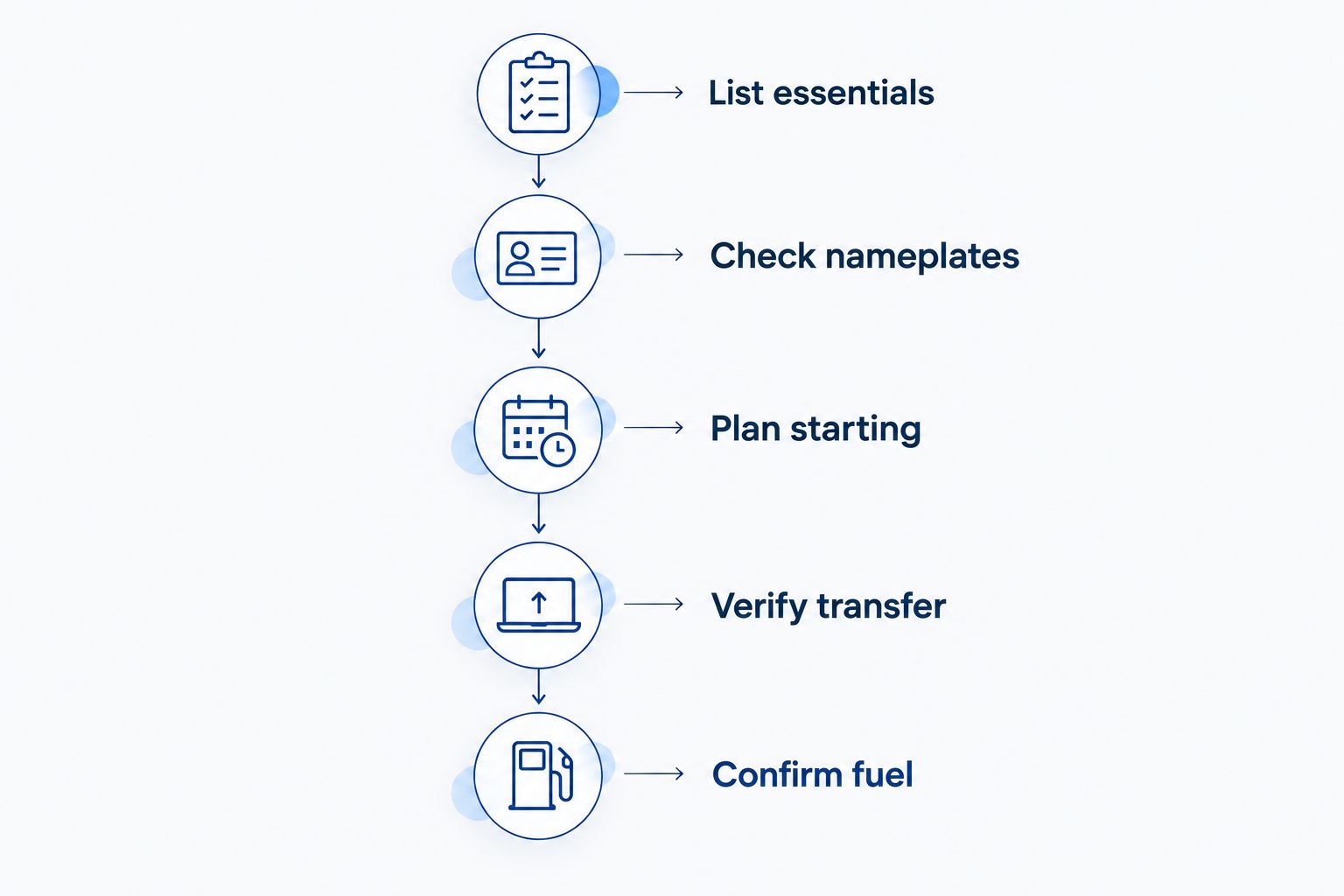
Use this sequence with your electrician:
- List essentials. Identify loads that must run and loads you can leave off.
- Check nameplates. Record voltage, phase, running demand, and available motor-starting information.
- Plan starting. Decide which motors must start together and which can start separately.
- Verify transfer. Confirm how the generator will supply the selected circuits safely.
- Confirm fuel. Check delivery capacity, storage, replenishment, and winter requirements.
A 200-amp service rating is not a generator sizing calculation. It describes the service rating, not the actual outage load or motor-starting demand. Likewise, a generator with sufficient total output still needs the correct voltage and phase.
Use the generator installation guide for ND farms and ranches to organize the installation questions. Keep equipment selection and connection design together.
Winter operation and safe transfer come first
For winter 2026 planning, confirm the exact manufacturer's cold-weather instructions. Battery condition, specified oil, starting aids, and clear ventilation paths matter. Snow storage and drifting must not block required access or airflow.
Portable generators belong outdoors. CDC guidance calls for keeping portable generators at least 20 feet from doors, windows, and vents, with exhaust directed away from buildings. Never operate one in a home, garage, or barn, even with doors open.
Never backfeed a building through a receptacle. Have a licensed electrician select and install the appropriate transfer equipment. Neutral switching and grounding depend on the generator and installation; they are not guesswork.
Shut down and allow portable equipment to cool before refueling as directed by its manufacturer. Keep working carbon monoxide alarms in occupied buildings. Alarms do not make unsafe generator placement acceptable.
Get a written scope, not just a generator size
Ask Eagle Electric for a clear written quote that identifies the electrical work. List the circuits to be backed up, transfer equipment, connection points, load-management requirements, and responsibility for fuel-system work. Ask what inspections and approvals apply.
Confirm exclusions before authorizing work. Trenching, equipment pads, fuel piping, and changes to existing distribution need assigned responsibility, whether included or handled separately. A same-business-day quote response does not establish a job completion date.
Request a written electrical quote
Get a same-business-day response. Define essential loads, transfer equipment, and the electrical scope.
How these setups rank
This ranking prioritizes unattended essential-load protection, then separates larger motor duty, tractor-supported backup, limited portable use, and mobile work. It is not a model test or a fuel-efficiency ranking. Each recommendation depends on load compatibility, safe transfer, winter preparation, and operator availability.
Which generator setup should you choose?
Choose automatic propane standby as the starting point for unattended essential circuits. Move to stationary diesel when documented electrical demands support it. Choose PTO, portable inverter, or towable diesel only when their operating requirements match the job.
Eagle Electric is a licensed electrical contractor for Bakken property owners who need farm backup-power connections assessed on-site. For your 2026 project, settle the load list and transfer design before committing to equipment.
FAQ
What's the best generator for a farm or ranch?
An automatic propane standby generator is the default choice for unattended essential circuits, subject to a site and fuel assessment. Substantial motor loads or mobile work can justify a different setup.
Can a portable generator run my farm's well pump?
A portable generator can run a well pump only when its voltage, phase, starting capability, and connection arrangement match the pump. Have a licensed electrician verify the pump requirements and transfer equipment.
Is diesel better than propane for farm backup power?
Diesel is not automatically better than propane for farm backup power. Compare the actual motor loads, cold-weather requirements, fuel delivery, maintenance, and need for automatic operation.
Does a 200-amp panel tell me what size generator to buy?
A 200-amp panel rating does not determine generator size. Generator selection requires an assessment of essential running loads, motor starting, voltage, phase, and load management.
Can I use a tractor PTO generator for automatic backup?
A conventional tractor PTO setup is attended backup, not automatic standby. It requires a suitable tractor, correct operating speed, safe guarding, and an operator-managed procedure.
Do I need a transfer switch for a farm generator?
A generator supplying building wiring needs approved transfer equipment appropriate to the installation. A licensed electrician must determine the arrangement that prevents utility backfeed and handles grounding and neutral requirements correctly.
How far should a portable generator sit from buildings?
CDC guidance calls for portable generators to remain outdoors at least 20 feet from doors, windows, and vents, with exhaust directed away from buildings. Never run one inside a barn, garage, or home.
One last thing
A generator that starts successfully has not proved it can start your water pump. Ask for a documented commissioning check that exercises the transfer system and the intended essential loads under safe conditions. Proof means the right loads operate—not just that the engine runs.


