
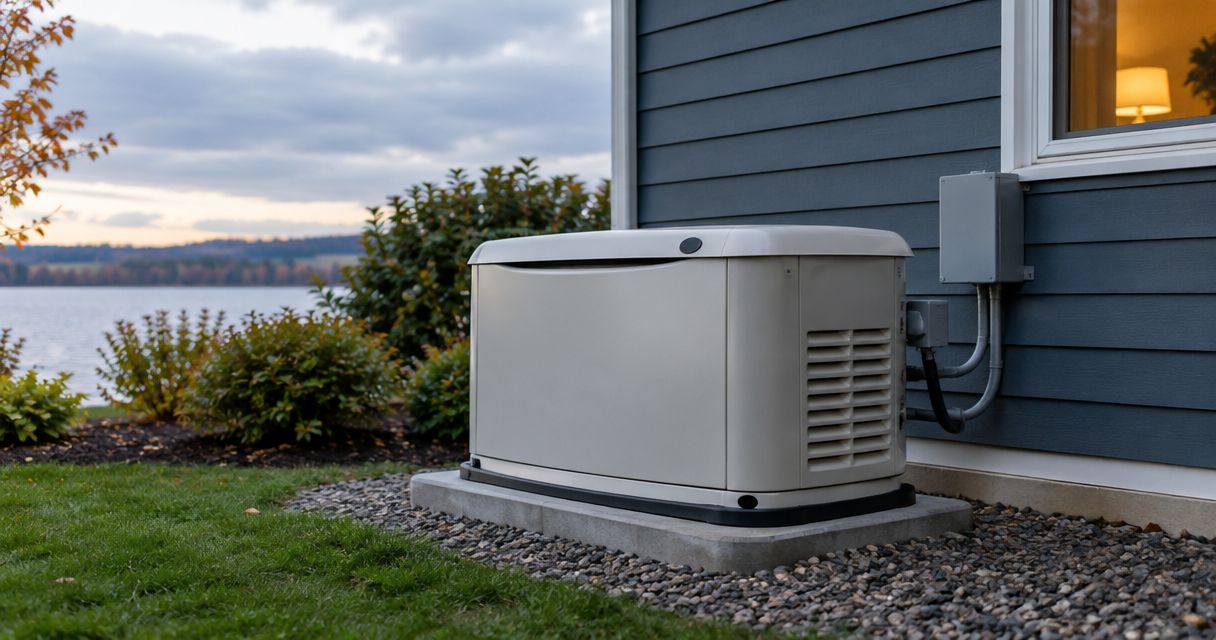
A generator can supply power through a multi-day outage when its operating rating, fuel supply, maintenance schedule, and electrical connection support that duty. That does not mean running without interruption: follow the model’s required shutdowns, and shut down and cool a portable generator before refueling.
- Can a generator run continuously during a multi-day outage? Yes, within its operating limits and required maintenance stops.
- Portable generators need safe outdoor placement, supervised operation, and shutdowns for refueling and maintenance.
- Standby generators still depend on fuel delivery, oil checks, cooling, and the manufacturer’s operating instructions.
- Eagle Electric provides licensed electrical contracting for Bakken homeowners and businesses; electrical connections need professional assessment.
Why this matters
The lights coming back on is not proof that your backup setup can carry the building through the rest of the outage. A generator can handle the connected load now and still need a shutdown for service later.
For your 2026 outage plan, separate three questions: how long the fuel lasts, how long the engine can operate before service, and which circuits must stay powered. Those are different limits. For building wiring and backup-power connections, start with a licensed contractor’s electrical services, not a homemade cord arrangement.
Can a generator run continuously during a multi-day outage?
Yes, a generator can support a multi-day outage, but uninterrupted operation is a separate question. The exact answer comes from the operating manual and rating for your specific model. A fuel-tank runtime figure is not permission to skip maintenance or run the engine indefinitely.
A 3-day outage spans 72 hours. A 5-day outage spans 120 hours. Those are planning periods, not guaranteed generator runtimes; your equipment’s instructions determine the actual operating and service limits.
| Generator setup | Best for | Advantage during a long outage | Limitation you must plan around |
|---|---|---|---|
| Portable generator | Selected essential loads with active supervision | Can supply selected equipment through approved connections | Requires safe outdoor placement, fuel handling, and maintenance stops |
| Permanently installed standby generator | Buildings needing automatic backup | Can start and transfer connected loads automatically when properly configured | Still requires adequate fuel, maintenance, and an appropriate load plan |
| Commercial generator system | Businesses with defined operating loads | Can be specified around the facility’s electrical requirements | Rating, fuel logistics, transfer equipment, and service access need professional planning |
No setup removes the need to read the manual. Automatic starting does not make an engine maintenance-free, and a larger fuel supply does not change its service requirements.
Portable generators: plan for supervised operation and stops
A portable generator is useful when you need to keep selected equipment running. It is not a set-and-forget substitute for utility service. Someone must manage fuel, observe warning indicators, and follow the inspection and maintenance schedule.
Never refuel a running portable generator. Shut it down and let it cool according to the manufacturer’s instructions. Fuel spilled onto hot engine parts can ignite, so do not treat refueling as a quick task between other jobs.
For portable generators, the CDC’s carbon-monoxide guidance calls for outdoor operation at least 20 feet from doors, windows, and vents, with exhaust directed away from the building. Follow the manufacturer’s placement instructions as well. Never operate a generator inside a house, garage, basement, or attached enclosure, even with doors open.
Use working carbon-monoxide alarms as directed by their instructions. If an alarm sounds or anyone develops headache, dizziness, or nausea, move everyone to fresh air immediately and call emergency services. Do not reenter to investigate.
In your 2026 portable-generator plan, identify what happens during refueling and service stops. Equipment that cannot tolerate an interruption needs a separate, professionally reviewed continuity plan.
Standby generators: automatic does not mean unlimited
A permanently installed standby generator can respond to an outage without someone starting the engine manually. Properly configured transfer equipment separates the building’s backup supply from utility power and transfers the connected loads.
That convenience does not erase operating limits. The generator still needs suitable fuel supply, adequate cooling airflow, and maintenance at the intervals specified for the model. Follow the manufacturer’s instructions for shutdown, disabling automatic starting, and checking oil.
Natural-gas service depends on the supply remaining available. Propane and diesel depend on stored fuel and replenishment. None of those arrangements justifies an assumed runtime without the model’s fuel-consumption information and the actual connected load.
Before relying on a standby system for several days, know who is responsible for service. Keep the manual and service contact information accessible without internet access. A phone notification is useful, but it does not replace physical inspection when the instructions require one.
Commercial generators: the operating rating matters
A commercial generator needs a duty rating that matches how the facility will use it. Standby and prime-power ratings describe different operating applications; they are not interchangeable promises of unlimited output. Check the manufacturer’s rating definitions for the actual equipment.
For a business, identify the loads that protect people, equipment, and essential operations. Refrigeration, pumps, heating equipment, and process loads do not all start or operate the same way. A licensed electrician must assess the building connection and load requirements.
Your 2026 business continuity plan should also name the person authorized to shut equipment down. A generator service stop is easier to manage when staff know which operations must pause and which systems need an independent backup.
Oilfield sites need additional assessment of the location and equipment requirements. Do not assume a residential backup arrangement is suitable for an industrial site or a hazardous location.
Why generator runtime varies
There is no single safe runtime that applies to every generator. These factors determine what your specific setup can support:
- Operating rating. The manufacturer defines the intended duty and operating limits. Use the rating for the exact model, not a general claim about generators.
- Connected load. Fuel consumption changes with electrical demand. Motor-starting requirements also affect whether the generator can support the equipment you connect.
- Fuel supply. Tank capacity, usable fuel, delivery access, and the supply system affect how long power remains available.
- Maintenance intervals. Oil checks, oil changes, filters, and inspections follow the manufacturer’s schedule. Extended operation does not suspend those requirements.
- Operating conditions. Temperature, altitude, blocked airflow, and exhaust restrictions can affect operation. Follow the model’s environmental limits and installation instructions.
- Equipment condition. Existing faults, leaks, damaged cords, and overdue service need attention before an extended outage, not after the generator stops.
Fuel runtime and allowable operating time are different limits. Use the stricter requirement when planning the next stop. Do not stretch a service interval because fuel remains in the tank.
How do you prepare a generator for a multi-day outage?
Build the plan before bad weather arrives. Do not open electrical equipment or improvise connections during an outage.
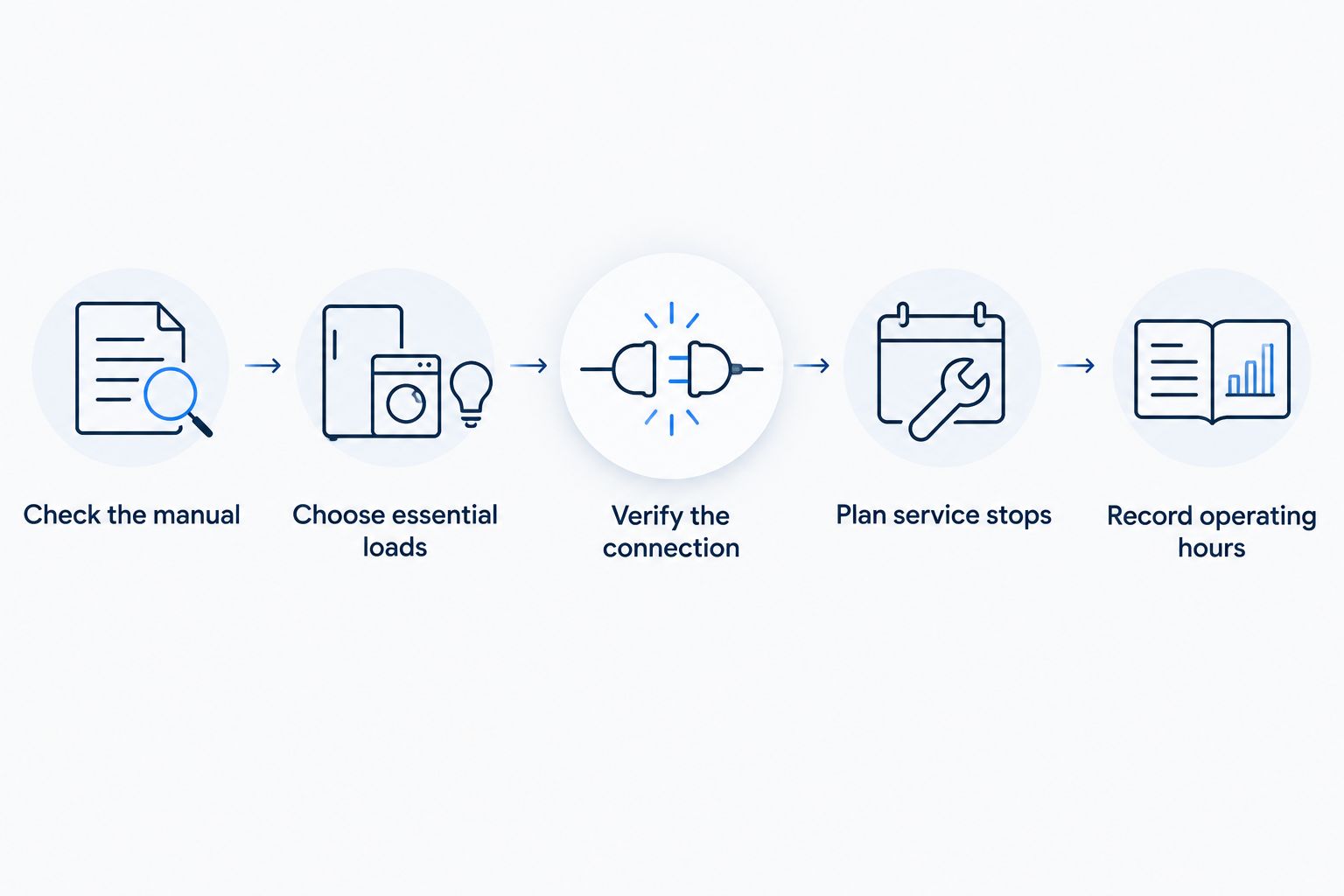
- Check the manual. Record the model, operating rating, fuel requirements, maintenance intervals, and shutdown instructions. Confirm that the instructions match the equipment you actually own.
- Choose essential loads. List the equipment that must operate and the equipment you can leave off. Have a licensed electrician assess connected circuits, running demand, and motor-starting requirements.
- Verify the connection. Have a licensed electrician inspect the transfer arrangement and building connection. Never energize house wiring through a receptacle or use a cord with exposed male plug ends.
- Plan service stops. Identify who will monitor operation and follow the manual’s shutdown procedures. Arrange an alternative for any critical equipment that cannot tolerate those stops.
- Record operating hours. Keep a written log of engine hours, inspections, service, and faults. Follow the actual maintenance schedule rather than relying on memory.
For a 2026 readiness check, gather the generator manual, existing maintenance records, and your essential-load list before the site visit. Those details help turn a general question about runtime into a decision about your actual installation.
Eagle Electric is best for Bakken homeowners and businesses that need a licensed electrical contractor for building electrical work. Generator engine service and fuel-system work must also go to professionals qualified for those tasks. Ask who handles each part rather than assuming one appointment covers everything.
You can request a written quote and describe the existing generator, building connection, and loads you need assessed. Eagle Electric responds to quote requests the same business day and provides clear written quotes. A quote response is not a promise of same-day job completion.
Get your electrical setup assessed
Request a same-business-day response and a clear written quote for electrical work.
Can I leave a generator running overnight?
Overnight operation requires the same safe placement, load limits, monitoring, and maintenance compliance as daytime operation. Darkness does not make an unsafe setup acceptable. Follow the manufacturer’s supervision instructions and do not assume a portable generator is safe to leave unattended.
Keep exhaust away from occupied buildings and maintain working carbon-monoxide alarms. If the required service or refueling stop falls overnight, plan for that interruption rather than postponing it until morning.
Does a full fuel tank mean the generator can run until empty?
A full tank does not override the maintenance schedule or operating limits. A required inspection or service stop can come before the fuel runs out. Use the manufacturer’s instructions to decide when to stop.
Do not use another model’s advertised runtime to estimate your own. The relevant figure must match your generator, fuel, and load conditions. If those conditions differ, the advertised figure does not establish your actual runtime.
Should I shut off appliances to extend generator runtime?
Reducing connected demand generally reduces fuel consumption, but it does not cancel required maintenance. Start with a defined essential-load list. Avoid adding high-demand appliances simply because an unused receptacle is available.
Switching loads also requires attention to starting demand and the connection’s capacity. Have a licensed electrician establish which circuits and equipment your installation can safely support.
FAQ
Can a generator run continuously during a multi-day outage?
A generator can supply power through a multi-day outage if its operating rating, fuel supply, and maintenance requirements support that use. Required shutdowns still apply, so multi-day backup does not necessarily mean uninterrupted engine operation.
How many hours can my generator run without stopping?
Your generator’s manual determines its operating and service limits; there is no universal hour limit for every model. Check the exact model’s duty rating, maintenance schedule, and shutdown instructions.
Can I add gasoline while my portable generator is running?
No. Shut down the portable generator and let it cool according to the manufacturer’s instructions before refueling. Spilled fuel can ignite on hot engine parts.
How far from my house should a portable generator sit?
CDC guidance calls for portable generators to operate outdoors at least 20 feet from doors, windows, and vents, with exhaust directed away from the building. Also follow the manufacturer’s placement instructions and never operate one in a garage or other enclosed space.
Will a natural-gas standby generator run forever?
No. A natural-gas standby generator still depends on continued fuel supply, suitable operating conditions, and required maintenance. A utility fuel connection does not remove engine-service requirements.
Can I connect a generator to my house through a wall outlet?
No. Feeding generator power into a wall outlet creates a dangerous backfeed arrangement. Have a licensed electrician assess and install an approved building connection and transfer arrangement.
What should I do if a carbon-monoxide alarm sounds while the generator runs?
Move everyone to fresh air immediately and call emergency services. Do not stay inside to investigate or reenter until emergency responders say it is safe.
One last thing
A generator shutdown can be the correct result, not a failure. Required maintenance protects the equipment, and a protective shutdown needs investigation rather than repeated resets.
For your 2026 outage checklist, write down the next required service point before starting the engine. Keep that note beside the operating log. If a critical load cannot survive the planned stop, solve that gap before the outage—not by skipping service.


