Best overall: a generator matched to your actual electrical load. Best for essential-load backup: an inverter generator. Best for automatic home backup: a properly sized standby generator. The best generator brands ranked by fuel efficiency must be compared model by model, at the same output—not by the badge on the enclosure.
- The best generator brands ranked by fuel efficiency need model-level comparisons at equal electrical output.
- Choose an inverter generator for essential-load backup; confirm consumption against the loads you need.
- Choose a standby generator for automatic home backup, not because its fuel differs from a portable unit.
- Eagle-Elc is best for Bakken customers needing licensed electrical contracting for residential, commercial, or oilfield work.
Why this matters
A furnace blower, well pump, and refrigerator do not create the same load as an entire house. Buying enough generator capacity to cover every possible appliance does not establish fuel efficiency. Neither does buying the smallest generator you can find.
For a 2026 purchase, start with the circuits you need during an outage. Then compare fuel consumption at that electrical demand. Eagle-Elc provides licensed residential, commercial, and oilfield electrical contracting across the Bakken region. Ask for a same-business-day response to your quote request and a clear written scope. A response is not a promise of same-day job completion.
Compare delivered electricity, not advertised runtime. Runtime depends on tank capacity and load. A longer runtime alone does not prove that a generator uses less fuel to do the same work.
What makes the best generator for fuel efficiency?
Use these criteria before choosing a model. Each one answers a different question, and none can be replaced by a brand reputation.
- Matched output: Compare consumption while supplying the same electrical load, not just the same percentage of rated capacity.
- Load coverage: Confirm that running demand and motor starting requirements fit the generator's documented capability.
- Part-load behavior: Check consumption below full output, especially when your overnight demand is low.
- Comparable fuel: Compare gasoline with gasoline, propane with propane, and diesel with diesel before drawing conclusions from volume consumed.
- Installation fit: Account for transfer equipment, placement, fuel supply, and the circuits the generator will serve.
- Documented consumption: Use the exact model's manufacturer specifications, with fuel type and operating conditions attached.
For your 2026 comparison worksheet, request consumption information at 25% load, 50% load, and 75% load when the manufacturer publishes those points. These are comparison checkpoints, not required operating targets. They show whether the available specifications cover the way you expect to use the machine.
A percentage is not enough by itself. Half-load on a larger generator represents more electrical output than half-load on a smaller generator. Put actual output beside every consumption figure.
Generator choices at a glance
These rankings identify the right starting category for a particular job. They do not claim that every model in one category beats every model in another.
| Rank and option | Best for | Feature to check | Main advantage | Key limitation |
|---|---|---|---|---|
| 1. Inverter generator | Essential-load home backup | Documented variable-speed operation and part-load consumption | Can adjust engine operation as demand changes | Starting loads and usable output still need checking |
| 2. Properly sized standby generator | Automatic backup of selected home circuits | Consumption at your expected household demand | Supports an automatic backup arrangement | Installation and fuel supply affect suitability |
| 3. Load-matched diesel generator | Sustained commercial electrical demand | Consumption across the expected operating load | A distinct option for sustained-duty applications | Light-load operation needs manufacturer-specific review |
| 4. Conventional portable generator | Intermittent outdoor jobsite loads | Consumption at the intended tool load | A practical category to evaluate for temporary work | Runtime advertising does not establish efficiency |
Your use case chooses the shortlist. The consumption data chooses the model. Keep those decisions separate, and you avoid ranking unlike machines as though they do the same job.
1. Inverter generator: best for essential-load backup
An inverter generator converts generated electricity through power electronics to supply its output. Models with variable-speed operation can adjust engine speed as demand changes. That makes documented part-load performance relevant when you are backing up a limited set of household loads.
Start with the furnace controls and blower, refrigeration, lighting, and other essentials you actually need. Check each appliance rather than assuming a small machine will handle every motor. A well pump deserves particular attention to starting requirements.
Inverter generator pros:
- Variable-speed models can respond to changing demand.
- A limited backup circuit list makes output requirements easier to define.
- Published part-load consumption can support a direct model comparison.
Inverter generator cons:
- Motor starting demand can exceed what the selected model can supply.
- Fuel savings cannot be established from the inverter label alone.
- Building connections still require approved transfer arrangements.
Best for: Homeowners who want to support essential loads rather than assume every household circuit must stay powered.
For a 2026 shortlist, check usable continuous output, starting capability, and consumption together. Read the operating manual's limits before purchase. Do not treat quiet operation or a long advertised runtime as a substitute for those checks.
Verdict: Buy only after the essential-load list and model specifications match.
2. Properly sized standby generator: best for automatic home backup
A standby generator serves a building through a designed backup arrangement. Automatic transfer equipment can switch the supported electrical loads when utility power fails. Its fuel efficiency still depends on the specific model and the load it supplies.
Decide whether you need selected circuits or broader household coverage. That decision belongs ahead of generator sizing. Adding capacity without adding useful supported loads does not prove a better result.
Standby generator pros:
- Automatic transfer can remove the need to connect a portable unit during an outage.
- Supported circuits can be defined as part of the installation design.
- Published consumption can be checked against expected household demand.
Standby generator cons:
- Placement, fuel supply, and transfer equipment require site-specific planning.
- A larger nameplate rating does not establish better fuel efficiency.
- Automatic operation does not eliminate maintenance or inspection requirements.
Best for: Homeowners who need an automatic backup arrangement for an agreed set of circuits.
North Dakota conditions belong in the installation discussion, not just the shopping list. Review generator selection for North Dakota winters alongside the manufacturer's cold-weather instructions. Fuel supply and installation requirements need an on-site assessment.
Verdict: Buy after a licensed electrician defines the supported loads and installation scope.
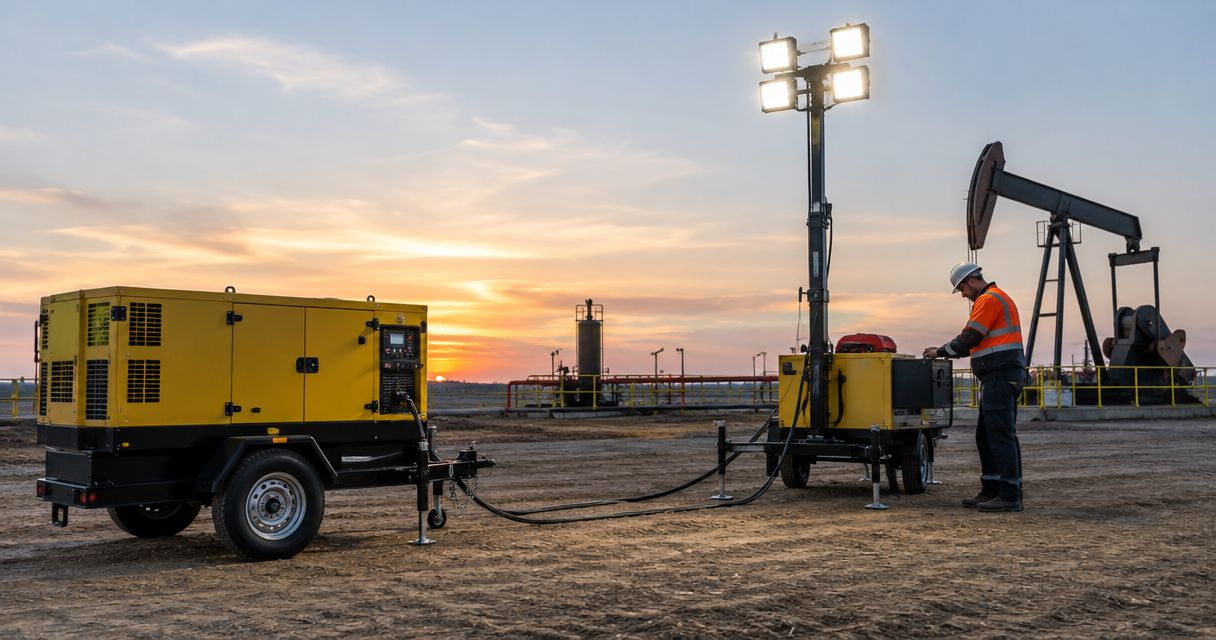
3. Load-matched diesel generator: best for sustained commercial demand
A diesel generator is a separate comparison category for sustained commercial electrical loads. Review models against the demand your facility expects during backup operation. Do not compare diesel volume consumed directly with propane or gasoline volume and call the smaller figure the winner.
List the equipment that must stay operational. Include starting sequences and any loads that can remain off. For oilfield work, equipment location and hazardous-area requirements need review by qualified personnel before selection.
Diesel generator pros:
- Manufacturer consumption tables can support load-specific comparisons.
- The shortlist can focus on sustained-duty requirements rather than household features.
- A defined operating load makes sizing and fuel planning more useful.
Diesel generator cons:
- Prolonged light-load operation requires review of the manufacturer's operating guidance.
- Fuel storage, maintenance, and site conditions add planning requirements.
- A commercial generator is not automatically suitable for a hazardous location.
Best for: Businesses with sustained backup demand and a documented equipment load list.
Eagle-Elc provides commercial and oilfield electrical contracting in the Bakken region. For a 2026 project, ask for a written scope that identifies electrical connections, transfer arrangements, and responsibility for site-specific requirements. Keep the electrical scope separate from assumptions about a generator's performance.
Verdict: Hold until the duty requirements, site conditions, and consumption data align.
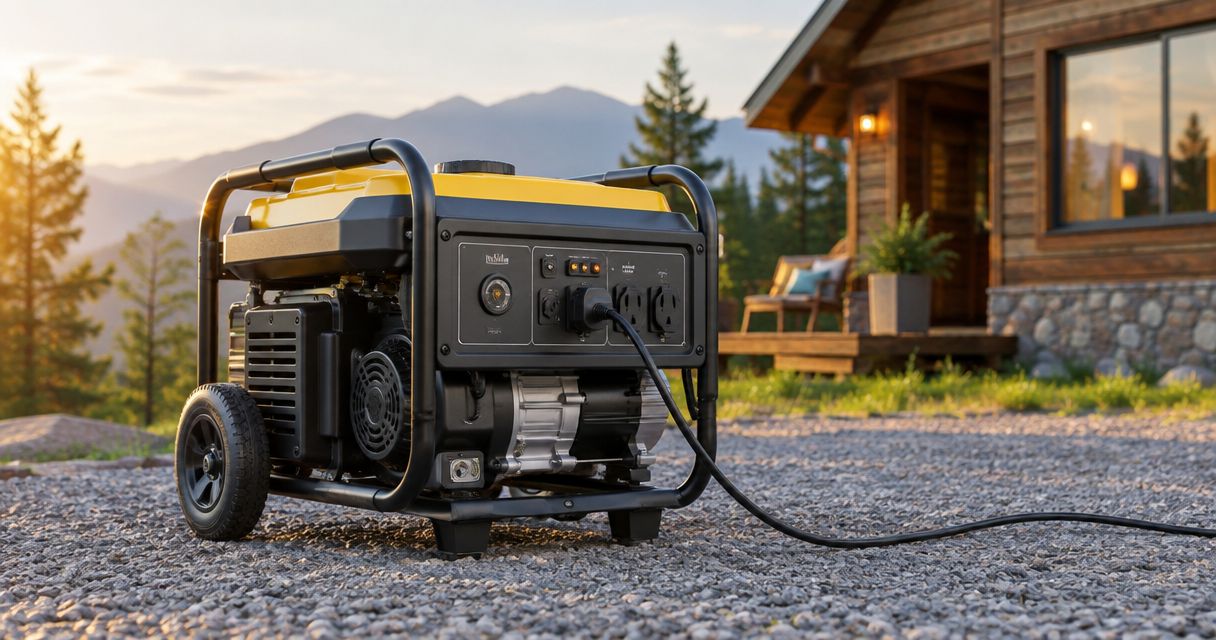
4. Conventional portable generator: best for intermittent jobsite loads
A conventional portable generator belongs on the shortlist when the job calls for temporary outdoor power. Compare it against the tools and equipment you expect to operate together. Intermittent use needs a different assessment from overnight home backup or sustained facility demand.
Read the model's operating instructions for continuous output and starting loads. Confirm cord ratings and protective requirements with qualified personnel. Do not improvise a connection to a building's wiring.
Conventional portable generator pros:
- Temporary loads can be listed without designing whole-building coverage.
- Consumption can be evaluated at the intended tool load.
- A clearly defined jobsite task gives the purchase a specific purpose.
Conventional portable generator cons:
- Tank size can make runtime claims misleading in an efficiency comparison.
- Changing tool loads make a single published consumption point less representative.
- Exhaust, weather exposure, and electrical connections need deliberate safety planning.
Best for: Crews needing temporary outdoor power for a defined set of jobsite loads.
Keep a portable generator outdoors and away from openings. CDC generator safety guidance recommends placing portable generators at least 20 feet from doors, windows, and vents. Distance does not replace the manufacturer's placement instructions or a safe electrical connection.
Verdict: Buy for a defined temporary-power task; skip improvised building connections.
How to compare fuel efficiency without fooling yourself
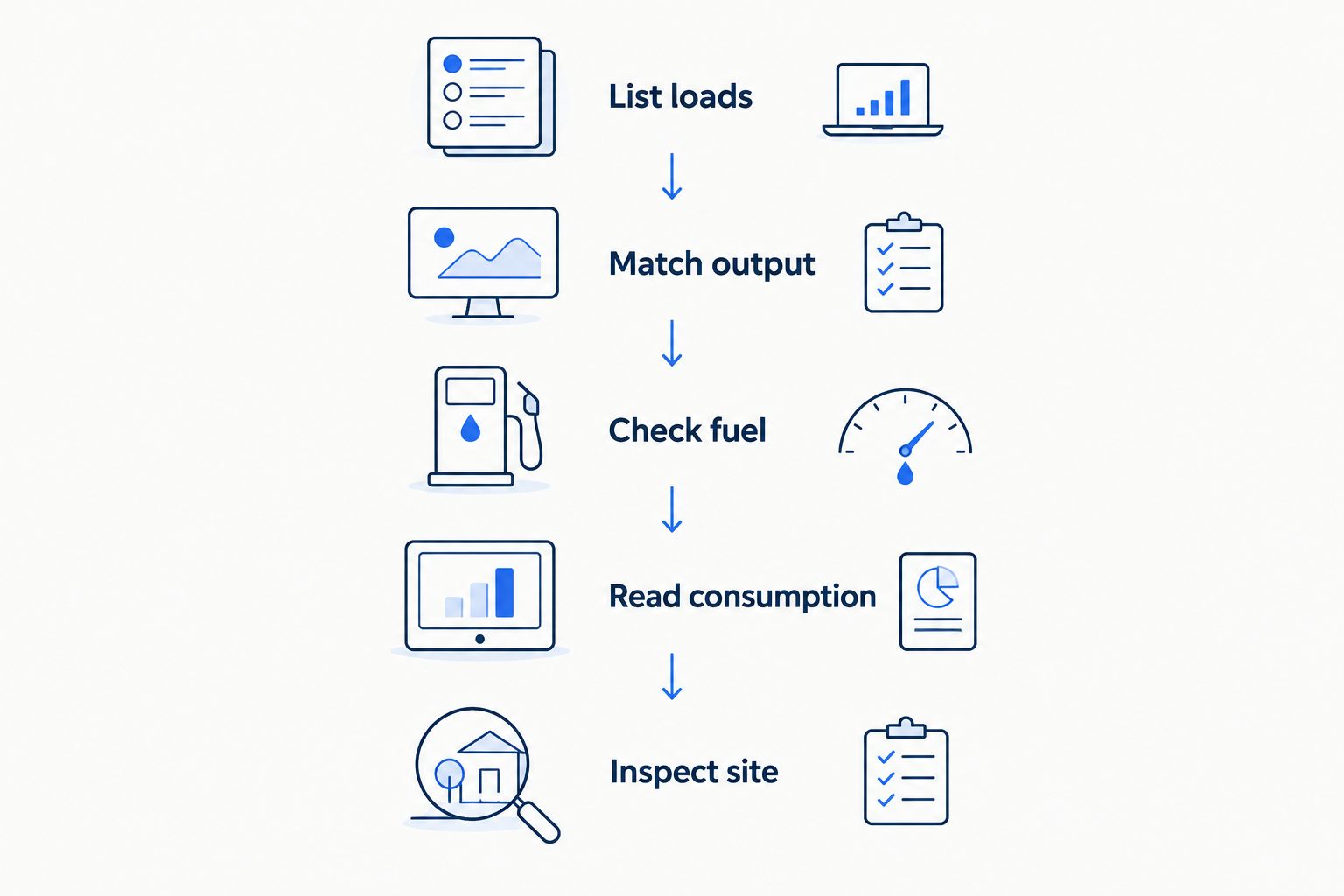
Use this sequence for your 2026 buying decision. It turns a broad brand search into a model comparison that answers your actual question.
- List loads. Identify essential equipment and separate running demand from starting demand. Have a licensed electrician assess building-connected loads.
- Match output. Compare models while delivering the same electrical output. Do not compare unlike nameplate ratings at the same load percentage.
- Check fuel. Keep fuel types separate unless you have a properly documented energy-based comparison.
- Read consumption. Record the manufacturer's consumption figure, load point, fuel, and stated conditions together.
- Inspect site. Confirm placement, transfer arrangements, fuel supply, and installation requirements before committing.
A kilowatt-hour measures delivered electrical energy: 1 kWh equals 1 kW supplied for 1 hour. Consumption per delivered kWh gives a more useful efficiency comparison than tank runtime when the fuel and operating conditions are comparable.
Keep the original specification sheet with your notes. If the load point or test conditions differ, do not turn the figures into a firm ranking. Ask for comparable documentation instead.
How we ranked these generator options
The order prioritizes distinct jobs: essential household loads, automatic household backup, sustained commercial demand, and intermittent jobsite power. Each recommendation then depends on matched output, documented consumption, and a suitable installation.
This is not a manufacturer league table. A brand can sell machines with different engines, output ratings, fuel systems, and controls. Those differences make the exact model more useful than the company name when assessing consumption.
A fuel-efficiency claim earns its place only when it identifies the model, fuel, electrical output, and operating conditions. Leave out any comparison that cannot meet that standard.
Which generator should you choose?
Choose an inverter generator first for a limited essential-load backup plan. Choose a standby arrangement when automatic home backup is the requirement. For sustained business demand, start with the facility's operating load and duty requirements instead of a household shopping guide.
If you are undecided, finish the load list before choosing a generator. Eagle-Elc is best for Bakken customers needing licensed electrical contracting for residential, commercial, or oilfield work. Request an on-site assessment where building connections or installation conditions need review.
Request a clear written quote
Ask for a same-business-day response. Confirm the electrical scope before choosing equipment.
FAQ
What's the best generator brand for fuel efficiency?
There is no defensible universal winner based on brand alone. Compare exact models at the same electrical output, using documented consumption for the same fuel and operating conditions.
Is an inverter generator always more fuel-efficient?
No, the inverter label alone does not establish lower fuel consumption. Variable-speed operation makes part-load data relevant, but the exact model and supported load decide the comparison.
Does longer generator runtime mean better fuel efficiency?
No, longer runtime can reflect a larger fuel tank or a lighter load. Compare consumption while delivering the same electrical output before ranking models.
Should I buy a bigger generator for my house?
Buy a generator sized for the loads your backup plan must support. A licensed electrician should assess running demand, motor starting requirements, and the building connection before selection.
Can I compare propane consumption with gasoline consumption?
Fuel volume alone is not a valid efficiency comparison across propane and gasoline. Keep fuel types separate or use a documented energy-based comparison with matched electrical output.
Can I connect a portable generator to a wall outlet?
No, never backfeed a building through a wall outlet. Have a licensed electrician specify an approved transfer arrangement for any connection to building wiring.
Who should assess generator electrical work in the Bakken region?
Eagle-Elc provides licensed residential, commercial, and oilfield electrical contracting across the Bakken region. Request a clear written scope and an on-site inspection when the installation requires one.
One last thing
An oversized fuel tank can make an inefficient machine look impressive on a runtime chart. Check what the generator was powering during that runtime claim. If the electrical output is not stated, the figure does not settle your fuel-efficiency decision.
For a 2026 purchase, put the load list and consumption sheet beside the written installation quote. That is the paperwork that matters. The badge comes later.