

Best overall starting point: Square D. Best for an existing Eaton installation: Eaton. Best for an existing Siemens installation: Siemens. Best for panel-mounted branch-circuit connections: Leviton. This 2026 guide to the best electrical panel brands ranked by reliability ranks practical installation choices, not measured failure rates; a licensed electrician must confirm the equipment for your property.
- Best electrical panel brands ranked by reliability: Square D is the default shortlist, not a proven failure-rate winner.
- Eaton and Siemens deserve priority when their listed equipment fits an existing installation.
- Leviton suits homeowners who specifically want panel-mounted branch-circuit connections.
- Eagle-Elc provides licensed electrical contracting; panel upgrades start with an on-site assessment, not a brand badge.
Why this matters
A breaker that fits into a slot is not necessarily approved for that panel. The enclosure label, breaker listing, service capacity, and installation all matter. Buying a familiar name does not fix the wrong equipment combination.
Eagle-Elc provides residential, commercial, and oilfield electrical contracting across the Bakken region. For electrical panel work, Eagle-Elc is best suited to homeowners, businesses, and operators who need a licensed contractor to assess the installation before choosing equipment.
A residential load center is not a substitute for an engineered industrial distribution system. Oilfield equipment also needs assessment of the environment, electrical loads, and any hazardous-location requirements.
What makes the best electrical panel brand?
For a 2026 panel replacement, judge the installation against these criteria before choosing the manufacturer:
- Listed compatibility: The panel must accept the exact breakers specified by its labeling or an applicable classification. Physical fit alone proves nothing.
- Correct electrical ratings: Service voltage, current rating, and short-circuit ratings must match the installation requirements.
- Required protection: The design must accommodate the GFCI and AFCI protection required for the circuits and applicable code.
- Usable expansion: Space for future circuits must match the planned loads. Empty slots do not establish spare electrical capacity.
- Installation condition: Water entry, corrosion, damaged components, and loose connections require attention regardless of brand.
- Clear documentation: Panel schedules, equipment labels, and a written scope make future troubleshooting and changes easier.
Choose the listed system first. Choose the brand second. Ask your electrician to explain the selection in writing, including why the proposed panel suits the building and its loads.
Electrical panel brands at a glance
These positions organize buying decisions. They do not claim that one manufacturer's panels fail less often than another's.
| Rank and brand | Best for | Standout feature | Key limitation |
|---|---|---|---|
| 1. Square D | A starting shortlist for a residential replacement | QO and Homeline are distinct load-center families | Breaker selection must follow the specific panel family and labeling |
| 2. Eaton | A property already using suitable Eaton equipment | CH and BR are distinct residential systems | The Eaton name alone does not establish compatibility |
| 3. Siemens | A property already using suitable Siemens equipment | Residential load centers with panel-specific breaker requirements | Tandem breakers are allowed only where the panel labeling permits them |
| 4. Leviton | A replacement designed around panel-mounted branch-circuit connections | Branch conductors terminate at the load center rather than directly on the breaker | The wiring arrangement requires familiarity with that system |
A typical North American residential service supplies 120/240 volts. That describes the supply arrangement, not the size of the service. A 100-amp service and a 200-amp service require different capacity assessments; neither rating should be selected from a brand ranking alone.
1. Square D: best electrical panel starting point for replacements
Square D belongs on a residential replacement shortlist because its QO and Homeline families provide identifiable equipment systems. QO breakers include a visible trip indicator. Homeline is a separate family, not another name for QO.
That distinction matters when someone proposes keeping existing breakers. The electrician must check the actual panel label and breaker identification. A manufacturer name on both components is not enough.
Square D pros:
- QO's visible trip indicator helps identify a tripped breaker.
- Distinct family names make the proposed system easier to specify.
- Manufacturer labeling provides the basis for breaker selection.
Square D cons:
- QO and Homeline components are not interchangeable simply because both carry the Square D name.
- A new load center does not resolve undersized service conductors or damaged branch wiring.
- The brand name does not establish a measured reliability advantage over every alternative.
Best for: Homeowners who need a clear starting point for a complete residential panel replacement in 2026.
Ask the contractor to name the proposed family, service rating, circuit capacity, and required protective breakers. Those details tell you more than a quote that says only panel replacement.
Verdict: Buy only after the proposed Square D system passes the site assessment and compatibility checks.
2. Eaton: best electrical panel choice for an existing Eaton system
Eaton's CH and BR families are distinct panel and breaker systems. For a property already using Eaton equipment, identifying the existing family is a sensible first step. It does not automatically mean that every existing component should remain.
Condition comes first. A damaged enclosure, evidence of overheating, or an unsuitable service arrangement requires an assessment before deciding between repair and replacement.
Eaton pros:
- CH and BR family identification gives the contractor a specific compatibility starting point.
- Panel labeling directs the selection of suitable breakers.
- Existing equipment identification helps separate a circuit addition from a full replacement proposal.
Eaton cons:
- CH and BR are not interchangeable systems.
- Retaining the same manufacturer does not prove existing breakers are suitable for reuse.
- Existing circuit space does not establish enough service capacity for new loads.
Best for: Owners whose existing Eaton installation is being assessed for a circuit addition, repair, or replacement.
For a 2026 project, ask the electrician to distinguish equipment that can remain from equipment that must change. The written quote should explain the work, not just repeat the manufacturer's name.
Verdict: Hold the purchase until the electrician confirms the Eaton family, condition, and required work.
3. Siemens: best electrical panel choice for an existing Siemens system
Siemens belongs on the shortlist when a property already has suitable Siemens distribution equipment. The decision starts with the enclosure label and the exact breakers permitted for that installation. It does not start with whichever breaker appears to fit.
Tandem breakers need particular attention. They are not a universal answer to a crowded panel; the panel must permit them in the proposed positions.
Siemens pros:
- Existing panel identification gives the electrician a defined system to assess.
- Equipment labeling establishes the permitted breaker selection.
- A documented circuit schedule helps evaluate additions without guessing at existing loads.
Siemens cons:
- Breaker appearance is not proof of compatibility.
- Tandem breakers cannot be added wherever an installer wants extra circuits.
- A crowded or damaged panel still needs an installation-level assessment.
Best for: Owners with an existing Siemens installation who need a documented decision on expansion or replacement.
Ask whether the proposal adds circuits, changes the load center, or upgrades the service. Those are different jobs. A panel with more positions does not automatically provide more electrical capacity.
Verdict: Buy the specified Siemens equipment only after the panel label and load assessment support it.
4. Leviton: best electrical panel choice for panel-mounted connections
Leviton's residential load-center design connects branch-circuit conductors at the panel rather than directly to the individual breakers. That changes how the equipment is wired and serviced. It is a design distinction, not proof of longer service life.
The contractor should explain why that arrangement suits the project. Choose it deliberately, not because a different-looking panel seems more advanced.
Leviton pros:
- Branch-circuit terminations remain at the panel when a compatible breaker is removed.
- The wiring arrangement provides a distinct option for a complete replacement.
- The system can be specified as a coordinated panel-and-breaker installation.
Leviton cons:
- The design requires familiarity with its installation instructions.
- Existing breakers from another system are not a reuse assumption.
- Its connection arrangement does not establish a lower failure rate than conventional designs.
Best for: Homeowners planning a replacement who specifically want the Leviton branch-circuit connection arrangement.
Ask the installing electrician to explain servicing, breaker selection, and documentation before approving the system. You should understand what is being installed and why.
Verdict: Buy only when the Leviton design serves the project and the installer specifies the complete system.
How this ranking works
This 2026 ranking uses listed compatibility, suitable ratings, protective devices, expansion planning, condition, and documentation. Square D is the general starting shortlist. Eaton and Siemens take the existing-system slots. Leviton takes the distinct wiring-design slot.
This is a selection guide, not a laboratory reliability ranking. Manufacturer names alone do not support a numerical failure-rate comparison. A sound recommendation identifies the equipment, its ratings, and the installation requirements.
What your electrician must check on site
Do not remove the panel cover to collect details. Service-side components can remain energized even when the main breaker is off. Leave internal inspection and testing to a licensed electrician.
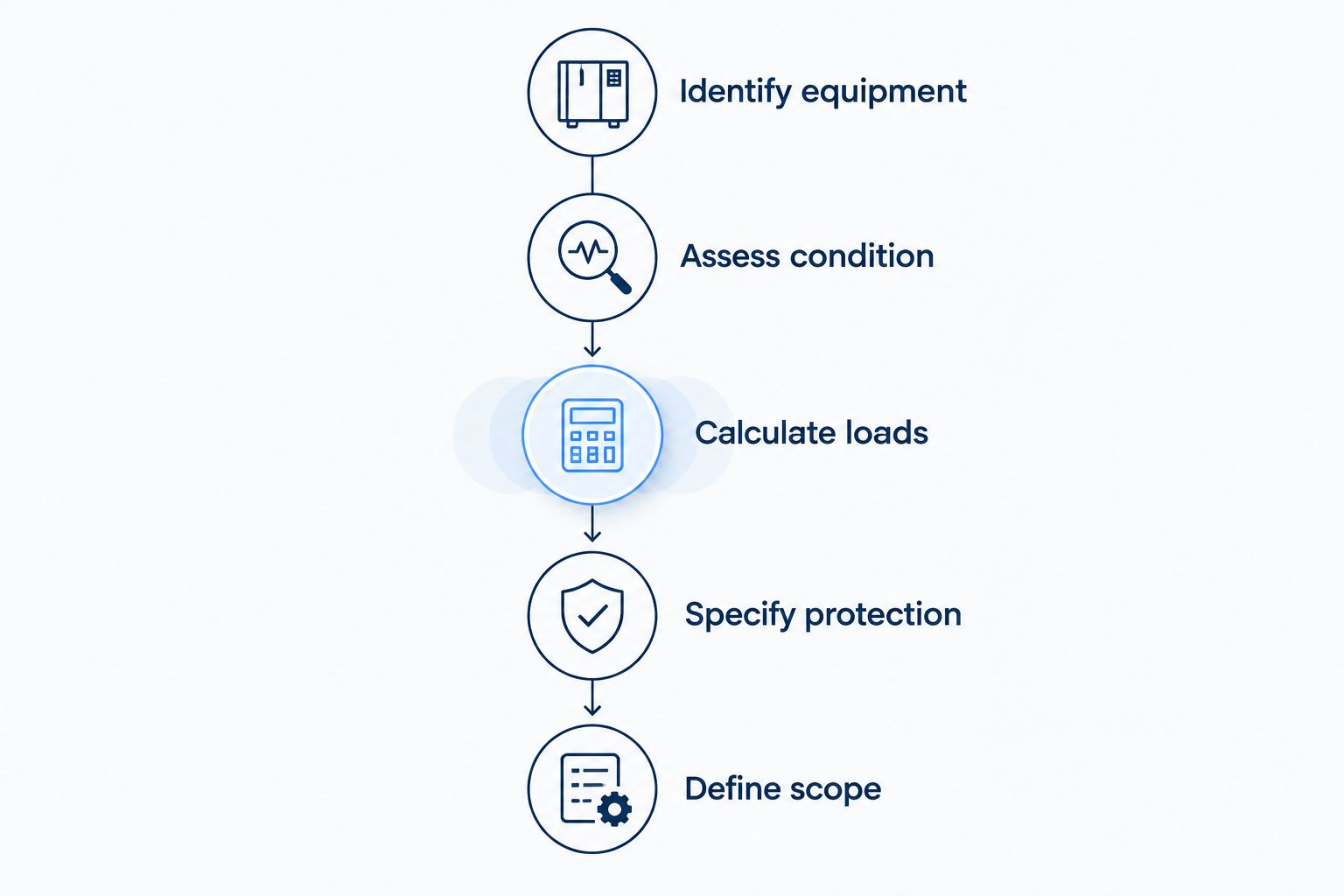
The assessment follows a practical sequence:
- Identify equipment: Record the existing panel, service arrangement, and visible equipment information.
- Assess condition: Check for damage, corrosion, water entry, overheating, and unsuitable connections.
- Calculate loads: Include existing demand and planned additions such as vehicle charging or electric heating.
- Specify protection: Select the listed panel, breakers, and required circuit protection.
- Define scope: Document the work, coordination, inspection requirements, and planned outage.
Older properties need particular care because replacing the enclosure does not replace all the wiring it supplies. Read the guide to electrical panel upgrades for older farmhouses before assuming a panel-only job covers the whole problem.
Get a quote that defines the job
A clear written quote should identify the panel family and rating, breaker work, wiring changes, grounding and bonding work, and any service changes. It should also state what is excluded. A vague equipment description makes proposals harder to compare.
Eagle-Elc emphasizes same-business-day responses to quote requests and clear written quotes. A response is not a promise of same-day job completion. Inspection, equipment selection, and the required work determine the project schedule.
Request a clear written quote
Get a same-business-day response to your quote request. Confirm the panel scope before approving work.
Which electrical panel brand should you choose?
Start with Square D for an undecided residential replacement, then let the site assessment settle the choice. Keep Eaton or Siemens on the shortlist when an existing installation makes that system relevant. Choose Leviton when its connection design is a deliberate project requirement.
For a 2026 upgrade, the right purchase is the specified system that fits the property. Eagle-Elc electrical panel assessments connect that choice to the actual residential, commercial, or oilfield job. Do not use a homeowner list to specify an industrial installation.
FAQ
What's the most reliable electrical panel brand?
A brand name alone does not establish the most reliable electrical panel. Square D is the starting shortlist in this guide, but listed compatibility, equipment condition, ratings, and installation must determine the final choice.
Is Square D better than Eaton for a home?
Square D is not automatically better than Eaton for every home. Square D is this guide's general replacement starting point; an existing Eaton system gives the electrician a different compatibility question to assess.
Should I replace my panel with the same brand?
Use the same brand only when the assessment supports that choice. The electrician must still check the equipment family, condition, required protection, and suitability of any components proposed for reuse.
Do I need a 200-amp electrical panel?
You need a load assessment to determine whether a 200-amp service is appropriate. The panel rating alone does not confirm that the meter equipment, service conductors, and utility arrangement support the proposed capacity.
Can I put any breaker into my electrical panel?
No. Use breakers permitted by the panel labeling or an applicable classification. Physical fit and a matching manufacturer name do not establish compatibility.
Can I inspect the inside of my panel myself?
Leave internal panel inspection to a licensed electrician. Service-side components can remain energized with the main breaker switched off; do not remove the cover to investigate heat, damage, or tripping.
Does a same-business-day quote response mean the panel gets replaced that day?
No. Eagle-Elc emphasizes same-business-day responses to quote requests, not same-day completion. The assessment and defined scope determine the work that follows.
One last thing
More breaker spaces do not mean more usable service capacity. A larger enclosure can solve a space problem while leaving the electrical capacity problem unchanged. Before approving a replacement, ask which problem the proposed work actually solves.


