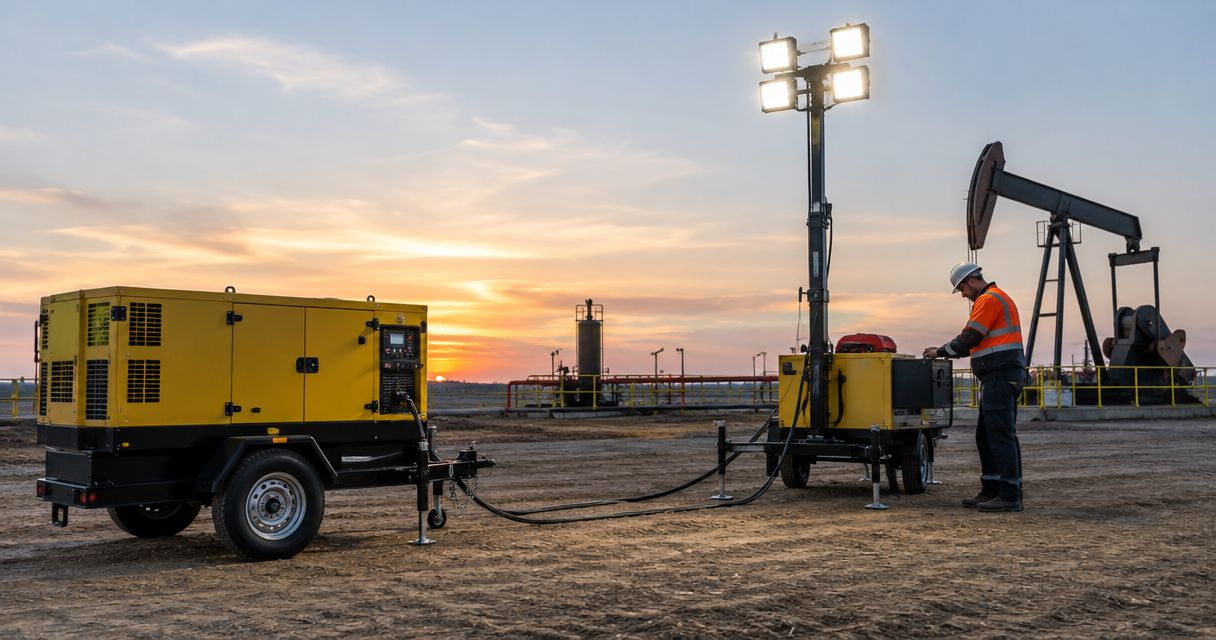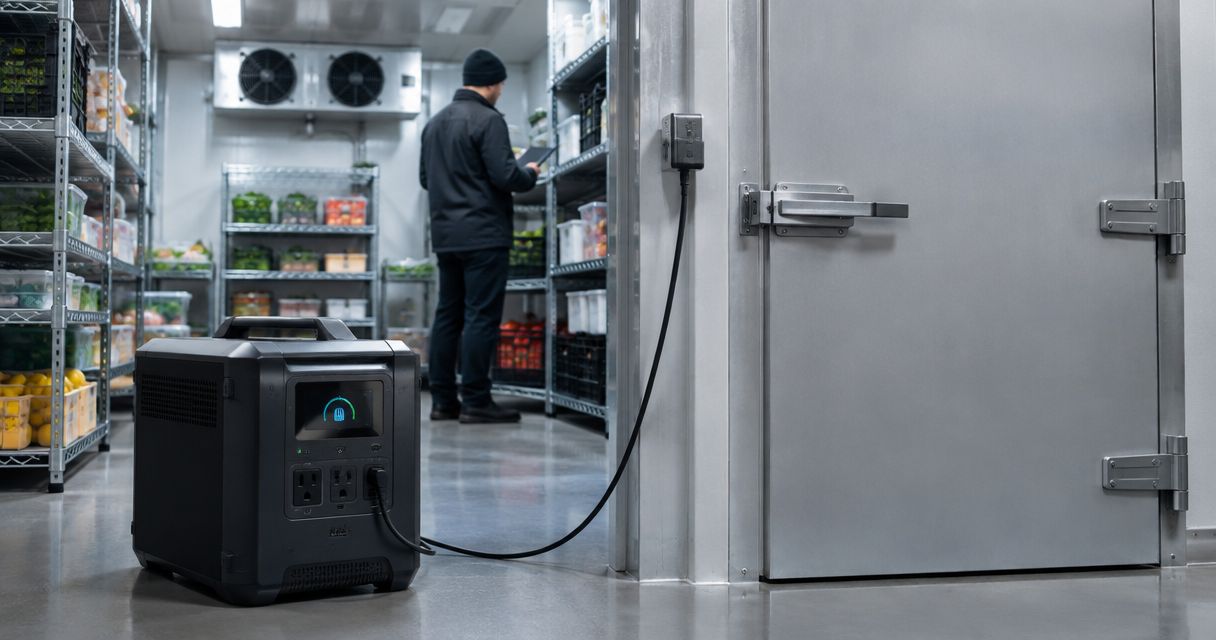
Instead of manually starting a generator when the lights go out, keep a walk-in cooler running during a power outage with a properly sized standby generator and automatic transfer switch. Have a licensed electrician coordinate the generator, transfer equipment, refrigeration circuits, and restart controls so the cooler resumes cooling without someone connecting cables.
- To keep walk-in cooler running during power outage, use a standby generator and automatic transfer switch sized for compressor starting.
- Eagle-Elc is best for Bakken businesses needing licensed commercial electrical contracting.
- Automatic transfer restores electrical supply; refrigeration controls determine when the compressor restarts.
- Test the complete cooling cycle under generator power, not just whether the generator starts.
Why this matters
A running generator does not prove your cooler has backup power. The condensing unit, evaporator fans, controls, and other required components must receive the correct supply. Separate feeds are easy to miss.
Automatic backup also has an interruption. The generator starts, its output stabilizes, and the transfer switch connects the protected loads. Refrigeration controls can add a restart delay to protect the compressor.
For a 2026 backup-power project, start with an on-site electrical inspection and refrigeration equipment records. Send those details with your quote request so the written scope addresses the whole system, not just a generator connection. Eagle-Elc emphasizes same-business-day responses to quote requests and clear written quotes; a response is not a promise of same-day installation.
Before you start
- Gather equipment records and access. Provide readable nameplate photos, refrigeration manuals, panel schedules, existing generator documents, and access to electrical and refrigeration equipment. Photograph only what is safely accessible without removing covers.
- Assign qualified people. A licensed electrician handles electrical design, permits, transfer equipment, and testing. A refrigeration technician confirms compressor starting requirements, control behavior, and safe restart settings.
- Find the hidden dependency. The cooler's compressor and indoor components can be on different circuits. An alarm, controller, solenoid, or fan left outside the backup system can prevent useful cooling even when the condensing unit has power.
Do not open energized panels, connect generator conductors, or change protective settings yourself. Never feed a building through a receptacle. Transfer equipment must prevent the generator from energizing utility lines.
Refrigeration load inventory
Identify every required circuit
- Record the equipment. List the condensing unit, evaporator fans, refrigeration controls, defrost equipment where fitted, and any manufacturer-required accessories. Separate equipment needed for cooling from lighting and convenience loads.
- Have the electrician trace the feeds. Confirm which panels and breakers supply each component. Do not treat an old panel directory as proof.
- Match voltage and phase. Record the actual nameplate requirements. Equipment marked 120 volts, 208 volts, or 240 volts is not interchangeable; voltage alone also does not establish phase compatibility.
- Document starting behavior. Have the refrigeration technician identify compressor starting requirements, existing start components, and restart protection. Running amperage alone is not a generator-sizing method.
- List competing loads. Include anything else expected to run on the same generator, especially motors and electric heating loads that can start while refrigeration is operating.
Expected result: You have a verified load list showing every required refrigeration circuit, its electrical requirements, and its starting demands. Keep this list with the 2026 project documents.
A larger breaker does not solve a starting problem. Breakers and conductors protect the circuit; changing them without an engineered basis creates a different problem instead of fixing generator capacity.
Backup source and transfer configuration
Choose the protected-load scope
Two common arrangements can support automatic refrigeration backup. Choose the scope before equipment selection, because the loads determine generator and transfer requirements.
| Arrangement | Best for | Advantage | Limitation |
|---|---|---|---|
| Selected-load standby generator system | Businesses prioritizing refrigeration and defined essential circuits | Limits backup demand to the loads included in the design | Unlisted circuits stay without power; missed refrigeration components can stop cooling |
| Whole-facility standby generator system | Businesses needing refrigeration and broader building operation | Covers more building functions within the approved design | Requires evaluation of the full connected load and any load-management sequence |
Selected-load backup is the starting point when your goal is specifically to protect refrigeration. Whole-facility backup fits a broader operating plan. Neither arrangement excuses checking compressor starting performance.
- Set the scope in writing. Identify the circuits that must operate and the loads that can remain off. Include any required controls and communications equipment.
- Have the generator sized for the load behavior. Require evaluation of motor starting, simultaneous loads, voltage dip, operating conditions, and manufacturer requirements. Do not select capacity from cooler floor area alone.
- Specify compatible transfer equipment. The electrician must address voltage, phase, current rating, fault-current suitability, grounding, bonding, and the installation's applicable requirements.
- Confirm the fuel and location plan. Coordinate fuel supply, required clearances, exhaust discharge, access, and cold-weather provisions with qualified installers. North Dakota winter operation belongs in the equipment selection, not an afterthought.
- Document load management. If other loads must wait while refrigeration starts, state the sequence and who is responsible for configuring it.
Expected result: The written design identifies what receives power, how the source transfers, and how the generator handles the starting sequence.
For a larger property, the guide to automatically transferring commercial buildings to backup power covers the broader workflow. Eagle-Elc provides commercial electrical contracting across the Bakken region; an on-site assessment establishes the work your building needs.
Transfer controls and commissioning
Prove automatic operation under load
Control labels differ by generator, transfer switch, and refrigeration controller. Use the exact model manuals rather than assuming a button or setting has a universal name. Only authorized, qualified personnel should change operating settings or simulate utility failure.
- Confirm automatic readiness. Have the installer verify the generator's automatic operating mode, starting battery, fuel supply, transfer controls, and absence of blocking faults. Confirm any emergency-stop device is in its normal operating condition.
- Coordinate restart controls. Have the refrigeration technician verify that compressor restart protection remains active. Do not shorten an anti-short-cycle delay just to make the test look faster.
- Simulate utility loss safely. The electrician should use the approved test procedure to verify generator start and transfer. Record whether the protected refrigeration circuits actually receive generator power.
- Observe refrigeration recovery. Confirm that required fans, controls, and the compressor operate in the correct sequence. For three-phase equipment, have qualified personnel verify phase sequence before operation.
- Test competing loads. Confirm that the approved load-management sequence works when other protected equipment operates. Observe generator behavior and refrigeration operation, not just indicator lights.
- Verify utility return. Test retransfer and the generator's specified cooldown sequence. Confirm that refrigeration returns to normal operation without a fault or an unsafe restart.
Expected result: A witnessed test demonstrates utility loss, generator start, transfer, cooling recovery, and utility return. Save the results in a dated 2026 commissioning record.
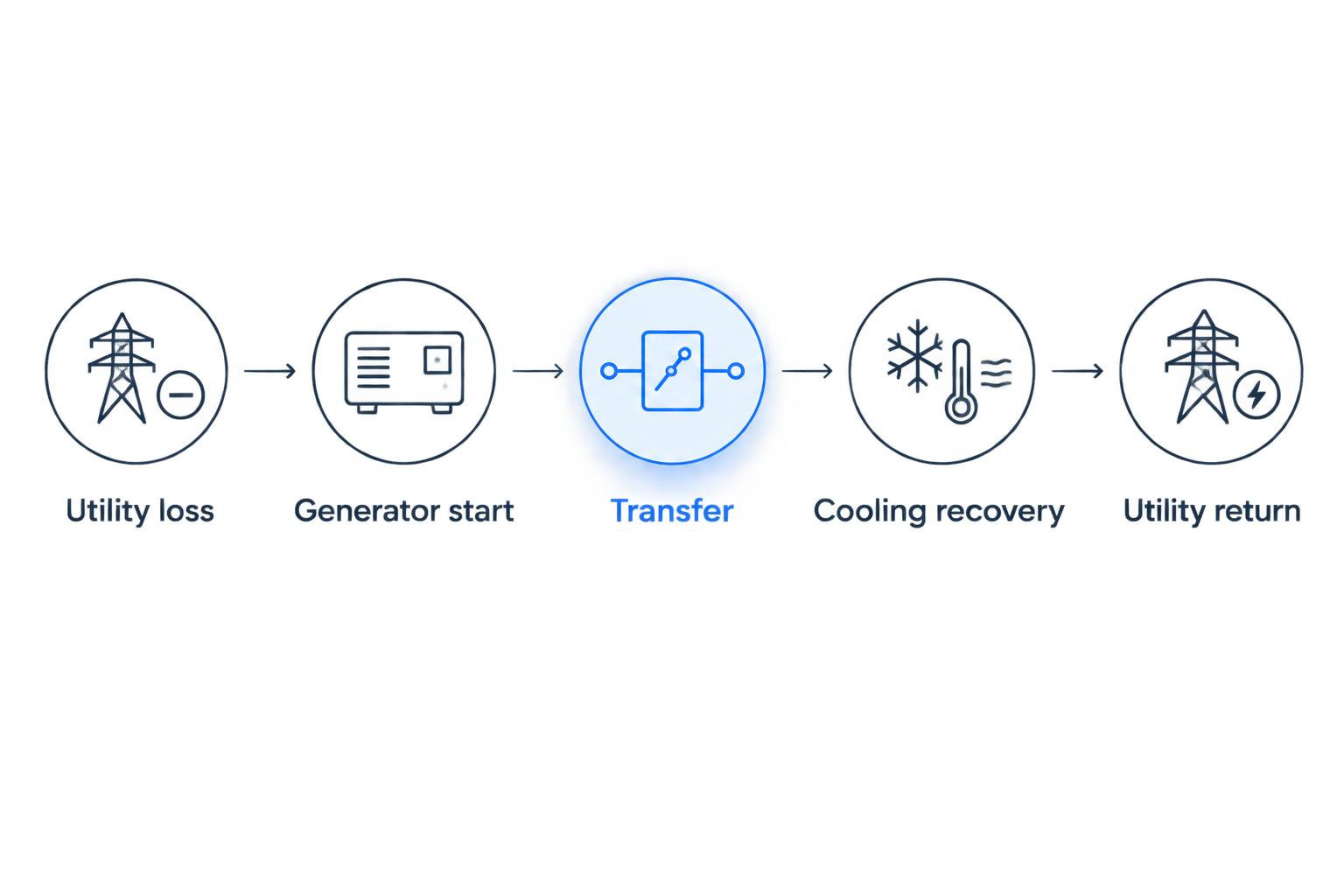
A no-load generator exercise is useful, but it does not establish that the cooler works during an outage. The acceptance test must include the actual refrigeration load and its controls.
Request a written electrical quote
Get a same-business-day response to your quote request. Define the circuits, transfer equipment, and testing scope.
Add an alert when cooling does not recover
Automatic power transfer and temperature monitoring do different jobs. Transfer equipment changes the electrical source. A temperature alarm tells your designated contact that the cooler needs attention; it cannot fix a stalled compressor or an open door.
For your 2026 operating plan, add a monitored alert workflow after the electrical backup passes its load test:
- Choose an appropriate sensor location. Follow the monitoring equipment instructions and your food-safety plan. Avoid a location that gives a misleading reading from direct discharge air or door openings.
- Protect the communications path. Verify how the sensor, gateway, router, and any required network equipment operate during an outage. Wi-Fi monitoring is ineffective if its required network loses power.
- Assign a primary and backup contact. State who acknowledges the alert and who visits the site when the primary contact does not respond.
- Test delivery and response. Use the alarm system's approved test method. Confirm that an actual person receives and acknowledges the notification.
Expected result: An outage does not leave you depending solely on a generator status light. You also have a tested way to learn that cooling has failed to recover.
Monitoring has a limit: a delivered message does not guarantee a response. Keep the escalation instructions with the electrical shutdown and refrigeration service contacts.
Troubleshooting
The generator runs, but the cooler stays off
Have the electrician verify the transfer switch position and power at every required refrigeration circuit. A missed control feed or an unprotected evaporator circuit can leave the system unable to cool. Check the verified circuit inventory before assuming the generator is defective.
The compressor tries to start and trips
Stop repeated restart attempts and call qualified service personnel. The electrician and refrigeration technician should evaluate supply voltage, starting demand, protective-device operation, and compressor condition. Do not install a larger breaker or bypass overload protection.
Lights work, but cooling has not resumed
Check the refrigeration controller's documented status and any active alarms without opening electrical enclosures. A restart delay can be normal after interrupted power. If cooling does not resume as the equipment manual specifies, have the refrigeration technician investigate instead of repeatedly cycling power.
The system works in a test but fails in cold weather
Have the generator service provider inspect starting-battery condition, specified cold-weather equipment, fuel supply, and maintenance status. Have the refrigeration technician review any low-ambient operating requirements as well. Never improvise heaters or block ventilation openings.
Backup power works, but no alert arrives
Check whether the monitoring device and its communications equipment stayed powered. Then test the notification route, contact details, and acknowledgment process. Electrical backup and alarm delivery require separate verification.
Customize your workflow
Make the handoff usable by the person who opens the business, not just the installer. Ask for a plain-language operating sheet covering normal status, alarm meanings, safe visual checks, and the point at which staff must call for service.
Your 2026 maintenance file should include:
- The protected-circuit schedule and equipment model information.
- Generator, transfer switch, and refrigeration manuals.
- The witnessed load-test record and unresolved defects.
- Manufacturer-required inspection and service tasks.
- Fuel arrangements, alarm contacts, and staff responsibilities.
Require a written scope from Eagle-Elc that separates electrical work, refrigeration work, and owner responsibilities. Clear boundaries prevent an untested control circuit or missing alarm connection from becoming someone else's assumption. Reassess the backup design whenever you add refrigeration or other substantial loads.
FAQ
How do I automatically keep a walk-in cooler running during a power outage?
Use a properly sized standby generator with an automatic transfer switch serving every required refrigeration circuit. A licensed electrician and refrigeration technician must verify electrical compatibility, compressor starting, and restart controls.
Will an automatic transfer switch keep my cooler running without interruption?
No. A conventional standby-generator transfer sequence includes an interruption while the generator starts and the supply transfers. Refrigeration restart protection can add another delay before the compressor operates.
What size generator does my walk-in cooler need?
Generator size depends on the actual refrigeration equipment, compressor starting demand, and other connected loads. Have qualified professionals inspect the installation and use equipment data rather than cooler dimensions alone.
Can a portable generator automatically run a walk-in cooler?
A portable generator does not provide unattended automatic backup merely because a transfer switch is installed. Automatic operation requires compatible starting controls, transfer equipment, fuel arrangements, and an installation approved for that use.
Why does my cooler stay off after generator power comes on?
A missing circuit, refrigeration fault, or restart delay can prevent immediate cooling. Have qualified personnel check the complete refrigeration supply and controller status; do not bypass protective devices.
Should my cooler's temperature alarm have backup power too?
Yes, every component required to deliver the alert needs an outage operating plan. Verify the sensor and communications path, then test delivery to the responsible person.
Who should inspect a commercial cooler backup-power installation in the Bakken?
Use a licensed electrician for the electrical installation and a qualified refrigeration technician for refrigeration operation. Eagle-Elc provides licensed commercial electrical contracting for businesses across the Bakken region.
One last thing
Test an outage, not just a generator. Before you accept the installation, ask qualified personnel to demonstrate actual cooling on backup power and a clean return to utility power. A generator that starts is only part of the job.