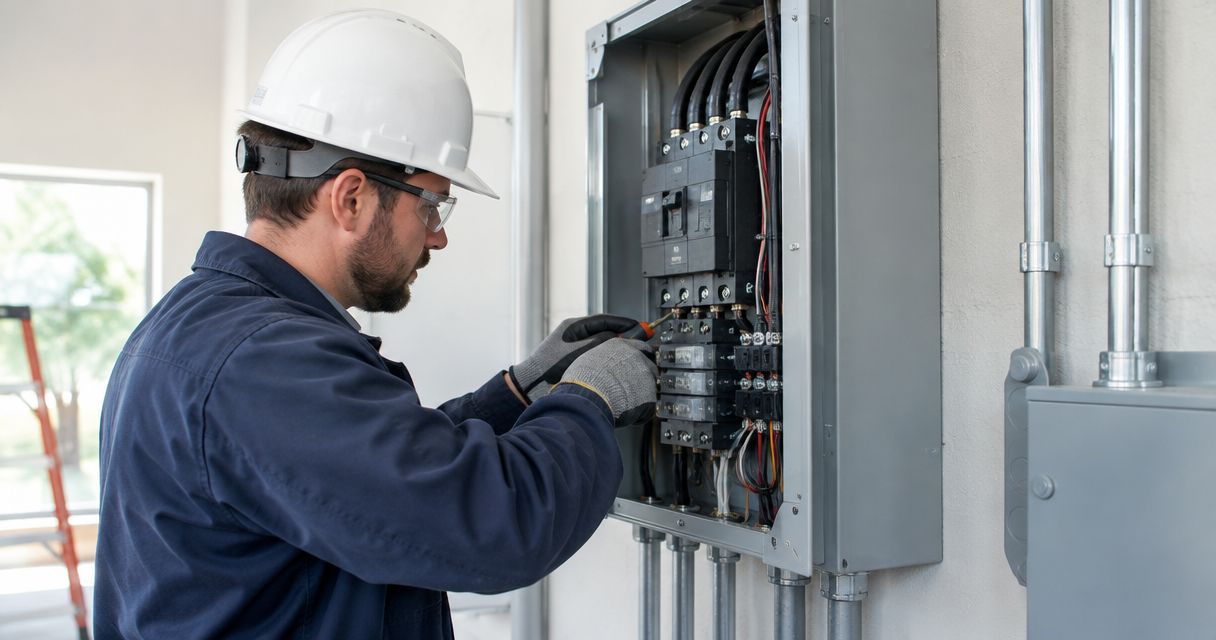
Transfer switch installation time depends on the switch type, existing panel, wiring route, and any utility or inspection coordination; a licensed electrician needs an on-site assessment before committing to a schedule. The electrical shutdown is only part of that schedule—planning, required approvals, testing, and any panel corrections also count.
- Transfer switch installation time needs a site-specific schedule, not a blanket same-day promise.
- Manual transfer switches require operator action; automatic transfer switches need compatible generator controls.
- Eagle-Elc provides licensed electrical contracting for homeowners and businesses across the Bakken region.
- Ask for a written scope that separates installation, electrical shutdown, inspection, and final testing.
Why this matters
A transfer switch job affects more than when an electrician arrives. You need to know when normal power will be interrupted, which loads will have backup power, and when the system will be ready to use.
For a 2026 installation, ask for separate work, shutdown, and ready-to-use schedules. Those are different commitments. A completed mounting and wiring visit does not establish that the entire backup system is commissioned.
Eagle-Elc provides licensed residential, commercial, and oilfield electrical contracting across the Bakken region. Expect a same-business-day response to a quote request and a clear written quote—not a promise that the installation will finish that day.
How long does it take to install a transfer switch?
The reliable answer is a job-specific schedule issued after an on-site assessment. A transfer switch beside a suitable panel presents a different scope from equipment that requires service modifications, a long wiring route, or coordinated utility disconnection.
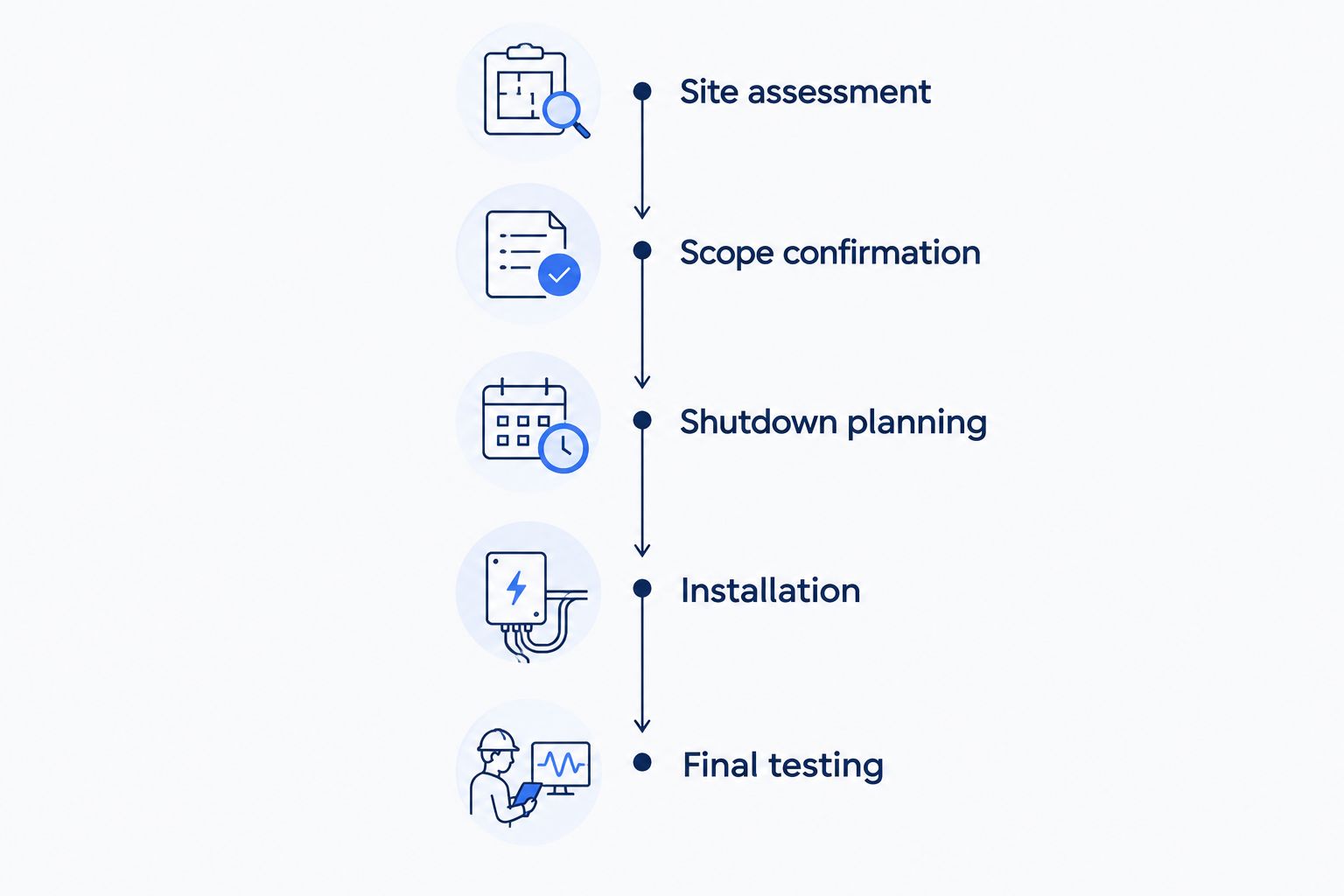
Use this sequence to understand what belongs in the schedule. These are contractor planning steps, not instructions for doing electrical work yourself.
- Site assessment. The electrician checks the service equipment, proposed switch location, generator connection, access, and loads you want backed up.
- Scope confirmation. The contractor identifies the switch arrangement, circuit work, wiring route, and any panel corrections included in the job.
- Shutdown planning. The contractor determines how the equipment will be safely isolated and whether utility coordination is needed.
- Installation. Qualified personnel mount and connect the equipment according to its listing, manufacturer instructions, and applicable requirements.
- Final testing. The contractor verifies the transfer arrangement, confirms intended loads, and explains safe operation. Required inspection belongs in the completion plan.
Ask which steps happen during the installation visit and which require separate appointments. That distinction makes a schedule useful. A start date alone does not tell you when backup power will be ready.
Manual transfer switch: plan for operator action
Best for: owners who can be present and operate the backup system during an outage. A manual transfer switch requires you to change the supply arrangement using the equipment's operating procedure. With a portable generator, generator placement and connection are separate tasks.
The installation scope depends on whether the switch supplies selected circuits or another approved load arrangement. Moving selected circuits, correcting inaccurate labels, and routing wiring all belong in the contractor's assessment.
The benefit is direct control over the transfer process. The limitation is equally clear: manual equipment does not provide unattended operation. Do not choose it for a critical load on the assumption that someone will always be there.
For your 2026 project, tell the electrician who will operate the equipment. That affects the handover, labeling, and operating instructions you need before the job is complete.
Automatic transfer switch: include control testing
Best for: properties that need backup transfer without an operator moving a manual switch. An automatic transfer switch senses supply conditions and works with compatible generator controls. Automatic operation still depends on the complete system being correctly designed, connected, and maintained.
The installation scope includes more than the power conductors. The contractor must account for the generator's control requirements, the switch arrangement, and any load-management equipment included in the design.
The benefit is unattended transfer when the system operates as designed. The limitation is added coordination between electrical equipment and controls. A switch marked automatic does not make every generator an automatic-start system.
Have the contractor confirm compatibility before equipment is selected. The guide to connecting a transfer switch to a portable generator for automatic backup power addresses that planning question; the actual installation still requires a licensed electrician.
Manual and automatic transfer switch planning
| Planning point | Manual transfer switch | Automatic transfer switch |
|---|---|---|
| Best for | An owner available to operate the system | A property needing unattended transfer |
| Main benefit | Direct operator control | Transfer without manual switch operation |
| Main limitation | Requires operator action | Requires compatible controls and system commissioning |
| Installation scope to confirm | Circuit arrangement, connections, and operating instructions | Power wiring, control wiring, and automatic operation testing |
| Question to ask | Who will operate it during an outage? | What starts the generator and confirms transfer? |
Choose the operating arrangement first. Get the installation schedule second. Comparing schedules before the scope is settled invites an apples-to-oranges comparison.
Why transfer switch installation time varies
The equipment location and existing electrical system drive the work. Ask the electrician to explain these factors in the written scope rather than burying them under a single installation line.
- Panel condition and suitability. Damaged equipment, unsuitable connections, or necessary corrections add work beyond mounting a switch. A transfer switch does not correct an unsafe panel.
- Switch arrangement. Selected-circuit transfer equipment and service-level transfer equipment involve different connection points and isolation planning.
- Wiring route. Distance, wall access, exterior routing, and penetrations affect the work needed to connect the equipment.
- Generator integration. A portable generator connection and an automatic standby system have different operating and control requirements.
- Utility coordination. Work that requires utility involvement needs an agreed disconnection and restoration plan. Do not treat that appointment as interchangeable with the electrician's arrival.
- Inspection and testing. Required approvals and functional checks belong in the completion schedule, not in an undefined follow-up visit.
For a 2026 quote, ask which conditions have been inspected and which remain assumptions. A clear scope identifies what triggers additional work and how you will approve it before that work begins.
Will the power be off for the entire installation?
The shutdown window and total installation time are not the same measurement. The contractor determines which tasks can happen before isolation and which require the electrical supply to be disconnected.
Ask exactly what will lose power. A planned interruption can affect heating controls, well pumps, refrigeration, network equipment, and other loads you rely on. Tell the electrician about medical equipment or other critical needs before accepting the shutdown plan.
Do not assume that turning off the main breaker makes every part of the service equipment safe to touch. Supply-side parts can remain energized. Isolation and verification belong to qualified personnel.
For a business, include the person responsible for operations in shutdown planning. Electrical access, equipment shutdown procedures, and reopening requirements need agreement before the crew starts.
Does installing the switch finish the generator project?
A transfer switch installation is not the same as a complete generator installation. The generator, fuel arrangements, placement, connections, and any required related work have their own scope.
If you are planning the entire system in 2026, ask for a schedule that identifies those dependencies. A switch can be installed while another part of the project is still unfinished. That does not make backup power ready for use.
The completion standard should be plain: the intended system has been checked, required approvals are addressed, and you understand its operation. Equipment mounted on a wall is not proof of a working backup plan.
What should I send before asking for a schedule?
Give the contractor enough information to identify the job. Photos help with an initial conversation, but they do not replace an on-site assessment or justify opening electrical equipment yourself.
Send the following from safe, accessible locations:
- A photo of the panel exterior and its readable identification label, without removing covers.
- The generator make and model, if you already own it.
- The loads you want backed up, such as heating equipment, refrigeration, or a well pump.
- Photos of the proposed equipment locations and the space between them.
- Your access restrictions and the times when a power interruption would cause problems.
Eagle-Elc is a fit for Bakken homeowners and businesses that need a licensed electrical contractor for backup-power work. The installation schedule still needs a site assessment; an initial response is not a confirmed work duration.
Request a written electrical quote
Get a same-business-day response. Confirm the site assessment, scope, and shutdown plan.
What should the written schedule include?
A useful 2026 schedule identifies the work, the interruption, and the handover. Ask for plain language. You should not need to interpret trade shorthand to know what happens next.
Check that the written scope answers these questions:
- Is the work limited to the transfer switch, or does it include the generator connection and related wiring?
- Which circuits or loads are included?
- Is panel correction or replacement included, excluded, or subject to inspection?
- Who coordinates any necessary utility appointment and required inspection?
- When is normal power expected to be unavailable?
- What testing and operating instruction are included before handover?
Also ask how an unexpected condition will be handled. The contractor should explain the issue, the proposed change, and its effect on the schedule before proceeding with additional work. Clear written quotes make scope changes visible.
FAQ
Can a transfer switch be installed in one day?
Do not book around a one-day assumption. A licensed electrician needs to assess the switch arrangement, panel, wiring route, and any utility or inspection coordination before committing to a completion schedule.
How long will my house be without power during installation?
Your electrician must define the shutdown window for your specific installation. Total project time and time without normal power are different, so request both in the written schedule.
Does an automatic transfer switch take longer to install than a manual switch?
Automatic transfer equipment adds control-integration and testing requirements, but switch type alone does not establish the job duration. Panel condition, wiring access, and the connection arrangement also affect the scope.
Can I install a transfer switch myself to save time?
Use a licensed electrician for transfer switch installation. The work involves hazardous electrical connections and must prevent an improper connection between generator and utility supplies.
Will a transfer switch make my portable generator start automatically?
A transfer switch alone does not make a portable generator start automatically. Automatic backup requires compatible starting controls, transfer equipment, and a system designed for that operation.
Do I need a panel upgrade before installing a transfer switch?
A panel upgrade is not established by the transfer switch request alone. A licensed electrician must inspect the existing equipment and determine whether corrections or replacement belong in the scope.
What should I ask before accepting a transfer switch installation quote?
Ask for the installation scope, shutdown plan, coordination responsibilities, and final testing requirements in writing. Confirm whether the quote covers only the switch or the complete backup-power system.
One last thing
Ask for an operating walkthrough, not just a finished-work notice. Before handover, you should know which loads receive backup power, what you must operate yourself, and which warning conditions require a service call.
Keep the operating instructions where the responsible person can find them. The right time to learn the transfer procedure is before an outage—not beside unfamiliar equipment after the lights go out.