A generator interlock kit is worth choosing over a transfer switch when your panel supports an approved kit, you use a portable generator, and someone can manage the loads during an outage. Choose a manual transfer switch for a defined backup-circuit arrangement, or a compatible automatic transfer system when power must return without someone operating the equipment.
- Generator interlock kit vs transfer switch: choose by panel compatibility, load control, and whether backup must work unattended.
- An interlock permits manual circuit selection but does not increase generator capacity or provide automatic backup.
- A manual transfer switch organizes backup loads; an automatic transfer switch needs a compatible generator system.
- Eagle Electric provides licensed residential electrical contracting in the Bakken region; an on-site inspection establishes the right setup.
Why this matters
A refrigerator, furnace blower, and well pump do not all place the same demand on a generator. Motor starting loads matter. So does who will operate the equipment when the lights go out.
The right transfer arrangement prevents the utility supply and generator supply from being connected together. It also needs to match your panel, generator, grounding arrangement, and intended loads. A device that fits physically is not automatically suitable electrically.
For a 2026 backup-power project, start with the loads you need and the equipment already installed. A licensed electrician can assess those conditions through residential electrical services before you buy a kit or switch.
Is a generator interlock kit worth it instead of a transfer switch?
Yes, when manual operation fits your household and the panel accepts an approved interlock arrangement. No, when you need unattended operation, the panel is unsuitable, or the proposed installation cannot satisfy equipment instructions and local requirements.
The important comparison is not simply interlock versus transfer switch. Manual transfer switches and automatic transfer switches solve different operating problems.
| Arrangement | Best for | Main advantage | Main limitation |
|---|---|---|---|
| Panel interlock | Homeowners who can manage portable-generator loads | Allows selection among panel circuits within generator limits | Requires manual operation and an approved panel-specific arrangement |
| Manual transfer switch | Homeowners who want clearly organized backup loads | Provides a dedicated manual transfer arrangement | Selected-circuit models limit backup to the circuits connected to them |
| Automatic transfer switch | Properties needing backup while occupants are away | Transfers between sources automatically with compatible equipment | Requires a compatible generator, controls, and a properly designed installation |
None of these arrangements makes a generator larger. None eliminates the need to account for starting demand, fuel, maintenance, or safe generator placement.
Panel interlock: best for hands-on portable-generator use
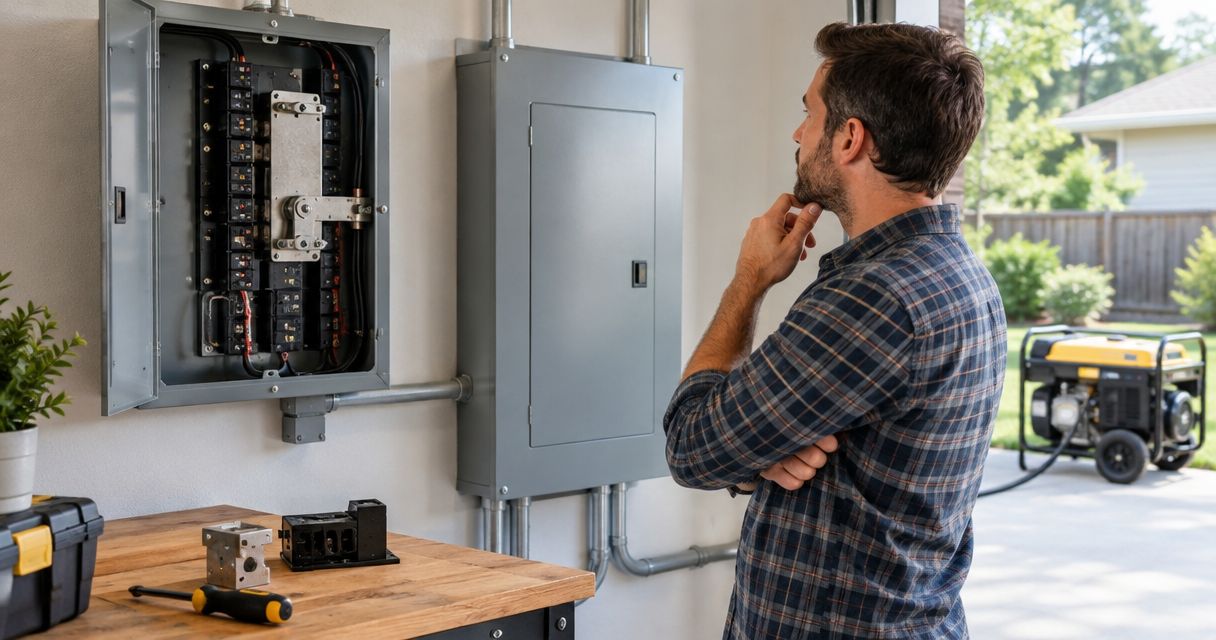
An interlock mechanically prevents the designated utility and generator breakers from being on together when installed and operated as designed. The electrician must verify the exact panel model, breaker positions, interlock compatibility, and installation requirements.
Its practical advantage is circuit flexibility. You can choose which connected loads receive power rather than being limited to a selected-circuit transfer panel. That flexibility comes with responsibility: you must keep the combined load within the generator and connection ratings.
Choose a panel interlock only if someone can operate the system correctly during an outage. If the household cannot reliably manage the controls and loads, flexibility becomes a drawback rather than a benefit.
Manual transfer switch: best for a defined backup plan
A manual transfer switch provides a dedicated way to move designated loads between utility and generator power. Selected-circuit versions make the backup plan visible: the circuits wired to that equipment are the circuits available during an outage.
That arrangement helps when you want a clear list of essentials rather than decisions at the main panel. The trade-off is less flexibility on selected-circuit models. Adding another backed-up load can require electrical changes.
Manual transfer switches also come in configurations that transfer a larger feeder or service. Do not assume every manual transfer switch backs up only a few circuits. Ask what the proposed equipment actually supplies.
Automatic transfer switch: best for unattended backup
An automatic transfer switch detects source conditions and transfers the connected loads through a compatible control arrangement. With a properly configured standby generator, backup can operate without someone manually changing the supply.
The switch alone does not make an ordinary portable generator start automatically. Generator starting controls, fuel supply, transfer equipment, and load management must work together.
Choose automatic transfer when being away from home is part of the problem. It still does not provide uninterrupted power; equipment that cannot tolerate a power interruption needs separate planning.
Why the right generator connection varies
The right choice for your 2026 installation depends on the equipment and operating needs at your property. These factors decide the scope:
- Panel compatibility: The exact panel model and breaker layout determine whether an approved interlock arrangement is available.
- Generator configuration: Output voltage, connection ratings, neutral configuration, and protective devices must suit the installation.
- Essential loads: Running demand and motor starting demand determine what the generator can support together.
- Operator availability: A manual system needs someone present who understands its documented operating procedure.
- Existing electrical condition: Damaged equipment, unsuitable wiring, or insufficient space changes the work required.
- Inspection requirements: The electrician must establish the applicable permit, inspection, and equipment-approval requirements before installation.
A picture of the panel cover can help identify equipment. It cannot establish the condition of wiring inside the enclosure or settle every compatibility question.
Check the loads before choosing the hardware
Start with what must keep working, not with the generator's largest advertised output figure. List the refrigerator, heating equipment, sump pump, well pump, necessary lighting, and any other essential equipment that applies to your home.
Then separate running demand from starting demand. A motor can require substantially more power while starting than while running. Your electrician needs equipment ratings and an appropriate load assessment, not a guess based on the number of rooms.
A 120-volt load and a 240-volt load also need the correct supply arrangement. A well pump requiring 240 volts cannot be treated like a small plug-in appliance. Verify the actual equipment nameplate.
Likewise, a 200-amp electrical panel does not mean a portable generator can deliver 200 amps. The panel rating describes the panel's capacity under its specified conditions. The generator connection has its own limits.
A whole-panel connection is not a promise of whole-house capacity. An interlock can make many circuits selectable while the generator supports only a limited combination at one time.
What should a licensed electrician check on site?
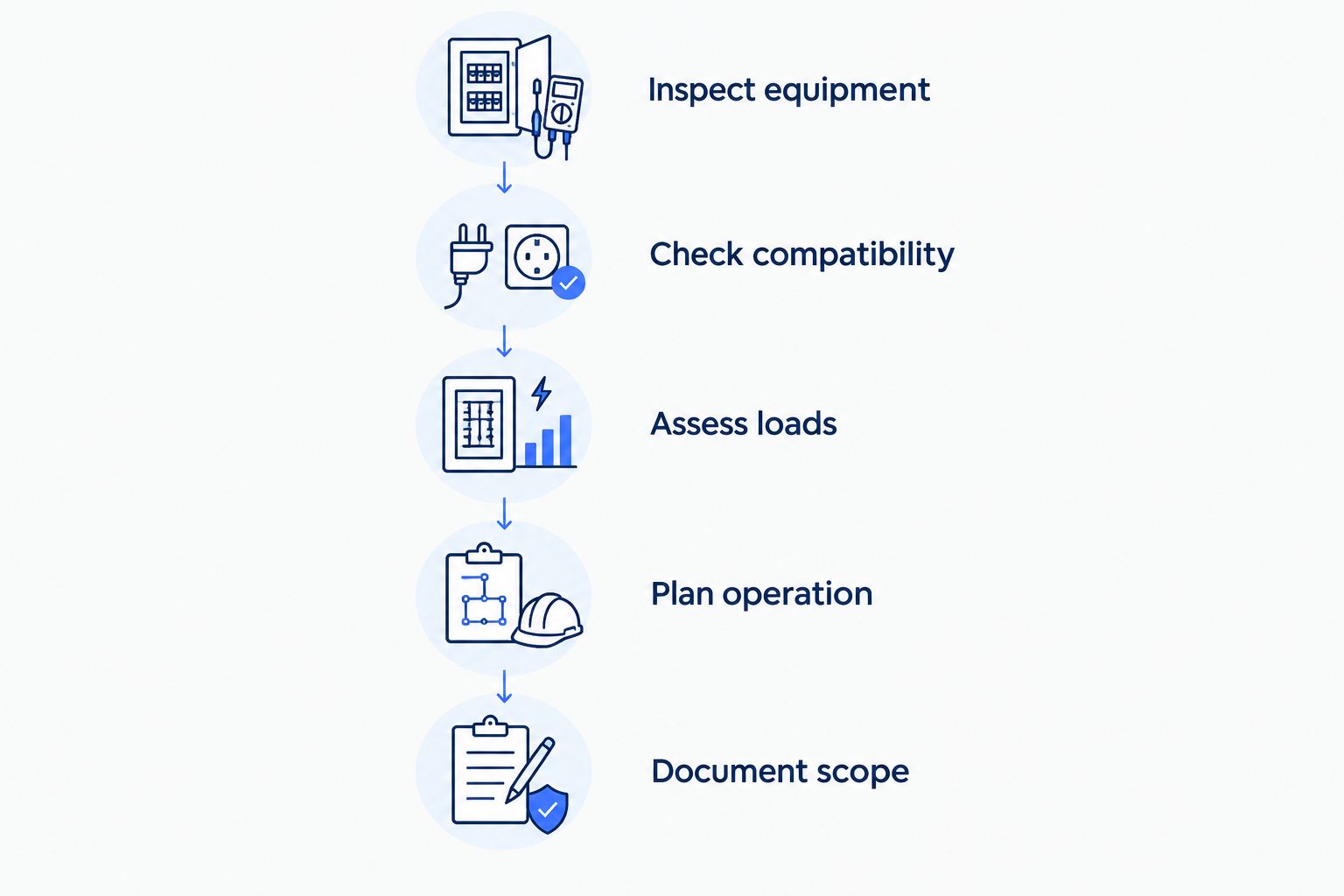
Use this sequence to evaluate a proposal in 2026. These are inspection and planning steps, not instructions for opening or modifying your panel.
- Inspect equipment. Identify the service equipment, panel model, existing condition, and available installation space.
- Check compatibility. Match the proposed transfer arrangement to the panel and generator, including neutral and grounding requirements.
- Assess loads. Record essential equipment and evaluate running demand, motor starting demand, and load management.
- Plan operation. Establish who will operate the system, where the generator will run, and how the connection will be used safely.
- Document scope. Identify equipment, electrical work, labeling, permits, inspection, and operating instructions in the written proposal.
A useful proposal connects every major component to a need. If a panel replacement is proposed, ask what condition or compatibility problem makes it necessary. If automatic transfer is proposed, ask how the generator receives its start signal.
Neutral configuration and GFCI protection need attention
Generator neutral arrangements are not all identical. Some generators have a neutral bonded to the frame; other configurations differ. Transfer equipment can also differ in whether it switches the neutral.
Those details affect the grounding and bonding design. A licensed electrician must assess the generator instructions and the complete installation rather than treating every portable generator as interchangeable.
Ground-fault circuit interrupter protection, or GFCI protection, also needs to work with the proposed configuration. Do not remove a bonding connection or bypass a protective device to stop nuisance tripping. Have the electrician identify the cause and specify a permitted arrangement.
This is one reason a kit recommendation based only on the panel's brand name is incomplete. The generator matters too. So do its instructions and the connection equipment.
Manual backup still needs a workable outage routine
An interlock does not start the generator, connect its cord, manage its fuel, or decide which loads stay off. A manual transfer switch also needs an operator. Plan for the person who will actually be home, not just the person buying the equipment.
Ask whether that person can move the generator safely, reach the connection point, understand the controls, and manage the selected loads. Darkness and bad weather make an unclear routine harder to follow.
For your 2026 plan, request equipment-specific written operating instructions and a demonstration after installation. Keep those instructions accessible without relying on internet access.
An automatic system reduces the need for manual transfer. It does not remove maintenance or fuel requirements. Equipment that has not been maintained is not dependable simply because its switch is automatic.
Safety rules neither option replaces
Never feed a home's wiring through a wall receptacle or a cord with exposed energized prongs. That is not a substitute for approved transfer equipment. Improper connections can energize utility wiring and expose workers or occupants to lethal electrical hazards.
Portable-generator exhaust presents a separate hazard. CDC guidance calls for portable generators to operate outdoors at least 20 feet from doors, windows, and vents, with exhaust directed away from occupied buildings. Never operate a portable generator inside a home, garage, or other enclosed space.
That placement requirement belongs in the connection plan. The inlet location and correctly rated cord need to support safe operation without placing exhaust near an opening.
Do not remove the panel cover to investigate compatibility yourself. Parts of service equipment can remain energized even when the main breaker is off. Leave internal inspection and wiring to a licensed electrician.
What should your written quote include?
A useful quote describes a complete installation, not just an interlock plate or switch. You need to know what will be connected, what remains manual, and what the proposed system cannot support.
Ask for these items in writing:
- The proposed interlock or transfer equipment and its compatibility basis.
- The generator connection, inlet, and any required associated equipment.
- The backed-up circuits or load-management plan.
- Required panel work and the reason for it.
- Permit and inspection responsibilities.
- Labeling, testing, and operating instructions.
- Clear exclusions and any conditions requiring additional work.
Eagle Electric is a licensed electrical contractor for Bakken homeowners who need residential backup-power work. Request a clear written quote and a same-business-day response to your quote request. A response is not a promise of same-day installation; the site conditions and agreed scope determine the work.
Can an interlock power my whole house?
An interlock can make circuits in the connected panel available for selection, but generator capacity limits what can run together. Large heating loads, cooking equipment, pumps, and other motor loads need specific evaluation.
Do not confuse access to a circuit with capacity to run it. Your load plan should identify equipment that stays off while the generator supplies essentials.
Can a transfer switch make a portable generator automatic?
A transfer switch alone cannot make a portable generator automatic. Automatic operation requires compatible starting controls and a complete system designed for unattended use.
If the goal is keeping equipment powered while you are away, say so before equipment is selected. That requirement changes the design from the start.
Is an interlock safe for an older electrical panel?
An interlock is suitable only when the exact panel, proposed equipment, and installation meet the applicable requirements. Age alone does not establish compatibility or safety.
A licensed electrician must inspect the panel's condition and verify the approved arrangement. Existing damage or unsuitable equipment needs correction before adding backup power.
FAQ
What's better in 2026: a generator interlock kit or a transfer switch?
A generator interlock kit suits compatible panels and hands-on portable-generator use; a transfer switch suits a defined manual backup arrangement or a compatible automatic system. Choose by loads, equipment compatibility, and who will operate it.
Can I install a generator interlock kit myself?
Use a licensed electrician to inspect the panel and install the generator connection. Panel work can expose energized parts, and the installation must satisfy equipment instructions and applicable requirements.
Does an interlock stop generator power from reaching utility lines?
A correctly installed and operated interlock prevents the designated utility and generator breakers from being on together. It must be the approved arrangement for the exact equipment and remain intact.
Do I need a new electrical panel for an interlock?
A new electrical panel is not automatically necessary for an interlock. A licensed electrician must verify the existing panel's condition, layout, and compatibility before making that determination.
Will an automatic transfer switch provide uninterrupted power?
An automatic transfer switch does not provide uninterrupted power. Generator startup and source transfer involve an interruption; sensitive or critical equipment needs separate planning.
Can I run every circuit with an interlock?
An interlock does not let you exceed the generator's capacity. The connected panel can offer circuit choices, but the combined running and starting demand must stay within the system's limits.
What should I send Eagle Electric for a generator connection quote?
Send Eagle Electric the panel identification visible without removing covers, the generator model, and your essential-load list. Include whether you need unattended backup; an on-site inspection establishes the final installation scope.
One last thing
Write down who operates the backup system before you choose the hardware. If nobody will be home to start a portable generator and manage loads, a well-installed manual system still does not meet your goal.
For a 2026 project, settle that question first. Then have the electrician match the panel, generator, transfer equipment, and operating plan. The right purchase is the complete arrangement that fits your household—not the smallest box in the quote.