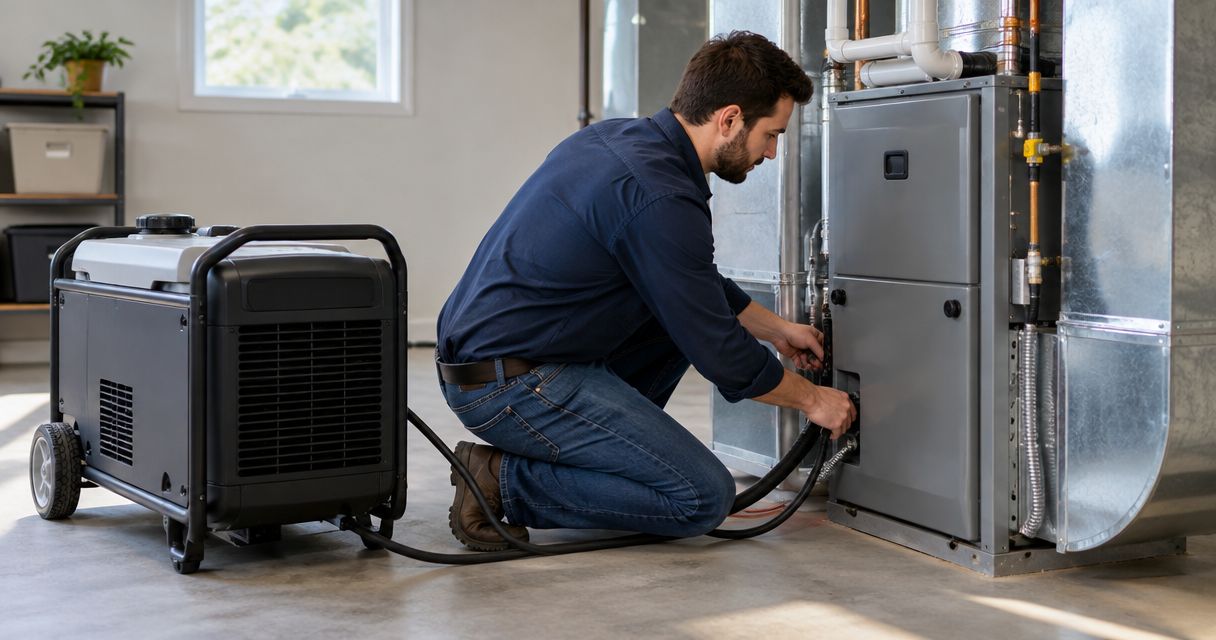
Instead of scrambling for temporary heat during an outage, have a licensed electrician connect your furnace to backup power through approved transfer equipment. For a 2026 installation, the job includes checking the heating load, preventing utility backfeed, and testing a complete heating cycle—not just getting the blower to spin.
- To connect furnace to backup power safely, use approved transfer equipment installed by a licensed electrician.
- Eagle-elc is a licensed electrical contractor for Bakken homeowners who need residential electrical work.
- Size backup power for furnace startup and supporting equipment, not just the blower's running load.
- Automatic transfer reduces hands-on work, but it does not guarantee uninterrupted heat.
Why this matters
A gas furnace still needs electricity. Its controls, ignition system, combustion-air inducer, and circulating blower cannot operate on fuel alone. Depending on the installation, a condensate pump also needs power.
A working generator does not prove you have working heat. The furnace must receive compatible power through a safe connection, then complete its normal operating sequence.
Eagle-elc provides residential electrical services in the Bakken region. An on-site inspection establishes what your furnace, panel, and proposed backup source actually need.
Backup power also has limits. It cannot correct a failed gas supply, blocked exhaust, or broken furnace. Automatic systems have a transfer interval, and fuel or battery energy eventually runs out.
Before you start
- Gather equipment information. Photograph the furnace nameplate, accessible circuit labels, and backup-source specifications. Keep covers closed. Collect the furnace and generator manuals, including startup and operating requirements.
- Arrange qualified access. A licensed electrician needs access to the panel, furnace disconnect, proposed inlet or transfer equipment location, and generator location. An HVAC technician handles furnace faults or manufacturer-specific heating questions.
- Flag the hidden compatibility issue. Neutral bonding, grounding, and transfer-switch design must work together. A generator that operates tools successfully is not automatically compatible with a furnace installation. Do not alter a neutral bond or add a grounding connection yourself.
For your 2026 project scope, identify whether the system is a fuel-fired forced-air furnace, electric furnace, or heat pump. This guide focuses on a fuel-fired furnace. Electric resistance heat and heat pumps require a separate load assessment; a backup source sized for furnace controls and a blower is not a substitute.
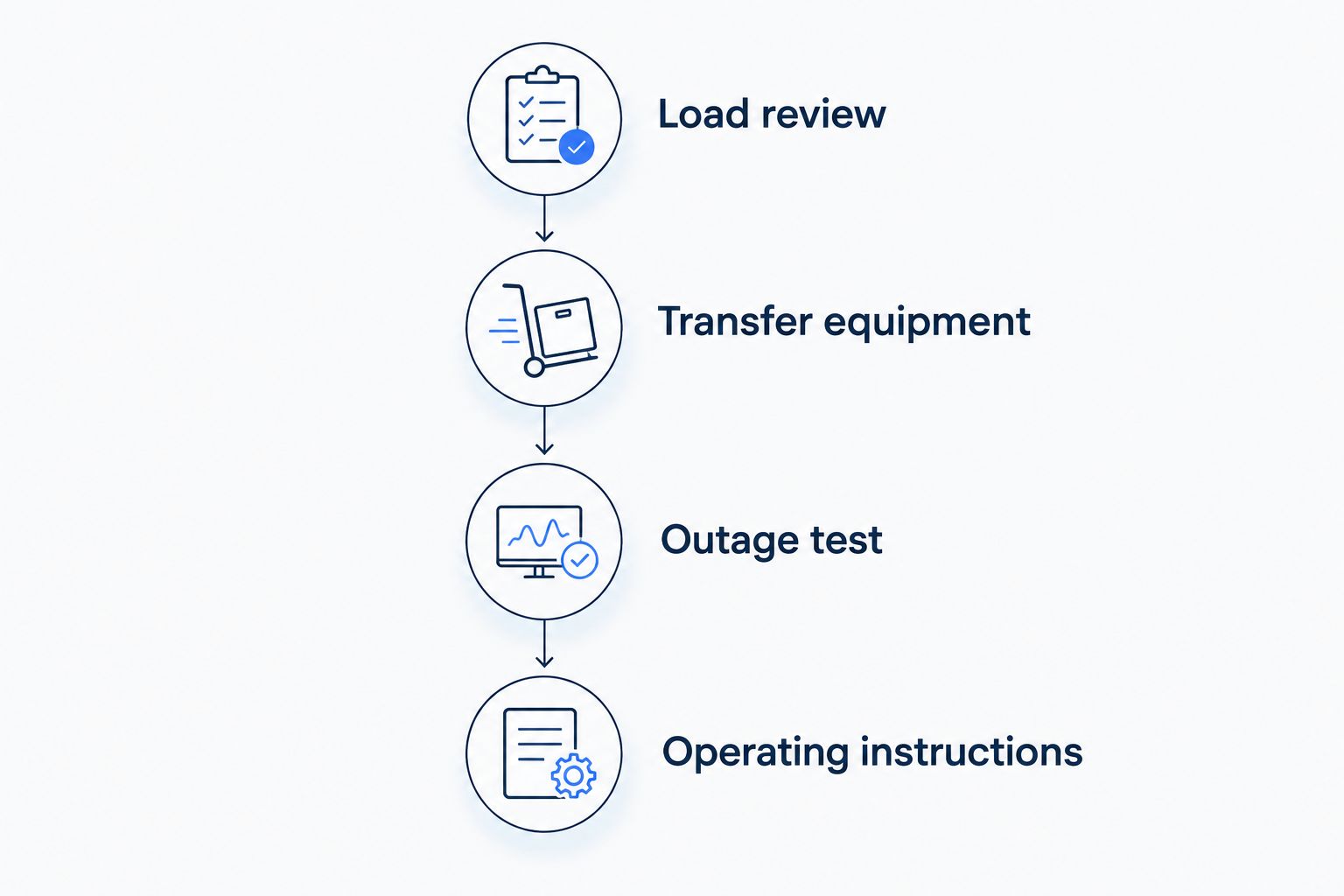
Load review
The first configuration decision is what must keep running. Do not choose equipment from the furnace's heating-output rating alone: fuel input and electrical demand are different measurements.
- Identify the supply. Have the electrician confirm the furnace's required voltage, circuit arrangement, and manufacturer instructions. Many residential gas furnaces use 120 volts, but your equipment nameplate controls the decision.
- List supporting loads. Include a condensate pump where fitted and any separate equipment required for normal heating operation. Identify which accessories are essential and which can remain off.
- Check starting demand. Ask the electrician to assess motor startup and the backup source's continuous output. A source must support both starting and sustained operation without exceeding its ratings.
- Separate other household loads. A well pump or electric water heater can change the design substantially. Equipment requiring 240 volts cannot run from a source that supplies only 120 volts.
Expected result: You have a written load list and a backup-source specification that covers the heating system's actual electrical needs.
Do not turn a breaker rating into a generator-size recommendation. A breaker protects its circuit; its rating is not a measurement of what the furnace draws during operation.
Transfer equipment
Never backfeed a furnace through a wall receptacle, dryer outlet, or homemade cord. Turning off the main breaker without an approved transfer arrangement is not an acceptable substitute for equipment that prevents an unsafe connection between sources.
- Have the electrician select the connection method. A listed furnace transfer device, suitable transfer switch, or panel-compatible interlock arrangement must match the installation and local requirements.
- Confirm source isolation. The design must prevent generator power from energizing utility conductors. It must also address neutral switching and bonding where required by the equipment arrangement.
- Specify the inlet and cord where applicable. For portable-generator service, the electrician selects compatible equipment with suitable ratings and an installation location that supports safe generator placement.
- Put the operating sequence in writing. Labels vary by equipment. Have the electrician identify the actual controls and provide instructions for your installation rather than copying switch positions from an online guide.
Expected result: Your written scope identifies the transfer equipment, source connection, protected loads, and operating procedure.
Use this comparison to choose an operating approach—not to skip the inspection.
| Approach | Best for | Main advantage | Main limitation |
|---|---|---|---|
| Portable generator with manual transfer | Homeowners able to operate equipment during an outage | Supplies selected heating loads through an approved connection | Requires safe outdoor placement, manual operation, and fuel handling |
| Standby generator with automatic transfer | Homeowners who need transfer without manual intervention | Starts and transfers through a compatible automatic system | Requires installed equipment, a suitable fuel supply, and ongoing maintenance |
Neither approach guarantees continuous heat. Choose according to who will be present, which loads matter, and how the equipment will be maintained.
Outage test
A commissioning test checks the whole heating sequence. A lit thermostat or spinning fan is not enough.
- Have the electrician inspect the completed installation. Required permits, inspections, equipment ratings, and source isolation must be addressed before normal use.
- Arrange a controlled outage simulation. Let the electrician perform the transfer test using the installed equipment's procedure. Do not remove panel covers or improvise a utility disconnection.
- Call for heat at the thermostat. Follow the thermostat's own instructions. Observe from outside the furnace cabinet while the system starts, ignites, circulates warm air, and satisfies the call for heat.
- Test the agreed supporting loads. Confirm that required pumps and controls operate. The electrician should assess operation under the planned combination of loads, not only with everything else switched off.
- Check return to utility power. Confirm the return procedure and normal furnace operation after transfer. Record any fault indications for the appropriate technician.
Expected result: The furnace completes a heating cycle on backup power and returns to normal utility operation without an unresolved fault.
For the 2026 commissioning record, keep the load list, equipment manuals, inspection documents, and operating instructions together. Record what was tested so the next operator knows the system's limits.
Operating instructions
A safe installation still needs a usable outage routine. Keep that routine beside the operating instructions—not inside an electrical enclosure.
- Establish the outdoor generator location. Keep a portable generator at least 20 feet from the home, with exhaust directed away from doors, windows, and vents. Never operate it in a garage, basement, or attached enclosure, even with doors open.
- Plan for weather without enclosing exhaust. Follow the generator manufacturer's instructions for wet conditions and any protective equipment. Do not build an improvised shelter that traps exhaust or blocks cooling airflow.
- Set the fuel-handling procedure. Shut the generator down and let it cool before refueling. Follow the manufacturer's instructions for fuel storage and handling.
- Verify alarms and access. Maintain working carbon monoxide alarms according to their instructions. Keep snow and stored materials away from furnace vents, generator clearances, and electrical equipment access.
- Review shutdown and restoration. Use the installation-specific instructions for removing loads, transferring sources, and stopping the generator. Do not assume every switch uses the same sequence.
Expected result: The person operating the system can explain where the generator goes, which controls to use, and when to stop and call for help.
The workflow has four separate checks. Skipping one leaves either the electrical connection or the heating result unproven.
Automatic furnace backup when utility power fails
Best for: homeowners who need backup transfer without someone starting and connecting a portable generator. A compatible standby generator and automatic transfer system handle the source change without the manual connection routine.
The advantage is reduced hands-on operation. The limitation is dependence on the installed system's controls, starting battery, fuel supply, and maintenance. Automatic does not mean maintenance-free.
Ask the electrician to include these checks:
- Confirm that the furnace circuit and its required supporting equipment are included in the backed-up loads.
- Verify that load-management settings will not unexpectedly exclude the heating equipment under the agreed operating conditions.
- Test an actual transfer and furnace heating cycle. A generator exercise alone does not prove that the house transfers or the furnace heats.
- Explain what happens when utility power returns and how to recognize an equipment fault.
A thermostat can remain powered by its own batteries while the furnace has no usable power. Treat the thermostat display as a control indication, not proof of backup operation.
Troubleshooting
The blower runs, but there is no heat
A fan can operate without successful ignition. Check the thermostat's operating mode using its manual, and note any visible furnace fault indication without opening the cabinet. If heat does not start normally, call an HVAC technician. Do not bypass a door switch, flame sensor, or other safety control.
The furnace works on utility power but faults on backup
Stop repeated restart attempts. Have the electrician check supply quality, polarity, grounding, neutral configuration, and transfer-equipment compatibility against the furnace requirements. A larger generator is not automatically the fix.
The generator trips when heating starts
Disconnect optional loads using the written operating procedure. If the problem continues, have the electrician review startup demand, source capacity, cords, and the installation. Do not increase breaker size or defeat overload protection.
The furnace shuts down after running briefly
Record the visible fault indication. From a safe location, check whether snow or debris obstructs accessible outdoor vent openings. Condensate drainage and furnace faults need HVAC attention; electrical supply problems need an electrician. Do not keep resetting a furnace that repeatedly shuts down.
A carbon monoxide alarm sounds
Get everyone outside immediately and call emergency services from a safe location. Do not stay inside to troubleshoot or silence the alarm and resume operation. Reentry and equipment restart require clearance from the responding authorities and correction of the hazard.
Customize your workflow
Start with heat, then decide what else the outage plan must support. A refrigerator, sump pump, or well pump adds a different load and sometimes a different voltage requirement. Add equipment only after the electrician updates the load assessment.
For your 2026 maintenance plan, follow the equipment manufacturers' schedules and repeat the operating review whenever the furnace, generator, or backed-up circuits change. A replacement appliance can change the original design assumptions.
Eagle-elc offers same-business-day responses to quote requests and clear written quotes. Request a written quote with the furnace information, proposed backup source, and the loads you want included. A quote response is not a promise of same-day job completion.
FAQ
Can I connect my furnace directly to a portable generator?
A hardwired furnace needs an approved connection arrangement selected and installed by a licensed electrician. Do not cut its wiring, add an improvised plug, or backfeed a household receptacle.
What size generator do I need to run a gas furnace?
Generator size depends on the furnace's electrical demand, startup requirements, and supporting loads. Have an electrician assess the actual equipment rather than choosing from heating-output ratings or breaker size alone.
Will a gas furnace work during a power outage?
A typical modern gas furnace will not heat without electricity for its controls, ignition, and motors. Backup electricity also cannot replace an interrupted gas supply.
Is automatic backup better than a manual transfer switch?
Automatic backup is better for operation without manual intervention; manual transfer suits someone prepared to operate the system safely. Both require compatible equipment, maintenance, and a tested heating load.
Can I use an extension cord to power my furnace?
Do not use an extension cord as an improvised connection to a hardwired furnace. Have a licensed electrician determine the approved transfer arrangement; any generator cord must match the installed equipment and manufacturer instructions.
Does a generator guarantee that my heat never stops?
No generator guarantees uninterrupted heat. Transfer intervals, fuel interruptions, equipment faults, and furnace problems can still stop heating, so keep an outage response plan.
One last thing
Test a call for heat, not just a generator start. In your 2026 readiness check, prove that the furnace ignites, delivers warm air, and completes its cycle on backup power. Eagle-elc's electrical contracting services cover the electrical work; furnace combustion and heating faults belong with an HVAC technician.