
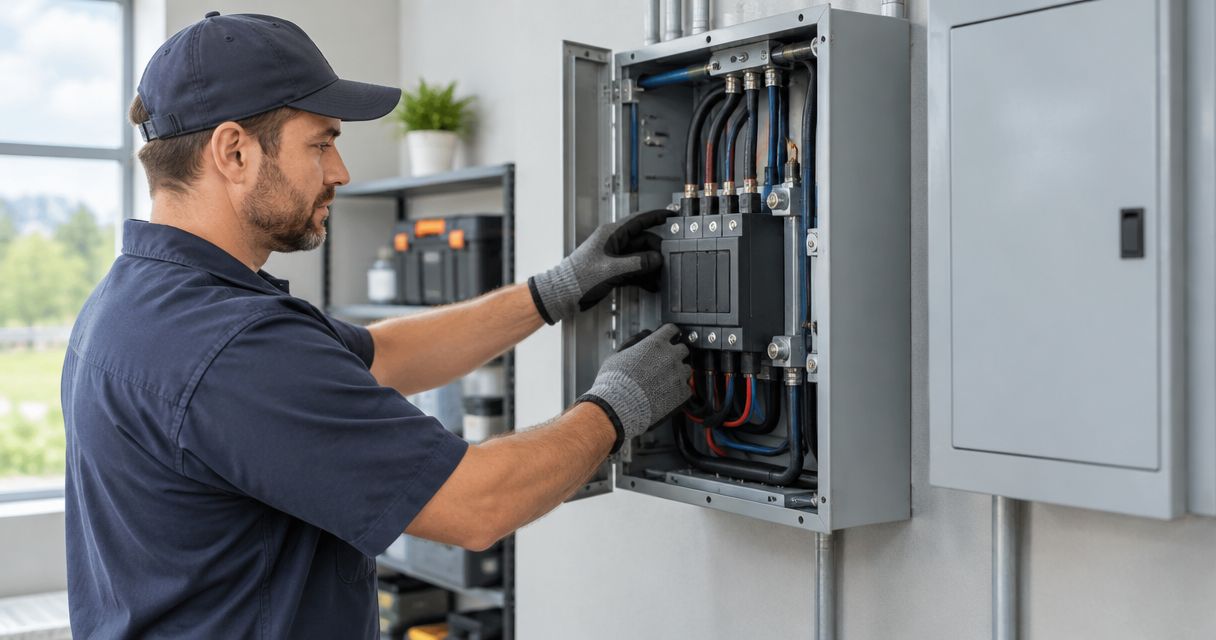
Your transfer switch installation cost depends on the switch, generator connection, electrical panel, and circuits you need backed up; get a written quote based on an on-site inspection before approving the work. Panel repairs, a generator inlet, permits, and generator installation are separate scope items unless the quote specifically includes them.
- Transfer switch installation cost needs a site-specific quote, not a switch-only equipment figure.
- Manual transfer suits owner-operated backup; automatic transfer requires compatible generator controls.
- Eagle Electric provides licensed electrical contracting for homeowners and businesses across the Bakken region.
- Compare written scopes covering equipment, wiring, permits, testing, and exclusions before approving work.
How much does a transfer switch installation cost?
The useful number is the installed total for your electrical system—not the switch alone. A transfer switch connects to equipment that must work together: the generator, service or distribution equipment, wiring, and selected loads. An equipment listing does not establish the labor or changes your property needs.
For a 2026 project, request a written quote that separates transfer equipment from generator work and existing electrical repairs. Ask for a same-business-day response to your request. A response sets up the next step; it does not mean same-day installation.
Use this breakdown to check what the proposed work actually covers:
| Scope item | What the written quote should identify | What needs clarification |
|---|---|---|
| Transfer equipment | Manual or automatic operation, rating, and installation location | Whether the equipment suits the existing system |
| Generator connection | Inlet, feeder, or permanent connection as applicable | Whether generator supply and installation are included |
| Circuit work | Loads transferred and any circuit relocation | Whether backup covers selected circuits or broader distribution |
| Existing equipment | Required panel repairs or modifications | Which repairs are included and which need separate approval |
| Approval and testing | Applicable permits, inspection, labeling, and functional checks | Who handles each step and any required shutdown |
Do not compare totals until these items match. A narrower scope is not the same job with a better offer.
Why this matters
A transfer switch is part of the separation between utility power and generator power. Improper connections can backfeed electrical lines and endanger utility workers, occupants, and anyone servicing the equipment. This is not a place to improvise.
Your backup plan also needs to work when the lights are out. A correctly installed manual system still requires someone to operate it, while automatic transfer needs a compatible generator and control arrangement. Choose the operating plan before choosing the switch.
For 2026 planning, write down what must keep running and who will be present during an outage. Those answers give the electrician a useful starting point without asking you to select electrical equipment yourself.
Manual transfer: best for owner-operated backup
A manual transfer arrangement requires you to change the power source using the installed equipment's operating procedure. It fits backup plans where a capable person will be present to start the generator, make any approved connection, and manage loads.
The advantage is direct control. The limitation is the same: nothing happens until someone acts, and the operator must understand the procedure. Manual transfer does not provide unattended restoration simply because the generator has electric start.
Ask the electrician to define the generator connection and the circuits supplied. A portable generator's receptacle arrangement, output, and manufacturer instructions matter. So do the transfer equipment's requirements.
Best for: occupied properties where someone can safely operate the system. Choose manual transfer only if that responsibility fits your actual outage plan.
Automatic transfer: best for unattended operation
An automatic transfer switch works with compatible equipment to transfer loads after loss of utility power and return them when normal power is restored. The generator must support the required starting and control functions. The switch alone does not make a portable generator automatic.
Automatic operation reduces the need for someone to initiate transfer. It also adds control requirements that must be designed and tested as a system. Generator maintenance remains necessary; automatic controls cannot compensate for equipment that will not start.
Ask what happens when the connected loads exceed generator capacity. Load management or a restricted backup circuit selection can be part of the design. The answer belongs in the scope, not in a verbal assurance that everything will run.
Best for: properties that need compatible backup equipment to operate without someone initiating each transfer. Confirm the complete operating sequence before approving installation.
| Transfer option | Best for | Main advantage | Main limitation |
|---|---|---|---|
| Manual transfer | Owner-operated backup | Direct operator control over transfer | Requires someone present and able to follow the procedure |
| Automatic transfer | Unattended backup with compatible equipment | Initiates transfer without manual switching | Requires compatible starting, controls, and system design |
Why transfer switch installation cost varies
These factors change the installation scope. Have a licensed electrician inspect them rather than selecting equipment from photographs alone.
- Backup coverage. Selected essential circuits and broader building distribution require different arrangements. List the loads you need before discussing equipment.
- Electrical ratings. Voltage, current, phase, and equipment ratings must match the design. A residential installation is not a substitute design for a commercial or oilfield system.
- Existing panel condition. Damaged equipment, unsuitable connections, or required modifications can add work beyond installing the transfer switch.
- Wiring route. Equipment placement determines the feeder route, penetrations, raceway, and installation access. A nearby wall does not automatically provide a usable route.
- Generator compatibility. Manual connections and automatic starting controls impose different requirements. Existing generator ownership does not establish compatibility.
- Permits and coordination. Applicable inspection requirements and any utility coordination affect the work plan. Clarify responsibility before scheduling a shutdown.
A 2026 quote should describe these conditions in plain language. If the proposed work changes after inspection, get the revised scope in writing before authorizing it.
Does a 200-amp panel require a matching generator?
A 200-amp panel rating does not mean your generator must supply every connected load at once. The electrician must assess the intended backup loads and select a compliant transfer arrangement. Service capacity and generator output are different design considerations.
Likewise, a 120-volt generator connection cannot supply a 240-volt load that requires both supply legs. Well pumps, heating equipment, and other motor loads need their actual electrical requirements checked. Do not assume that a plug fitting an adapter establishes compatibility.
Give the electrician equipment nameplate information, not guesses about what the house uses. Starting requirements, simultaneous operation, and the transfer arrangement all matter. Leave covers closed and collect only information you can read safely.
What should you prepare before requesting a quote?
You do not need to design the system. You need to describe the job clearly enough for the electrician to inspect the right equipment.
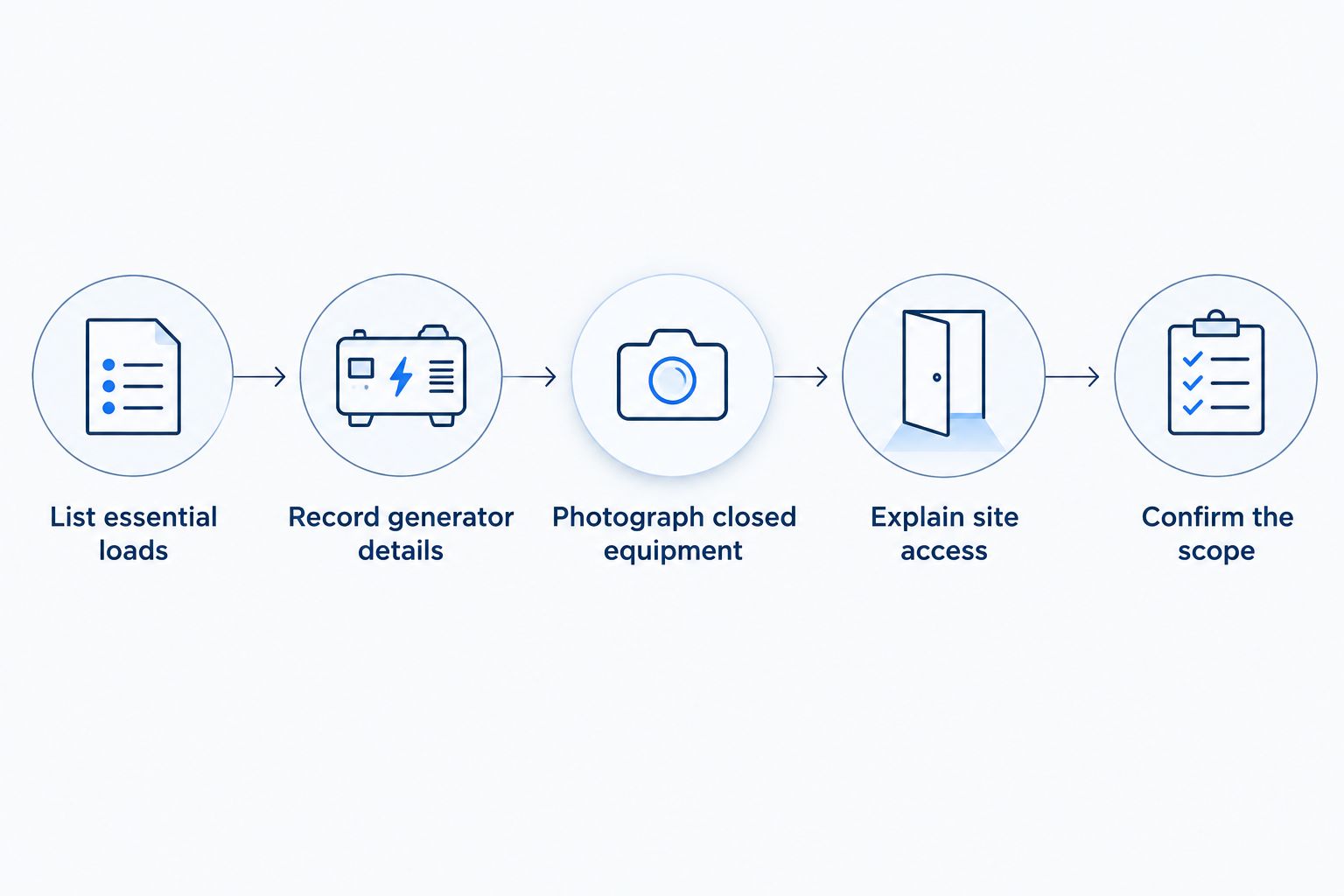
- List essential loads. Identify what must run during an outage: heating controls, refrigeration, a sump pump, or a well pump, as applicable. Separate necessities from equipment you can leave off.
- Record generator details. Provide the manufacturer, model, nameplate output, and any available instructions. State whether you already own the generator or still need one selected.
- Photograph closed equipment. Take accessible exterior photographs of the panel, visible labels, proposed connection area, and generator location. Do not remove covers or reach around exposed parts.
- Explain site access. Identify occupied spaces, locked rooms, outdoor exposure, and shutdown restrictions. Commercial properties should identify who can authorize an interruption.
- Confirm the scope. Ask for the proposed equipment, backed-up loads, exclusions, testing, and permit responsibilities in writing. Resolve unclear items before authorizing work.
These steps make the inspection more useful. They do not replace load assessment, equipment checks, or the electrician's responsibility to establish a safe design.
What belongs in a clear written quote?
A clear written quote names what will be installed and what the finished system will do. It should distinguish the transfer switch installation from generator supply, fuel work, and unrelated panel repairs. Ask who handles each part when different trades are involved.
For your 2026 project, check these points before approval:
- Equipment identification: transfer type, relevant ratings, and intended location.
- Backup coverage: named circuits or a clear description of the distribution supplied.
- Connection work: inlet or feeder work, wiring route, and associated electrical changes.
- Project boundaries: generator work, existing defects, patching, and other excluded tasks.
- Completion checks: transfer testing, labels, operating instructions, and applicable inspection.
Eagle Electric's electrical contracting services cover residential, commercial, and oilfield work across the Bakken region. Ask for a same-business-day response to the quote request and a clear written scope after the installation requirements are established.
Eagle Electric is best suited to Bakken homeowners and businesses seeking a licensed local electrical contractor. An on-site inspection is still needed to establish transfer equipment compatibility and the work your property requires.
Can you reduce the scope without cutting safety?
Yes. Start by separating essential loads from optional loads, then have the electrician assess the resulting backup plan. You can narrow what the generator serves without removing required protection or using an improvised connection.
Equipment placement also deserves discussion before work starts. A practical approved location can simplify access and routing, but safety, equipment instructions, and electrical requirements control the decision. Do not buy a switch first and expect the installation to fit around it.
Keep alternate scopes distinct. If you want both a selected-circuit plan and broader backup evaluated, ask the electrician to explain what changes between them. You need a clear difference in capability—not two unexplained totals.
Can you install the transfer switch yourself?
Use a licensed electrician for the assessment and installation. Transfer equipment involves utility and generator sources, and switching off the main breaker does not necessarily de-energize every part of service equipment. This article is not a wiring procedure.
Never connect a generator through a household receptacle or use a cord with exposed energized male ends. Do not bypass transfer equipment, protective devices, or manufacturer instructions. If an existing backup connection looks improvised, stop using it until a licensed electrician checks it.
For a 2026 installation, confirm the current permit and inspection requirements with the contractor and authority having jurisdiction. Do not treat an older installation nearby as proof that the same arrangement is acceptable today.
FAQ
How do I get an accurate transfer switch installation cost?
Get a written quote based on an on-site inspection of your panel, generator, intended backup loads, and wiring route. Confirm whether generator work, permits, repairs, and testing are included.
Does a transfer switch installation quote include the generator?
A transfer switch installation quote includes the generator only when the written scope says so. Ask for generator supply, electrical connection, and any fuel-system work to be identified separately.
Is a manual transfer switch better than an automatic transfer switch?
Manual transfer is better suited to owner-operated backup; automatic transfer is better suited to unattended operation with compatible equipment. The right choice depends on who will operate the system and what the generator supports.
Can an automatic transfer switch start any portable generator?
An automatic transfer switch cannot start every portable generator. Automatic operation requires compatible generator starting and control functions, confirmed against the equipment instructions.
Do I need a panel upgrade before installing a transfer switch?
A panel upgrade is not automatically required for every transfer switch installation. A licensed electrician must inspect the equipment and determine whether repairs, modifications, or replacement are necessary.
Can a transfer switch power my whole house?
A transfer arrangement can serve broader household distribution, but the generator still limits what can run together. A licensed electrician must assess loads and any required load management.
Does a same-business-day quote response mean same-day installation?
A same-business-day response addresses your request; it does not promise same-day installation. Inspection, equipment selection, approvals, and scheduling remain separate steps.
One last thing
A transfer switch can connect a large panel without making the generator large enough to run every load. Ask the electrician to explain exactly what you can operate together and what happens if demand exceeds capacity. Get that explanation before the first outage, not during it.
When you contact Eagle Electric, bring the essential-load list and generator details. Clear inputs help establish a clear scope. Approve the work only when the written quote matches the backup operation you expect.


