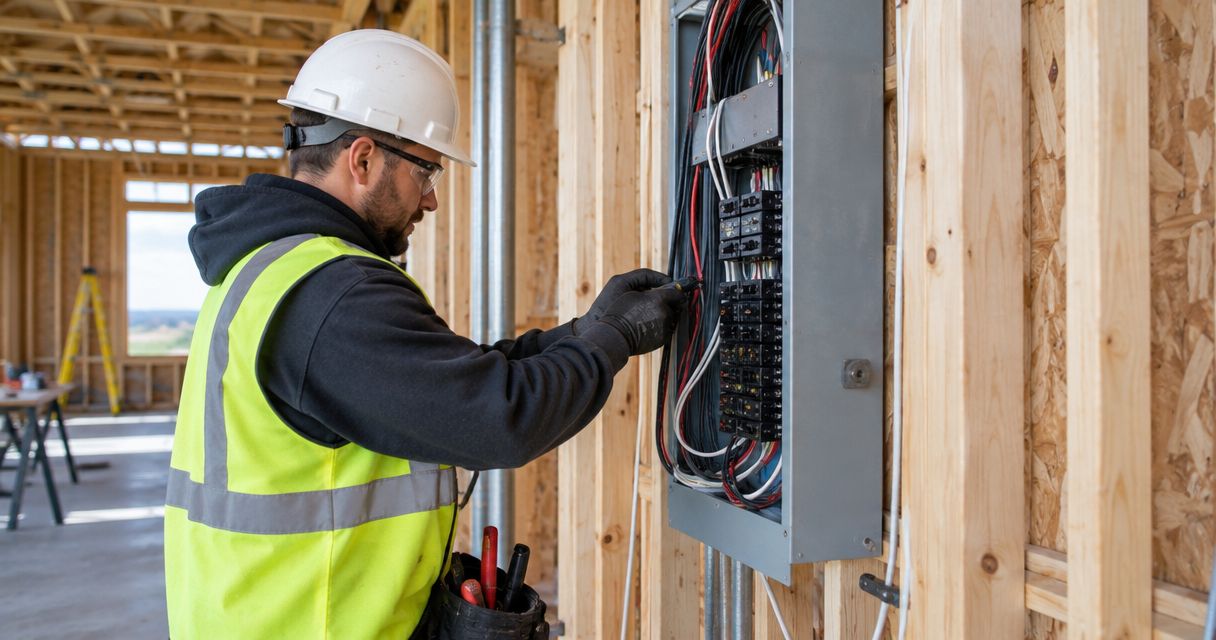
General contractors’ electrical wiring is the planning and installation of building circuits, equipment connections, and service infrastructure with the aim of delivering a safe, inspection-ready project. For North Dakota jobs in 2026, the work starts with a clear scope, verified equipment loads, and a schedule that puts electrical inspections before wall closure.
- Eagle Electric is best for Bakken contractors seeking licensed residential, commercial, or oilfield electrical contracting services.
- Choosing an electrician for general contractors north dakota starts with licensing, written scope, and inspection responsibilities.
- Confirm equipment loads before rough-in; an open breaker space does not establish electrical capacity.
- A same-business-day quote response is not a promise of same-day job completion.
Why electrical wiring matters for ND general contractors
Electrical work crosses nearly every trade boundary. Framing sets device locations. Mechanical equipment sets connection requirements. Cabinet layouts affect receptacles and lighting. A change in any of those drawings needs an electrical review before installation continues.
Your subcontract package needs more than a fixture count. It needs defined responsibility for permits, utility coordination, temporary power, rough-in, inspections, equipment connections, and closeout. Match the required electrical contracting services to the actual building and equipment scope.
For your 2026 project schedule, separate contractor-controlled work from outside approvals. An electrical crew does not control utility energization or an inspector’s calendar. Set milestones around confirmed dependencies, not assumed completion dates.
The steps below cover contractor coordination. They are not instructions for wiring, opening energized equipment, or performing electrical testing. Assign that work to a licensed electrician.
How to plan electrical wiring without scope gaps
Define the electrical scope before requesting bids
Start with a marked-up drawing set and a scope sheet. You can prepare both using printed plans or a shared document. Identify what is new, what stays, what moves, and what gets removed. Label unresolved decisions instead of letting each bidder guess.
A building addition, tenant improvement, and oilfield support structure do not need the same electrical package. State the occupancy, intended use, equipment, and existing-service conditions. For renovation work, arrange an on-site inspection before treating concealed wiring or existing capacity as settled facts.
Give every bidder the same 2026 drawing issue and addenda. If the drawings change during bidding, issue the revision to everyone and ask each bidder to acknowledge it. Otherwise, different assumptions can look like different levels of efficiency.
- Mark demolition, reuse, relocation, and new installation separately.
- List owner-furnished equipment and who makes each connection.
- Assign responsibility for trenching, backfill, patching, and firestopping.
- Identify temporary power and occupied-building restrictions.
- Record exclusions and unresolved design questions in writing.
Verify licensing and project responsibilities
Build a basic qualification sheet before selecting the electrical subcontractor. Check the contractor’s licensing through the North Dakota State Electrical Board, and confirm the license information matches the business bidding the work. Request insurance documentation that meets your contract requirements.
Then assign authority. Your superintendent needs to know who answers field questions, who approves changes, and who coordinates inspection requests. Licensing does not replace a project-specific scope or a workable communication plan.
Keep permit administration separate from installation responsibility. Ask the electrical contractor to identify the required filings and inspection checkpoints for the actual location and scope. Do not assume another trade, the owner, or the utility has handled them.
- Verify the electrical contractor’s license information.
- Request insurance documents required by your contract.
- Name the field contact and change-approval contact.
- Assign permit filings and inspection requests.
- Confirm responsibility for utility applications and service coordination.
Compare written quotes on the same scope
Start with a simple bid comparison sheet. Put inclusions, exclusions, allowances, equipment assumptions, and schedule conditions beside each other. A quote that leaves out trenching or equipment connections is not the same package as one that includes them.
Eagle Electric provides licensed residential, commercial, and oilfield electrical contracting across the Bakken region. For projects in that service area, use the quote request to send the plans, site location, equipment information, and required milestones together. Quote requests receive a same-business-day response; require a clear written quote before authorizing work.
A response is not a completed estimate, a reserved start date, or a completion promise. Have the written scope identify what still requires a site visit, design decision, or equipment submittal. That distinction keeps procurement and scheduling honest.
- Compare bids against the same drawing revision.
- Separate included work from exclusions and allowances.
- Identify equipment supply and installation responsibilities.
- Request written assumptions for concealed conditions.
- Confirm milestones and change-authorization requirements.
Coordinate loads and equipment before rough-in
Start an equipment schedule using approved submittals and manufacturer documentation. The electrician needs actual electrical requirements, not a room label or an appliance nickname. Include voltage, phase, connection method, and other manufacturer-specified electrical data.
A 120-volt receptacle load and a 240-volt equipment connection are not interchangeable. Likewise, specifying a 200-amp panel does not establish that the service can support every planned load. A licensed electrician must assess the existing system and perform the necessary calculations; additional design involvement depends on the project.
Freeze the equipment information before releasing the 2026 rough-in package. A revised air handler, commercial cooking appliance, or shop machine needs an electrical review even when it fits the same floor space.
- Collect equipment nameplates and approved electrical submittals.
- Confirm voltage, phase, and connection requirements.
- Review service capacity and calculated loads.
- Coordinate disconnect locations and required working space.
- Flag future equipment separately from the current installation.
Sequence rough-in around trade handoffs
Start with a coordination meeting and a marked floor plan. Walk through wall locations, ceiling space, equipment access, and installation conflicts before crews close those spaces. Record decisions where every affected trade can find them.
Build the schedule around clear release points. Electrical rough-in needs the relevant framing and layout information. Wall closure needs the required inspection release. Equipment startup needs the permanent connections, controls coordination, and other prerequisites identified for that system.
Do not use temporary power as permission to improvise permanent connections. A licensed electrician must plan and install the temporary distribution appropriate to the site. Coordinate protective measures, weather exposure, cord routing, and construction activity before the system is used.
- Confirm layouts before boxes and raceways are installed.
- Resolve duct, pipe, framing, and cable-route conflicts.
- Reserve access to panels, disconnects, and equipment.
- Hold wall closure until required inspections are released.
- Record responsibility for temporary-power changes and removal.
Control field changes before crews proceed
Use a written request for information when a drawing, equipment requirement, or site condition conflicts with the planned installation. A short email with a marked plan is better than an undocumented conversation. Make the affected location unmistakable.
Separate a design answer from authorization to perform changed work. The person answering a technical question is not automatically the person authorized to approve a contract change. Name both roles before construction starts.
Keep a field log tied to drawing revisions. When the owner moves a counter, adds equipment, or changes a room’s use, ask the electrician to review the electrical consequences before other trades finish around the change. Never direct a crew to bypass protection or energize unfinished work to recover schedule.
- Document the location and reason for each change.
- Attach revised equipment information or marked drawings.
- Identify inspection and schedule effects before approval.
- Obtain authorization from the designated decision-maker.
- Update the field set after the change is accepted.
Close out the installation before turnover
Start the closeout list while construction is still active. Use a shared checklist to track inspections, panel directories, equipment documentation, and unresolved items. Waiting until the owner’s walkthrough turns missing paperwork into a turnover problem.
For your 2026 handover, distinguish installed, inspected, energized, and operational. Those terms describe different conditions. An installed circuit is not proof that the connected equipment has completed its required startup or that every inspection item is closed.
Have the licensed electrician identify the electrical checks and documentation required for the project. Coordinate equipment startup with the responsible suppliers or trades. The general contractor should collect the records, confirm outstanding items, and explain operating restrictions to the owner.
- Collect applicable inspection releases and correction records.
- Confirm accurate, legible circuit identification.
- Obtain equipment instructions and relevant installation records.
- Track incomplete work with a named responsible party.
- Confirm who explains disconnects and operating restrictions to the owner.
Compare electrical contracting approaches
Choose the contracting approach that matches how much of the design is settled. No procurement method removes the need for a written scope. Early involvement helps resolve unanswered questions, but the final installation still needs defined responsibilities and approvals.
The options below describe project arrangements, not competing companies. Confirm that your preferred contractor accepts the proposed arrangement before building it into your contract.
| Option | Best for | Main advantage | Key limitation |
|---|---|---|---|
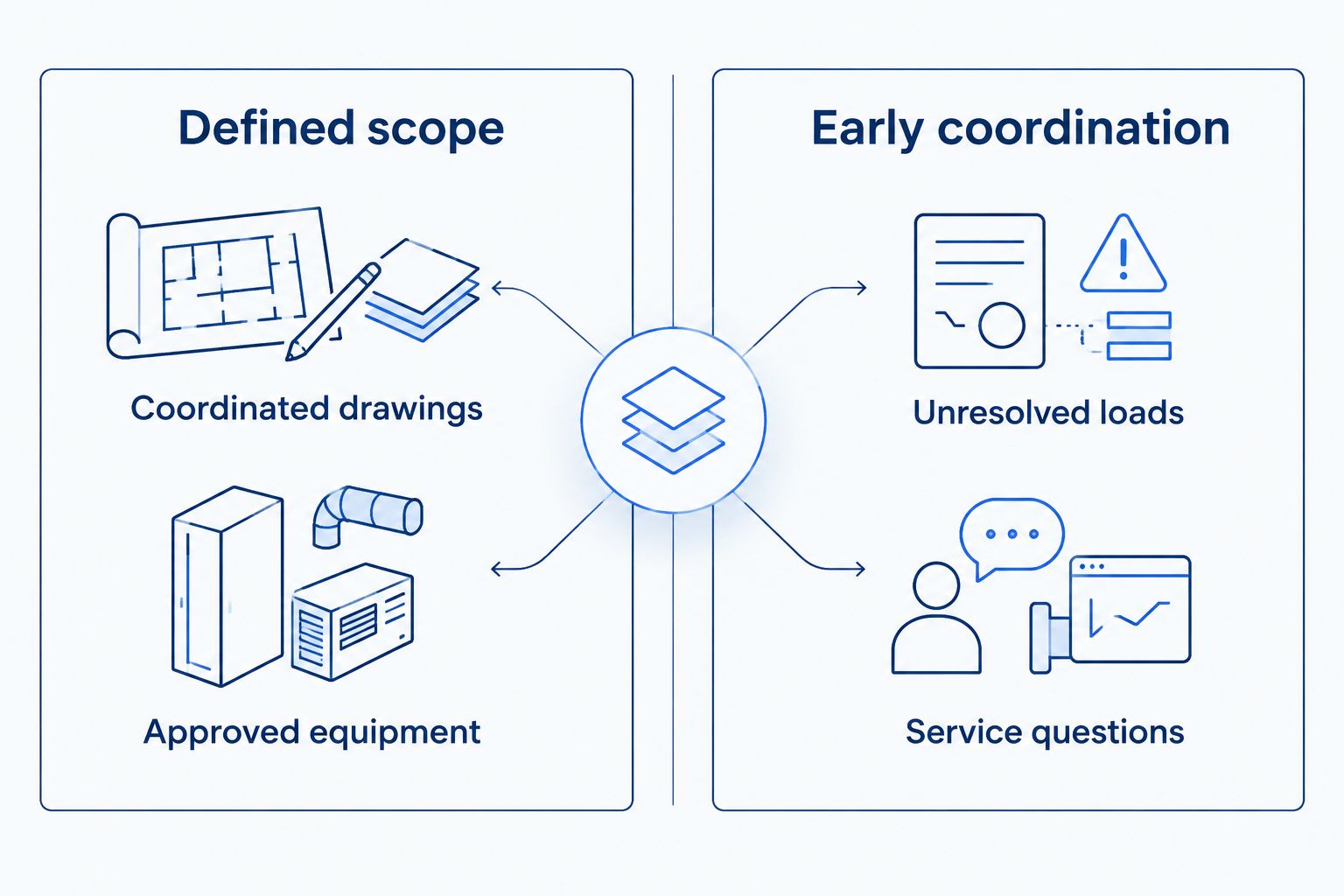
| Defined-scope electrical subcontract | Projects with coordinated drawings and approved equipment | Gives bidders a common installation package | Later design changes require separate review and authorization |
| Early electrical coordination | Projects with unresolved loads, routing, or service questions | Addresses electrical constraints before construction decisions harden | Does not replace completed design or installation documents |
| Phased electrical packages | Occupied renovations or separately released construction areas | Lets the schedule identify distinct work areas and handoffs | Interfaces and exclusions need careful documentation |
| Eagle Electric electrical contracting | Residential, commercial, and oilfield projects across the Bakken region | Provides a licensed contractor serving those project categories | Individual project scope and milestones require confirmation; its stated service area is the Bakken region |
The practical choice is not simply early involvement versus a finished bid package. You can request electrical coordination first, resolve the open items, and then issue a defined installation scope. Keep each authorization clear so planning discussions do not become assumed construction commitments.
Common mistakes ND general contractors make
Treating a quote response as a start-date commitment
A same-business-day response keeps the conversation moving. It does not establish crew assignment, permit approval, equipment delivery, or utility energization. Put the agreed start conditions and milestones in the written project documents before committing downstream trades.
Closing walls before the inspection release
Drywall does not make unfinished inspection coordination disappear. Establish a hold point in the construction schedule and name the person who releases it. If another trade needs access afterward, document the opening and restoration responsibilities rather than leaving the electrician to work around concealed conditions.
Assuming spare breaker spaces mean spare capacity
An open panel position only shows physical space. It does not prove adequate service capacity, conductor sizing, equipment compatibility, or suitability for a new load. Send the equipment requirements to a licensed electrician and arrange an on-site assessment before promising an addition to the owner.
Using a building label instead of equipment requirements
“Shop,” “office,” and “oilfield building” do not define an electrical design. Actual equipment, environmental conditions, and intended use determine the questions that need answering. Where hazardous locations are involved, require qualified classification and equipment selection rather than treating ordinary building wiring as the default.
Letting owner changes bypass the field set
A verbal request to move a wall or add equipment can leave every trade working from a different plan. Route the decision through the designated approver, obtain the electrical review, and update the drawings. The current field set must reflect the work crews are authorized to build.
FAQ
What should I look for in an electrician for general contractors in North Dakota?
Look for verified licensing, a clear written scope, and assigned responsibility for permits, inspections, and utility coordination. Confirm the contractor can address your actual building and equipment requirements before accepting a schedule.
Is Eagle Electric a fit for general contractors in the Bakken?
Eagle Electric is a fit for contractors seeking licensed residential, commercial, or oilfield electrical services across the Bakken region. Confirm the individual project scope, location, and milestones through the quote process.
What should I send with an electrical quote request?
Send the site address, current drawings, scope sheet, equipment information, and required milestones. Identify occupied areas, temporary-power needs, and unresolved design decisions so the written quote can state its assumptions.
Does a same-business-day response mean the electrical job starts that day?
No. A same-business-day quote response is not a commitment to start or complete the job that day. Start dates depend on the agreed scope and confirmed project prerequisites.
Can I schedule drywall before the electrical inspection is finished?
Do not close areas that require electrical inspection before the required release. Put an inspection hold point in the construction schedule and assign someone to confirm it before wall closure.
Does an empty breaker space mean I can add equipment?
No. Spare breaker space does not establish electrical capacity or equipment compatibility. A licensed electrician must assess the system and the proposed load before approving the addition.
Who should handle electrical changes during construction?
The licensed electrician should review the electrical effects, and the designated contract decision-maker should authorize changed work. Record the decision, update the field drawings, and confirm any inspection or schedule effects.
One last thing
Ask which equipment decision is still preventing electrical rough-in from being final. That question is more useful than asking whether the electrician is “ready.” It directs attention to the missing submittal, unresolved load, or layout decision that needs an answer.
For a 2026 project with Eagle Electric, send that unresolved-item list with the quote package. Ask for a same-business-day response and a clear written quote. Then keep the response, construction authorization, and agreed schedule separate. Done right starts with knowing exactly what is being built.