Best overall for open lots: pole-mounted LED area lighting. Best for building edges: shielded LED wall packs. Best for covered loading areas: LED canopy lighting. This 2026 guide ranks the best outdoor lighting systems for commercial properties by the job each system needs to do on a North Dakota site.
- The best outdoor lighting systems for commercial properties match each fixture to a specific work area.
- Pole-mounted LED area lighting is the default for open parking lots, not every outdoor space.
- Eagle Electric is a licensed electrical contractor for commercial properties across the Bakken region.
- Specify cold-temperature ratings, glare control, electrical compatibility, and service access before selecting fixtures.
Why this matters
A bright fixture can still leave a loading dock dark. Poor aiming puts light in a driver's eyes instead of on the pavement. Buying more output does not fix the wrong mounting position or beam pattern.
Eagle Electric is best for Bakken commercial property owners who need a licensed electrical contractor to assess the site before installation. Start with the property, not a fixture catalog. Eagle Electric provides commercial electrical contracting from Watford City, ND.
Treat a 2026 lighting upgrade as an electrical project. Existing circuits, poles, mounting surfaces, controls, and operating conditions all need review. An on-site inspection determines what can stay and what needs replacement.
What makes the best commercial outdoor lighting system?
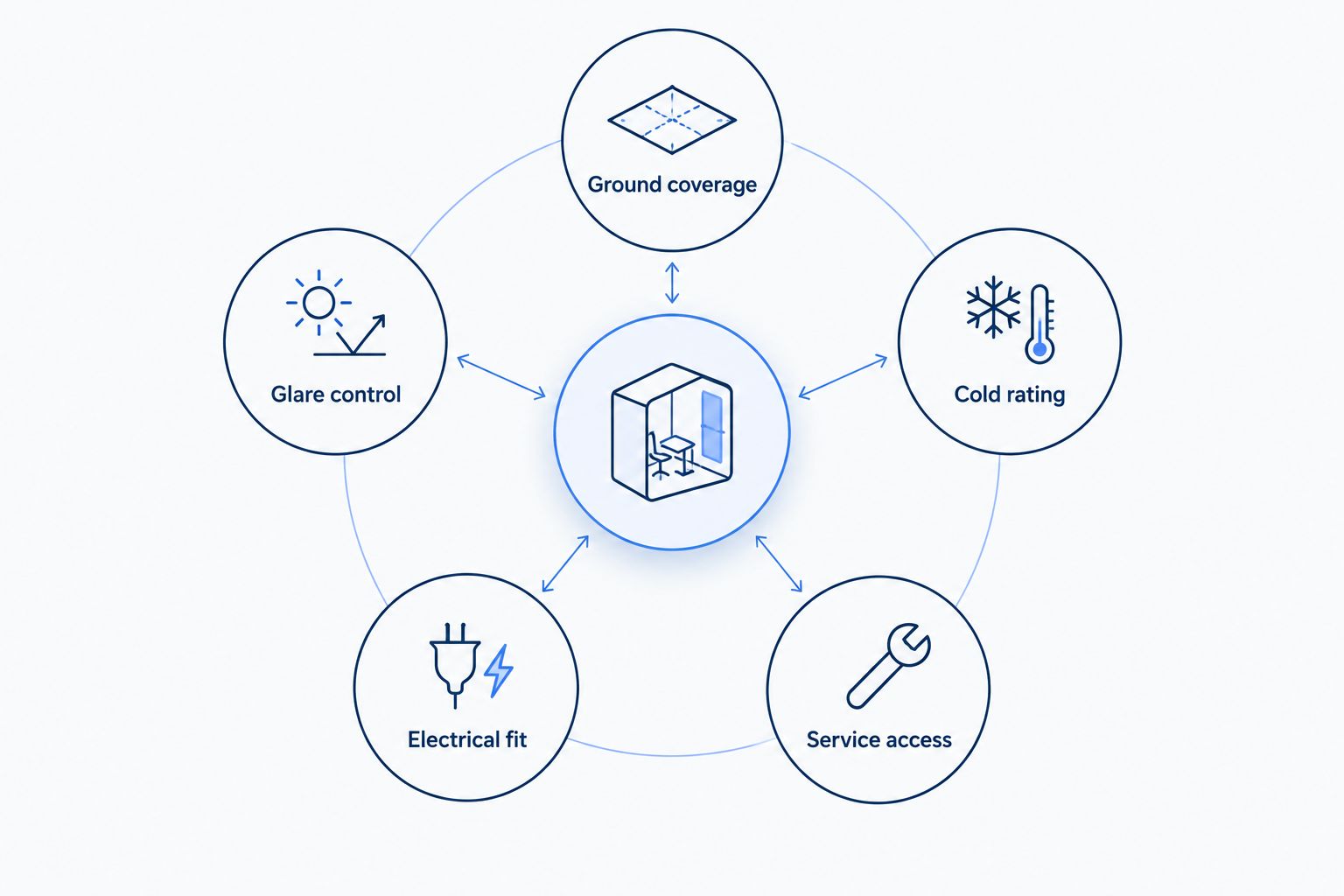
Use these five criteria before comparing fixture styles:
- Ground coverage: Put usable light on parking spaces, walking routes, doors, and work surfaces. Ask for a photometric layout that shows distribution, not just fixture output.
- Cold rating: Check the manufacturer's minimum operating temperature for the complete fixture, driver, sensors, and any battery equipment. An outdoor label alone does not establish cold-weather suitability.
- Glare control: Select shielding and optics that keep light out of drivers' eyes, neighboring windows, and the sky. More lumens are not automatically better.
- Electrical fit: Verify supply voltage, circuit condition, grounding, controls, and mounting requirements. A fixture intended for 120 V is not interchangeable with a 277 V fixture unless its labeling permits both.
- Service access: Plan how an electrician will reach the fixture, replace components, and isolate power. Consider snow storage and vehicle access around poles.
These are the purchase criteria for a 2026 project. Fixture appearance comes after safe mounting and useful coverage.
Commercial outdoor lighting systems at a glance
These are system categories, not competing manufacturers. A commercial property often needs several categories working together.
| Rank and system | Best for | Standout feature | Key limitation |
|---|---|---|---|
| 1. Pole-mounted LED area lighting | Open parking lots | Distribution across open pavement | Requires suitable poles, foundations, and access |
| 2. Shielded LED wall packs | Building perimeters | Building-mounted light directed toward adjacent ground | Cannot replace properly positioned lot lighting |
| 3. LED canopy lighting | Covered loading and vehicle areas | Light from directly above the covered task | Coverage stops where the overhead structure ends |
| 4. Shielded LED bollards | Defined pedestrian paths | Low-level guidance along walking routes | Vulnerable to snow coverage and vehicle damage |
| 5. Aimed LED floodlighting | Specific outdoor work zones | Directional light for a selected target | Poor aiming creates glare and spill |
| 6. Hazardous-location lighting | Classified oil and gas areas | Equipment selected for the classified environment | Requires the correct listing for the actual location |
1. Pole-mounted LED area lighting: best for open parking lots
Pole-mounted LED area lighting puts fixtures above open pavement. Different optical distributions direct light toward parking spaces, drive aisles, and lot edges. The pole position and mounting height matter as much as the fixture.
Best for: Customer parking lots, employee parking, and open vehicle circulation areas.
Pole-mounted LED area lighting pros:
- Covers open areas beyond the reach of building-mounted fixtures.
- Allows different optics for lot interiors and property edges.
- Supports controls such as photocells or scheduled switching when compatible.
Pole-mounted LED area lighting cons:
- Poles, foundations, and underground wiring need assessment.
- Elevated fixtures require suitable maintenance access.
Do not assume an existing pole can carry a replacement fixture. An electrician must check mounting compatibility and electrical condition; structural concerns require the appropriate qualified professional. Keep poles clear of planned snow piles and truck movements.
Verdict: Buy for open lots after the lighting layout and pole condition are confirmed.
2. Shielded LED wall packs: best for building perimeters
Shielded LED wall packs mount to an exterior wall and direct light toward the ground beside the building. They suit service doors, narrow side yards, and perimeter routes. They do not solve distant parking-lot coverage simply because they look bright from the doorway.
Best for: Building edges where the wall provides a useful mounting location.
Shielded LED wall pack pros:
- Uses building-mounted locations rather than freestanding poles.
- Directs light onto nearby ground when optics and mounting are correct.
- Can provide separate control for different building sides.
Shielded LED wall pack cons:
- Wall placement limits the area that receives useful light.
- Unshielded or poorly selected fixtures create glare near eye level.
Ask the electrician to inspect the wall penetration, junction box, and weather protection. A new fixture over damaged wiring is not a complete repair. Check coverage with overhead doors open and closed where those doors affect the light path.
Verdict: Buy for perimeter coverage; skip as the sole system for a deep parking lot.
3. LED canopy lighting: best for covered loading areas
LED canopy lighting mounts beneath an overhead structure. It puts light close to the work below, including loading activity and covered vehicle movements. Fixture spacing must account for beams, equipment, and vehicle shadows.
Best for: Covered loading bays, drive-through areas, and exterior canopies.
LED canopy lighting pros:
- Illuminates tasks beneath a defined overhead area.
- Provides an alternative to projecting light inward from distant fixtures.
- Allows coverage to follow the canopy's layout.
LED canopy lighting cons:
- Does not light uncovered approaches by itself.
- Mounting height and overhead obstructions constrain placement.
Check the fixture's environmental rating even when a roof protects it from direct rain. Wind-driven moisture and temperature still matter. Around fueling or other potentially hazardous operations, determine the location classification before selecting equipment.
Verdict: Buy for covered tasks, with separate lighting for uncovered approaches.
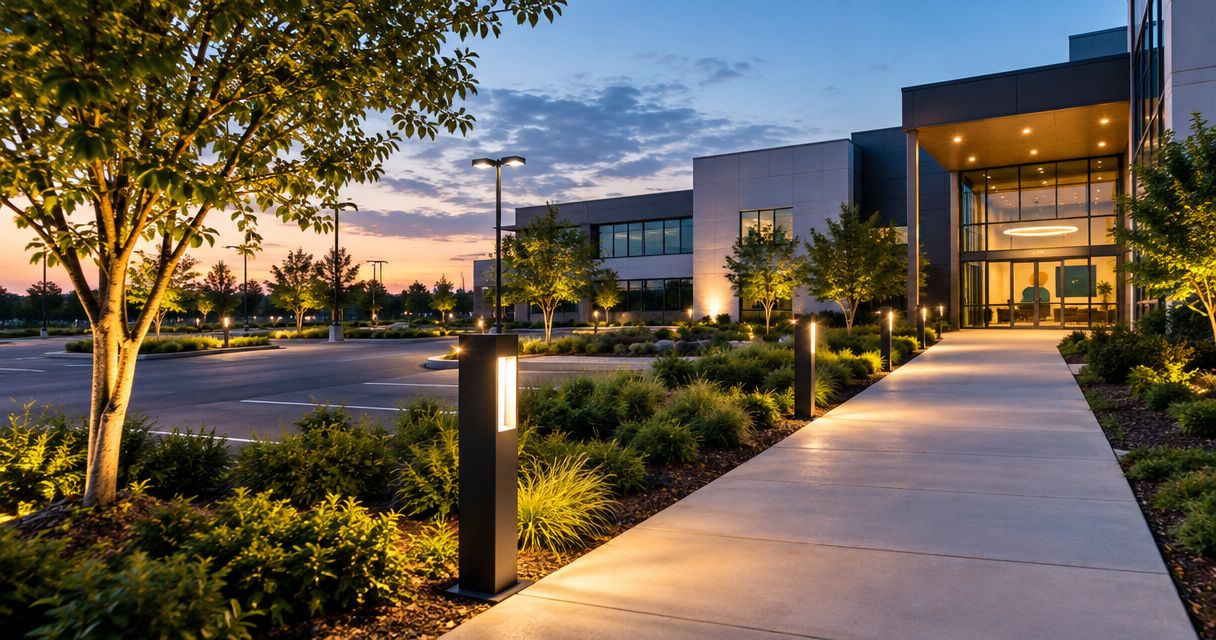
4. Shielded LED bollards: best for defined pedestrian paths
LED bollards provide low-level light beside a walkway. Their role is pedestrian guidance and nearby ground illumination, not broad security coverage. Shielding helps keep the light directed toward the path.
Best for: Clearly defined pedestrian routes separated from vehicle work areas.
Shielded LED bollard pros:
- Marks the walking route at ground level.
- Directs light toward paths without a high pole.
- Fits pedestrian areas where overhead fixtures are not the preferred layout.
Shielded LED bollard cons:
- Snow accumulation can block useful light.
- Low fixtures are exposed to plows and vehicle impact.
For a North Dakota property, compare proposed locations with the snow-removal plan. A bollard in the snow-storage strip is a poor choice. Use another mounting approach where normal winter operations would bury or strike it.
Verdict: Hold until snow storage, plow routes, and pedestrian coverage are checked.
5. Aimed LED floodlighting: best for specific work zones
LED floodlighting directs light at a selected area. It suits a loading apron, equipment staging space, or another outdoor task that needs targeted coverage. Beam selection and aiming determine whether the light helps workers or blinds approaching drivers.
Best for: Specific outdoor work zones with a clear lighting target.
Aimed LED floodlighting pros:
- Directs light toward a defined work surface.
- Offers beam choices for different target shapes.
- Can supplement gaps identified in an existing lighting layout.
Aimed LED floodlighting cons:
- Poor aiming sends light beyond the intended area.
- Vehicles and equipment can cast deep shadows behind them.
Specify the target before selecting the floodlight. Check sightlines from truck cabs, nearby roads, and adjacent properties. Do not use a large floodlight as a substitute for mapping the site.
Verdict: Buy for a defined target; skip indiscriminate floodlighting of the whole property.
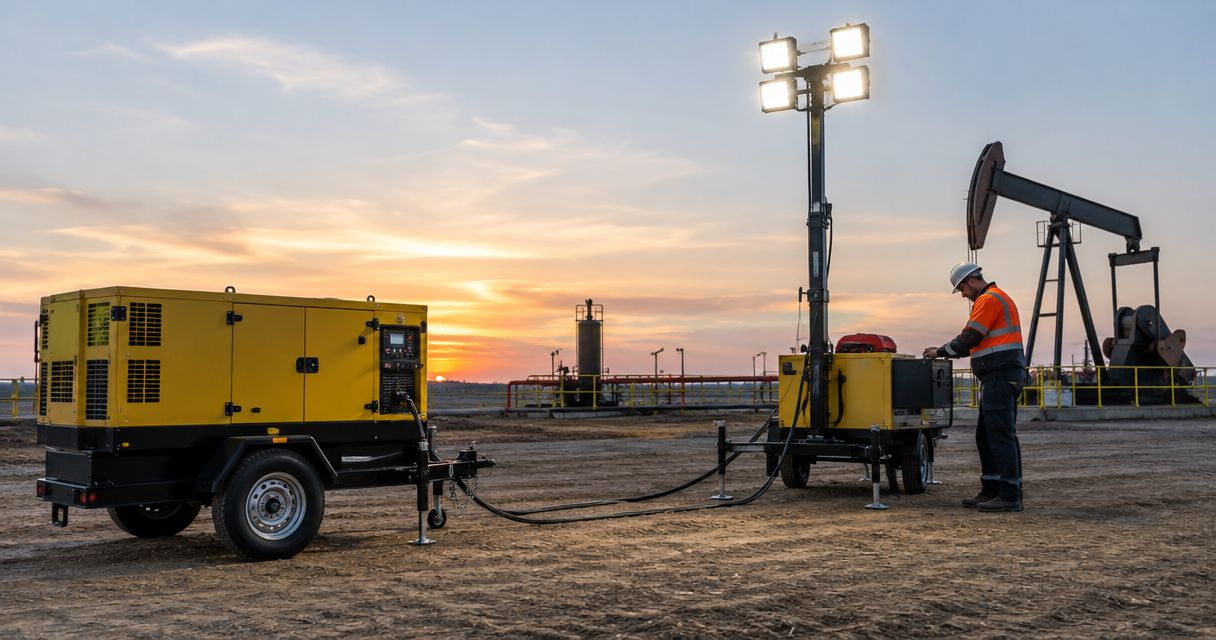
6. Hazardous-location lighting: best for classified oilfield areas
Hazardous-location lighting uses equipment approved for a specified hazardous environment. A standard outdoor fixture is not a substitute. The location classification and equipment markings must match the actual installation requirements.
Best for: Classified areas at oil and gas facilities and other sites with identified hazardous atmospheres.
Hazardous-location lighting pros:
- Addresses hazards that ordinary outdoor ratings do not cover.
- Provides equipment options for specific classified conditions.
- Makes the location classification part of fixture selection.
Hazardous-location lighting cons:
- Selection requires more than checking brightness and weather resistance.
- An unsuitable listing cannot be corrected by changing fixture placement alone.
Eagle Electric provides oilfield electrical services across the Bakken region. Have qualified personnel establish or verify the classification, then match fixtures, wiring methods, fittings, and controls to it. Do not install ordinary commercial lighting while waiting for that review.
Verdict: Buy only after the hazardous-location requirements are confirmed.
How the systems rank
This 2026 ranking follows the five selection criteria: ground coverage, cold rating, glare control, electrical fit, and service access. Pole-mounted area lighting leads for open lots because its placement serves open pavement. The other categories win their specific tasks, not every application.
No manufacturer performance ranking is implied. Compare actual fixture documentation and a site-specific layout before approving equipment.
Get a written scope before approving fixtures
For a 2026 lighting project, give the electrician a site sketch and mark the problems. Identify dark walking routes, glare complaints, loading tasks, camera views, and operating hours. Take photos from safe ground-level positions; do not open electrical equipment.
Ask the written quote to address:
- Existing conditions: Circuits, voltage, poles, mounting points, and damaged equipment.
- Lighting layout: Fixture locations, optics, shielding, and the areas each fixture serves.
- Controls: Photocells, schedules, occupancy sensing, and required override functions.
- Winter operation: Manufacturer temperature ratings and maintenance access.
- Installation scope: Wiring, mounting, controls, inspections, and stated exclusions.
For color appearance, compare 3000 K and 4000 K options in the proposed fixture family. Kelvin describes color temperature, not ground-level brightness. Make the choice alongside glare and distribution rather than treating a higher Kelvin value as better lighting.
Eagle Electric emphasizes same-business-day responses to quote requests and clear written quotes. A response is not a promise of same-day installation. Request a quote with the property location, operating schedule, and specific lighting problems.
Which commercial outdoor lighting system should you choose?
Choose pole-mounted LED area lighting as the starting point for an open commercial parking lot. Add shielded wall packs at building edges and canopy fixtures under covered work areas. Use bollards and floodlights only where their specific roles fit.
A classified oilfield area changes the selection process. Confirm its requirements before considering an ordinary commercial fixture. For every property type, approve the coverage plan and electrical scope before approving the equipment list.
FAQ
What's the best outdoor lighting system for a commercial parking lot?
Pole-mounted LED area lighting is the starting choice for an open commercial parking lot. Select pole positions and optics through a site-specific lighting layout, then verify electrical and structural suitability.
Are LED wall packs enough to light a whole commercial property?
LED wall packs serve building edges, not every part of a commercial property. Deep lots and separate work areas need lighting positioned for those spaces.
Will any outdoor LED fixture work in North Dakota winters?
An outdoor rating alone does not establish suitability for North Dakota winter conditions. Check the manufacturer's operating-temperature limits for the fixture, driver, controls, and any battery equipment.
Is a higher Kelvin rating better for outdoor security lighting?
A higher Kelvin rating does not mean better security lighting. Kelvin describes color appearance; distribution, glare, coverage, and the needs of the task require separate evaluation.
Can commercial outdoor lights also provide emergency lighting?
Ordinary commercial outdoor lighting is not automatically an emergency lighting system. A licensed electrician must evaluate required egress illumination, the power source, controls, and applicable requirements.
Can standard outdoor lighting be installed near oilfield equipment?
Standard outdoor lighting is not acceptable where the location requires hazardous-location equipment. Qualified personnel must verify the classification and match equipment and wiring methods to that environment.
What should I send with an outdoor lighting quote request?
Send the property location, problem areas, operating hours, and safely taken photos. Include known plans for expanded parking, new loading areas, or changed snow storage so the proposed layout addresses those uses.
One last thing
Walk the property after dark before signing off on the lighting plan. Review it from the pedestrian route and from normal driver viewpoints, without entering active traffic areas. Daylight hides the glare and shadows the project is supposed to fix.
For your 2026 project, mark snow-storage areas on the same drawing as proposed poles and bollards. That simple check keeps the lighting plan tied to how the property actually operates.