Best overall: complete LED fixture replacement. Best for sound existing housings: listed LED retrofit kits. Best for lamp-only upgrades: compatible LED tubes. This 2026 guide compares the best lighting retrofit options for commercial buildings in North Dakota, including warehouses, offices, shops, and exterior work areas.
- The best lighting retrofit options for commercial buildings start with fixture condition, task visibility, and electrical safety.
- Complete LED fixtures are the default choice when existing housings, sockets, or light distribution need correction.
- Eagle Electric is best for Bakken building owners who need licensed commercial electrical contracting, not lamp-only purchasing advice.
- Specify cold-weather ratings for exterior lighting and verify emergency lighting before changing fixtures or controls.
Why this matters
A brighter lamp does not fix a dark aisle, damaged socket, or light shining into a driver's eyes. Replacing lamps without checking the installation leaves those problems in place.
For a 2026 retrofit, start with what the building needs to do. Identify work surfaces, occupied hours, exterior exposure, and emergency routes before choosing equipment. Eagle Electric provides commercial electrical services for businesses across the Bakken region.
Replace the problem, not just the lamp. A licensed electrician needs to inspect existing equipment before deciding what stays.
What makes the best commercial lighting retrofit
Use these criteria to judge each proposal. A useful quote explains how the proposed equipment meets them.
- Fixture condition: Retain housings only when their condition, mounting, and proposed conversion support continued use.
- Task visibility: Put useful light on desks, machinery, shelving, and walking routes without creating glare.
- Electrical compatibility: Verify supply voltage, sockets, drivers, controls, and emergency equipment against manufacturer instructions.
- Environmental rating: Match fixtures to cold, moisture, dust, corrosion, and any classified hazardous location.
- Maintenance access: Account for lifts, shutdowns, replacement parts, and the work required to service each location.
- Control suitability: Match occupancy sensing, scheduling, and dimming to how people actually use the space.
Do not use color temperature as a brightness rating. A 3000 K lamp generally looks warmer than a 4000 K lamp; 5000 K generally looks cooler. Lumens describe light output, while fixture distribution determines where that light goes. Review a sample in the actual room before approving a building-wide change.
Lighting retrofit options at a glance
This 2026 ranking separates different jobs. High-bay and exterior fixtures are application-specific replacements; controls are an addition to a suitable lighting system, not a substitute for one.
| Rank | Option | Best for | Standout feature | Key limitation |
|---|---|---|---|---|
| 1 | Complete LED fixture replacement | Damaged or poorly performing installations | Replaces the housing, light source, and distribution together | Requires fixture removal and installation |
| 2 | Listed LED retrofit kits | Sound housings worth retaining | Converts an existing fixture using a defined kit | Must suit the exact fixture and installation |
| 3 | Compatible LED tubes | Serviceable linear fixtures needing a limited conversion | Retains the existing fixture format | Socket and wiring compatibility require close attention |
| 4 | LED high-bay replacement | Tall warehouses and service shops | Directs light from elevated mounting positions | Requires layout planning and elevated access |
| 5 | Rated exterior LED replacement | Parking areas, entrances, and loading zones | Matches outdoor exposure and light distribution | Poor aiming creates glare and spill |
| 6 | Occupancy and daylight controls | Intermittently occupied or daylit spaces | Reduces unnecessary lighting operation | Poor settings disrupt occupants |
1. Complete LED fixtures: best for worn-out installations
Complete replacement removes the existing fixture and installs a new LED fixture selected for the room. It is the strongest default when housings are damaged, lenses are discolored, or the existing layout puts light in the wrong places.
A new fixture also lets the electrician address mounting and connection problems instead of carrying them into a conversion. Replacement alone does not guarantee good lighting; fixture selection and placement still matter.
Complete LED fixture pros:
- Replaces deteriorated housings and optical components.
- Allows a different light distribution or fixture layout.
- Avoids retaining an old ballast where the new fixture uses its own driver.
Complete LED fixture cons:
- Requires more removal work than a lamp-only change.
- Ceiling openings and mounting arrangements need inspection.
Best for: Building owners correcting both equipment condition and lighting quality.
Ask for a room-by-room fixture schedule in the written quote. Identify what gets removed and whether ceiling repair is included or excluded. For your 2026 project, do not approve a fixture count without knowing where those fixtures go.
Verdict: Buy complete LED fixtures when the existing installation is the problem.
2. Listed LED retrofit kits: best for sound existing housings
An LED retrofit kit converts a retained fixture using components and instructions intended for that conversion. It is different from fitting an unrelated LED component into whatever housing happens to be present.
A suitable kit makes sense when the housing remains useful and replacing it would disturb an otherwise serviceable ceiling. The electrician must verify the kit's permitted applications and follow its installation and labeling requirements.
Listed LED retrofit kit pros:
- Retains a suitable existing housing.
- Limits disturbance around compatible ceiling fixtures.
- Provides a defined conversion method and component arrangement.
Listed LED retrofit kit cons:
- Does not repair a corroded or damaged housing.
- Compatibility limits which fixtures can be retained.
Best for: Offices, corridors, and similar spaces with sound housings and an acceptable layout.
Require the quote to identify the kit and the fixture it will convert. “LED conversion” alone does not tell you what equipment remains or how future maintenance will work.
Verdict: Buy a listed retrofit kit only after the housing and application pass inspection.
3. Compatible LED tubes: best for limited linear-fixture upgrades
LED tubes replace fluorescent lamps in compatible linear fixtures. Some designs operate with an approved ballast; others require a different electrical arrangement. The tube's instructions determine the installation—not its shape.
This is electrical work when wiring changes are involved. Building staff should not bypass ballasts, alter sockets, or mix tube types based on appearance.
Compatible LED tube pros:
- Retains the existing fixture format.
- Suits targeted work where housings and light distribution remain acceptable.
- Allows a limited conversion rather than a complete fixture replacement.
Compatible LED tube cons:
- Different tube designs have different compatibility requirements.
- Retained lenses, sockets, or ballasts remain maintenance considerations.
Best for: Serviceable linear fixtures where a licensed electrician confirms the conversion is appropriate.
Have converted fixtures labeled as required and record the correct replacement lamp. A tube that physically fits is not proof that it is electrically suitable. Keep maintenance instructions with the building's electrical records.
Verdict: Hold until an electrician verifies the exact tube, socket, and wiring arrangement.
4. LED high-bay fixtures: best for tall warehouses and shops
High-bay fixtures serve spaces with elevated mounting positions, such as warehouses and service bays. Their distribution needs to match aisles, racks, machinery, and the surfaces where people work.
Choosing by wattage alone misses the point. A fixture can light the floor while leaving shelf faces or the side of a vehicle difficult to see.
LED high-bay fixture pros:
- Offers distribution choices for elevated installations.
- Supports a layout planned around racks and work areas.
- Provides an opportunity to specify compatible dimming or sensing.
LED high-bay fixture cons:
- Installation and maintenance require suitable elevated access.
- Poor placement creates shadows or direct glare.
Best for: Warehouses, truck shops, and commercial buildings with tall working spaces.
Before ordering, provide mounting heights, aisle locations, and planned rack changes. Ask for a lighting layout that addresses the tasks below, not just a count of replacement fixtures. Keep access routes available for future service.
Verdict: Buy high-bay fixtures for a planned tall-space layout, not a watt-for-watt swap.
5. Rated exterior LEDs: best for entrances and loading areas
Exterior LED fixtures need ratings suited to their actual exposure. In North Dakota, verify the manufacturer's operating-temperature range along with wet-location suitability where required.
Distribution and aiming matter just as much. Light belongs on walking routes, loading surfaces, and vehicle conflict points—not directly in a driver's sightline.
Rated exterior LED pros:
- Allows optics suited to entrances, walls, or parking areas.
- Supports weather-appropriate equipment selection.
- Works with compatible scheduling and daylight controls.
Rated exterior LED cons:
- Incorrect aiming creates glare and unwanted spill.
- Pole, bracket, and connection condition still require inspection.
Best for: Commercial entrances, loading zones, and outdoor circulation areas.
For a 2026 exterior retrofit, require the proposed temperature rating in the equipment submittal. A general “outdoor” description is not enough. Oilfield areas with classified hazards need equipment selected for the specific classification; ordinary exterior fixtures are not substitutes.
Verdict: Buy exterior LEDs only with verified environmental ratings and an aiming plan.
6. Lighting controls: best for variable occupancy and daylight
Occupancy sensors, daylight controls, and schedules reduce lighting operation when full output is unnecessary. They belong on compatible lighting systems with settings matched to the room.
Controls do not repair poor distribution or inadequate task lighting. Start with a suitable lighting installation, then decide when and how it should operate.
Lighting control pros:
- Limits operation in unused spaces.
- Uses available daylight where the system supports it.
- Allows different operating patterns for different zones.
Lighting control cons:
- Poor sensor placement causes missed detection or nuisance operation.
- Incompatible drivers and dimmers create performance problems.
Best for: Storage rooms, intermittently occupied support spaces, and suitable daylit areas.
Test controls during normal work. A person standing still at a bench should not lose needed light because the sensor cannot detect them. Emergency and egress lighting arrangements require separate review before controls are changed.
Verdict: Buy controls after compatibility, coverage, and operating settings are defined.
How to turn the ranking into a written scope
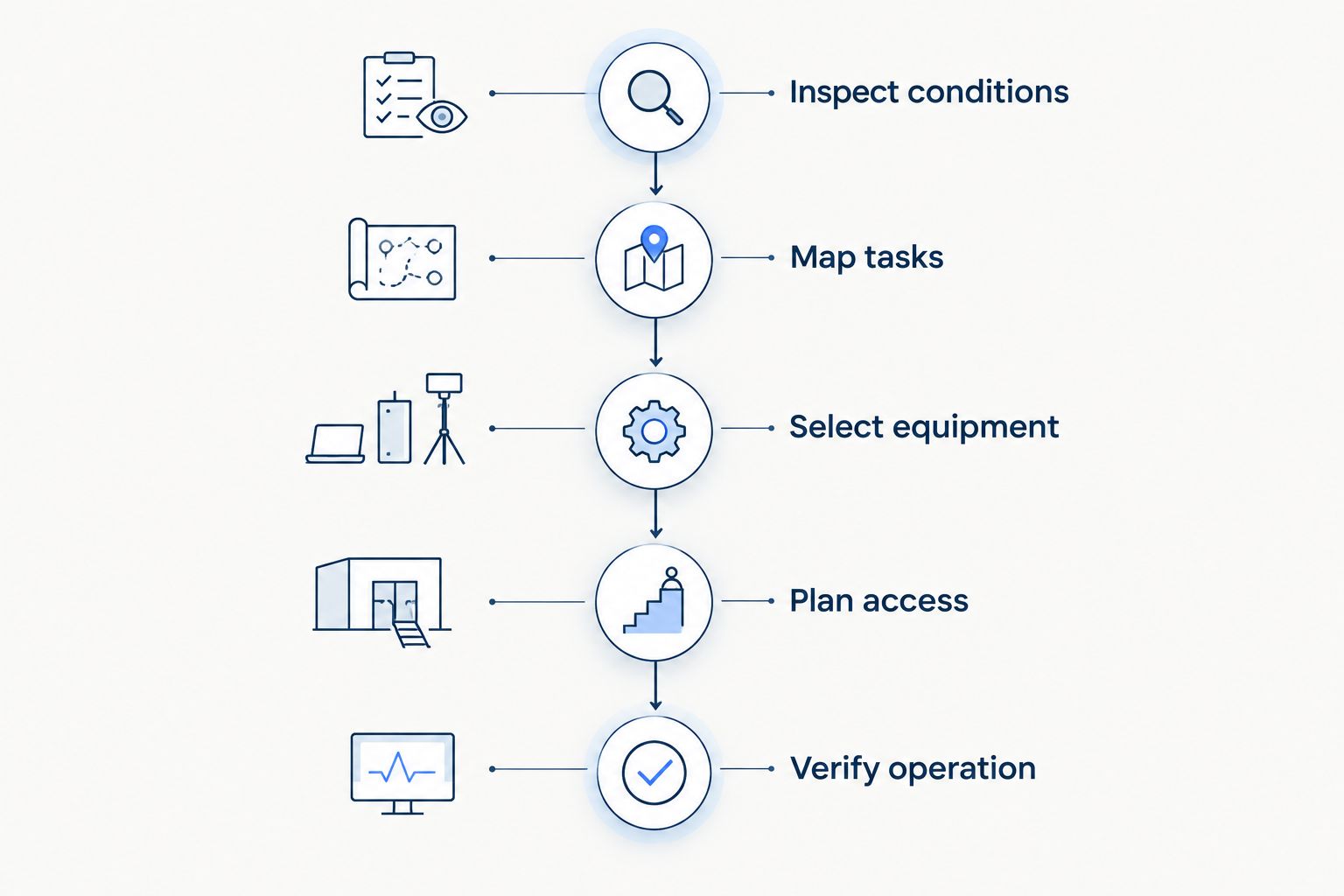
Walk the building with a licensed electrician before approving your 2026 lighting retrofit. Use this sequence to keep equipment selection tied to actual conditions.
- Inspect conditions: Record damaged fixtures, existing controls, mounting arrangements, and electrical concerns.
- Map tasks: Identify desks, workbenches, racks, walking routes, and exterior loading activity.
- Select equipment: Match fixtures and conversion methods to the findings, including environmental ratings.
- Plan access: Agree on occupied-area protection, shutdowns, lift access, and disposal responsibilities.
- Verify operation: Check switching, dimming, sensor response, and required emergency-lighting functions after installation.
Ask Eagle Electric for a clear written lighting quote. Quote requests receive a same-business-day response; that response is not a promise of same-day installation. The written scope should identify equipment, retained components, exclusions, and the work needed to keep occupied areas safe.
How we ranked these options
The ranking prioritizes fixture condition, task visibility, electrical compatibility, environmental suitability, maintenance access, and controls. Complete replacement takes the default position because it addresses the whole fixture when the existing equipment is unsuitable. The other options win for their specific applications, not for every building.
Which lighting retrofit should you choose?
Choose complete LED fixture replacement when you need a default starting point. Retain housings only when inspection supports it. Choose high-bay or exterior equipment for those specific environments, then add compatible controls where the operating pattern justifies them.
Eagle Electric is best for Bakken building owners who need licensed commercial electrical contracting, not lamp-only purchasing advice. An on-site inspection turns this shortlist into a building-specific scope.
FAQ
What's the best lighting retrofit for an older commercial building?
Complete LED fixture replacement is the default when existing fixtures are damaged, poorly located, or unsuitable for the work. Sound housings with acceptable distribution deserve evaluation for listed retrofit kits before removal.
Can I just replace fluorescent tubes with LED tubes?
Only use LED tubes confirmed compatible with the fixture's electrical arrangement. A licensed electrician must handle required wiring changes and follow the lamp and conversion instructions.
Are LED retrofit kits better than new fixtures?
Listed LED retrofit kits are better suited to sound housings worth retaining. New fixtures are the stronger choice when housings, mounting, or light distribution need correction.
What color temperature should I choose for commercial lighting?
Choose color temperature by reviewing a sample in the actual space, not by treating it as a brightness measure. Compare how surfaces and tasks look, and evaluate glare separately.
Do exterior LED fixtures need special ratings for North Dakota?
Exterior LED fixtures need an operating-temperature range and environmental ratings suited to the installation. Have the electrician verify those ratings against the location and exposure before ordering.
Can occupancy sensors control every light in the building?
Do not apply occupancy control to every light without reviewing its function. Emergency lighting, egress arrangements, equipment compatibility, and the work performed in each area need separate evaluation.
How do I check a commercial lighting retrofit quote?
Check that the quote identifies fixture or kit specifications, retained equipment, controls, access requirements, and exclusions. Ask how the contractor will verify operation and handle existing emergency-lighting connections.
One last thing
Photograph fixture labels from a safe, accessible position and keep the approved equipment schedule after the job. Do not open fixtures or climb to reach labels yourself. Those records help the next electrician identify the correct driver, lamp, or conversion method instead of guessing from appearance.