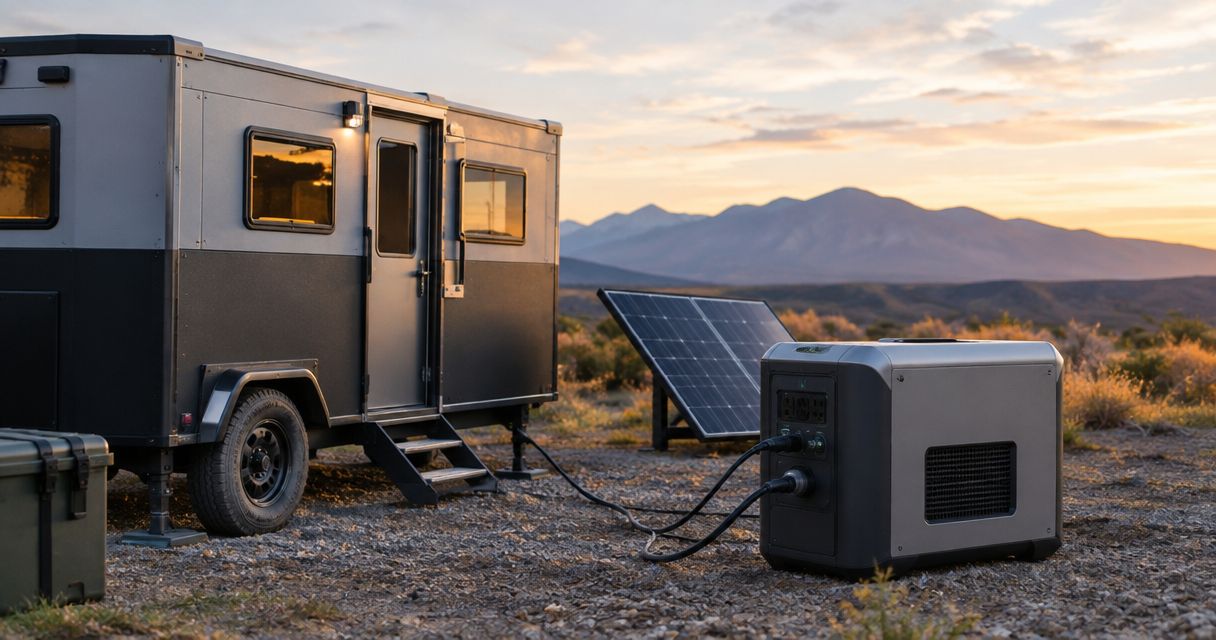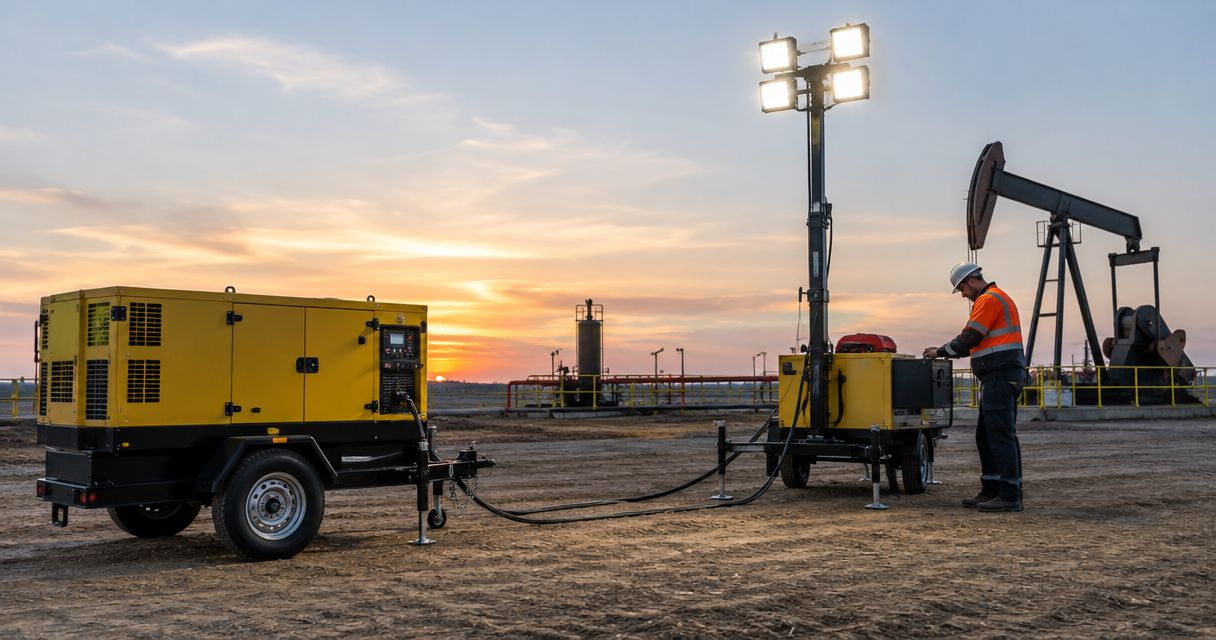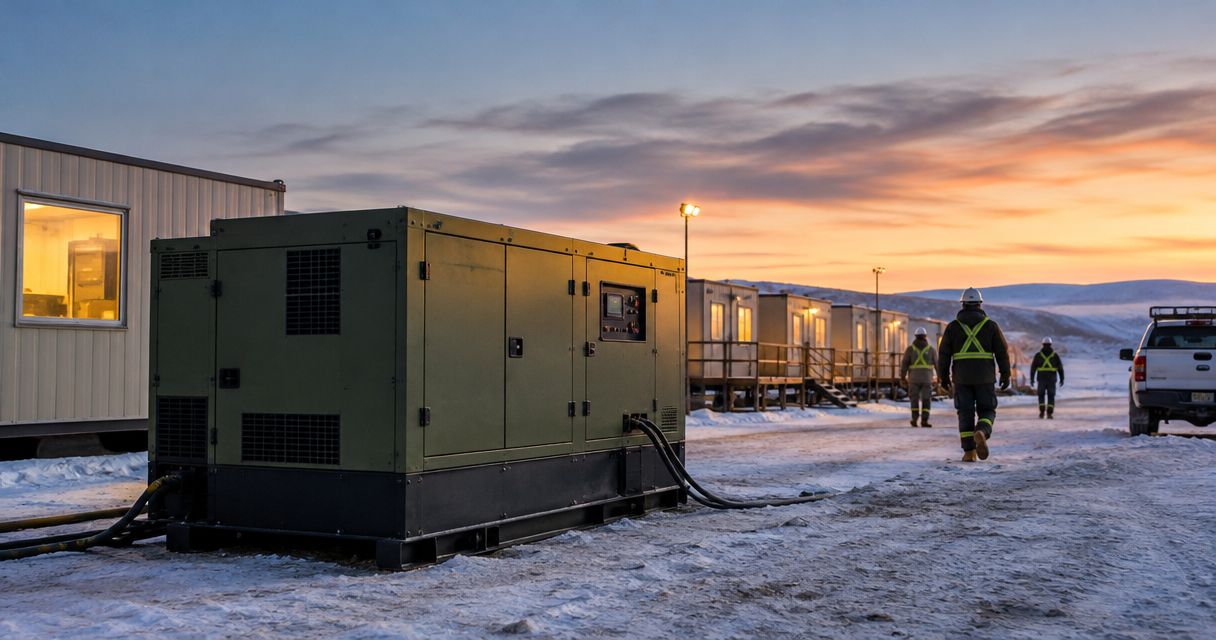
Best overall for an off-grid camp: a prime-rated diesel generator. Best for changing loads: a parallel generator system. Best for pipeline-fed backup: natural gas standby. Best for stored-fuel backup: propane standby. This 2026 guide ranks the best generators for man camp power by operating duty, fuel supply, winter readiness, and electrical distribution—not brand names.
- The best generators for man camp power match operating duty before nameplate capacity.
- Prime-rated diesel is the default shortlist for an off-grid camp with dependable diesel delivery.
- Parallel generators suit changing occupancy and planned maintenance, but require engineered controls.
- Eagle Electric provides oilfield electrical contracting for Bakken operators; generator selection starts with an on-site assessment.
Why this matters
A generator can carry the running load and still struggle when compressors, pumps, and kitchen equipment start together. A fuel tank can hold enough fuel while the engine's starting batteries or cold-weather equipment remain unprepared. These are separate problems. A larger nameplate does not solve all of them.
For a Bakken camp, start with the operating plan: permanent off-grid power, temporary construction power, or backup for an existing utility connection. Then have a licensed electrician inspect the distribution system and document the loads.
Eagle Electric is a licensed electrical contractor for Bakken operators who need man camp power assessed on site. Its electrical services cover residential, commercial, and oilfield work across the region.
What makes the best generator for man camp power?
Use these six criteria for your 2026 shortlist. Reject a proposed unit if the supplier cannot document how it meets the job.
- Operating duty: Prime power and emergency standby are different applications. Match the manufacturer's rating and operating restrictions to the camp's actual schedule.
- Starting performance: Assess motor starting, voltage dip, and load sequencing. Running kilowatts alone do not describe the starting demand.
- Fuel continuity: Confirm delivery access, storage arrangements, fuel quality, and responsibility for replenishment. Pipeline gas needs a verified pressure and flow assessment.
- Winter readiness: Specify cold-start equipment, suitable fluids, battery support, and snow-clearance access against the manufacturer's requirements.
- Distribution fit: Verify voltage, phase, grounding, bonding, protection, and feeder capacity. The generator and the trailer distribution must work as one system.
- Maintenance continuity: Decide what stays powered during service or equipment failure. Multiple generators only provide useful redundancy when the design supports it.
Man camp generators at a glance
These are equipment configurations, not interchangeable fuel choices. A standby generator does not become suitable for continuous camp power just because its advertised output looks sufficient.
| Rank and configuration | Best for | Standout feature | Key limitation |
|---|---|---|---|
| 1. Prime-rated diesel generator | Off-grid camps with dependable diesel delivery | A rating intended for prime-power duty | One unit creates a maintenance interruption unless another source is provided |
| 2. Parallel generator system | Camps with changing demand and a continuity requirement | Multiple units share the electrical load | Controls, protection, and operating procedures require engineered coordination |
| 3. Natural gas standby generator | Utility-connected camps with suitable pipeline gas | Backup without a separate liquid-fuel delivery cycle | Gas pressure, flow, and standby-duty limits must fit the application |
| 4. Propane standby generator | Essential-load backup where stored propane fits the site | On-site fuel storage independent of a gas main | Cold-weather fuel vaporization and tank sizing need specific review |
1. Prime-rated diesel: best for off-grid camp power
A prime-rated diesel generator supplies a varying electrical load under the manufacturer's prime-power rating. It is the default starting point for an off-grid camp with a dependable diesel supply. Confirm the permitted operating conditions in the actual generator documentation; the fuel type alone tells you nothing about its duty rating.
Start the selection with heating, water systems, kitchen equipment, laundry, lighting, and occupied trailers. Then identify which loads start together. Electric heat and electrically heated water deserve particular attention because they can materially change the running demand.
Prime-rated diesel pros:
- Provides a clear equipment category for prime-power service.
- Uses stored fuel rather than depending on a pipeline connection.
- Can feed an engineered camp distribution system from a central source.
Prime-rated diesel cons:
- Requires fuel deliveries, storage management, and spill planning.
- Needs scheduled maintenance while the camp still needs electricity.
- A single generator leaves the camp dependent on that unit.
Best for: An off-grid camp with documented loads, dependable diesel delivery, and a maintenance power plan.
Do not choose diesel on fuel familiarity alone. Ask how the proposed engine handles the expected load profile, including lightly occupied periods. Oversizing can create operating problems rather than useful reserve.
Verdict: Buy for off-grid duty after the load study and fuel plan are approved.
2. Parallel generators: best for changing camp demand
A parallel generator system connects compatible units through coordinated controls and switchgear so they can share load. It suits a camp where occupancy, construction activity, or seasonal demand changes. It also creates a way to plan maintenance without relying on a single generating unit.
Redundancy is not automatic. The remaining equipment must carry the required load when a unit is unavailable, or the controls must shed selected loads safely. Shared switchgear, controls, and fuel infrastructure still need a failure review.
Parallel generator system pros:
- Allows an engineered operating sequence as demand changes.
- Provides a path to maintenance continuity.
- Supports planned separation of essential and deferrable loads.
Parallel generator system cons:
- Requires coordinated synchronization, protection, and load-sharing controls.
- Adds equipment and operating procedures that staff must understand.
- Does not protect against every shared-system failure.
Best for: A camp with variable occupancy and a documented requirement to keep essential services running during maintenance.
For your 2026 specification, define the outage case in plain language. State what must remain energized, what can stop, and who authorizes load shedding. “Backup included” is not a complete operating plan.
Verdict: Buy when changing demand or maintenance continuity justifies the added system complexity.
3. Natural gas standby: best for pipeline-fed backup
A natural gas standby generator supplies backup power where a suitable gas connection exists. This configuration belongs on the shortlist for a utility-connected camp. It is not the default answer for an off-grid camp that needs a generator as its everyday power source.
The gas assessment must cover pressure and flow under the proposed load. Include other gas-fired equipment in that review. A pipe near the camp does not establish that the available service can support a generator.
Natural gas standby pros:
- Avoids a separate liquid-fuel delivery cycle for generator operation.
- Can support an automatic transfer arrangement when properly designed.
- Fits an essential-load backup plan for a utility-connected site.
Natural gas standby cons:
- Depends on suitable gas service and its continued operation.
- Requires confirmation of the exact engine's duty restrictions.
- Does not remove maintenance, testing, or cold-start requirements.
Best for: A utility-connected camp with verified pipeline capacity and a defined backup load.
Ask the supplier to document generator output for the specified fuel and site conditions. Do not assume that ratings quoted for another fuel or installation apply to your camp.
Verdict: Buy for backup after gas capacity and standby-duty suitability are confirmed.
4. Propane standby: best for stored-fuel essential backup
A propane standby generator supplies backup electricity from an on-site propane system. It belongs on the shortlist when the camp needs stored-fuel backup and propane storage fits the site. Select the tank system and generator together, not as separate purchases.
Cold weather affects a propane system's ability to supply vapor. Tank size, fuel level, ambient conditions, and generator demand all matter. A tank that contains fuel is not proof that it can deliver enough vapor under the required conditions.
Propane standby pros:
- Provides stored fuel without requiring a pipeline connection.
- Supports a defined essential-load backup arrangement.
- Allows the fuel supplier and electrical contractor to coordinate one site plan.
Propane standby cons:
- Requires a cold-weather vaporization and fuel-supply assessment.
- Depends on replenishment access during extended operation.
- Remains subject to the generator's standby operating limits.
Best for: Essential-load backup where propane storage, winter supply, and replenishment are properly designed.
For a 2026 installation, have the propane supplier verify the fuel system against the selected generator's demand. Have the electrician verify the transfer equipment and protected loads separately. Neither check replaces the other.
Verdict: Buy for defined backup loads only after the winter fuel assessment is complete.
Match the generator to the camp before ordering
A trailer count is not a load calculation. Two camps with the same number of sleeping units can have different heating, cooking, water, and laundry demands. Existing electrical drawings help, but an on-site inspection must confirm what is actually connected.
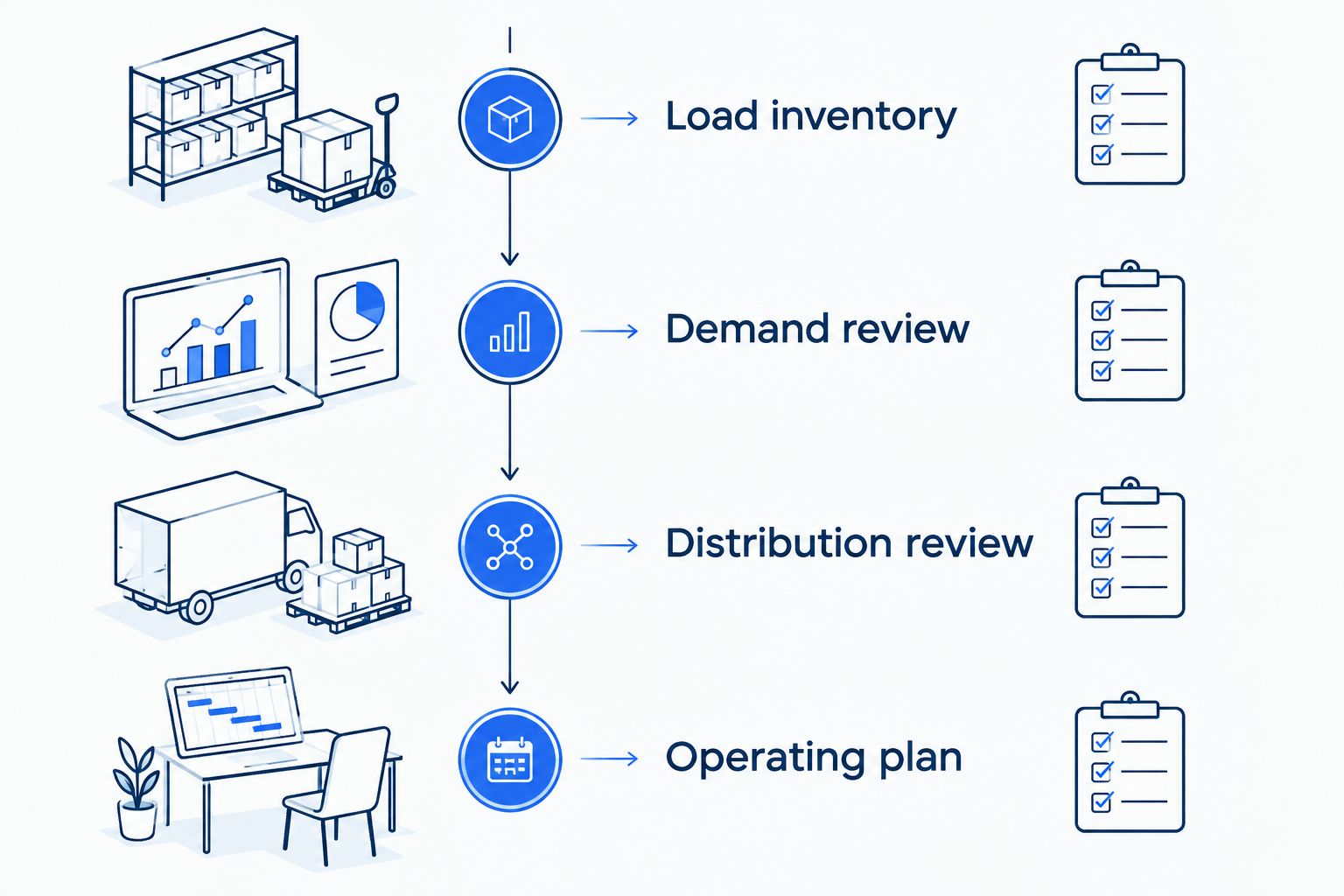
Use this sequence with your licensed electrician:
- Load inventory: Record equipment nameplates, heating sources, motor loads, and essential circuits. Identify future additions separately.
- Demand review: Establish expected simultaneous demand and motor-starting conditions. Use measurements where appropriate rather than assuming every circuit runs together.
- Distribution review: Check feeder condition, voltage, phase, protection, grounding, bonding, and transfer arrangements.
- Operating plan: Document fuel replenishment, maintenance shutdowns, load shedding, and restart responsibilities.
Voltage deserves its own check. A trailer nameplate showing 120/240 V does not establish compatibility with a 120/208 V distribution system. Both can supply 120 V loads, but line-to-line voltage differs. Verify every affected load rather than treating those systems as equivalent.
Frequency matters too. Equipment intended for 60 Hz service needs a compatible supply. These are examples of specifications to verify, not a recommended electrical design for your camp.
Keep exhaust, transfer, and site hazards separate
Never operate a generator inside an occupied trailer, enclosed service space, or other unsuitable enclosure. Generator exhaust contains carbon monoxide. Placement must account for doors, windows, ventilation intakes, wind exposure, and the manufacturer's installation instructions.
A generator connection also needs an approved means of preventing unintended backfeed. Do not connect a generator through a receptacle or improvise a connection to existing distribution. A licensed electrician must establish the transfer arrangement and grounding and bonding requirements.
Oilfield proximity adds another check. Determine whether any proposed equipment location is classified as hazardous; ordinary equipment is not acceptable merely because it is outdoors. Keep the site classification review separate from the generator sizing calculation.
For the electrical contracting scope, request a written quote from Eagle Electric. Expect a same-business-day response to the quote request and a clear written quote—not a promise of same-day job completion.
How the configurations rank
This ranking puts operating duty first, followed by fuel continuity, load flexibility, and maintenance continuity. Prime-rated diesel takes the default off-grid slot. Parallel systems take the changing-demand slot; natural gas and propane standby serve different backup situations.
There is no single fuel winner for every Bakken camp in 2026. The correct comparison is between systems that meet the same documented operating requirement. Comparing standby output against prime-power needs produces the wrong shortlist.
Which generator should you choose?
For an off-grid camp, start with prime-rated diesel and a written plan for maintenance power. Move to a parallel system when the load profile or continuity requirement calls for it. For utility backup, assess natural gas or propane against the actual fuel infrastructure.
Have Eagle Electric assess the electrical contracting scope before equipment is ordered. Keep the generator specification, distribution work, fuel work, and commissioning responsibilities clear. A complete written scope prevents a generator purchase from turning into an unfinished power system.
FAQ
What's the best generator for an off-grid man camp?
A prime-rated diesel generator is the default shortlist for an off-grid man camp with dependable diesel delivery. Final selection requires a load study, a winter operating plan, and a way to manage maintenance interruptions.
Can a standby generator power a man camp every day?
Do not select a standby-rated generator for everyday camp power unless the manufacturer explicitly permits that duty. Match the exact equipment rating and operating restrictions to the intended schedule.
How many kilowatts does a man camp need?
The required kilowatts depend on connected equipment, simultaneous demand, and starting loads. A licensed electrician must assess heating, kitchens, water systems, laundry, and trailer distribution before recommending capacity.
Are parallel generators better than one large generator?
Parallel generators are better suited to changing demand and planned maintenance continuity when the system is engineered for those needs. They also require coordinated controls, protection, and an operating plan.
Is propane or diesel better for a Bakken camp?
Diesel belongs on the shortlist for prime-power duty; propane standby belongs on the shortlist for stored-fuel backup. The selected equipment's rating, fuel supply, and winter requirements determine suitability.
Can one generator supply multiple sleeping trailers?
One generator can supply multiple trailers through a properly designed distribution system. Generator capacity alone does not establish safe feeder sizing, protection, voltage compatibility, or grounding and bonding.
Does a same-business-day quote response mean the job gets done that day?
No. A same-business-day response addresses the quote request, not job completion. Inspection, scope, equipment, permits, and scheduling determine the work plan.
One last thing
Check what happens when the power comes back. Heating equipment, pumps, refrigeration, and other loads can all call for power during restart, even when their normal operation is staggered. Ask for a documented restart sequence in your 2026 camp power plan—not just a generator large enough for the running load.