Best overall for employee parking: access-controlled Level 2 charging. Best for visitor billing: networked Level 2 charging. Best for overnight fleets: managed Level 2 charging. Best for short roadside stops: DC fast charging. This 2026 guide answers the search for the best EV charger brands for businesses by putting electrical capacity, vehicle compatibility, and daily use ahead of the badge.
- The best EV charger brands for businesses must match vehicle connectors, parking time, electrical capacity, and winter operating requirements.
- Access-controlled Level 2 charging is the default recommendation for employee parking with long dwell times.
- DC fast charging fits short stops but demands a separate utility and electrical capacity review.
- Eagle Electric provides licensed commercial electrical contracting for businesses across the Bakken region.
Why this matters
A charger can fit the parking space and still be wrong for the building. Spare breaker positions do not prove spare electrical capacity. A fast charger does not guarantee that every vehicle can accept its full output.
For a North Dakota business, the purchase starts with the site: electrical service, parking patterns, snow removal, and vehicle access. Choose the charging setup first. Select the exact equipment after a licensed electrician reviews the installation.
Eagle Electric provides commercial electrical services across the Bakken region. Eagle Electric is a local fit for businesses that need licensed commercial electrical contracting. Equipment selection and installation scope belong in the same conversation, not separate purchase decisions.
What makes the best business EV charger?
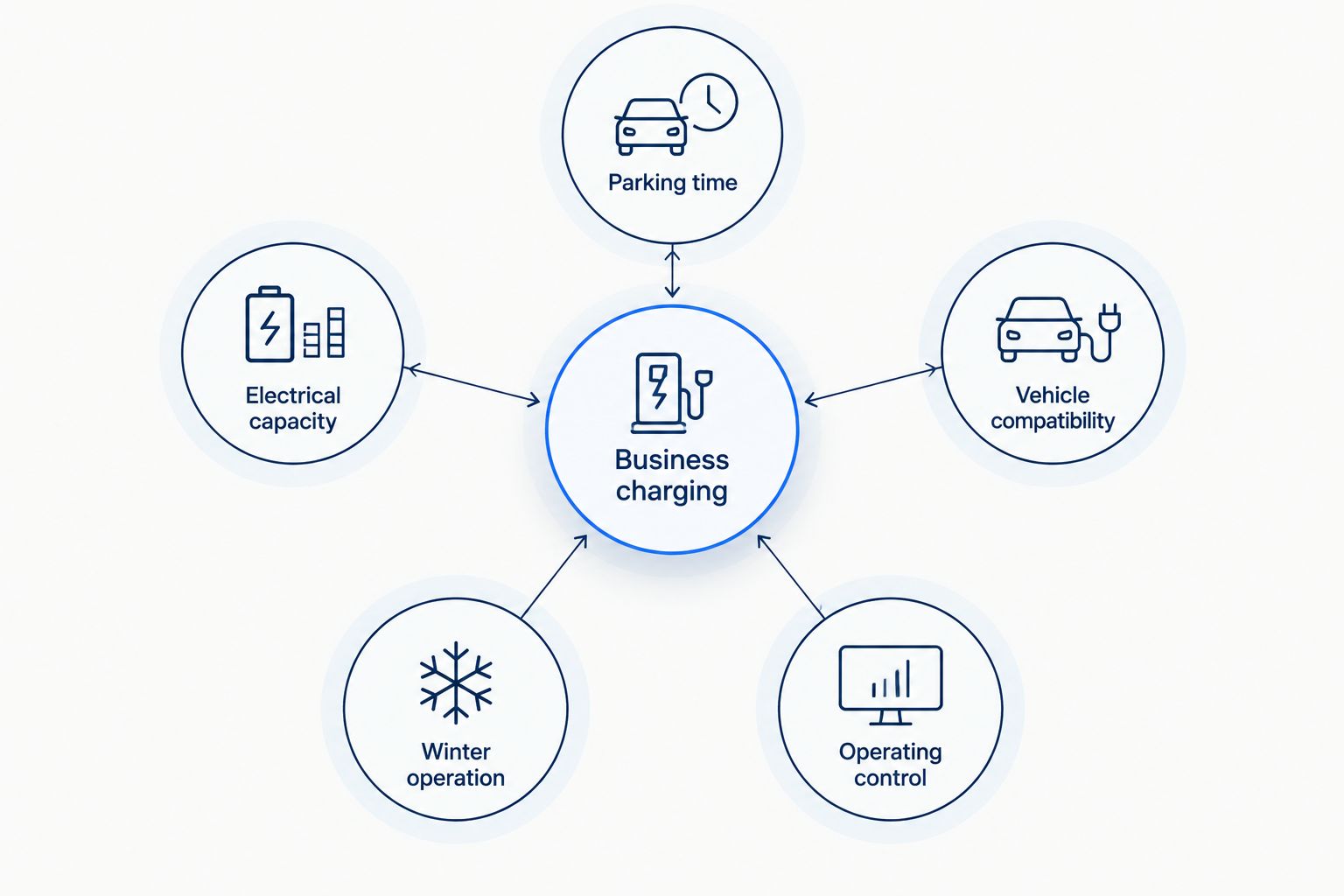
Use these five criteria to screen your 2026 shortlist. Ask for written documentation against each one before approving equipment.
- Parking time: Match charging output to how long vehicles actually remain connected. Employee shifts and overnight parking differ from roadside stops.
- Electrical capacity: Require a load calculation and a review of service, feeders, panels, and utility requirements. An open breaker slot is not a capacity assessment.
- Vehicle compatibility: Confirm the connector and charging capability of the vehicles you expect. Do not treat adapters as an automatic solution.
- Winter operation: Check the exact model's published operating temperature range, cable handling requirements, and outdoor installation instructions.
- Operating control: Decide who can charge, who handles faults, and whether you need billing, access control, or charging records.
A recognizable name does not settle these questions. Neither does a long feature list. The best equipment is equipment your site can support and your staff can operate.
Business EV charging options at a glance
These are purchasing configurations, not interchangeable products. Features such as access control and load management must be confirmed for the exact hardware and software combination.
| Rank and option | Best for | Standout capability to require | Key limitation |
|---|---|---|---|
| 1. Access-controlled Level 2 charging | Employee parking | Restricted use during long parking periods | Poor fit for drivers needing a short charging stop |
| 2. Networked Level 2 charging | Customer and visitor parking | Driver access, session records, and billing when needed | Requires ongoing administration and clear network terms |
| 3. Managed Level 2 fleet charging | Vehicles parked overnight | Charging schedules tied to departure needs and site capacity | Requires accurate fleet energy and scheduling information |
| 4. DC fast charging | Short roadside stops | Direct-current charging for compatible vehicles | Requires a larger electrical and utility planning effort |
1. Access-controlled Level 2: best for employee parking
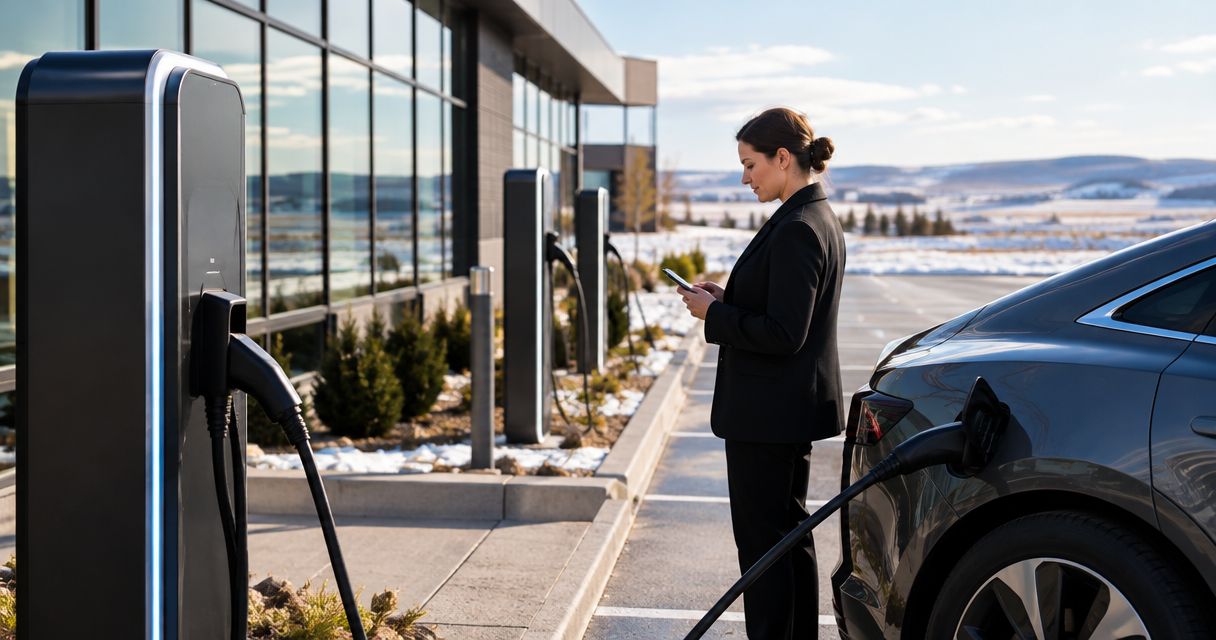
Access-controlled Level 2 charging suits workplaces where vehicles remain parked through a shift. Require equipment that limits use to authorized drivers if the spaces are intended for staff.
This is the default starting point for a 2026 workplace project. You do not need to design a roadside charging station to serve employees who park for hours.
Access-controlled Level 2 pros:
- Matches longer parking periods without making rapid turnover the goal.
- Lets you define who can use employee charging spaces.
- Keeps the project focused on workplace needs rather than public transactions.
Access-controlled Level 2 cons:
- Does not serve short-stop drivers as effectively as DC fast charging.
- Still requires a capacity review; slower charging is not permission to overload a service.
- Requires a parking policy when more employees want charging than spaces allow.
Specify whether staff need badges, an application, or another access method. Confirm what happens if the access system or internet connection fails. Those details belong in procurement documents, not a surprise after installation.
Best for: Employers with predictable parking periods and a defined employee user group.
Verdict: Buy for long-dwell employee parking after the site assessment.
2. Networked Level 2: best for customer and visitor parking
Networked Level 2 charging adds management functions to a charging installation. Depending on the selected system, those functions can include driver authorization, charging records, billing, and remote fault information.
Require each needed function in writing. “Networked” alone does not tell you whether a charger supports your parking rules or what works during an internet outage.
Networked Level 2 pros:
- Supports managed access for changing groups of drivers.
- Can provide charging records for property management.
- Supports billing where the selected system includes that function.
Networked Level 2 cons:
- Adds software administration and account ownership decisions.
- Makes connectivity and offline behavior part of equipment selection.
- Does not turn a long-dwell charger into a fast-stop charger.
A hotel, office property, or visitor lot needs a clear operating policy. Decide who answers driver questions, who handles blocked spaces, and who receives fault alerts. Check applicable accessibility requirements before finalizing stall positions and controls.
For a 2026 purchase, request the current service agreement and software terms alongside the equipment documentation. Confirm who controls the account if the property changes managers.
Best for: Businesses that need charging access or session management for visitors.
Verdict: Buy when visitor management justifies the added operating responsibility.
3. Managed Level 2 fleet charging: best for overnight vehicles
Managed Level 2 fleet charging coordinates charging around vehicle schedules and a defined site power limit. The selected system must support those controls; do not assume every connected charger does.
Start with the fleet's required energy and departure times. Then determine whether the available charging window and electrical capacity can meet that requirement.
Managed Level 2 fleet charging pros:
- Aligns charging with scheduled departures.
- Can distribute a defined power allowance across connected vehicles.
- Creates a planning framework for vehicles with different daily duties.
Managed Level 2 fleet charging cons:
- Cannot create electrical capacity or energy that the site lacks.
- Depends on accurate vehicle usage and charging-window information.
- Requires a plan for late arrivals, missed connections, and system faults.
Ask the designer to explain what happens when every vehicle plugs in together. Also ask which vehicles receive priority and how staff can recognize an incomplete charging session before departure.
Do not select fleet charging from charger output alone. A vehicle that returns late and leaves early presents a different requirement from one parked all night.
Best for: Businesses with predictable return-to-base operations and overnight parking.
Verdict: Buy only after the charging plan matches the fleet schedule.
4. DC fast charging: best for short roadside stops
DC fast charging supplies direct current to a compatible vehicle's battery system. It serves a different purpose from workplace charging: delivering energy during a shorter stop.
The vehicle limits what it can accept. Battery temperature, charge level, and vehicle capability affect charging behavior, so a charger's maximum rating is not a promised result for every driver.
DC fast charging pros:
- Fits locations where drivers cannot remain parked for hours.
- Supports higher charging power than typical Level 2 installations.
- Separates short-stop charging from employee or overnight parking needs.
DC fast charging cons:
- Requires substantial attention to electrical supply and utility coordination.
- Needs clear maintenance responsibility and fault response arrangements.
- Requires evidence that the site's expected drivers need short-stop charging.
For a 2026 roadside project, involve the utility before committing to equipment. Confirm the service arrangement, installation requirements, and applicable demand charges with the relevant providers.
Do not buy DC equipment simply because “faster” sounds better. A workplace with long parking periods needs a reason to take on this different installation and operating scope.
Best for: Sites serving compatible vehicles whose drivers need short charging stops.
Verdict: Hold until utility capacity and the operating plan are confirmed.
What your electrician needs to verify
An EV charger is an electrical load, not just a parking accessory. A licensed electrician needs to inspect the site and design the circuit around the equipment instructions and applicable code.
For common continuous-load branch-circuit sizing, a 32-amp charging load generally requires a 40-amp circuit, while a 48-amp charging load generally requires a 60-amp circuit. These examples reflect the usual 125% continuous-load sizing requirement; they are not instructions for selecting breakers or conductors yourself.
Listed energy-management systems and the applicable installation rules can affect the design. The electrician must determine what applies to your equipment and jurisdiction.
Keep the inspection focused on these points:
- Service capacity: Existing building loads, calculated charging load, and utility supply.
- Circuit route: Conduit paths, trenching, building penetrations, and equipment locations.
- Physical protection: Vehicle impact exposure, cable routing, and charger placement.
- Winter access: Plowed snow, snow-storage areas, drainage, and safe walking routes.
- Site restrictions: Required clearances, accessible routes, and any hazardous-location classification.
Oilfield properties need particular care. A standard outdoor rating does not establish suitability for a classified hazardous location. Have the location and equipment requirements reviewed before selecting a charger position.
Get a written scope before ordering
Your 2026 installation quote should identify what is included and what remains dependent on inspection or utility approval. Separate equipment selection from assumptions about the building's capacity.
Give Eagle Electric the property location, intended vehicles, parking duration, desired charging spaces, and any equipment documents you already have. Request a same-business-day response to the quote inquiry and a clear written quote. A quote response is not a promise of same-day installation.
The written scope should address permits and inspections, electrical work, equipment mounting, commissioning, and responsibility for network setup. Ask how changes will be documented if field conditions differ from the initial assessment.
You can request a quote with those project details. Do not remove panel covers or open energized equipment to gather information; a licensed electrician should handle that inspection.
How these options are ranked
The ranking starts with parking time, then considers capacity, compatibility, winter operation, and operating control. It is a site-use ranking, not a claim that one manufacturer wins every commercial installation.
Access-controlled Level 2 comes first because it directly serves the employee-parking use case. Networked Level 2, managed fleet charging, and DC fast charging follow distinct operating needs. None replaces an on-site electrical assessment.
Which business EV charger should you choose?
For employee parking, start with access-controlled Level 2 charging. Add visitor management when you need it. Specify fleet management when departure schedules and shared capacity require it. Choose DC fast charging only when short stops justify the separate electrical and operating plan.
The best EV charger brands for businesses are the ones whose exact equipment meets the written requirements. For a 2026 North Dakota project, reject equipment that lacks documented winter suitability, connector compatibility, or a workable service plan.
FAQ
What's the best EV charger for a North Dakota business?
Access-controlled Level 2 charging is the default recommendation for employee parking with long dwell times. Visitor lots, overnight fleets, and short-stop locations need different controls or charging configurations. Have a licensed electrician assess capacity before selecting equipment.
Should a business choose Level 2 or DC fast charging?
Choose Level 2 for longer parking periods and consider DC fast charging for short stops. DC fast charging requires a separate review of electrical supply, utility requirements, and operating responsibilities.
Can a business install an EV charger without upgrading its panel?
A panel upgrade is not automatic; the decision requires a load calculation and an on-site assessment. Spare breaker spaces alone do not establish capacity. A suitable energy-management design can be considered where the equipment and applicable rules permit it.
Do commercial EV chargers work during North Dakota winters?
Select equipment with a published operating temperature range suitable for the installation site. Outdoor suitability also requires attention to cable handling, drainage, snow removal, and the manufacturer's installation instructions. Do not assume every outdoor charger has the same cold-weather limits.
Does a business EV charger need internet access?
Internet requirements depend on the selected charger and management functions. Confirm connectivity needs and offline behavior for access control, billing, records, and fault reporting before purchase.
Can one charging connector serve every business vehicle?
Do not assume one connector serves every vehicle. Confirm each vehicle's charging inlet, supported charging method, and any manufacturer-approved adapter requirements before specifying equipment.
How do I get an EV charging installation quote?
Provide the property location, intended vehicles, parking duration, desired charging spaces, and available equipment documentation. Eagle Electric provides licensed commercial electrical contracting across the Bakken region. Request a clear written scope and distinguish the quote response from the installation schedule.
One last thing
Walk the proposed charging area with whoever plows your lot. A location that looks clear in summer can become snow storage in winter. Set the charger, cable reach, protective posts, and accessible route around the parking lot's actual use—not just the shortest conduit run.