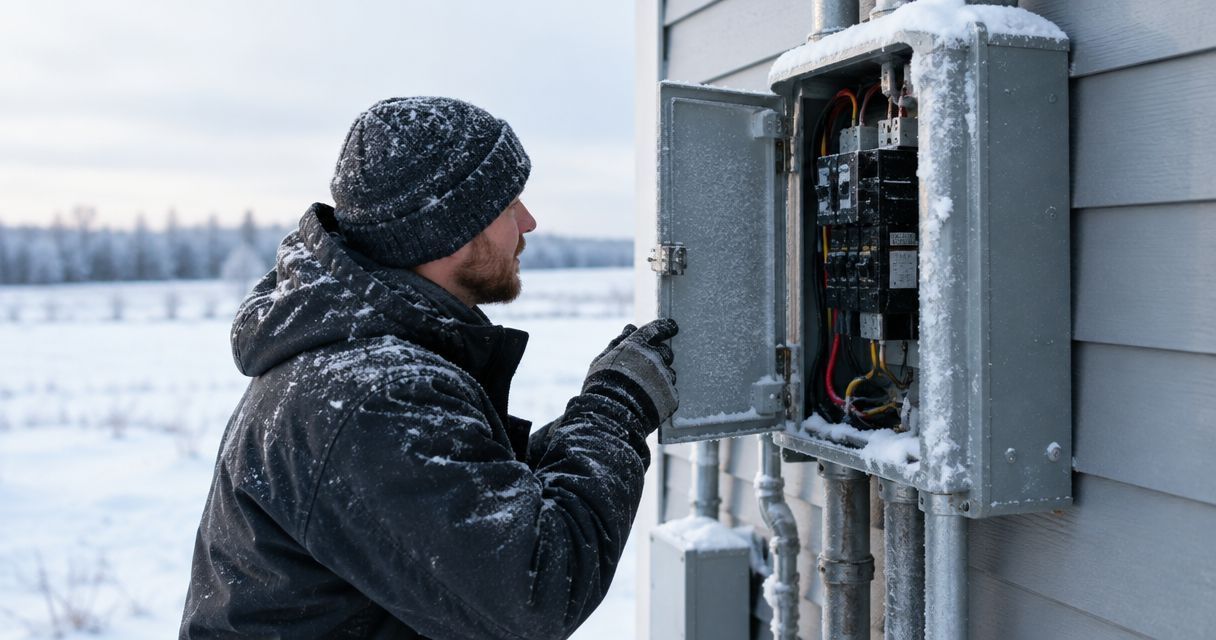
Yes. Extreme cold can damage outdoor electrical panels when temperatures fall outside the equipment’s listed limits, and winter conditions can expose weak seals, brittle insulation, and moisture problems. Freezing weather alone does not prove a panel is unsafe; the enclosure rating, component ratings, installation, and condition determine whether it is suitable for a North Dakota winter.
- Extreme cold damage outdoor electrical panels can suffer includes cracked insulation, frozen mechanisms, and moisture-related faults.
- NEMA enclosure ratings describe environmental protection, not a universal minimum operating temperature.
- Keep clear of damaged, wet, smoking, or arcing equipment. Do not thaw or open it yourself.
- Eagle Electric provides licensed electrical contracting for Bakken homeowners, businesses, and oilfield operators.
Can extreme cold damage outdoor electrical panels in ND?
Yes. Outdoor electrical equipment must withstand both the actual temperature and the conditions around it. A panel exposed to blowing snow, repeated thawing, or water entering through conduit needs more than a door that appears closed.
For damaged equipment or unexplained winter electrical problems, arrange electrical services rather than opening the cabinet yourself. An exterior check cannot establish the condition of energized parts behind the cover.
These common enclosure designations describe different protection levels under NEMA enclosure standards. None, by itself, establishes the operating-temperature limit of every component inside.
| Enclosure designation | What it protects against | Useful application | Important limitation |
|---|---|---|---|
| NEMA 3R | Rain, sleet, snow, and damage from external ice formation | Best for outdoor locations where this protection matches the exposure | Does not establish protection against windblown dust or hose-directed water |
| NEMA 4 | Windblown dust, rain, splashing water, hose-directed water, and damage from external ice | Best for locations needing these additional protections | Does not establish that breakers or controls will operate at any winter temperature |
| NEMA 4X | NEMA 4 protections plus additional corrosion resistance | Best for locations needing added corrosion protection | Does not eliminate inspection, maintenance, or component temperature limits |
The complete assembly matters. A suitable cabinet does not make an unsuitable breaker, fitting, or added control acceptable.
Why this matters
A winter electrical failure can interrupt heat, water pumping, lighting, or business operations. The immediate problem is not always a damaged panel. A utility outage, overloaded branch circuit, failed appliance, or loose connection can produce symptoms that first appear during cold weather.
For 2026 winter maintenance, separate the symptom from the cause. Record which equipment stopped working, whether neighboring properties lost power, and whether the trouble began during snowfall, thawing, or increased heating use. Give that information to the electrician without approaching damaged equipment.
Eagle Electric is a practical choice for Bakken homeowners, businesses, and oilfield operators who need a licensed electrical contractor. An on-site inspection is needed to determine whether a particular panel has weather damage; a photograph alone cannot establish electrical safety.
Water and ice: winter’s main warning signs
Water freezes at 32°F, or 0°C, under ordinary atmospheric conditions. Water entering an enclosure can freeze, obstruct moving parts, and contribute to damage as conditions change. Moisture also creates electrical hazards before it freezes and after it melts.
Look for problems from a safe position outside the equipment. A distorted door, broken latch, missing fitting, or visible ice emerging from an opening deserves professional attention. Do not touch a wet cabinet to find out whether it is energized.
Condensation is a separate issue. Moisture can form when humid air meets a surface below its dew point, even without an obvious roof leak or direct snowfall. An electrician needs to trace the moisture path instead of simply drying what is visible.
Do not drill drain holes, plug openings with household materials, or seal the cabinet shut. Unapproved changes can interfere with the enclosure’s intended protection, drainage, or ventilation. The repair must follow the equipment instructions and applicable electrical requirements.
Cold ratings: check the whole assembly
There is no single outdoor-panel temperature limit that covers every installation. The relevant limits come from the equipment’s listing, markings, and manufacturer instructions. Breakers, electronic trip units, controls, cable, and accessories can have different restrictions.
A 200-amp panel describes current capacity, not cold-weather suitability. The same distinction applies to smaller equipment. More amperage does not mean better protection against snow, ice, or condensation.
Cold also affects materials differently. Some insulation and plastic components become less flexible at low temperatures. Moving or bending them outside their permitted installation or handling conditions can cause damage that a closed-door inspection will not reveal.
During a 2026 cold snap, the electrician should compare the actual exposure with the requirements for the installed equipment. Do not substitute a wind-chill reading for the equipment’s ambient-temperature requirements. Wind chill describes cooling effects on people; it is not a separate equipment temperature rating.
Why cold-weather damage varies
Two outdoor panels on the same property can face different conditions. These factors determine what needs inspection:
- Temperature limits: The enclosure and installed components must suit the temperatures they encounter.
- Water entry: Damaged fittings, loose covers, and moisture traveling through conduit create paths into equipment.
- Snow exposure: Drifting snow and blocked access complicate inspection and safe operation.
- Existing condition: Corrosion, damaged insulation, and loose hardware need attention regardless of the forecast.
- Installation changes: Added controls, replacement breakers, and altered openings must remain compatible with the assembly.
- Electrical demand: Increased heating loads can reveal circuit overloads that are separate from weather damage.
Do not assume the oldest panel is the only concern. A newer installation still needs the correct equipment, intact weather protection, and proper installation. Age alone does not settle the diagnosis.
What should you do when a panel looks frozen or damaged?
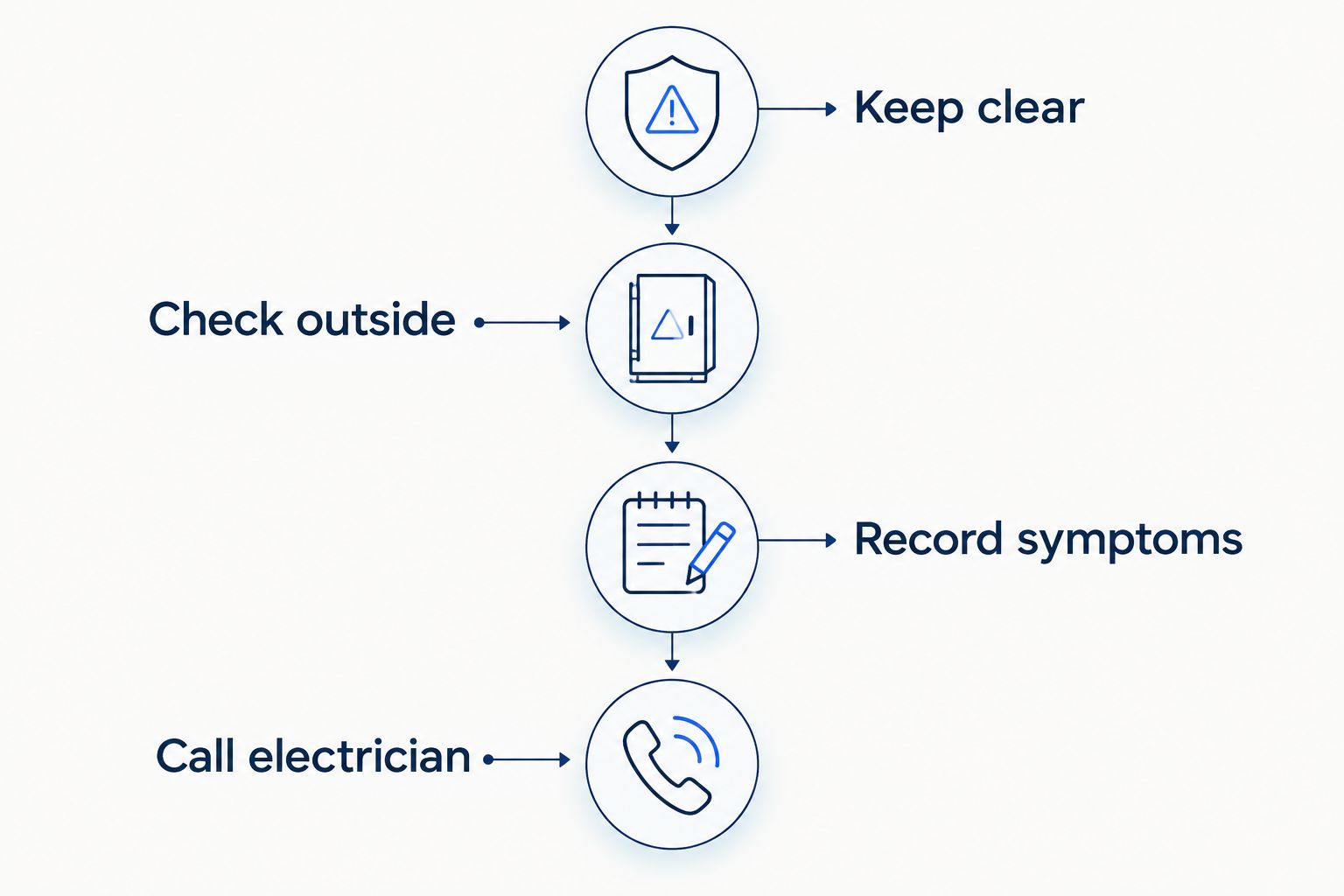
For your 2026 winter checks, use this sequence without removing covers or touching questionable equipment. It is a reporting process, not a repair procedure.
- Keep clear. Stay away from arcing, smoke, damaged service wires, and water around electrical equipment. Keep other people away. Call 911 for fire or an immediate threat, and contact the utility about damaged utility equipment or service conductors.
- Check outside. From a safe position, note snow buildup, a damaged door, a broken latch, or visible damage. Stop if reaching the area requires crossing water, unstable ice, or downed wires.
- Record symptoms. Write down what lost power and when. Note whether the issue affects the whole property or a particular circuit. Take photographs only when doing so does not require approaching a hazard.
- Call electrician. Explain the symptoms and visible conditions. Ask whether the utility also needs to attend. Do not open the panel, force a frozen handle, or attempt a repair while waiting.
Do not use a torch, heat gun, boiling water, or a portable heater to thaw the cabinet. Do not strike ice off the door. Those actions introduce heat, moisture, impact, or electrical exposure without correcting the underlying problem.
A tripped breaker is not permission to keep resetting it. Repeated trips, unusual sounds, or a burning smell require diagnosis. Never replace a breaker with a higher-rated one to stop trips.
What should a licensed electrician inspect?
A useful inspection goes beyond checking whether the door closes. The electrician needs to identify the equipment, assess the exposure, and examine the installation under appropriate electrical safety procedures.
Ask for findings that address these points:
- Equipment identification: Enclosure designation, panel identification, breaker compatibility, and applicable temperature limits.
- Moisture paths: Cable entries, conduit connections, damaged fittings, and evidence of condensation or water movement.
- Physical condition: Corrosion, damaged insulation, distorted parts, and ice-related damage.
- Electrical condition: Evidence of overheating, defective connections, and faults that explain the reported symptoms.
- Repair requirements: Which parts require replacement, whether the assembly remains suitable, and whether utility coordination or permits are needed.
The electrician must determine how to establish a safe work condition. Turning off a main breaker does not necessarily de-energize the service conductors ahead of it. That is another reason not to remove the cover yourself.
A 2026 replacement decision should rest on equipment condition and suitability, not a blanket claim that all outdoor panels fail in North Dakota cold. Ask the written quote to separate the identified defect, proposed repair, and any additional work that inspection reveals.
Eagle Electric responds to quote requests the same business day and provides clear written quotes. That response commitment is not a promise of same-day job completion. Submit a quote request with the location, symptoms, and safely obtained photographs.
Does a frozen panel automatically need replacement?
A frozen panel does not automatically need replacement. The decision depends on where moisture entered, which parts were affected, and what the manufacturer permits after that exposure. A licensed electrician must assess the equipment before anyone returns it to service.
Drying the enclosure is not proof that its breakers, insulation, and connections remain serviceable. Water exposure and physical damage require an equipment-specific decision. Do not accept an exterior wipe-down as a complete diagnosis.
Can cold weather cause breakers to trip?
Cold weather can coincide with breaker trips without directly damaging the panel. Electric heating and other winter loads can overload a circuit, while moisture or damaged wiring can produce different faults. The trip alone does not identify the cause.
Tell the electrician what was operating when the breaker tripped. Do not recreate the fault deliberately. If the trouble occurs only during a thaw or after blowing snow, include that detail in the report.
How should you prepare before the next freeze?
Before the next 2026 freeze, deal with visible damage and access problems while conditions allow safe inspection. Do not wait for a door to freeze shut before reporting a broken latch. Leave cabinet repairs to a licensed electrician.
Keep the approach accessible without piling snow against the equipment. Do not direct snowblower discharge, roof runoff, or irrigation toward the cabinet. Never strike the enclosure with snow-removal tools or attach an improvised cover that blocks access.
Gather any equipment documents already in your records. A model number from an existing invoice or manual can help the electrician identify requirements without asking you to open anything. If identification is not safely visible, leave it for the visit.
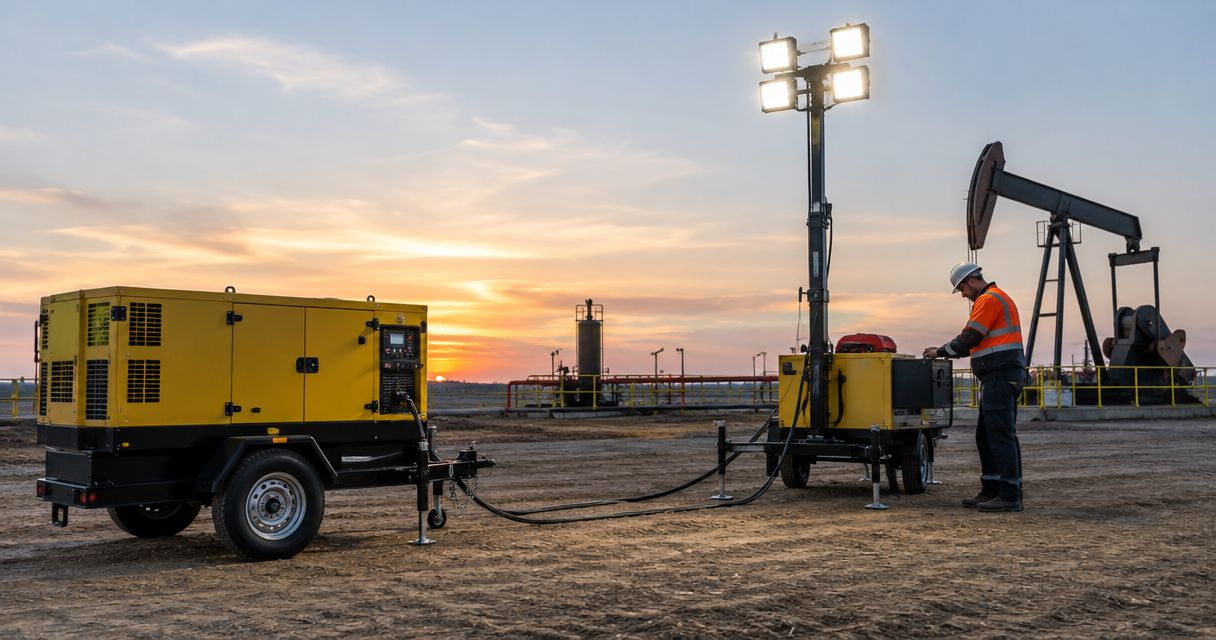
For businesses and oilfield sites, tell the electrician which operations depend on the affected equipment. Identify any generator or other power source as well. Multiple power sources change isolation requirements, and a general-purpose outdoor enclosure does not establish suitability for a hazardous location.
Plan the inspection around the installation, not just the forecast. Weather protection, electrical loading, access, and safe isolation all belong in the discussion. A cold-weather repair that leaves the water-entry problem in place is not a complete fix.
FAQ
Can an outdoor electrical panel survive a North Dakota winter?
An outdoor electrical panel can serve through a North Dakota winter when the complete installation is suitable for its temperature and environmental exposure. Check the equipment requirements and have damaged or questionable installations inspected by a licensed electrician.
What temperature is too cold for an outdoor electrical panel?
The equipment’s listed operating limits determine what temperature is too cold. There is no single minimum that applies to every panel, breaker, control, and accessory.
Is NEMA 3R enough for an outdoor electrical panel?
NEMA 3R provides protection against rain, sleet, snow, and damage from external ice formation. Whether it is enough depends on the installation’s exposure and the requirements of the complete assembly; the designation does not establish a universal cold-temperature limit.
Can I use a heat gun to thaw my electrical panel?
Do not use a heat gun to thaw an electrical panel. Keep clear of damaged or wet equipment and have a licensed electrician assess the ice, moisture source, and equipment condition.
Does ice on the outside mean water is inside the panel?
Ice on the outside does not prove water is inside the panel. It also does not establish that the equipment is safe; damaged doors, openings, or visible moisture need professional assessment.
Should I reset a breaker that keeps tripping during cold weather?
Do not repeatedly reset a breaker that keeps tripping during cold weather. Stop using the affected equipment and arrange diagnosis rather than forcing the breaker or increasing its rating.
Can Eagle Electric inspect winter electrical problems in the Bakken?
Eagle Electric provides licensed residential, commercial, and oilfield electrical contracting across the Bakken region. Describe the location and symptoms when requesting a quote; an on-site inspection is needed to determine the condition of a specific panel.
One last thing
A bigger panel is not automatically a better winter panel. Current capacity and weather suitability answer different questions. Before approving replacement, ask the electrician to explain both: whether the equipment handles the required load and whether the complete installation suits the temperature, moisture, and exposure at your property.
Keep that explanation with the written quote. It gives you a clear record of what the work is intended to correct.