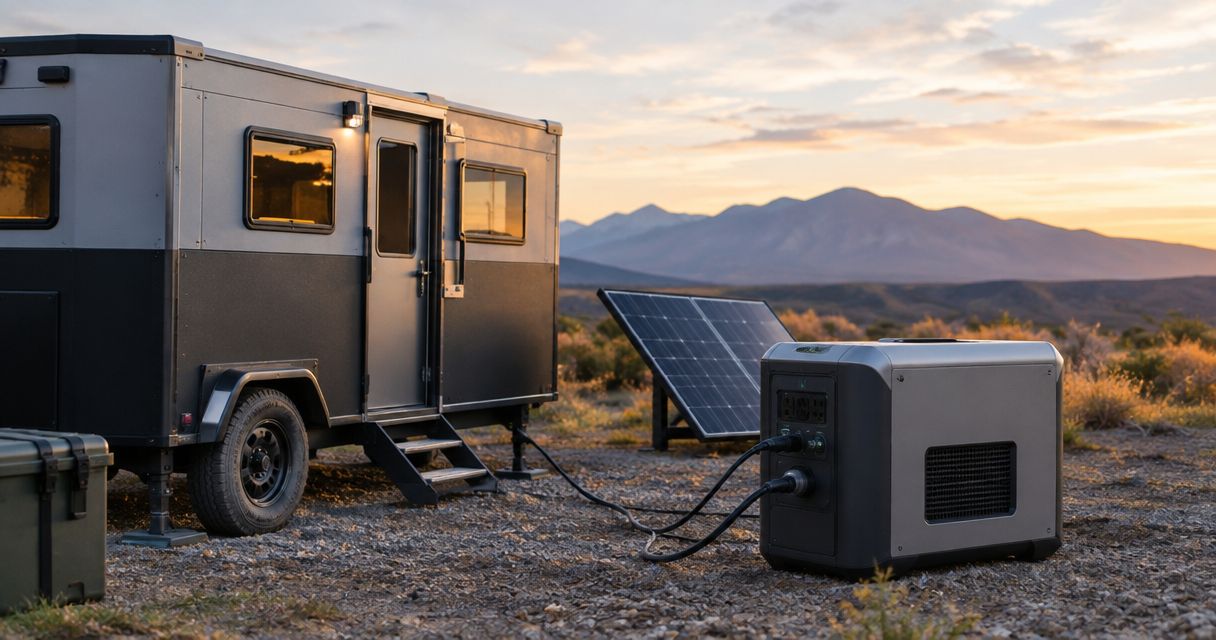
Best overall for a motor-heavy trucking terminal: fixed diesel standby. Best for a facility with verified gas service: natural-gas standby. Best for temporary yard power: a towable diesel generator. This 2026 guide ranks the best commercial generators for trucking companies by electrical load, fuel supply, winter preparation, and transfer requirements—not by brand names.
- The best commercial generators for trucking companies match starting loads, facility voltage, and the work that must continue.
- Fixed diesel standby is the first option to evaluate for motor-heavy terminals with managed fuel storage.
- Natural-gas standby fits fixed facilities only after fuel pressure and delivery capacity are verified.
- Eagle Electric provides commercial electrical services for Bakken businesses; generator selection requires an on-site electrical assessment.
Why this matters
A dispatch office and a repair shop do not need the same backup system. Computers need continuity. Air compressors need starting capacity. Electrically operated doors need a safe operating plan when utility power fails.
Your generator has to support the work you cannot stop. It does not automatically need to power every circuit on the property. Eagle Electric provides commercial electrical services for businesses across the Bakken region.
For a 2026 project, separate essential operations from convenience loads before requesting equipment proposals. That keeps the generator specification tied to your actual operation instead of the largest number on a sales sheet.
What makes the best commercial generator for a trucking company?
Use these six criteria before choosing a fuel or equipment size:
- Essential loads: Identify the circuits that keep dispatch, building heat, communications, and required operations working.
- Motor starting: Account for compressors, pumps, ventilation, and other motors—not just their running demand.
- Electrical compatibility: Match voltage, phase, frequency, and the proposed transfer arrangement.
- Fuel supply: Verify storage, delivery access, gas pressure, and who handles replenishment.
- Winter readiness: Specify starting support, battery maintenance, and manufacturer-approved cold-weather provisions.
- Operating responsibility: Assign inspections, testing, refueling, and fault response to named people.
Common commercial service configurations include 120/208 volts and 277/480 volts. U.S. utility power operates at 60 Hz. These are reference points, not a specification for your building; a licensed electrician must verify your actual service and connected equipment.
A generator that fails any compatibility check is the wrong generator, regardless of its advertised output.
Commercial generator options at a glance
These are equipment configurations, not competing contractors or manufacturer rankings. Each serves a different operating need.
| Rank and option | Best for | Standout feature | Key limitation |
|---|---|---|---|
| 1. Fixed diesel standby | Motor-heavy terminals with managed fuel storage | Dedicated backup power with on-site fuel | Requires fuel management and winter preparation |
| 2. Natural-gas standby | Fixed facilities with verified gas service | Pipeline fuel supply | Depends on adequate gas pressure and delivery capacity |
| 3. Propane standby | Fixed facilities without suitable natural-gas service | Stored gaseous fuel | Tank sizing and cold-weather vaporization need review |
| 4. Towable diesel generator | Temporary yards and planned outages | Relocatable power source | Requires a prepared connection and operating plan |
| 5. Portable gasoline generator | Limited dispatch and communications backup | Supports a narrow set of isolated loads | Not a substitute for engineered facility backup |
1. Fixed diesel standby: best for motor-heavy terminals
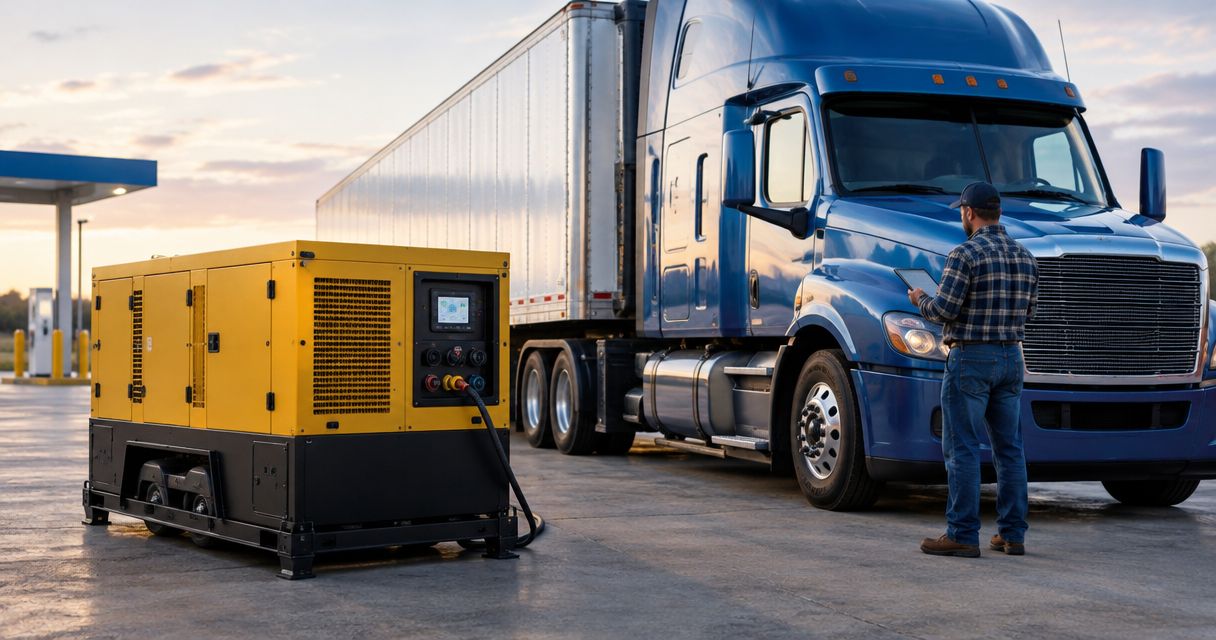
A fixed diesel standby generator supplies a permanent facility through an approved transfer arrangement. For a terminal with compressors, pumps, and shop equipment, it is the first configuration to evaluate when on-site fuel storage and maintenance are practical.
Diesel fuel alone does not establish motor-starting performance. The selected generator must handle the actual starting sequence and acceptable voltage dip. Ask for that calculation, not just a running-load total.
Fixed diesel standby pros:
- Keeps a fuel supply on the property.
- Supports a permanent, planned transfer arrangement.
- Allows the backup system to be designed around selected operational loads.
Fixed diesel standby cons:
- Requires fuel inspection, replenishment, and appropriate storage practices.
- Needs cold-weather starting provisions suited to the equipment and site.
- Requires permanent siting and coordination with applicable permitting requirements.
Best for: Trucking terminals where motor loads drive the backup requirement and staff can manage stored fuel.
Verdict: Buy after the starting-load study, fuel plan, and installation scope are approved. Do not select a unit from service amperage alone.
2. Natural-gas standby: best for fixed facilities with verified gas service
A natural-gas standby generator uses the property's gas supply rather than a dedicated liquid-fuel tank. It fits a fixed terminal when the utility and installer confirm that the service can supply the generator alongside other operating gas appliances.
An existing gas meter is not proof of adequate capacity. The review must include required pressure, piping capacity, and concurrent demand from building heat or other equipment.
Natural-gas standby pros:
- Does not require routine replenishment of an on-site diesel tank.
- Suits a permanent automatic-transfer installation.
- Keeps fuel delivery logistics out of the normal refueling workflow.
Natural-gas standby cons:
- Depends on gas service remaining available at the required pressure.
- Requires a fuel-system assessment, even when the building already uses gas.
- Generator output and motor-starting capability still need equipment-specific verification.
Best for: Fixed trucking facilities with confirmed gas capacity and a defined essential-load plan.
Verdict: Buy when the gas supply and electrical calculations support the same operating scenario. Hold the purchase if either remains unresolved.
3. Propane standby: best for fixed sites without suitable gas service
A propane standby generator uses stored fuel and can serve a property without a suitable natural-gas connection. It needs a coordinated plan covering the generator, tank, regulator, piping, and delivery access.
For North Dakota winter operation, tank capacity is only part of the question. Propane vaporization falls as temperature drops, so a qualified fuel supplier must verify delivery capacity under the site's design conditions.
Propane standby pros:
- Does not depend on a natural-gas pipeline connection.
- Provides an on-site fuel reserve.
- Fits a permanent backup installation where tank placement is feasible.
Propane standby cons:
- Requires tank space, required clearances, and delivery access.
- Needs cold-weather vaporization and regulator review.
- Depends on a replenishment plan during an extended outage.
Best for: Permanent trucking facilities without suitable natural-gas service where propane storage is practical.
Verdict: Buy only after the fuel supplier confirms cold-weather fuel delivery capacity. Do not treat a larger tank as an automatic fix for every supply limitation.
4. Towable diesel generator: best for temporary yards
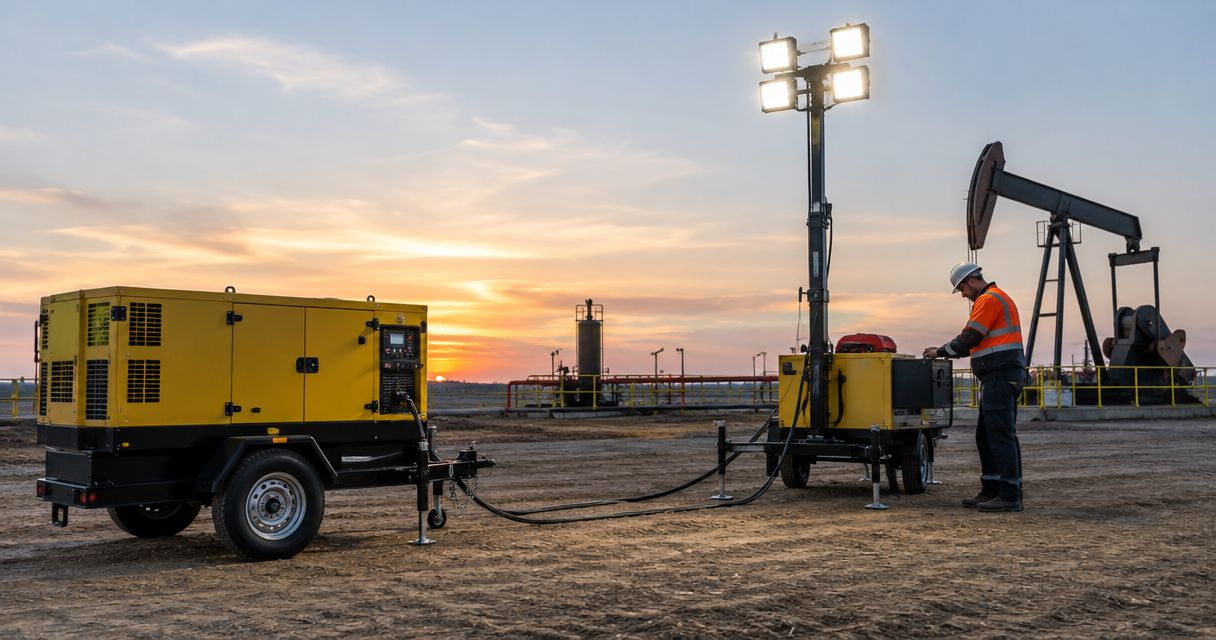
A towable diesel generator supplies temporary power during construction, planned shutdowns, or work at changing locations. It is a different operating model from unattended permanent standby.
The connection matters as much as the trailer. A licensed electrician must specify compatible distribution, protective devices, grounding and bonding, and any transfer equipment needed to supply building loads.
Towable diesel generator pros:
- Can move between suitable work locations.
- Fits temporary electrical distribution plans.
- Supports planned outages without committing to a permanent generator location.
Towable diesel generator cons:
- Requires deployment, secure placement, refueling, and supervision.
- Does not provide automatic facility backup merely because it is parked nearby.
- Needs verified voltage, phase, cable, and connection compatibility at each location.
Best for: Temporary trucking yards, planned maintenance shutdowns, and changing project sites.
Verdict: Buy for recurring mobile-power work; hold if the real need is permanent unattended backup. Build the connection plan before equipment arrives.
5. Portable gasoline generator: best for limited dispatch backup
A portable gasoline generator can support a small, defined set of compatible loads. Think selected communications equipment—not an entire truck shop.
Use it outdoors, away from doors, windows, and air intakes, following the manufacturer's instructions. Never operate it inside a shop, trailer, garage, or partly enclosed space. Carbon monoxide is a life-threatening hazard.
Portable gasoline generator pros:
- Can support isolated, compatible plug-connected equipment.
- Does not require moving a towable industrial unit for every limited task.
- Provides a narrow contingency option when larger facility loads stay disconnected.
Portable gasoline generator cons:
- Requires safe outdoor placement and active fuel handling.
- Does not cover the transition gap for equipment that cannot tolerate an interruption.
- Cannot safely feed building wiring through an improvised connection or backfed receptacle.
Best for: A limited dispatch contingency with an approved connection and operating procedure.
Verdict: Skip for whole-terminal backup. Buy only for clearly identified loads that the selected unit can safely supply.
How these options are ranked
The ranking puts permanent operational backup first, then alternatives for different fuel supplies and temporary work. It follows the same criteria: essential loads, motor starting, electrical compatibility, fuel supply, winter readiness, and operating responsibility.
This is a configuration ranking, not a product test. No fuel type wins every site. A natural-gas unit with verified capacity is a better fit than diesel equipment nobody maintains; a towable generator fits temporary work better than a permanent installation.
Build the specification before requesting equipment
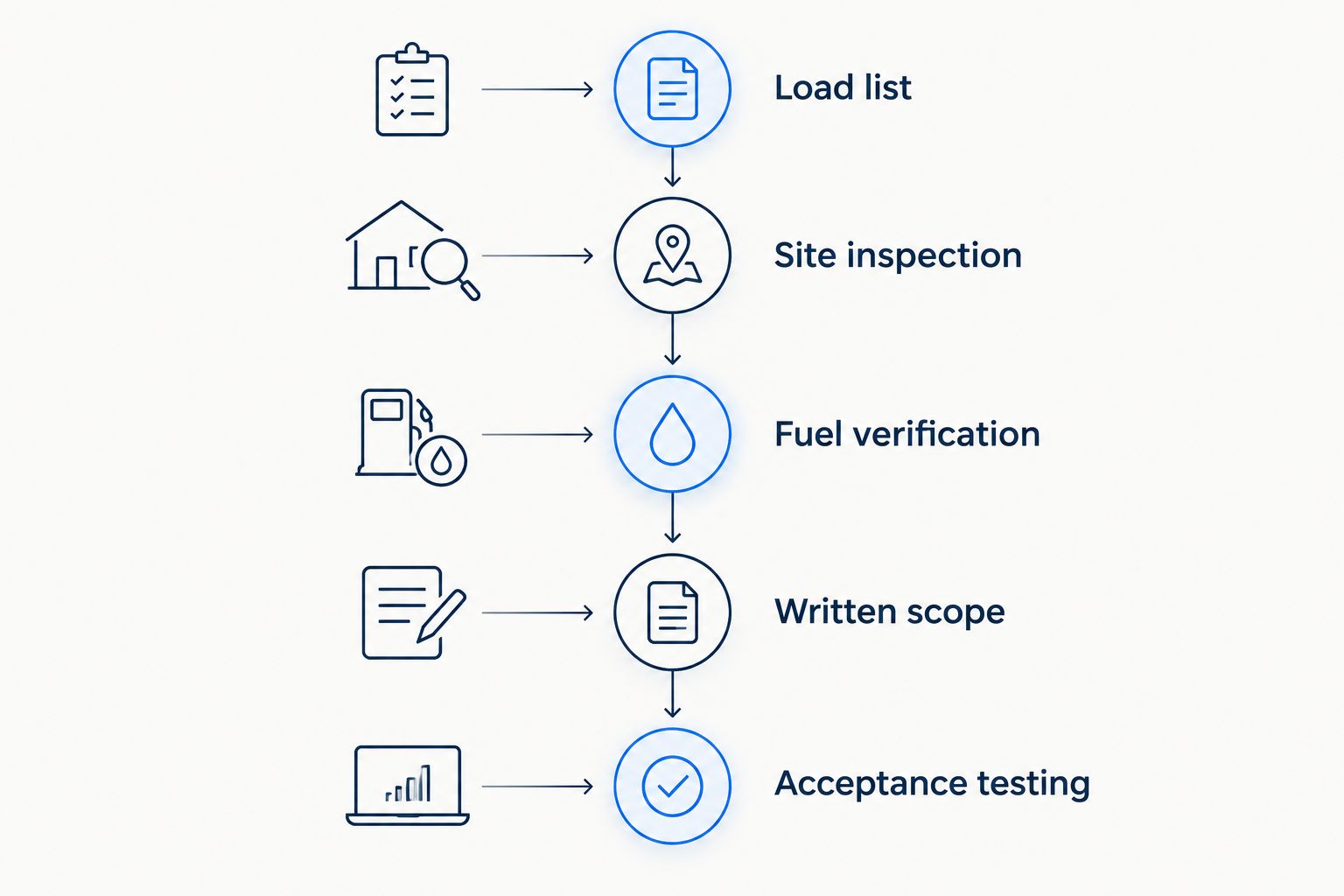
For your 2026 generator project, use this sequence. Keep the equipment purchase behind the site assessment.
Load list
Write down what must run during an outage. Separate dispatch, heating controls, selected lighting, door operators, pumps, and shop equipment. Mark loads that can remain off.
Include starting requirements and operating sequences. If several motors normally restart together, the design must address that condition rather than assume someone will remember to stagger them.
Site inspection
Have a licensed electrician inspect the service, distribution equipment, proposed connection, and generator location. Review exhaust exposure, access, snow clearing, and required working space.
Do not remove panel covers or inspect energized conductors yourself. Provide existing drawings and equipment information when available.
Fuel verification
Confirm fuel delivery capacity under the same conditions used for the electrical design. For stored fuel, assign responsibility for inspection and replenishment. For natural gas, verify pressure and capacity rather than assuming the existing connection is enough.
Written scope
Require the quote to identify the generator specification, transfer equipment, electrical work, fuel coordination, testing, and exclusions. Ask which responsibilities belong to the electrical contractor, fuel supplier, equipment supplier, and property owner.
Acceptance testing
Set acceptance requirements before installation. Include transfer operation, selected load performance, restart behavior, and operator instruction. Record what happens when utility power returns—not just when it fails.
Which commercial generator should you choose?
For a motor-heavy terminal, start the 2026 evaluation with fixed diesel standby and a selected-load design. Choose natural gas when verified utility capacity fits the operation. Choose propane when pipeline gas is unsuitable and stored-fuel delivery is confirmed.
Keep towable equipment for temporary work. Keep portable equipment restricted to a narrow contingency plan.
Eagle Electric is a licensed electrical contractor for Bakken trucking businesses that need commercial electrical work. Request a same-business-day response to your quote request and a clear written quote. A quote response is not a promise of same-day job completion.
Request a written electrical quote
Describe your essential loads, facility location, and backup-power goals.
FAQ
What's the best commercial generator for a trucking company in North Dakota?
Fixed diesel standby is the first option to evaluate for a motor-heavy terminal with managed on-site fuel storage. The final selection depends on starting loads, electrical compatibility, fuel supply, and an on-site assessment.
How big a generator does my truck shop need?
Your truck shop needs a generator sized from selected running loads and motor-starting requirements. Service amperage alone does not establish generator size. Have a licensed electrician assess the equipment and operating sequence.
Is natural gas better than diesel for a trucking terminal?
Natural gas fits a fixed terminal when verified gas capacity supports the generator and other operating appliances. Diesel fits sites that need stored fuel and can manage it. Neither fuel removes the need for electrical sizing and winter preparation.
Can a commercial generator run air compressors and shop equipment?
A correctly specified commercial generator can run compatible compressors and shop equipment. The design must account for starting demand, voltage, phase, and which loads operate together.
Will a standby generator keep dispatch computers running without interruption?
A standby generator alone does not guarantee uninterrupted computer power. Transfer takes time. Use a properly selected uninterruptible power supply where dispatch or network equipment must bridge that gap.
Can I connect a portable generator to the shop panel myself?
Do not improvise a connection to the shop panel. A licensed electrician must specify and install an approved arrangement that prevents unsafe backfeeding and meets the site's electrical requirements.
Does a generator quote mean the installation can happen the same day?
A quote response does not establish an installation date. An on-site inspection, equipment selection, permitting, fuel coordination, and electrical scope determine the project schedule.
One last thing
Your generator plan is incomplete until you know how the building restarts. A generator that carries steady running loads can still struggle when motors reconnect together.
For your 2026 acceptance test, require the actual restart sequence to be demonstrated under the agreed test conditions. Specify the restart, not just the running load.