
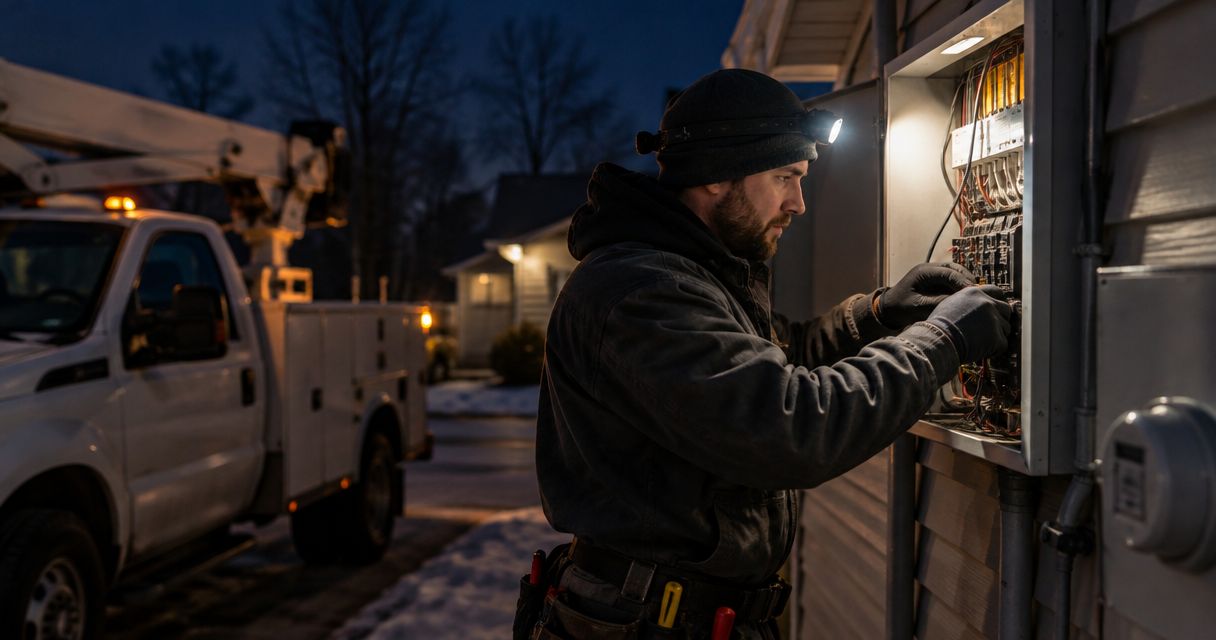
After-hours emergency electrical service in North Dakota needs a job-specific quote, not an unverified statewide average. For a 2026 callout, ask what dispatch, troubleshooting, travel, repair labor, and materials include before authorizing work. Making equipment safe and completing a permanent repair are different scopes; get both explained in writing.
- North Dakota after-hours emergency electrical service cost needs a written, job-specific quote—not an unsupported average.
- Eagle Electric serves Bakken homeowners, businesses, and oilfield operators needing licensed electrical contracting.
- Ask whether dispatch, travel, troubleshooting, and permanent repairs are included before approving work.
- Smoke, active arcing, or an electrical fire calls for emergency action, not price shopping.
How much does after-hours emergency electrical service cost?
The useful number is the written charge for your specific call—not an advertised figure with an undefined scope. A dead receptacle, damaged service equipment, and an oilfield shutdown need different work. An electrician needs the symptoms, location, and equipment details before defining that work.
Eagle Electric is a licensed electrical contractor based in Watford City, serving residential, commercial, and oilfield customers across the Bakken. Ask for a clear written quote and confirm after-hours dispatch directly. A response to a quote request is not confirmation that a crew is on the way.
Use this breakdown to check a 2026 emergency quote. These are questions to settle, not a claim that every contractor bills each item separately.
| Quote component | What you need answered | What remains unclear without it |
|---|---|---|
| Dispatch or callout | Does sending an electrician carry a separate charge? | What you authorize before diagnosis |
| Travel | Is travel included, and from where? | Whether location changes the total |
| Troubleshooting | What diagnostic work does the initial authorization cover? | Where fault-finding stops |
| Repair labor | Is repair included or separately approved? | Whether diagnosis also buys a repair |
| Materials | Which parts are included in the written scope? | What replacements require approval |
| Follow-up work | Does the quote cover a permanent repair and return visit? | What remains after the immediate hazard is addressed |
Why this matters
An emergency visit has two separate questions: Is the equipment safe, and what will restore normal service? Those answers do not always arrive together. A damaged circuit can require isolation before the electrician can define the full repair.
You need that distinction before approving work. Otherwise, a quote for troubleshooting can be mistaken for a promise to restore every affected load.
Do not judge an emergency quote by the headline alone. Judge the authorized scope, exclusions, and approval process. Clear boundaries matter most when the fault is still unknown.
What should happen before you approve an emergency visit?
Give the electrician useful information without opening equipment or approaching a hazard. You are reporting symptoms, not diagnosing the fault.
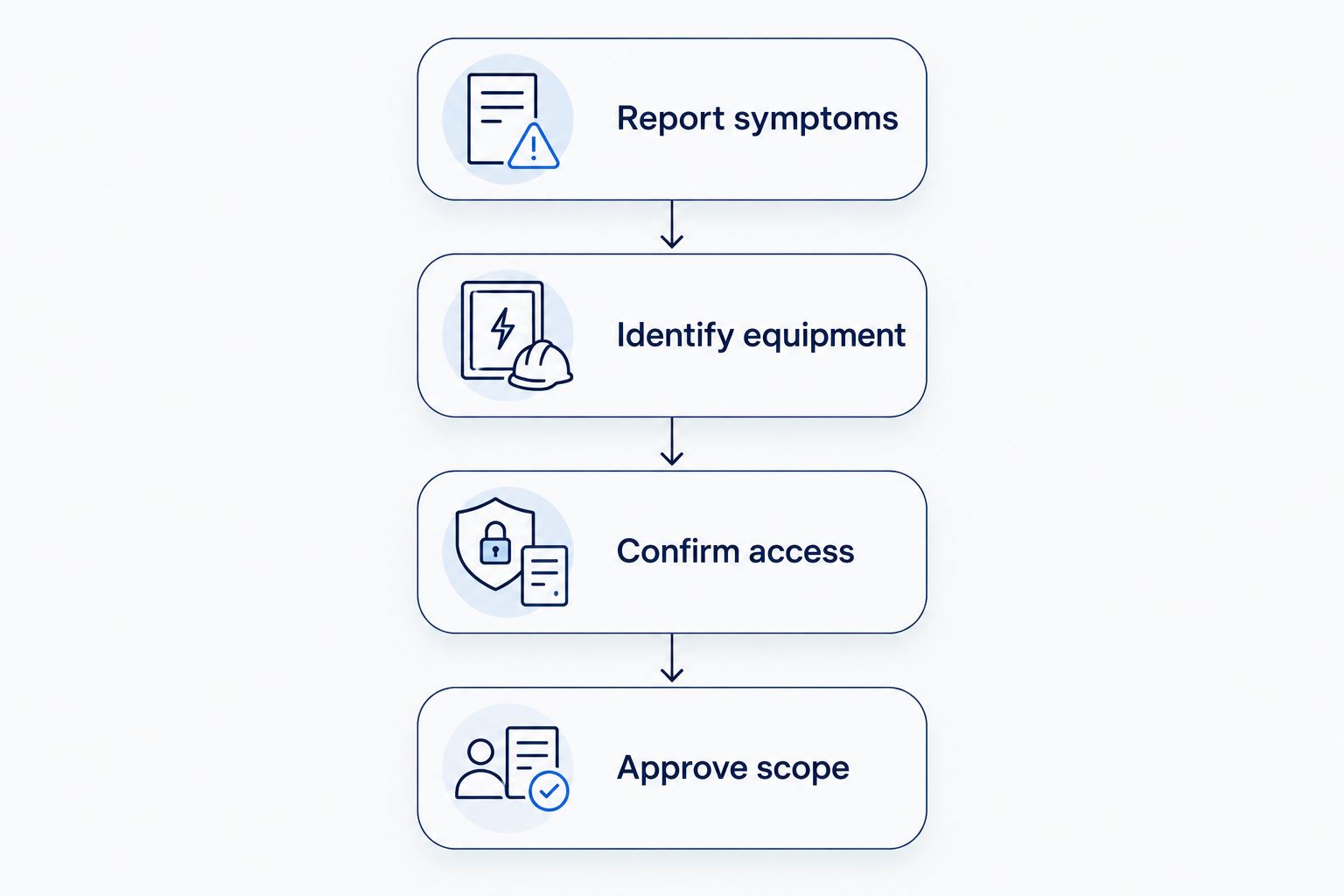
- Report symptoms. Say what stopped working and what you noticed beforehand. Mention smoke, unusual odors, arcing, water exposure, or repeated breaker trips immediately.
- Identify equipment. Describe the affected panel, receptacle, machine, or building area. Share an existing label photo only if you already have it or can photograph it safely from outside the enclosure.
- Confirm access. Give the address, entrance instructions, and responsible site contact. For an operating facility, explain the site's access and safety requirements.
- Approve scope. Ask what the initial authorization covers. Establish how additional work gets approved before repairs proceed.
Do not remove a panel cover to improve a quote. Do not touch a suspect receptacle to check whether it is hot. A licensed electrician needs to inspect damaged or suspect equipment on site.
For a 2026 service request, include the time the problem began and whether it affects one circuit, several rooms, or the entire property. That description gives the electrician a starting point. It does not establish the cause.
Why after-hours electrical service costs vary
The work changes with the fault and the site. Ask how each factor below affects your written scope rather than accepting an unexplained emergency total.
- Fault location. A problem at a receptacle is different from damage inside service equipment. Diagnosis must establish where the fault sits before the repair is defined.
- Equipment condition. Heat damage, water intrusion, and deteriorated wiring need inspection. Replacing a visible damaged part does not establish that the surrounding installation is sound.
- Travel and access. Provide the actual service location, gate instructions, and access restrictions. Ask whether travel and access requirements are included.
- Shutdown requirements. A business or oilfield site needs a responsible contact to coordinate affected equipment. Tell the electrician which operations cannot simply be restarted without authorization.
- Repair boundaries. Immediate isolation, temporary restoration, and permanent repair are different outcomes. The quote should identify the intended result and what remains excluded.
- Utility or inspection coordination. Ask whether the proposed work requires another party's involvement. An electrician's visit does not replace utility authorization or an inspection when required.
A clear quote names the work; it does not just name the emergency. If the scope changes after diagnosis, request the revised scope before approving additional repairs.
Immediate safety work versus a permanent repair
Neither option is automatically the right purchase. The fault and the inspection determine what is safe. Your job is to understand what each authorization accomplishes.
| Service scope | Best for | What it accomplishes | Limitation to clarify |
|---|---|---|---|
| Immediate safety work | Addressing an identified electrical hazard | Isolates or addresses the immediate unsafe condition | Normal power can remain unavailable |
| Diagnostic visit | Finding an unexplained electrical fault | Establishes the fault and repair requirements | Diagnosis is not the same as completed repair |
| Permanent repair | Correcting the identified defect | Repairs the agreed fault within the written scope | Other defects or required coordination need separate explanation |
Ask the electrician to state what can safely operate afterward. Do not assume that lights coming back on means every circuit, machine, or protective device has been checked.
Before the electrician leaves, get the status of disconnected equipment in writing. Note any restrictions and the next required action. That handoff matters when another employee, tenant, or family member arrives later.
What details matter at a home, business, or oilfield site?
The basic rule stays the same: report the symptoms and let a qualified electrician inspect the installation. The useful background changes with the property.
At a home
Tell the electrician whether the loss affects the whole house or a limited area. Mention recent water entry, electrical work, or a newly connected appliance. Do not recreate the fault to demonstrate it.
A 200-amp panel label describes a service rating; it does not prove the panel is undamaged or that a circuit is safe. Likewise, a 120-volt receptacle and a 240-volt appliance circuit are not interchangeable troubleshooting problems. Share labels only when you can read them safely without removing covers.
At a business
Name the affected equipment and the person authorized to approve repairs. Explain whether customers or staff are near the affected area. Keep people away from suspect equipment while you arrange qualified help.
Separate electrical repair from restarting business equipment. Ask who will authorize the restart and whether the equipment needs additional checks before use. Restored power alone is not a complete operating procedure.
At an oilfield site
Provide the site location, operator contact, and applicable site safety requirements. Flag any designated hazardous location, known process hazard, or shutdown restriction. Do not treat an oilfield electrical fault as a routine building service call.
Eagle Electric electrical contracting is for Bakken homeowners, businesses, and oilfield operators needing a licensed contractor. Confirm that the requested work, response arrangements, and site requirements match the actual job. Do not infer emergency dispatch availability from the general service description.
What should a written emergency quote say?
For a 2026 request, use a short approval checklist. You need plain answers, not a long document full of undefined terms.
- Authorized work: State whether you are approving dispatch, diagnosis, immediate safety work, or a defined repair.
- Included charges: Identify how travel, labor, and materials are handled.
- Exclusions: Name work outside the authorization, including any unresolved permanent repair.
- Change approval: Identify who must approve additional work and how approval is recorded.
- Completion status: Explain what will be tested, what can return to service, and what stays disconnected.
Eagle Electric emphasizes same-business-day responses to quote requests and clear written quotes. That response standard is separate from after-hours arrival, diagnosis, or job completion. Confirm those arrangements directly.
Request a clear written quote
Describe the fault and location. Confirm after-hours dispatch and the work included before authorizing service.
Should I wait until normal business hours?
Do not delay action on an active electrical hazard to avoid an after-hours charge. If you see smoke, active arcing, or fire, leave the affected area and call 911 from a safe location. Keep others away.
For a non-hazardous loss of service, describe the symptoms to the utility or a licensed electrician and ask for direction. Do not decide that an unexplained outage is safe just because nothing is visibly burning.
An outage affecting nearby properties points you toward contacting the utility. It does not authorize you to approach damaged service equipment or downed lines. Stay clear of both.
Does an emergency visit include a permanent repair?
An emergency visit includes only the work stated in the authorization. Ask whether the electrician is attending to diagnose, make the installation safe, or complete an identified repair.
If permanent work cannot be defined until inspection, request a separate repair scope afterward. Keep the diagnosis and the repair authorization together so the next step is clear.
Can I get an exact total over the phone?
A phone description does not replace an on-site electrical inspection. Ask which charges can be confirmed before dispatch and which work requires diagnosis first.
A useful phone conversation establishes the initial authorization and the approval process. It should not require you to remove covers, handle damaged wiring, or repeatedly reset a breaker to gather information.
FAQ
How much does after-hours emergency electrical service cost in North Dakota?
Get a written, job-specific quote for after-hours emergency electrical service in North Dakota. Confirm dispatch, travel, troubleshooting, repair labor, materials, and follow-up work before authorizing the visit.
Does Eagle Electric provide an immediate after-hours response?
Confirm after-hours dispatch directly with Eagle Electric. Same-business-day responses to quote requests do not establish an immediate arrival time or same-day job completion.
Should I keep resetting a breaker that trips?
Do not repeatedly reset a breaker that keeps tripping. Leave the affected circuit out of use and arrange assessment by a licensed electrician; do not open the panel to investigate.
Who should I call if an electrical panel is smoking?
Leave the affected area and call 911 from a safe location if an electrical panel is smoking or burning. Do not approach the panel or attempt to open it.
Does a troubleshooting charge mean the repair is included?
A troubleshooting authorization does not establish that repairs are included. Ask the contractor to identify the diagnostic scope and obtain approval terms for any additional work.
What information should I give an emergency electrician?
Give the service address, symptoms, affected equipment, access instructions, and an authorized contact. Report smoke, arcing, water exposure, and site hazards immediately without approaching them.
Can an electrician guarantee full power restoration before inspecting the fault?
A phone description cannot establish that full power restoration is safe. A licensed electrician needs to assess the fault and explain the repair scope and any required utility or inspection coordination.
One last thing
Before approving a 2026 emergency visit, ask one question: What condition will you leave the equipment in if a permanent repair cannot be completed during this visit? The answer should identify what remains disconnected, what you must not use, and who handles the next step.
That is more useful than a promise to get everything running. Safe equipment status is the handoff you need.


