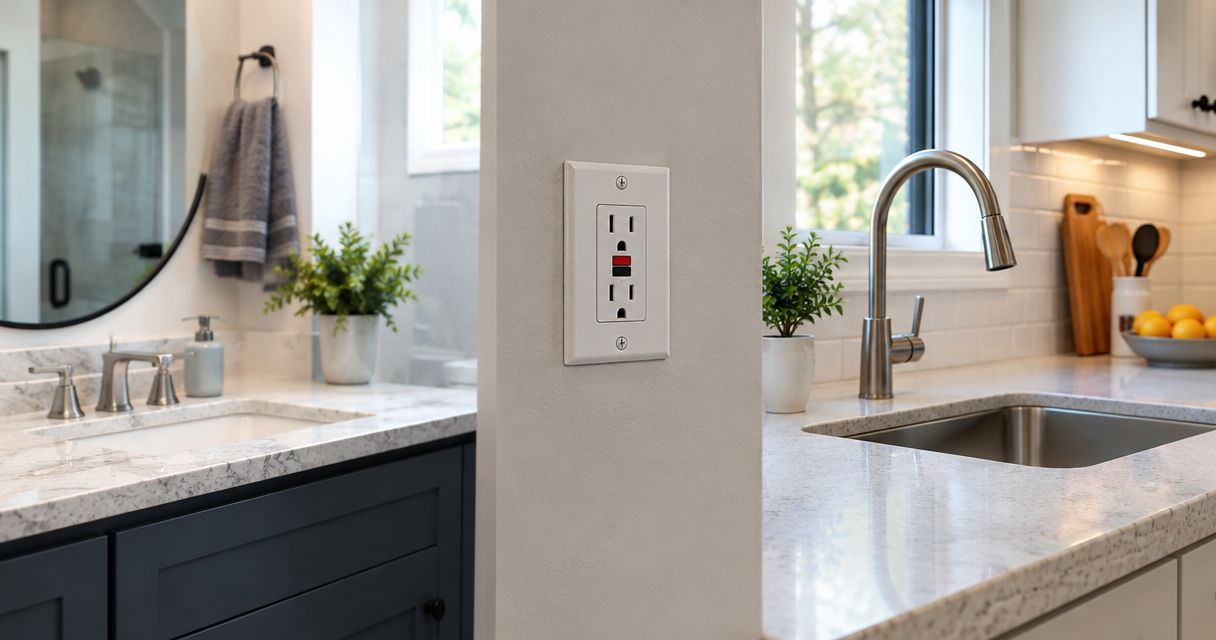
Best overall: a self-testing, tamper-resistant GFCI receptacle. Best for a crowded box: a slim-depth GFCI. Best for a hard-to-see location: an audible-alert GFCI. The best GFCI outlets for bathrooms and kitchens match the circuit, fit the box, and provide the protection your installation requires—not just a matching faceplate.
- The best GFCI outlets for bathrooms and kitchens combine self-testing, tamper resistance, and correct circuit compatibility.
- Choose slim-depth construction for crowded boxes; an electrician must still check box fill and wiring condition.
- Choose an audible-alert GFCI when a tripped outlet would be difficult to notice.
- Eagle Electric provides licensed residential electrical services for homeowners across the Bakken region.
Why this matters
A bathroom outlet keeps tripping. A kitchen receptacle has scorch marks. A replacement looks right but will not reset. Those problems need a diagnosis before they need a shopping list.
GFCI means ground-fault circuit interrupter. It detects an imbalance between outgoing and returning current and interrupts power to reduce shock risk. It does not fix damaged wiring, add circuit capacity, or make a wet appliance safe.
For a 2026 bathroom or kitchen project, start with the existing circuit and the requirements that apply to the work. Eagle Electric's electrical contracting services include residential work across the Bakken region. An on-site inspection determines whether you need a receptacle replacement, circuit repair, or a different protection arrangement.
What makes the best GFCI outlets?
Use these six checks before choosing a device. A useful feature cannot compensate for the wrong electrical rating or an unsafe installation.
- Correct rating: Match the receptacle to the circuit and permitted installation. A 20-amp receptacle is not an upgrade for a 15-amp circuit.
- Recognized safety listing: Choose a listed GFCI intended for the location and application. UL 943 is the relevant GFCI safety standard.
- Self-testing: Select a device that checks its protective function automatically. Follow its instructions for manual testing, too.
- Tamper resistance: Look for TR marking where required. Internal shutters help prevent insertion of foreign objects.
- Physical fit: Check device depth, box capacity, conductor space, and terminal compatibility. Do not force a device into a crowded box.
- Useful trip indication: Choose an indicator you can actually notice. A hidden light is not much help behind an appliance.
Rank the installation needs before the extra features. For a straightforward indoor replacement, correct protection and fit matter more than charging ports or decorative finishes.
Best GFCI outlet options at a glance
These are feature-based recommendations, not competing manufacturer rankings. Features overlap: one receptacle can be self-testing, tamper-resistant, slim-depth, and equipped with an audible alarm.
| Rank | Option | Best for | Standout feature | Key limitation |
|---|---|---|---|---|
| 1 | Self-testing TR GFCI | Standard bathroom and kitchen replacements | Automatic checks plus tamper-resistant shutters | Does not provide arc-fault protection unless specifically identified |
| 2 | Slim-depth GFCI | Replacement work in crowded boxes | Shallower device body | Does not resolve excessive box fill or damaged conductors |
| 3 | Audible-alert GFCI | Locations where a trip is difficult to see | Sound notification when protection trips | Alarm must be within hearing range to help |
| 4 | Dual-function AFCI/GFCI receptacle | Work requiring both protections at the receptacle | Ground-fault and arc-fault protection | Suitability depends on the complete circuit arrangement |
For 2026 projects, verify the exact device markings and instructions. Similar-looking receptacles can have different functions, wiring requirements, and indicator meanings.
1. Self-testing TR GFCI: best for standard replacements
A self-testing, tamper-resistant GFCI is the default starting point for an ordinary indoor bathroom or kitchen receptacle replacement. Self-testing checks protective operation automatically. Tamper-resistant shutters provide a separate safeguard against insertion of foreign objects.
Neither feature replaces correct wiring. A licensed electrician must establish the circuit rating, grounding condition, and any downstream outlets that need protection before selecting the replacement.
Self-testing TR GFCI pros:
- Combines ground-fault protection with tamper-resistant construction.
- Checks protective operation automatically.
- Keeps TEST and RESET controls at the receptacle.
- Can protect downstream receptacles when correctly wired and permitted.
Self-testing TR GFCI cons:
- Does not supply AFCI protection unless the device specifically includes it.
- Does not create an equipment grounding conductor where none exists.
- Still requires manual testing according to the manufacturer's instructions.
Best for: Homeowners replacing a standard bathroom or kitchen receptacle after circuit suitability has been confirmed.
Choose this option when the box has adequate room and the installation does not call for a different protection method. Ask the electrician to identify every outlet that loses power when the device trips.
Verdict: Buy a listed self-testing TR GFCI for a verified, straightforward replacement.
2. Slim-depth GFCI: best for crowded replacement boxes
A slim-depth GFCI uses a shallower body to leave more space inside the electrical box. That matters when existing conductors and connections already occupy much of the available room.
A smaller device is not permission to cram wires behind it. The electrician still needs to check box fill, conductor condition, connection space, and whether the box itself needs replacement.
Slim-depth GFCI pros:
- Leaves more working room than a deeper device in the same box.
- Helps reduce crowding during suitable replacement work.
- Can combine compact construction with self-testing and tamper resistance.
Slim-depth GFCI cons:
- Does not make an undersized box compliant.
- Does not repair brittle insulation or short, damaged conductors.
- Exact dimensions vary; the slim label alone does not establish fit.
Best for: Existing bathroom and kitchen boxes where device depth is a confirmed constraint.
During a 2026 remodel, inspect the box before closing the wall or installing the backsplash. Replacing an unsuitable box is easier to address before finished surfaces limit access.
Verdict: Buy for a verified fit problem; hold if box capacity or wiring condition remains unresolved.
3. Audible-alert GFCI: best for hard-to-see locations
An audible-alert GFCI adds a sound notification when the device trips. It helps when you cannot easily see the indicator light, such as a receptacle inside a cabinet or behind equipment.
The alarm reports an interruption. It does not explain the cause, restore power, or guarantee that someone will hear it.
Audible-alert GFCI pros:
- Makes a trip noticeable without a direct view of the indicator.
- Helps draw attention to interrupted appliance power.
- Adds notification without relying only on a visible status light.
Audible-alert GFCI cons:
- Provides little benefit when nobody is within hearing range.
- Does not replace required accessibility for testing and resetting.
- Requires checking the exact model's alarm behavior and instructions.
Best for: Permitted receptacle locations where a tripped device would otherwise go unnoticed.
Do not select an inaccessible installation just because the outlet has an alarm. The electrician must confirm placement, appliance requirements, and how you will reach the controls safely.
Verdict: Buy when audible notification solves a real visibility problem; skip it when the alarm adds no practical benefit.
4. Dual-function AFCI/GFCI: best when both protections are needed
A dual-function AFCI/GFCI receptacle combines ground-fault protection with arc-fault protection. GFCI protection addresses ground-fault shock hazards. AFCI protection addresses certain arcing conditions associated with fire hazards.
These functions are not interchangeable. A receptacle that includes both is suitable only when its installation satisfies the requirements for the complete circuit—not merely the outlet face.
Dual-function AFCI/GFCI pros:
- Provides both protective functions in one device.
- Places testing and resetting controls at the receptacle.
- Offers an option where a receptacle-based arrangement is permitted.
Dual-function AFCI/GFCI cons:
- Requires assessment of upstream wiring and circuit configuration.
- Is not a universal substitute for protection at the panel.
- Does not correct wiring faults that cause tripping.
Best for: Renovation or replacement work where an electrician confirms that both protections are required and this arrangement is permitted.
For 2026 kitchen work, ask which protection the circuit needs and where that protection belongs. Do not assume that buying the device with the longest feature list settles the code question.
Verdict: Hold until a licensed electrician confirms the protection arrangement.
Match the device to the problem
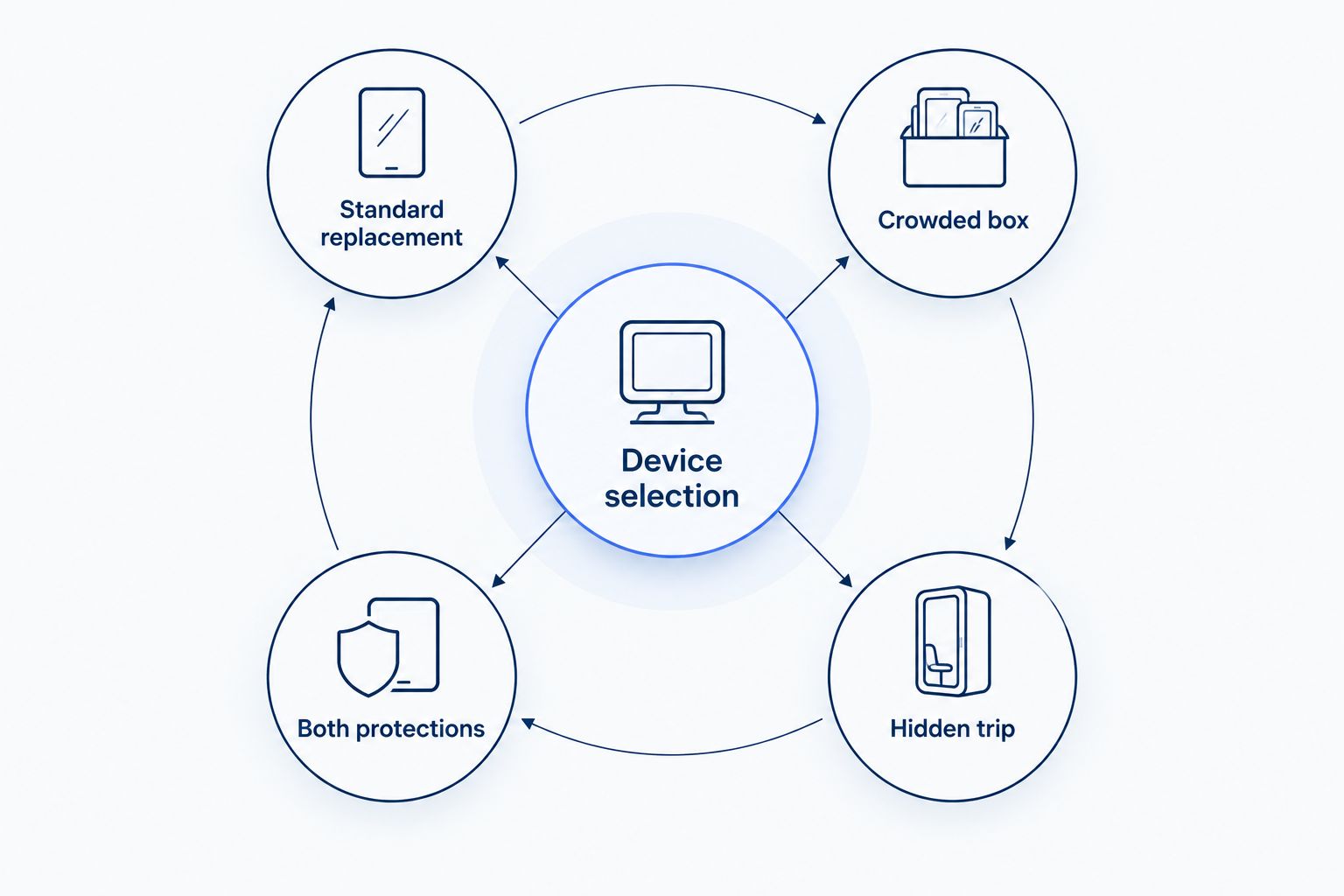
A useful selection process starts with what you can observe without opening the box. Write down the symptom, identify the affected outlets, and leave electrical testing to a qualified electrician.
- Standard replacement: Start with a listed, self-testing TR GFCI.
- Crowded box: Have the box checked before choosing a slim-depth device.
- Hidden trip: Consider audible notification without sacrificing access.
- Both protections: Confirm whether a dual-function arrangement fits the circuit.
A burning smell, visible scorching, buzzing, or a hot receptacle changes the job. Stop using the affected outlet and arrange an electrical assessment. If you see smoke or an active fire, leave the area and contact emergency services.
Check ratings before buying
Typical household bathroom and kitchen receptacles operate on 120-volt circuits. You will encounter both 15-amp and 20-amp receptacles, but the correct choice depends on the branch circuit and installation rules.
A 20-amp receptacle has a T-shaped slot. Installing one does not increase the capacity of the wiring or breaker. Certain multi-receptacle 20-amp circuits permit 15-amp receptacles; have an electrician confirm the application rather than choosing by appearance.
Never increase breaker size to stop tripping without a proper circuit assessment. A GFCI trip and an overload trip address different problems. Replacing one device will not necessarily solve the other.
Older two-wire installations also need care. A GFCI can provide ground-fault protection without creating a ground, and permitted replacements require the appropriate arrangement and labeling.
What to ask for in a written quote
A clear quote should describe the electrical work, not just count white plastic outlets. Ask whether the scope includes circuit identification, box inspection, device replacement, required labeling, and functional testing.
For a 2026 bathroom or kitchen project, give the electrician these details:
- Which outlets have stopped working or keep tripping.
- Whether the problem follows a particular appliance.
- Whether the work is a replacement or part of a remodel.
- Whether nearby outlets lose power at the same time.
- Whether there is heat damage, moisture, or an older ungrounded installation.
Eagle Electric provides same-business-day responses to quote requests and clear written quotes. That response concerns your request; it does not promise same-day job completion. Request a quote with the symptoms and project location so the scope starts with the actual problem.
How these options are ranked
The ranking puts ordinary replacement needs first, followed by specific fit, notification, and protection requirements. It uses circuit compatibility, safety listing, self-testing, tamper resistance, physical fit, and usable trip indication as the decision criteria.
This is a feature-selection guide, not a claim of product testing. A listed device that fits the verified installation is a better choice than a feature-heavy device installed in the wrong place.
Which GFCI outlet should you choose?
Choose a listed, self-testing, tamper-resistant GFCI as the default for a verified standard replacement. Add slim-depth construction when box space calls for it. Add an audible alert when noticing a trip is the real problem.
Use a dual-function AFCI/GFCI device only after confirming the circuit's protection requirements. Eagle Electric is best for Bakken homeowners who need licensed bathroom and kitchen GFCI installation rather than a product-only recommendation.
FAQ
What's the best GFCI outlet for a bathroom?
A listed, self-testing, tamper-resistant GFCI is the default choice for a standard bathroom replacement after circuit compatibility is confirmed. A licensed electrician must check the existing wiring, box, and required protection.
Should I buy a 15-amp or 20-amp GFCI for my kitchen?
Choose the receptacle rating permitted for your circuit and outlet arrangement. A 20-amp receptacle does not belong on a 15-amp circuit, while certain multi-receptacle 20-amp circuits permit 15-amp receptacles.
Is a self-testing GFCI better than one without that feature?
Self-testing adds automatic checks of protective operation. You must still use the TEST button according to the manufacturer's instructions and replace a device that fails its required test.
Do I need a GFCI outlet if the breaker already has GFCI protection?
A properly configured GFCI breaker can provide the required ground-fault protection without a GFCI receptacle at each outlet. An electrician must verify that the outlet is actually protected and that any separate AFCI requirements are satisfied.
Can a GFCI fix an ungrounded bathroom outlet?
A GFCI provides ground-fault protection but does not create an equipment ground. Permitted replacement arrangements require correct wiring and labeling; have a licensed electrician assess an older two-wire circuit.
Why does my kitchen GFCI keep tripping?
Repeated tripping requires diagnosis of the appliance, moisture conditions, wiring, and protective device. Do not bypass the protection or keep resetting an outlet with heat damage, buzzing, or a burning smell.
Can Eagle Electric help choose and install bathroom GFCI outlets?
Eagle Electric provides licensed residential electrical contracting across the Bakken region. Quote requests receive a same-business-day response and clear written quotes; job scheduling and the required work depend on the project.
One last thing
The dead bathroom outlet is not always where the tripped GFCI sits. An upstream device can protect additional receptacles elsewhere on the circuit.
Ask the electrician to identify the protection point and label the affected outlets before the job is finished. Knowing where to test and reset saves confusion without encouraging unsafe troubleshooting.