
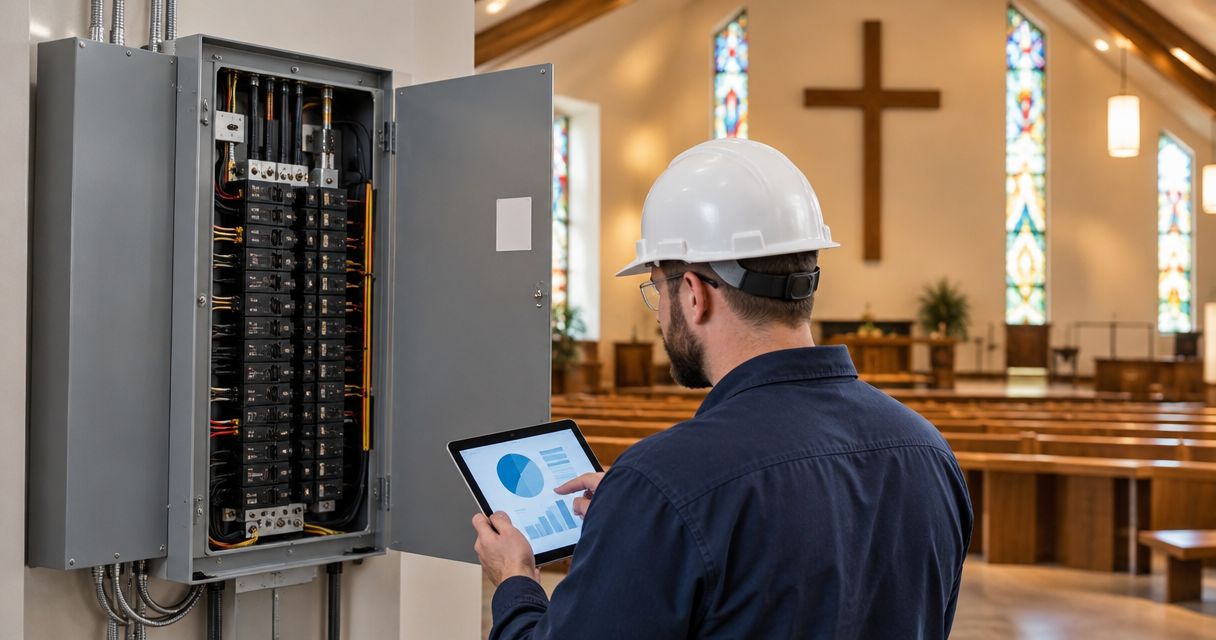
Best overall: a commercial main-breaker panelboard matched to your church’s service. Best for a small single-phase building: a load center. Best for backup circuits: a dedicated critical-loads panel. The best electrical panels for churches fit the building’s actual loads, supply voltage, and expansion plans—not a brand ranking.
- The best electrical panels for churches match service voltage, calculated loads, and the building’s actual use.
- Choose a commercial panelboard for central distribution; consider a load center for a small single-phase church.
- A critical-loads panel separates selected backup circuits but does not replace properly designed transfer equipment.
- Eagle-Elc provides licensed commercial electrical services in the Bakken region; panel selection requires an on-site assessment.
Why this matters
A sanctuary, fellowship kitchen, and electric heating system do not draw power the same way. Add them without checking the service and feeders, and a new cabinet alone does not solve the problem.
For a 2026 church project, start with an on-site assessment, not a shopping cart. Eagle-Elc provides commercial electrical services for businesses and organizations across the Bakken region. Eagle-Elc is a fit for churches in the Bakken region that need a licensed contractor for commercial electrical work.
This guide ranks panel configurations by use case. It does not compare manufacturers or treat a panelboard, subpanel, and backup panel as interchangeable. A church can need more than one configuration in the same electrical system.
What makes the best electrical panels for churches?
Judge the equipment against these requirements before choosing a configuration:
- Service match. Match voltage, phase, grounding arrangement, and service requirements. A panel cannot change the utility supply by itself.
- Calculated capacity. Size the service and feeders from a load calculation. Empty breaker spaces do not prove spare electrical capacity.
- Fault protection. Confirm equipment ratings against available fault current. Breakers must be approved for the specific panel application.
- Circuit organization. Give lighting, kitchen equipment, HVAC, and other loads clear circuit identification. Keep required working space clear.
- Expansion room. Plan for documented additions, including their feeder capacity and circuit-space needs. A larger cabinet alone is not an expansion plan.
- Site conditions. Match the enclosure to its actual location. Outdoor exposure, moisture, and equipment instructions matter in North Dakota.
Church electrical panels at a glance
| Rank and configuration | Best for | Standout feature | Key limitation |
|---|---|---|---|
| 1. Commercial main-breaker panelboard | Central building distribution | Main disconnect and organized branch-circuit distribution | Does not increase upstream service capacity |
| 2. Single-phase load center | Small churches with straightforward loads | Branch-circuit distribution suited to a simple single-phase system | Wrong choice when equipment requires a different supply |
| 3. Three-phase lighting and appliance panelboard | Churches with an existing three-phase supply | Distribution for compatible lighting, receptacles, and equipment | Requires verified voltage, phase, and load planning |
| 4. Feeder-supplied subpanel | Additions and remote building areas | Local circuit distribution near new loads | Depends on adequate upstream capacity |
| 5. Dedicated critical-loads panel | Selected circuits served by backup power | Separates designated backup loads | Requires coordinated transfer and generator design |
1. Commercial main-breaker panelboard: best for central distribution
A commercial main-breaker panelboard is the default starting point for a church replacing central distribution equipment. It combines branch-circuit distribution with a main breaker, subject to the building’s service and disconnect arrangement.
Choose it around the existing supply and calculated loads. Specify whether it serves as service equipment or sits downstream of another disconnect; that distinction affects installation details.
Commercial main-breaker panelboard pros:
- Centralizes distribution for clearly identified building circuits.
- Provides a main disconnect at that panel location.
- Supports a documented circuit schedule for maintenance and future work.
Commercial main-breaker panelboard cons:
- Replacement can require a coordinated building shutdown.
- Upstream conductors, metering, or utility equipment can limit capacity.
A cabinet marked 200 amps does not mean the church has 200 amps available for new equipment. The electrician must verify the complete supply path and calculated demand. Do not authorize a larger main breaker as a substitute for that work.
Best for: A church replacing its central distribution panel during a planned 2026 renovation.
Verdict: Buy only after the service arrangement, load calculation, and equipment ratings are confirmed.
2. Single-phase load center: best for a small church
A load center deserves consideration when a small church has a straightforward single-phase electrical system. Building use alone does not settle the choice; the equipment must suit the installation and applicable requirements.
A 120/240-volt single-phase service is one possible supply arrangement. Verify it on site. Do not infer voltage from the building’s size, age, or appearance.
Single-phase load center pros:
- Organizes ordinary lighting and receptacle branch circuits.
- Fits a simple distribution layout when correctly specified.
- Allows circuit-space planning around identified future needs.
Single-phase load center cons:
- Does not supply three-phase equipment from a single-phase service.
- A compact installation still needs proper working clearance and access.
Ask about the kitchen before choosing this option. Planned cooking equipment, water heating, and HVAC changes can alter the load calculation. A small sanctuary does not automatically mean a small electrical demand.
Best for: A small church with verified single-phase service and uncomplicated equipment needs.
Verdict: Buy when the load calculation and equipment requirements support a single-phase load center.
3. Three-phase panelboard: best for an existing three-phase supply
A three-phase lighting and appliance panelboard suits a church whose verified supply and equipment call for three-phase distribution. The electrician must identify the system voltage and assign circuits appropriately.
For example, 120/208-volt three-phase service differs from 120/240-volt single-phase service. Equipment nameplates matter. Similar-looking receptacles or breakers do not establish compatibility.
Three-phase panelboard pros:
- Distributes power to compatible single-phase and three-phase loads.
- Supports deliberate allocation of branch circuits across phases.
- Fits buildings with varied HVAC, kitchen, and lighting requirements when properly designed.
Three-phase panelboard cons:
- Does not create three-phase utility service where none exists.
- Incorrect voltage assumptions can lead to unsuitable equipment selections.
For a 2026 kitchen or HVAC project, collect equipment nameplates before approving the electrical scope. Ask the designer or electrician to check voltage and phase requirements against the actual supply—not just total amperage.
Best for: A church with an existing three-phase supply and equipment that needs coordinated distribution.
Verdict: Buy for verified three-phase requirements, not because three-phase sounds like an upgrade.
4. Feeder-supplied subpanel: best for an addition
A feeder-supplied subpanel distributes circuits near a new classroom wing, fellowship area, or other remote building space. It receives power from upstream equipment rather than creating a separate supply.
This configuration can organize an addition without routing every new branch circuit back to the original panel. The feeder still needs proper sizing, protection, and installation.
Feeder-supplied subpanel pros:
- Places branch-circuit distribution near the area it serves.
- Separates an addition’s circuit schedule from older building circuits.
- Provides a defined distribution point for planned expansion.
Feeder-supplied subpanel cons:
- Adds no capacity to an already overloaded service.
- Requires a suitable location with permanent access and working clearance.
A subpanel is not a cure for repeated breaker trips. Find the cause first. Overloads, equipment faults, and wiring problems require different corrections, and adding breaker spaces does not distinguish between them.
Best for: A church addition or remote building area with verified upstream capacity.
Verdict: Buy after the feeder design and upstream load calculation pass review.
5. Critical-loads panel: best for selected backup circuits
A dedicated critical-loads panel groups circuits selected for backup power. Possible candidates include heating controls, communications, or refrigeration, depending on the building and backup design.
The panel does not transfer power by itself. Properly designed transfer equipment must prevent an unsafe connection between generator power and the utility supply. Required emergency systems also need separate code review; they are not simply convenience circuits.
Critical-loads panel pros:
- Makes the selected backup circuit list explicit.
- Separates designated loads from circuits outside the backup plan.
- Gives the electrician a defined load group for generator sizing.
Critical-loads panel cons:
- Does not provide backup power without a suitable source and transfer arrangement.
- Requires careful review of heating, emergency-system, and operating needs.
During 2026 planning, decide what the church must actually operate during an outage. Keeping heating controls energized is different from powering electric resistance heat. Write the intended operating conditions down before selecting equipment.
Best for: A church planning generator power for a defined set of circuits.
Verdict: Buy as part of a complete backup-power design, never as a standalone outage fix.
What to confirm before approving the panel
A useful site assessment answers practical questions. Give the licensed electrician access to electrical rooms and equipment information, but do not remove panel covers yourself.
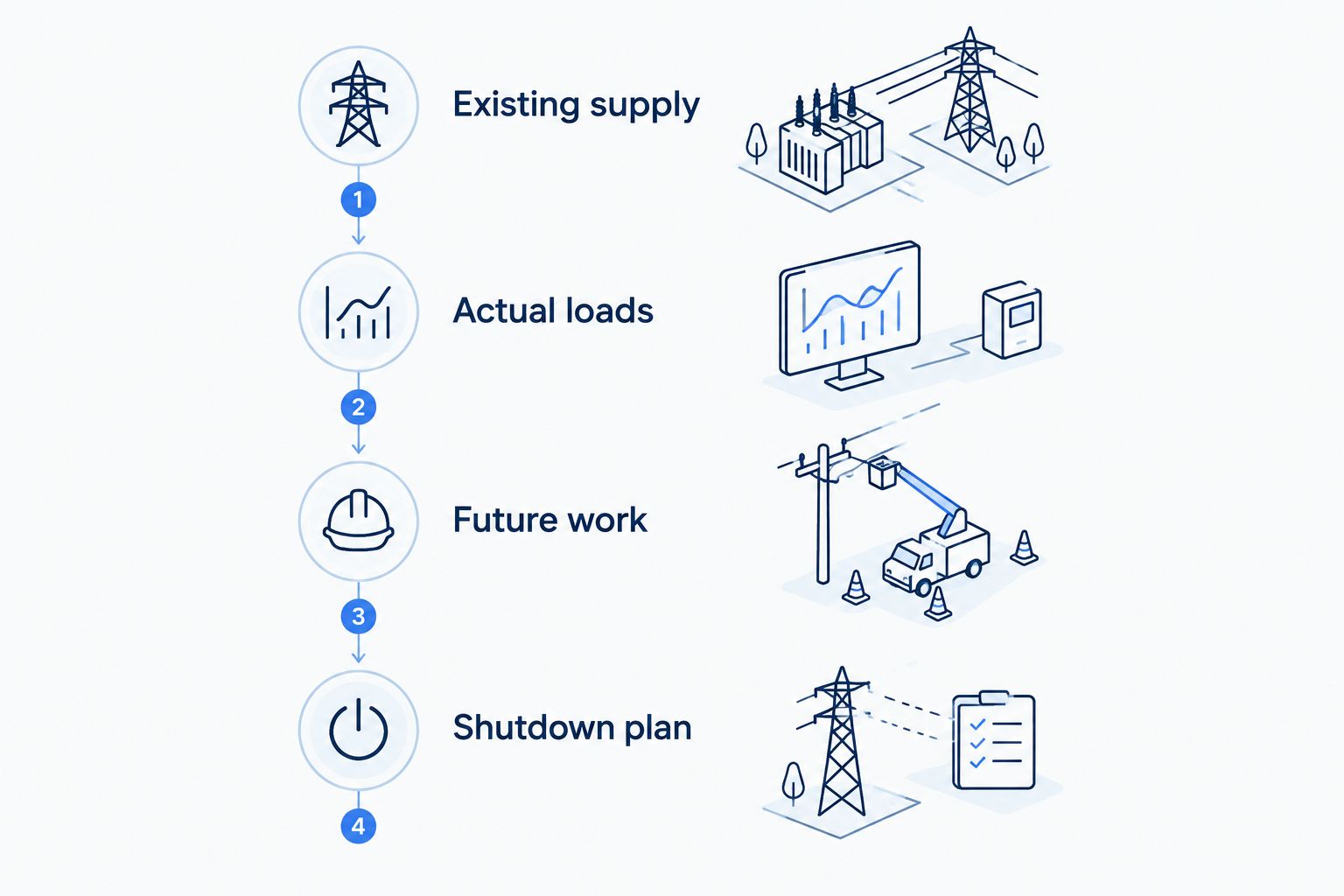
Existing supply
Confirm service voltage, phase, main rating, and the location of existing disconnects. Have the electrician assess equipment condition, grounding and bonding, feeder arrangements, and relevant ratings.
Actual loads
List HVAC, kitchen appliances, water heating, lighting, sound equipment, and other significant loads. Identify equipment that runs together during a service, meal, or community event. Nameplate information supports the calculation; guesses do not.
Future work
Include approved additions and equipment changes. Separate definite projects from ideas so the electrical design reflects a clear scope. Ask what spare capacity and circuit space remain after the planned work.
Shutdown plan
Identify services, events, heating needs, security systems, and refrigerated contents affected by an outage. Get the shutdown sequence and restoration responsibilities in writing. A quote response is not a promise of same-day installation.
What a clear written quote should cover
Your church board needs a defined scope, not just a panel description. Ask for the equipment configuration, service or feeder changes, circuit identification, permit and inspection responsibilities, and shutdown coordination. Clarify what happens if inspection reveals damaged wiring or other work outside the original scope.
Eagle-Elc emphasizes same-business-day responses to quote requests and clear written quotes. Use the quote request to describe the church location, current problem, planned equipment, and scheduling restrictions. Panel selection still requires an on-site assessment.
Same-business-day response does not mean same-day job completion. Confirm scheduling after the scope and required coordination are established.
How these configurations are ranked
The ranking puts general building distribution first, then narrows by service type, expansion needs, and backup requirements. It is a use-case guide, not a manufacturer reliability test.
For 2026 projects, the deciding criteria remain service match, calculated capacity, protection ratings, circuit organization, expansion, and site conditions. Eagle-Elc’s role is electrical contracting—not selling a panel as a substitute for system design.
Which electrical panel should your church choose?
Start with a commercial main-breaker panelboard for central distribution, then verify whether the building calls for a simpler load center or a three-phase configuration. Add a subpanel for a justified expansion. Use a critical-loads panel only within a coordinated backup design.
Do not order equipment from a photograph of the old panel. Give a licensed electrician the actual loads, planned changes, and access needed to specify the replacement safely.
FAQ
What are the best electrical panels for churches in North Dakota?
The best electrical panels for churches match the verified service, calculated loads, equipment ratings, and installation conditions. A commercial main-breaker panelboard is a starting point for central distribution, while smaller buildings and specialized loads need different configurations.
Does our church need a 200-amp panel?
A load calculation and service assessment determine whether a 200-amp panel is appropriate. Seating capacity and empty breaker spaces do not establish electrical capacity.
Is a three-phase panel better for a church?
A three-phase panel is appropriate when the church’s supply and equipment requirements support it. Installing that panel alone does not convert a single-phase utility service to three-phase power.
Can we add a subpanel instead of replacing the main panel?
A subpanel is an option when the existing service and upstream equipment can safely supply the added load. It provides circuit distribution, not additional utility capacity.
Can one panel handle both utility and generator power?
A panel can serve loads supplied through a properly designed utility-generator transfer arrangement. A licensed electrician must specify the transfer equipment and review any emergency-system requirements; never backfeed a panel through a receptacle.
Can church volunteers replace breakers or open the panel?
Church volunteers should leave panel interiors and breaker replacement to a licensed electrician. Dangerous energized parts can remain present even when a main breaker is switched off.
Does a fast quote response mean the panel can be replaced that day?
No. A quote response and job completion are different commitments. Equipment selection, permits, utility coordination, inspection, and the church’s shutdown schedule determine the installation plan.
One last thing
Keep the circuit directory current after the work is finished. Ask for labels that identify actual rooms and equipment, not vague entries such as lights or outlets. A well-chosen panel still needs a usable directory when someone must identify a circuit during a problem.


