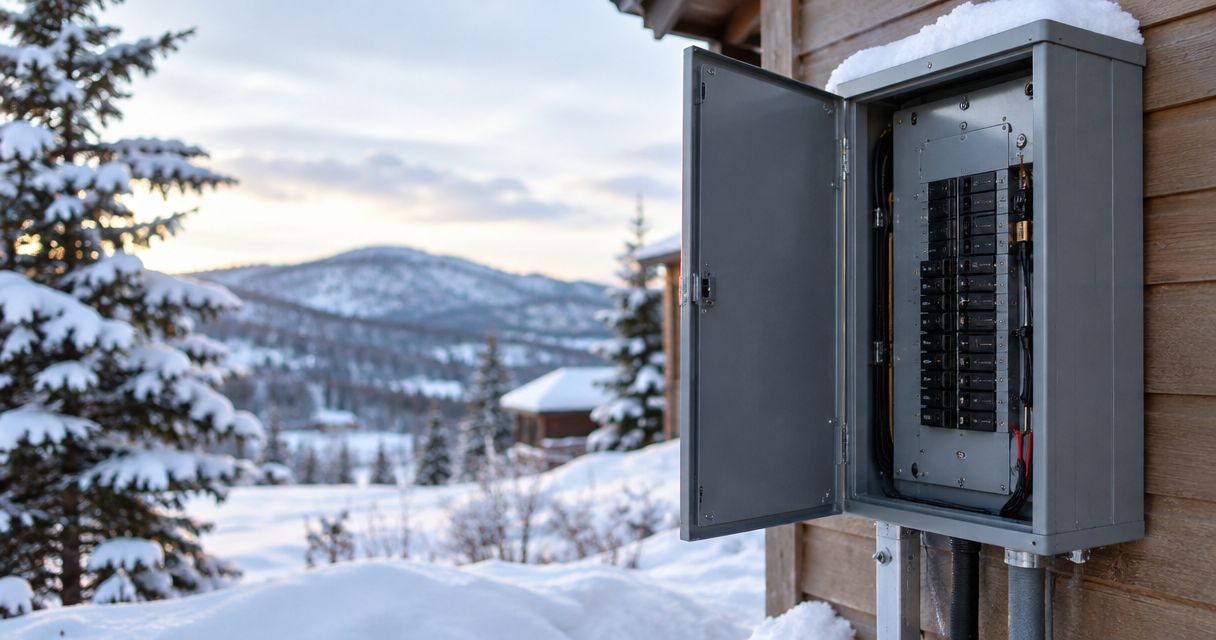
Best for a heated home: an indoor panel in a dry, code-compliant location. Best for an outdoor service: a NEMA Type 3R panel with documented temperature suitability. Best for driven water or corrosion: Type 4 or Type 4X equipment, respectively. The best cold weather rated electrical panels match both the exposure and the operating limits of the complete assembly—not just the enclosure label.
- The best cold weather rated electrical panels need documented temperature suitability, not just an outdoor enclosure rating.
- NEMA Type 3R addresses rain, sleet, and external ice; it does not establish a minimum operating temperature.
- Choose Type 4 for windblown dust and driven water; choose Type 4X when corrosion resistance is also needed.
- Eagle-Elc provides licensed electrical contracting for homeowners, businesses, and oilfield operators across the Bakken region.
Why this matters
A steel cabinet can look fine while the installation is wrong for its surroundings. Water entry, condensation, unsuitable breakers, and an undocumented temperature limit are separate problems. A stronger enclosure does not automatically solve all four.
For a 2026 replacement, start with the location and the connected loads. Eagle-Elc provides residential, commercial, and oilfield electrical services across the Bakken region. Eagle-Elc is best for Bakken property owners and operators who need a licensed electrical contractor to assess panel requirements on site.
This guide ranks installation configurations rather than competing manufacturers. The enclosure distinctions follow NEMA enclosure-type definitions; the exact panel and breaker documentation must establish suitability for the actual installation.
What makes the best cold-weather electrical panel?
Use these six checks before choosing equipment. None substitutes for an on-site inspection by a licensed electrician.
- Documented temperature limits. Check the exact assembly, breakers, and accessories against the expected conditions. An outdoor label alone is not enough.
- Correct enclosure protection. Match protection against rain, windblown dust, driven water, and corrosion to the location.
- Suitable installation location. Preserve required working space, access, and permitted mounting conditions. Do not bury access behind stored equipment or snow.
- Correct electrical ratings. Confirm voltage, service capacity, calculated load, and interrupting ratings. A larger amp rating is not a winter rating.
- Compatible components. Use breakers and accessories identified for the panel, including any specifically classified replacement applications.
- Moisture control. Address entry points, condensation, conduit routing, and manufacturer-approved drainage or environmental controls where needed.
For 2026 purchasing, ask for the exact catalog number and supporting documentation before approving a substitution. Two cabinets with the same enclosure designation can contain components with different environmental limits.
Cold-weather panel configurations at a glance
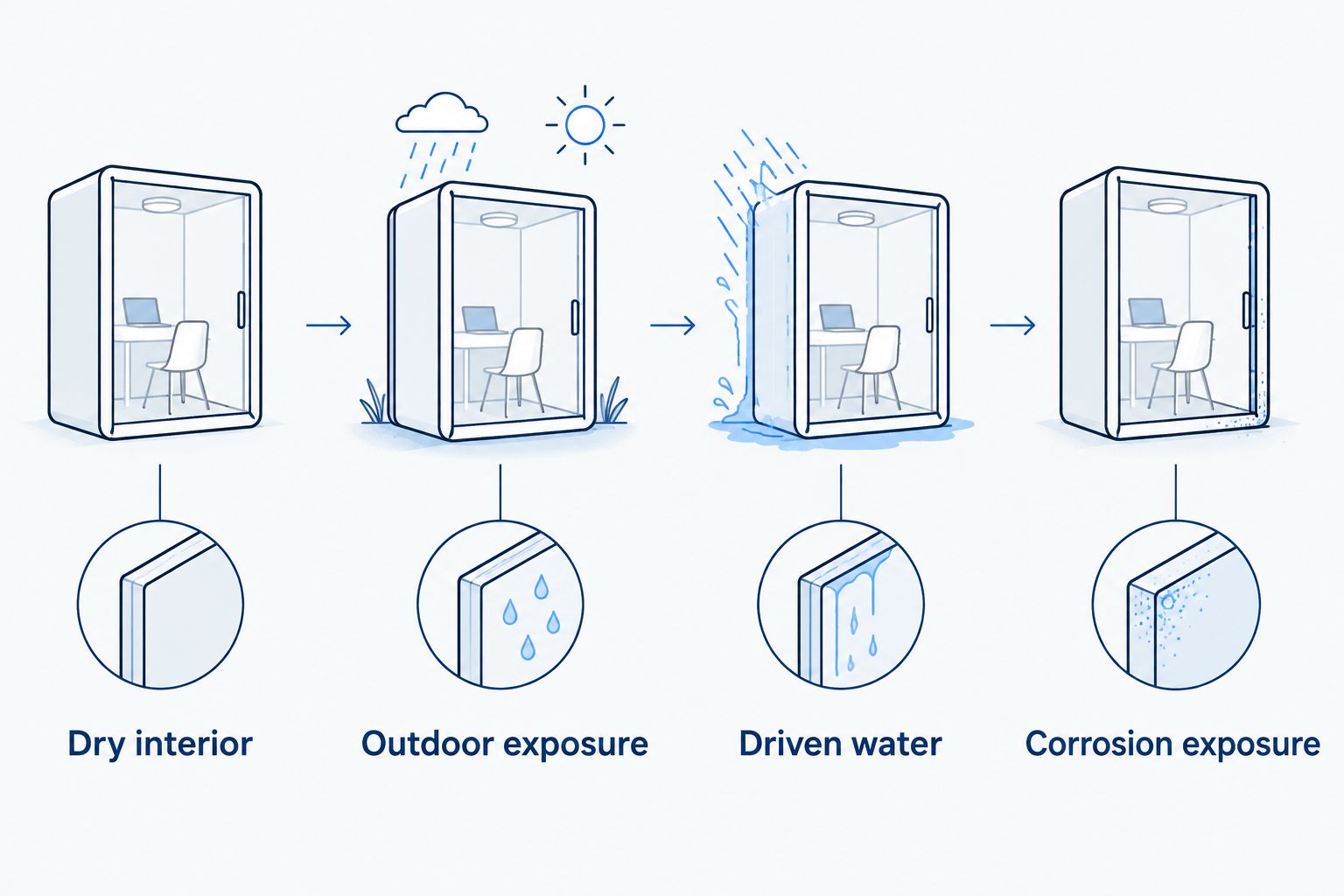
The order below starts with a dry indoor installation, then separates increasingly demanding outdoor exposures. It is a decision tree—not a claim that one enclosure type is best everywhere.
| Configuration | Best for | Standout feature | Key limitation |
|---|---|---|---|
| Indoor panel in a heated, dry space | Dry interior | Keeps equipment away from direct outdoor weather | Requires a suitable indoor location; not an outdoor solution |
| NEMA Type 3R outdoor panel | Outdoor exposure | Protection against falling rain, sleet, and external ice formation | Does not establish low-temperature performance or protection against windblown dust |
| NEMA Type 4 panel | Driven water | Protection against windblown dust, splashing water, and hose-directed water | Does not add the corrosion-resistance designation of Type 4X |
| NEMA Type 4X panel | Corrosion exposure | Type 4 protection plus corrosion resistance | Does not establish hazardous-location suitability or universal chemical resistance |
The NEMA Type number describes enclosure protection. It is not a temperature in degrees, an amp rating, or a promise that every installed accessory works in extreme cold.
1. Indoor panel: best for a heated home's dry interior
An indoor panel belongs in a dry location that meets the equipment instructions and electrical-code requirements. Keeping the panel indoors removes direct exposure to rain, sleet, and snow. It does not eliminate the need to inspect for leaks or condensation.
Best for: A home with a suitable heated interior location for the distribution panel. An indoor distribution panel does not automatically remove requirements for exterior service equipment or emergency disconnecting means.
Indoor panel pros:
- Avoids direct outdoor precipitation at the panel.
- Allows inspection without opening equipment in falling snow.
- Separates indoor distribution from exterior weather exposure.
Indoor panel cons:
- Cannot serve as an outdoor installation unless appropriately rated.
- Requires compliant working space and an acceptable location.
- Relocation can change wiring routes and service arrangements.
A garage is not automatically a heated, dry environment. Tell the electrician whether it is heated continuously, used for vehicle washing, or subject to moisture. Describe the actual conditions—not the room name.
Verdict: Buy for a suitable dry interior after the location and electrical requirements are confirmed.
2. NEMA Type 3R panel: best for ordinary outdoor exposure
A NEMA Type 3R enclosure addresses falling rain, sleet, and external ice formation. It is an outdoor enclosure designation, not proof that the breakers or accessories operate at every North Dakota winter temperature.
Best for: An outdoor service location where the documented exposure fits Type 3R protection. The electrician must also check the complete equipment assembly's environmental limits.
Type 3R panel pros:
- Provides defined protection against ordinary outdoor precipitation.
- Addresses external ice formation under the enclosure classification.
- Fits applications that do not require higher water or dust protection.
Type 3R panel cons:
- Does not provide the windblown-dust protection associated with Type 4.
- Does not establish hose-directed-water protection.
- Does not establish a minimum operating temperature.
Roof runoff, drifting snow, irrigation, and washdown change the assessment. A wall that appears sheltered in summer can still be a poor panel location. Inspect the mounting area and water paths before selecting equipment.
Verdict: Buy for ordinary outdoor exposure only when the assembly's temperature limits and installation instructions fit the site.
3. NEMA Type 4 panel: best for driven water and windblown dust
A NEMA Type 4 enclosure provides protection against windblown dust, splashing water, and hose-directed water, along with specified outdoor exposures. That makes it a different choice from Type 3R—not simply a colder-weather version.
Best for: A commercial or industrial location where dust or water exposure calls for Type 4 protection. Specify the actual exposure before selecting the enclosure.
Type 4 panel pros:
- Addresses windblown dust.
- Addresses splashing and hose-directed water.
- Provides an enclosure option for more demanding water exposure.
Type 4 panel cons:
- Does not carry Type 4X's added corrosion-resistance designation.
- Does not establish the operating limits of internal components.
- Requires suitable fittings and installation details to preserve protection.
An incorrect field opening or unsuitable fitting can compromise the finished installation. The enclosure designation must remain applicable after conduits, disconnect operators, and other components are installed. A label on an empty cabinet is not enough.
Verdict: Buy when driven water or windblown dust is a documented requirement; do not select it merely because winter is cold.
4. NEMA Type 4X panel: best for corrosion exposure
A NEMA Type 4X enclosure adds corrosion resistance to the protection associated with Type 4. Material selection still matters because corrosion resistance does not mean resistance to every chemical or site condition.
Best for: Locations where the exposure assessment identifies corrosion as well as water or dust concerns. The selected material must suit the actual environment.
Type 4X panel pros:
- Adds a defined corrosion-resistance requirement.
- Addresses windblown dust and hose-directed water.
- Gives specifiers a distinct enclosure category for corrosive exposure.
Type 4X panel cons:
- Does not establish hazardous-location approval.
- Does not guarantee compatibility with every chemical.
- Does not establish a low-temperature operating limit.
On an oilfield site, keep hazardous-location classification separate from weather protection. Type 4X does not mean explosionproof. A licensed electrician must assess the area classification and equipment suitability before installation.
Verdict: Buy when corrosion resistance is required and the assembly meets the remaining site requirements.
What to verify before approving a 2026 panel replacement
A clear written quote should identify the equipment and the work—not just say “winter-rated panel.” Ask the contractor to explain these points in plain language.
Temperature documentation
Request the applicable environmental limits for the panel assembly, circuit breakers, and installed accessories. Where published information does not establish suitability, obtain manufacturer confirmation before approving the equipment. Do not infer a temperature rating from the cabinet material.
Capacity and fault protection
A 200-amp panel is not more cold-resistant than a 100-amp panel because of its amp rating. Those ratings concern electrical capacity. A load calculation determines the required capacity; environmental documentation addresses cold exposure.
Likewise, a typical residential 120/240-volt system still needs equipment with suitable voltage and interrupting ratings. Neither voltage nor service size replaces the enclosure assessment.
Complete installation scope
Confirm whether the work includes the service equipment, panelboard, feeders, grounding and bonding corrections, permits, and inspections as applicable. Ask how the planned outage affects heating controls, well pumps, and other essential loads. Keep the outage plan separate from the response time to a quote request.
Eagle-Elc emphasizes same-business-day responses to quote requests and clear written quotes. Submit the location, existing equipment information, and planned loads through the quote request. A response is not a promise of same-day job completion.
How these configurations are ranked
This 2026 guide ranks configurations by fit: indoor dryness, ordinary outdoor exposure, driven water and dust, then corrosion exposure. It does not rank manufacturers or claim product testing.
The deciding criteria remain temperature documentation, enclosure protection, electrical ratings, component compatibility, and installation conditions. No configuration earns approval without meeting all applicable requirements.
Which cold-weather electrical panel should you choose?
For a heated home's suitable dry interior, start with an indoor panel. For an exterior installation, start with the actual weather exposure and determine whether Type 3R, Type 4, or Type 4X protection fits.
For a 2026 project, do not order equipment from the enclosure designation alone. Have a licensed electrician verify the assembly, site conditions, and required electrical ratings first. Eagle-Elc's electrical panel work serves homeowners, businesses, and oilfield operators across the Bakken region.
FAQ
What's the best cold weather rated electrical panel for North Dakota?
The best cold-weather electrical panel is an assembly documented for the site's temperature and exposure conditions. Choose the enclosure type separately from the temperature requirement, and have a licensed electrician confirm the complete installation.
Does NEMA Type 3R mean a panel is rated for extreme cold?
No. NEMA Type 3R describes enclosure protection against falling rain, sleet, and external ice formation; it does not establish a minimum operating temperature. Check the exact panel, breakers, and accessories.
Is a NEMA Type 4X panel better than Type 3R for every home?
No. Type 4X adds protection for different exposures, including corrosion, but that does not make it necessary for every home. Match the enclosure to the installation conditions rather than choosing the larger designation automatically.
Can I put an indoor breaker panel in an unheated garage?
Only if the exact equipment and location meet the applicable environmental limits, installation instructions, and code requirements. An unheated garage needs an assessment for temperature, moisture, and exposure; the word garage does not establish suitability.
Does upgrading to a 200-amp panel improve cold-weather performance?
No. A 200-amp rating identifies electrical capacity, not cold-weather performance. Select capacity from a load calculation and select environmental suitability from the equipment documentation.
Can I add a heater inside my outdoor electrical panel?
Do not add a heater unless the equipment manufacturer permits the arrangement and a licensed electrician designs and installs it appropriately. An improvised heater can introduce electrical, thermal, and equipment-listing problems.
What should I do if my panel has ice, water, or a burning smell?
Keep away from the panel and arrange professional assessment. Do not open it, touch wet equipment, or chip away ice; leave the area and contact emergency services if there is smoke, fire, or immediate danger.
One last thing
The winter problem can begin outside the cabinet. Water paths through conduit, failed entry seals, or runoff above the installation deserve attention alongside the panel itself. During the inspection, ask the electrician to trace where moisture can enter—not just read the enclosure label.